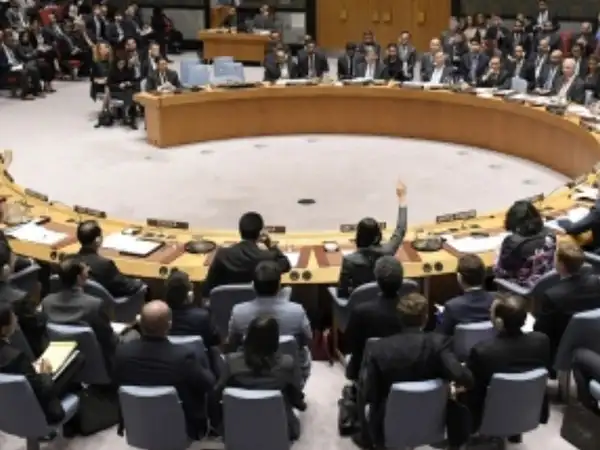
India has rejected the use of Human Rights allegations as a means of exerting political pressure or selectively targeting countries, reiterating that international scrutiny must be grounded in verified information, transparency and cooperation. The government said allegations should not be treated as established findings without proper examination and supporting evidence.
According to news agency Press Trust of India (PTI), New Delhi conveyed its position during a discussion at the United Nations General Assembly’s Third Committee, emphasising the importance of engaging with international human rights mechanisms through established channels rather than relying on unverified claims.
India’s statement comes amid international scrutiny of the authorities’ response to youth-led demonstrations in New Delhi, with UN human rights experts raising concerns about alleged violations during the protests. The exchange highlights differences between India’s position on international human rights engagement and concerns expressed by UN experts.
India Calls for Verification of Human Rights Allegations at UN
Barkha Tamrakar, Deputy Secretary in India’s Ministry of External Affairs, presented the country’s statement on Tuesday during a discussion concerning the Working Group on Enforced Disappearances at the UN General Assembly’s Third Committee.
Tamrakar said India remained engaged with international human rights mechanisms but stressed that such engagement should be guided by dialogue, consultation, cooperation, transparency and non-selectivity.
“India engages with international human rights mechanisms, but such engagement must be based on dialogue, consultation, cooperation with non-selectivity and transparency as guiding principles,” she said, according to PTI.
She argued that human rights issues should not be used as instruments of political pressure or as grounds for selectively targeting individual countries. India also called on UN member states to represent reports accurately and avoid drawing conclusions that go beyond the information they contain.
“We call on delegations to cite the report faithfully, not to inflate a humanitarian communication into a verdict,” Tamrakar said.
Her remarks reflected India’s objection to what it considers the presentation of allegations as conclusive findings before they have been adequately verified. The government maintained that specific cases supported by appropriate documentation could be addressed through established procedures.
New Delhi Objects to Unverified Claims and Incomplete Statistics
India also objected to the use of incomplete statistics and unverified allegations to characterise the country negatively in international discussions.
Tamrakar said India formally opposed any “attempt to convert unverified allegations, incomplete statistics or a report that contains no India country observation into a negative characterisation of the world’s largest democracy”.
The statement underscored New Delhi’s position that international reports and communications should be interpreted within their actual scope. India argued that allegations should not be presented as established facts when the relevant report does not contain a specific country observation supporting such a conclusion.
At the same time, India said it remained willing to clarify specific, properly documented cases through established channels. Its position was that engagement with international mechanisms should involve cooperation and consultation rather than conclusions based on claims that have not been adequately examined.
The distinction is central to India’s response: the government has not rejected engagement with international human rights institutions outright, but has challenged what it views as selective or inaccurate use of information in assessments of the country.
UN Experts Raise Concerns Over Youth-Led Protests in Delhi
India’s remarks came as more than 20 UN human rights experts in Geneva expressed concern over the reported police response to recent youth-led protests in New Delhi.
The experts described the response as a “repeatedly heavy-handed police response” to peaceful demonstrations and called on Indian authorities to ensure justice for reported human rights violations during the protests.
Their concerns placed the handling of demonstrations and the treatment of protesters under renewed international scrutiny. The experts called for reported violations to be addressed, while India’s broader position has been that allegations should be properly verified before being used to draw conclusions about the country’s human rights record.
The Office of the UN High Commissioner for Human Rights also expressed concern over reports of detentions involving demonstrators, protest leaders, members of civil society organisations, lawyers and journalists before and during large-scale demonstrations in Delhi.
The office referred to “reports of mass detentions of demonstrators, protest leaders, members of civil society organisations, lawyers and journalists”. These concerns were presented in the context of the demonstrations and the reported actions taken by authorities.
India, however, described the office’s remarks about the protests as “unwarranted” and an “unacceptable interference” in its internal affairs. New Delhi reiterated that international engagement on human rights should respect the principles of transparency, cooperation and non-selectivity.
India Previously Dismissed UN Expert’s Report as ‘Hearsay’
India’s latest statement followed its rejection last week of a report by a UN human rights expert that referred to a satirical political movement created by young people in the country and alleged that its members had faced retaliation.
New Delhi dismissed the claims as “hearsay” and urged the expert to verify the allegations before presenting them in a manner that could portray the country negatively.
The dispute reflects a broader disagreement over how allegations involving protests, political expression and the treatment of civil society groups should be assessed and communicated through international human rights mechanisms.
India has called for evidence-based engagement and has objected to statements it believes rely on incomplete information. UN experts and human rights officials, meanwhile, have raised concerns about reported detentions and the handling of demonstrations, calling for alleged violations to be addressed.
The competing positions underline the importance of distinguishing reported allegations from verified findings when assessing human rights concerns. Establishing the facts of individual cases and examining the evidence remain central to determining the circumstances surrounding the reported incidents.
India Reiterates Commitment to Dialogue and Cooperation
In its statement to the UN committee, India reiterated that engagement with international human rights mechanisms should be based on dialogue, consultation, cooperation, transparency and non-selectivity.
The government said it was prepared to clarify specific cases when allegations were properly documented, while opposing the use of unverified information to draw broader conclusions about the country.
India’s position also emphasised that international reports should be cited faithfully and assessed according to their contents, rather than being treated as definitive judgments when they do not establish the claims being made.
The latest exchange comes amid continuing international attention on the reported treatment of protesters in New Delhi. While UN experts have called for accountability over alleged violations, India has challenged the characterisation of the situation and objected to what it considers interference in its internal affairs.
The issue is likely to remain part of discussions over how international human rights mechanisms engage with national governments, particularly when concerns raised by UN experts are disputed by the countries concerned. India’s stated position is that such engagement must rely on verified information and established procedures while allowing governments to respond to specific, documented allegations.
With PTI inputs
For breaking news and live news updates, like us on Facebook or follow us on Twitter and Instagram. Read more on Latest World on thefoxdaily.com.




COMMENTS 0