The United Nations General Assembly has again condemned the United States’ economic embargo on Cuba, marking the 34th consecutive year it has called for an end to the longstanding restrictions. However, the latest vote revealed a notable decline in international support for the resolution, with several countries opposing it or declining to vote after efforts by the Trump administration to influence the outcome.
The resolution received 130 votes in favour, 17 against and 25 abstentions. The result represents a significant change from the previous year, when more than 160 countries supported the measure and only 12 abstained.
Although General Assembly resolutions of this kind are not legally binding, they serve as an indicator of international opinion. The latest outcome suggests that the diplomatic debate surrounding the embargo is becoming more complicated, even as Cuba faces worsening economic difficulties, fuel shortages and widespread electricity outages.
The vote also unfolded against a backdrop of escalating tensions between Washington and Havana. The Trump administration has intensified its economic pressure on the Caribbean island, while Cuban officials have accused the United States of using economic restrictions to undermine the country’s political system.
UN Vote Reveals Declining Support for Cuba’s Resolution
The General Assembly’s vote demonstrated that, although a majority of participating countries supported the resolution condemning the embargo, the level of backing was lower than in previous years.
The resolution received 130 votes in favour, compared with more than 160 countries supporting the measure a year earlier. Meanwhile, the number of abstentions increased from 12 to 25, indicating that more countries chose not to take a position in the vote.
Several Western countries, including Germany, Italy and Latvia, abstained for the first time in the 34-year history of the annual resolution, according to the report. Their decisions marked a departure from the voting pattern that had traditionally seen broad international opposition to the American embargo.
The list of countries voting against the resolution also expanded. Bosnia, Colombia, Costa Rica, Ecuador, Lithuania, Morocco, North Macedonia, Paraguay and Slovenia were among the countries that voted against it, most of them doing so for the first time.
The shift does not mean that the United Nations has endorsed the embargo. The resolution was still supported by a substantial majority of the countries voting in favour. However, the lower level of support highlights changes in the diplomatic landscape surrounding Cuba and the growing influence of Washington’s efforts to persuade governments to reconsider their positions.
The Trump administration had actively campaigned to influence the outcome. The voting pattern therefore became an important measure of how countries were responding to American pressure over Cuba’s economic and political future.
Despite the change in voting figures, the General Assembly’s resolution remains a non-binding expression of the international body’s position. It does not, by itself, remove or alter the US embargo.
Trump Administration Intensifies Pressure on Cuba
The latest vote came as the Trump administration pursued a tougher approach towards Cuba, seeking to increase economic pressure on the island and push for changes to its political system.
President Donald Trump has intensified an already longstanding campaign of restrictions against the Cuban government. The administration’s approach has placed additional pressure on an economy that has struggled with financial difficulties, shortages and disruptions to essential services.
In late January, Trump announced that tariffs would be imposed on countries selling or providing oil to Cuba. The warning effectively cut off fuel supplies to the island, according to the report, contributing to widespread electricity outages.
The consequences extend beyond the availability of electricity. Power disruptions have affected basic services, including water supply, internet access and telephone services, adding to the difficulties faced by residents.
Fuel is essential to maintaining electricity generation, transport and other infrastructure. Restrictions that reduce the island’s access to oil can therefore create wider economic and humanitarian pressures, particularly when the country is already experiencing shortages and financial strain.
The Trump administration’s policy has consequently become a central point of dispute between Washington and Havana. American officials have defended their approach by criticising Cuba’s communist government, while Cuban representatives argue that the economic restrictions are harming the population and violating the country’s right to determine its own future.
The latest UN vote took place amid these competing arguments, with governments deciding whether to support the resolution, oppose it or abstain.
Cuba Warns of Economic Warfare Against the Island
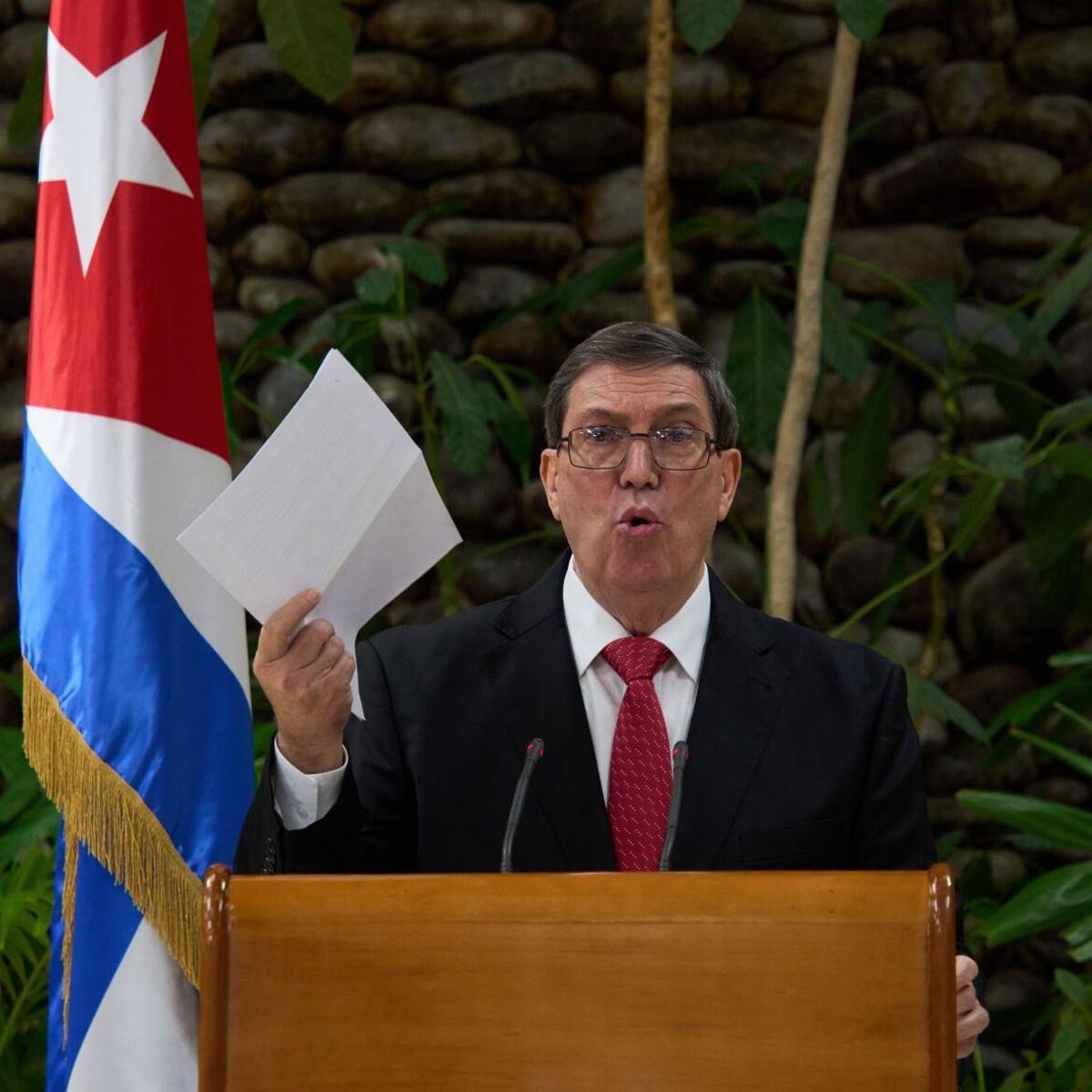
Cuban Foreign Minister Bruno Rodríguez criticised the US embargo before the General Assembly vote, arguing that the restrictions amounted to economic aggression against a member state of the United Nations.
“A great power is attacking through economic war a member state of this organization,” Rodríguez said ahead of the vote. “Cuba is not a threat. The blockade is a threat.”
His remarks reflected Havana’s longstanding position that the embargo is a principal source of economic pressure on the island. Cuban officials have repeatedly called for the restrictions to be lifted, arguing that they obstruct trade, limit access to resources and worsen the country’s financial problems.
The latest fuel restrictions have intensified those concerns. With electricity outages disrupting services such as water supply and telecommunications, the consequences of reduced fuel availability have become an important part of the dispute.
The Cuban government has also argued that Washington’s economic campaign is intended to force political changes. The Trump administration, meanwhile, has sought to increase pressure on Cuba’s leadership, making the embargo part of a broader confrontation over the island’s political system.
The General Assembly vote provided another international platform for these competing positions. While the resolution condemned the embargo, the lower number of supporting votes showed that the diplomatic response was less uniform than in the previous year.
US Ambassador Defends Washington’s Position
US Ambassador to the United Nations Mike Waltz urged member states to reject the resolution, presenting the vote as a decision about whether the international body should support the Cuban government’s political system.
Addressing the member nations, Waltz said: “Your vote today is the only thing standing between the corrupt, kleptocratic communist regime and using this body and your vote for another propaganda victory at the expense of the Cuban people.”
His remarks underscored Washington’s opposition to the annual resolution and its effort to frame the embargo as part of a broader political dispute with Cuba’s leadership.
The US position stands in contrast to the resolution’s central message, which calls for an end to the economic restrictions. For decades, Cuban representatives have used the annual vote to argue that the embargo imposes serious costs on the country and should be removed.
The latest exchange also illustrated how the debate has moved beyond the technical details of economic sanctions. Both governments have used the United Nations to challenge the other side’s legitimacy and defend their respective policies.
Diplomatic Clash Between US and Cuban Officials at the UN
Tensions between Washington and Havana became particularly visible during the discussions surrounding the resolution. On the day before the vote, Waltz and Rodríguez engaged in a heated confrontation on the floor of the General Assembly.
According to the report, Waltz had begun criticising Cuba’s socialist government when Rodríguez approached the podium where the American ambassador was speaking. Rodríguez called Waltz a liar and attempted to obtain a point of order from the official presiding over the session.
The confrontation escalated as United Nations security personnel and other staff attempted to intervene.
Waltz responded by telling Rodríguez to move away from the podium. “This individual needs to back away from this podium. He’s not going to intimidate me in the United States of America,” he said.
He then added: “You understand who you’re dealing with? This is America. Back up.”
The exchange departed from the diplomatic restraint generally expected during formal UN proceedings and reflected the increasingly confrontational relationship between the two countries.
Rodríguez later addressed the incident in a post on X, reminding Waltz that he was speaking at the United Nations rather than at a national security meeting at the White House.
He also accused the US government of using false claims to justify its policy towards Cuba, describing the embargo as economic aggression and referring to the restrictions on energy supplies as a blockade.
The public confrontation highlighted the intensity of the disagreement. Instead of limiting their differences to formal statements and diplomatic negotiations, the two officials exchanged sharp accusations in front of the General Assembly.
Earlier Confrontation Adds to US-Cuba Tensions
The argument at the General Assembly was not an isolated incident. A week earlier, a similar confrontation involving Waltz and Ernesto Soberón Guzmán, Cuba’s representative, had taken place outside a US-hosted panel featuring Cuban dissidents and former prisoners.
The panel was intended to highlight allegations of oppressive behaviour by Cuba’s government. The interaction outside the event added another episode to the growing series of public disputes between representatives of the two countries.
Together, the incidents reflect a more contentious phase in US-Cuba relations. The embargo has been a longstanding source of disagreement, but the latest exchanges demonstrate how tensions are increasingly playing out in highly visible diplomatic settings.
The United Nations has traditionally provided a forum where governments can present their positions and challenge the policies of other states. The confrontation between Waltz and Rodríguez showed how those proceedings can become more confrontational when diplomatic disagreements deepen.
The latest vote did not resolve the underlying dispute. Instead, it exposed both the continuing international opposition to the embargo and the growing willingness of some countries to abstain or vote against the resolution.
How the US Embargo Against Cuba Began
The US embargo against Cuba dates back to 1960, following the revolution led by Fidel Castro that overthrew Cuban dictator Fulgencio Batista. The new government subsequently nationalised properties belonging to US citizens and corporations, contributing to the deterioration of relations between Havana and Washington.
The economic restrictions became a defining feature of the relationship between the two countries. Over the decades, Cuba has faced persistent financial and economic difficulties while successive US administrations have maintained or adjusted restrictions as part of their policies towards the island.
The embargo has remained a recurring issue at the United Nations, where the General Assembly has repeatedly called for an end to the restrictions. The annual resolutions have become an important measure of international attitudes towards Washington’s Cuba policy.
Although the resolutions are not legally binding, their repeated adoption has demonstrated longstanding opposition among many UN member states to the embargo. The latest vote, however, indicates that this opposition is no longer reflected in the same voting pattern seen in earlier years.
The historical dispute also helps explain why the latest diplomatic exchanges have attracted attention. For Cuba, the embargo represents a continuing external constraint on its economy. For Washington, the restrictions form part of a strategy aimed at pressuring the Cuban government over its political system.
The disagreement has persisted across decades, and the latest measures involving oil supplies have added a new dimension to the economic pressure facing the island.
Fuel Shortages and Power Outages Deepen Cuba’s Economic Crisis
Cuba is facing mounting economic challenges as restrictions on fuel supplies compound existing financial difficulties. The Trump administration’s warning that it would impose tariffs on countries providing oil to Cuba has effectively cut off fuel to the island, according to the report.
The resulting energy shortages have contributed to widespread power outages, affecting essential infrastructure and everyday services.
Electricity disruptions can have consequences across multiple areas of public life. The report identifies water supply, internet access and telephone services among the systems affected by the outages.
These disruptions add to the strain on a country already experiencing shortages and financial troubles. Reduced access to fuel can make it harder to maintain electricity generation and keep essential services operating reliably.
The worsening situation has intensified the debate over the impact of US economic policy. Cuban officials argue that the embargo and the latest restrictions are worsening conditions for ordinary residents. The Trump administration, meanwhile, has continued its campaign to pressure Cuba’s political leadership.
The General Assembly’s vote took place against this backdrop of economic hardship and geopolitical tension. While the resolution again condemned the embargo, the lower level of support and the increased number of abstentions marked a significant change in the diplomatic response.
What the UN Vote Means for the Future of the Embargo
The latest resolution reinforces the General Assembly’s opposition to the US economic embargo, but it does not legally compel Washington to change its policy. Its significance lies primarily in the political message conveyed by the countries that supported it.
The vote of 130 in favour, 17 against and 25 abstentions shows that a majority of participating countries continued to support condemnation of the embargo. At the same time, the decline from more than 160 supporting countries in the previous year indicates that the United States’ diplomatic campaign coincided with a measurable change in voting patterns.
The abstentions by Germany, Italy and Latvia, alongside the opposition votes from several countries that had not previously voted against the resolution, make this year’s result particularly notable.
However, the vote alone does not establish why each country changed its position. The supplied report describes the Trump administration’s campaign to influence the outcome but does not provide individual explanations from all the governments that abstained or voted against the resolution.
The immediate outcome is therefore a diplomatic setback for the traditional effort to secure the broadest possible condemnation of the embargo, rather than a formal change to the legal status of the restrictions.
For Cuba, the economic consequences of the dispute remain pressing. Fuel shortages and power outages continue to affect essential services, while the government faces sustained pressure from Washington.
Conclusion
The United Nations General Assembly has condemned the US economic embargo on Cuba for the 34th consecutive year, but the latest vote revealed a notable decline in international support. With 130 countries voting in favour, 17 against and 25 abstaining, the result differed sharply from the previous year’s vote, when more than 160 nations backed the resolution and only 12 abstained.
The change comes as the Trump administration intensifies economic pressure on Cuba, including measures targeting countries that supply the island with oil. The resulting fuel shortages have contributed to power outages affecting water supplies, internet access and telephone services, deepening the difficulties facing the Cuban population.
Meanwhile, confrontations between US and Cuban officials at the United Nations have reflected the increasingly hostile tone of relations between Washington and Havana. Cuban representatives describe the embargo as economic aggression, while American officials defend their approach as pressure on the country’s communist government.
Although the General Assembly’s resolution is not legally binding, it remains an important indicator of international opinion. The latest vote shows that opposition to the embargo continues among a majority of participating countries, even as Washington’s diplomatic campaign coincides with a more divided response.
For breaking news and live news updates, like us on Facebook or follow us on Twitter and Instagram. Read more on Latest World on thefoxdaily.com.





COMMENTS 0