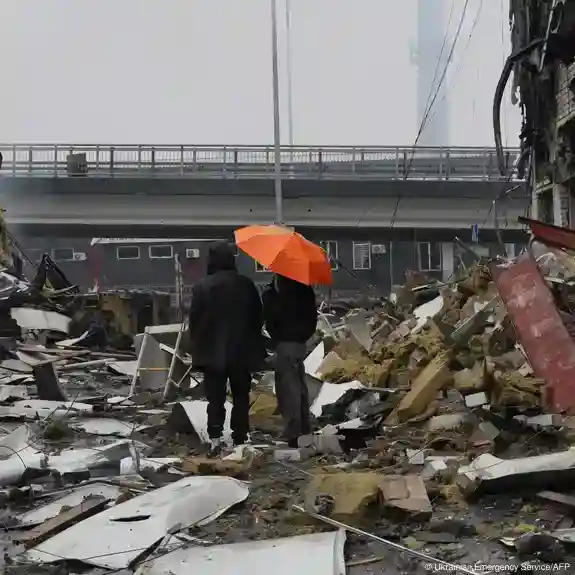
Russia launched a major missile and drone assault on Ukraine early Friday, November 20, 2026, damaging three key bridges across Kyiv’s Dnipro River just hours after President Vladimir Putin threatened a forceful response to Ukrainian attacks on the bridge connecting Russia with Crimea. The strikes disrupted transport across the Ukrainian capital, damaged critical infrastructure and left people dead and injured.
The attacks targeted the Podilsko-Voskresenskyi, Darnytskyi and Pivdennyi (Southern) bridges, which connect the eastern and western banks of the Dnipro River. Kyiv Mayor Vitali Klitschko confirmed the damage and announced traffic restrictions, warning residents against unnecessary travel through the city.
Ukrainian officials reported casualties in Kyiv and other regions as Russia used ballistic and cruise missiles alongside hundreds of drones in the overnight assault. The strikes came amid escalating attacks on strategic infrastructure on both sides of the Russia-Ukraine war, raising fresh concerns about the safety of civilians and the possibility of further retaliation.
Russian Missiles Damage Three Major Bridges Across Kyiv
The Russian attack began in the early hours of Friday and continued for several hours, with explosions reported across Kyiv. Ballistic missiles struck three important crossings over the Dnipro River, marking an unprecedented concentration of damage to the capital’s main road connections during the war.
According to Klitschko, the affected structures included the Podilsko-Voskresenskyi Bridge crossing, the Darnytskyi Bridge and the Pivdennyi Bridge, also known as the Southern Bridge. The crossings are essential for movement between Kyiv’s left and right banks, connecting residential neighbourhoods with commercial districts and other parts of the city.
The extent of the structural damage was still being assessed after the attack. Authorities imposed closures and traffic restrictions while specialists examined the affected infrastructure and determined whether the bridges could safely accommodate vehicles.
The strikes are particularly significant because Kyiv has six main bridges crossing the Dnipro. With three of them hit during the same attack, a substantial part of the city’s road network faced disruption simultaneously.
Earlier Russian strikes had also affected bridges in the capital, including the Southern and Northern crossings. Those attacks had already caused repeated closures, traffic congestion and disruption to public transport. The November 20 assault added further pressure to a transport network that residents have increasingly struggled to navigate.
Casualties Reported as Russian Attack Hits Multiple Regions
The assault caused casualties in Kyiv and other parts of Ukraine. Ukrainian Prime Minister Serhii Koretskyi reported that six people had been killed and 15 injured in the strikes on the capital. Two additional deaths were reported elsewhere in the country, taking the reported nationwide death toll to at least eight in the latest official update.
Earlier statements from Kyiv Mayor Vitali Klitschko had reported three deaths and around 15 injuries in the capital. The casualty figures were updated as authorities assessed the consequences of the attack.
The damage was not limited to bridges. Russian strikes also affected energy facilities and other critical infrastructure, while fires were reported in parts of Kyiv. Attacks in other regions added to the pressure on emergency services responding to the overnight barrage.
Ukraine’s Air Force said Russia had used ballistic and cruise missiles as well as more than 400 drones in the wider assault. The attacks targeted 23 locations across the country, according to the Ukrainian military’s account.
Russian strikes on power plants and electrical substations also caused power disruptions in Kyiv and 10 other regions. The damage threatened essential services at a time when Ukraine’s energy infrastructure was already facing sustained pressure from repeated attacks.
Kyiv Mayor Urges Residents to Avoid Unnecessary Travel
The damage to the bridges forced Kyiv authorities to restrict traffic across several important routes. The disruption affected commuters travelling between the two banks of the Dnipro, creating additional challenges for residents in a city of approximately three million people.
Klitschko urged residents not to use private cars to enter the city unless absolutely necessary. He also suggested that employers allow staff to work remotely wherever possible to reduce pressure on roads and public transport.
The restrictions could affect workers, students, emergency services and businesses that depend on regular movement across the river. With multiple crossings damaged or operating under limitations, journeys that would normally take a relatively short time could become considerably longer.
The latest attack also raises questions about how quickly the damaged bridges can return to normal operations. Structural assessments will determine whether repairs can be completed quickly or whether longer closures will be necessary.
For Kyiv residents, the disruption is another reminder that infrastructure remains directly exposed to the consequences of the continuing conflict. Bridges, energy facilities and transport networks are essential to everyday life, and damage to them can affect millions of people even when they are not directly injured in an attack.
Putin Vows a ‘Far More Painful’ Response to Crimea Bridge Attacks
The strikes on Kyiv followed a warning from Russian President Vladimir Putin, who promised retaliation after Ukraine attacked the Kerch Bridge linking Russia with Crimea for the third time that week.
Speaking in Shenzhen, China, after a high-profile meeting with US President Donald Trump and Chinese President Xi Jinping on the sidelines of the Asia-Pacific Economic Cooperation summit, Putin said Moscow would respond to the Ukrainian strikes.
Putin warned that Russia’s retaliation would be more painful than the damage Ukraine had inflicted on the bridge. His remarks came as the Kerch crossing, one of the most prominent infrastructure projects associated with Russia’s control over Crimea, became a renewed focus of the conflict.
The Russian president said Moscow would not leave the attacks unanswered, making clear that the Kremlin intended to retaliate. The subsequent assault on Kyiv’s bridges intensified concerns that the conflict was entering another phase of reciprocal attacks against strategically important infrastructure.
However, the timing of the strikes does not by itself establish that every target was selected specifically as retaliation for the Kerch Bridge attacks. Russia has repeatedly described Ukrainian infrastructure targets as having military significance, while Ukraine has accused Moscow of using attacks on civilian and essential infrastructure to increase pressure on the country.
Why the Kerch Bridge Is Strategically Important to Russia
The Kerch Bridge, also known as the Crimean Bridge, connects the Russian mainland with the Crimean Peninsula, which Moscow annexed in 2014. The crossing includes road and rail sections and has become one of the most recognisable symbols of Russia’s control over the territory.
Putin personally inaugurated the road section in 2018, presenting the project as a major achievement connecting Crimea with the rest of Russia. Its construction cost billions of dollars and gave Moscow a direct land-based transport link to the peninsula.
The bridge also has strategic importance beyond its symbolic value. It has served as a supply route for Russian military operations and a transport connection for civilians travelling between Crimea and mainland Russia.
Ukraine has repeatedly argued that the crossing supports Russia’s military presence in occupied Crimea. President Volodymyr Zelenskyy has described it as a key military route rather than simply a civilian transport facility.
Russia, by contrast, has insisted that the bridge is exclusively civilian infrastructure. The disagreement reflects a wider dispute over the military importance of transport links and other facilities used by both civilian and military traffic during the war.
Zelenskyy Rejects Russia’s Justification for Retaliatory Strikes
Ukrainian President Volodymyr Zelenskyy criticised Moscow’s attempts to justify its attacks as responses to Ukrainian operations. He argued that treating Russia and Ukraine as equally responsible for the escalation would ignore the circumstances of the war and Russia’s invasion of Ukrainian territory.
Zelenskyy also criticised Putin’s appearance alongside international leaders at the Shenzhen summit, arguing that the Russian president should face accountability for alleged crimes committed during the war against Ukraine.
His comments came as Kyiv dealt with the immediate consequences of the attacks on its bridges and critical infrastructure. The Ukrainian government has repeatedly called for stronger international pressure on Moscow and continued support for its defence against Russian attacks.
The exchange of accusations highlights the competing narratives surrounding the conflict. Moscow presents its strikes as military responses to Ukrainian operations, while Kyiv argues that Russia’s attacks are part of a broader campaign against Ukrainian territory and civilian life.
Russia Says Kyiv Bridges Were Used for Military Purposes
Russia acknowledged carrying out strikes against the bridges but claimed that the structures were being used for military purposes. The Russian position follows a pattern in which Moscow has described attacks on Ukrainian transport infrastructure as operations against facilities supporting military activity.
Bridges can have both civilian and military importance during wartime. They allow residents and commercial vehicles to move between areas, but they can also be used to transport military personnel, equipment and supplies.
However, describing infrastructure as having military use does not, on its own, establish that an attack complies with the laws of armed conflict. The legality of any strike depends on factors including the target’s military contribution, the expected military advantage and the anticipated harm to civilians.
The damage to three major Kyiv crossings therefore carries consequences beyond immediate traffic disruption. It raises questions about civilian protection and the vulnerability of essential infrastructure as both sides continue to target facilities they consider strategically important.
Energy Disruptions Add to Pressure on Ukraine
Alongside the attacks on Kyiv’s bridges, Russian strikes on power plants and substations caused electricity disruptions across multiple regions. Ukrainian energy authorities reported outages in the capital and 10 other regions following the latest assault.
Ukraine’s energy infrastructure has faced repeated attacks since early autumn, increasing pressure on the country’s ability to maintain reliable electricity supplies. Damage to generating facilities and substations can affect households, businesses, public services and essential infrastructure.
Power disruptions can also complicate emergency response operations and transport services. In a major city such as Kyiv, electricity is important not only for homes and offices but also for communications, water systems and other services that residents depend on.
The combination of bridge damage and energy outages makes the latest attack particularly disruptive. Even where infrastructure remains operational, restrictions and uncertainty can interfere with normal activity across several parts of the country.
What the Kyiv Bridge Strikes Mean for the Russia-Ukraine War
The November 20 attack demonstrates how transport and energy infrastructure have become increasingly important targets in the continuing Russia-Ukraine conflict. Damage to major crossings can disrupt the movement of people and supplies, while attacks on power facilities can affect services far beyond the immediate strike locations.
The timing is also significant. Putin’s warning came after repeated Ukrainian attacks on the Kerch Bridge, a structure closely associated with Russia’s annexation of Crimea. Russia’s subsequent assault on Kyiv’s bridges has intensified concerns about further retaliatory operations against strategic infrastructure.
For Ukraine, the immediate challenge is to restore transport links, assess structural damage and maintain essential services while protecting civilians from further attacks. For Kyiv residents, the restrictions on major bridges could continue to affect commuting and everyday activities until authorities complete their inspections and repairs.
The wider consequences will depend on whether the latest exchange leads to additional attacks on infrastructure in Ukraine or Russia. With both sides continuing to target strategically important facilities, the risk of further disruption remains high.
For now, Kyiv faces the difficult task of managing damage to three major river crossings while responding to the wider effects of a nationwide missile and drone assault. The attack has added another layer of uncertainty to a war in which critical infrastructure and civilian movement remain increasingly vulnerable.
For breaking news and live news updates, like us on Facebook or follow us on Twitter and Instagram. Read more on Latest World on thefoxdaily.com.






COMMENTS 0