- Why Russia Wants Trade Separated From the Ukraine Conflict
- How Russia-US Economic Relations Collapsed After 2022
- The Strategic Importance of Arctic and Energy Cooperation
- The Bering Strait Rail Tunnel Proposal Explained
- Russia’s Hardline Ukraine Demands Remain Unchanged
- Why the US and Russia May Still Explore Limited Cooperation
- How China Factors Into Russia’s Economic Strategy
- What This Means for Global Energy Markets
- Could a Ukraine Settlement Actually Happen?
- The Bigger Geopolitical Message Behind Moscow’s Comments
- Conclusion: Trade, Politics, and War Remain Deeply Intertwined
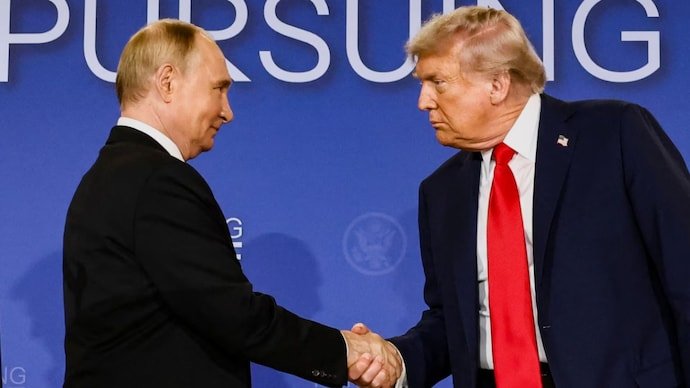
Russia has opened the door to a potential revival of economic relations with the United States, but with a major condition: trade and investment must no longer be tied to a Ukraine peace settlement. The message, delivered by Kremlin spokesman Dmitry Peskov, reflects a broader strategic shift in Moscow’s diplomatic and economic positioning as the war in Ukraine drags into another critical phase.
The development comes at a time when global markets, energy investors, Defense analysts, and geopolitical observers are closely watching whether Washington and Moscow could slowly move toward limited cooperation despite years of sanctions, Military escalation, and political hostility.
At the center of the debate is a difficult question: can the world’s two largest nuclear powers rebuild economic ties while simultaneously remaining on opposite sides of the biggest European conflict since World War II?
The answer could reshape not only the future of Russia-US trade relations, but also energy markets, Arctic development, global supply chains, and the broader balance of power between the West, Russia, and China.
Why Russia Wants Trade Separated From the Ukraine Conflict
The Kremlin’s latest messaging is part economic strategy, part geopolitical signaling. Russia’s leadership understands that the war in Ukraine has fundamentally damaged its commercial relationship with Western economies. However, Moscow also recognizes that complete economic isolation from the United States is neither realistic nor strategically desirable in the long term.
Peskov stated that Russia would welcome expanded investment and trade cooperation if economic normalization were no longer dependent on a Ukraine settlement. In simple terms, Moscow wants business discussions to happen independently from ceasefire negotiations or territorial disputes.
This is a significant diplomatic nuance.
Since 2022, the United States and its allies have treated sanctions as leverage to pressure Russia over Ukraine. Moscow, however, is now attempting to reframe the conversation by suggesting that mutual economic interests could exist even without a full political resolution.
The Kremlin’s approach appears designed to achieve several goals simultaneously:
- Reduce long-term economic pressure from Western sanctions
- Encourage American businesses to lobby for re-engagement
- Create divisions within Western policy circles
- Signal confidence that Russia can outlast the sanctions regime
- Position Moscow as open to pragmatic cooperation despite the conflict
This strategy also reflects a broader global reality: major powers often continue selective economic cooperation even during periods of geopolitical confrontation.
How Russia-US Economic Relations Collapsed After 2022
Before the Ukraine War escalated into a full-scale conflict in 2022, economic ties between Russia and the United States were already limited compared to America’s trade with Europe or China. Still, there were important areas of cooperation in energy, aerospace, commodities, industrial technology, and investment.
That changed dramatically after Russia launched its invasion of Ukraine.
Washington imposed sweeping sanctions targeting:
- Russian banks and financial institutions
- Energy exports and oil revenues
- Technology transfers
- Defense industries
- Wealthy Russian individuals and oligarchs
- Access to Western capital markets
Major American companies either exited Russia voluntarily or suspended operations due to sanctions and reputational risks. The collapse in commercial activity became one of the sharpest economic divorces between major powers in modern History.
| Sector | Impact of Sanctions on Russia-US Relations |
|---|---|
| Energy | Restrictions on oil, gas technology, and investment cooperation |
| Banking | Russian banks cut from major global financial systems |
| Technology | Limits on semiconductors, software, and advanced equipment |
| Aviation | Aircraft parts and maintenance support heavily restricted |
| Investment | American firms scaled back or exited Russian markets |
Despite these measures, Russia adapted faster than many Western analysts initially expected. Moscow redirected energy exports toward China, India, and other Asian markets while increasing domestic industrial substitution programs.
That adaptation is partly why the Kremlin now feels confident enough to discuss future economic cooperation again.
The Strategic Importance of Arctic and Energy Cooperation
One of the most overlooked aspects of Russia’s comments is the emphasis on future investment projects involving the Arctic and energy development.
Russia controls enormous Arctic territory rich in:
- Oil and natural gas reserves
- Rare earth minerals
- Nickel and strategic metals
- Shipping routes opened by melting ice
For years, Russian officials have believed that Arctic cooperation could become a practical area where American and Russian business interests overlap despite political disagreements.
President Vladimir Putin has repeatedly promoted the Arctic as a future engine of economic growth. Moscow sees the region not only as a resource hub but also as a geopolitical frontier where competition with NATO and China will intensify over the coming decades.
Interestingly, Russia’s mention of Alaska-related cooperation is not accidental. Alaska and Russia share historical, geographic, and strategic proximity across the Bering Strait. Reviving cross-Arctic economic projects could theoretically create limited channels of engagement between the two countries.
However, such ideas currently remain politically difficult given ongoing sanctions and military tensions.
The Bering Strait Rail Tunnel Proposal Explained
One of the more surprising proposals mentioned in discussions between Russian officials and American contacts is the idea of a rail tunnel beneath the Bering Strait.
The concept, promoted by Putin ally Kirill Dmitriev, envisions a massive infrastructure connection linking Russia and North America.
While the idea sounds futuristic, it has existed in various forms for decades.
The proposed tunnel would theoretically:
- Connect Siberia with Alaska
- Create new trade corridors
- Expand energy and cargo transportation
- Increase economic integration between continents
Still, enormous challenges make the project highly unlikely in the near future:
- Extreme construction costs
- Harsh Arctic conditions
- Political mistrust
- Security concerns
- Sanctions barriers
Yet the fact that Russian officials continue discussing such ambitious projects reveals something important: Moscow wants to project an image of long-term strategic optimism rather than isolation.
Russia’s Hardline Ukraine Demands Remain Unchanged
Even while discussing trade normalization, the Kremlin has shown no indication that it plans to soften its position on Ukraine.
Peskov repeated Moscow’s longstanding demands, including:
- Withdrawal of Ukrainian troops from territories claimed by Russia
- Recognition of annexed regions
- Conditions tied to ceasefire implementation
- Limits on future Ukrainian military positioning
Ukraine has consistently rejected these demands, arguing that they amount to surrender rather than negotiation.
From Kyiv’s perspective, accepting Russian territorial claims would reward military aggression and undermine Ukrainian sovereignty.
This fundamental disagreement remains the biggest obstacle to any peace settlement.
Western governments continue to support Ukraine financially and militarily because they view the conflict as larger than a regional war. Many NATO members believe the outcome could influence future global security norms, including whether territorial conquest by force becomes normalized.
Why the US and Russia May Still Explore Limited Cooperation
Despite deep hostility, history shows that Washington and Moscow often maintain selective communication even during periods of severe confrontation.
During the Cold War, the United States and the Soviet Union still cooperated on:
- Nuclear arms control
- Scientific research
- Space missions
- Diplomatic crisis management
Today, both sides may still identify areas where limited engagement serves mutual interests.
Potential areas include:
- Arctic navigation safety
- Counterterrorism intelligence
- Nuclear risk reduction
- Energy market stability
- Prisoner exchanges and humanitarian issues
However, there is a crucial difference between tactical cooperation and true normalization.
As long as the Ukraine war continues, full-scale economic restoration between Russia and the West remains politically difficult.
How China Factors Into Russia’s Economic Strategy
An important angle often missing from mainstream coverage is China’s growing influence over Russia’s economic calculations.
Since sanctions intensified, Russia has become increasingly dependent on Chinese markets, technology, banking channels, and industrial partnerships.
While Beijing and Moscow publicly describe their relationship as strategically strong, Russia also understands the risks of becoming overly reliant on a single economic partner.
That is one reason the Kremlin may want to reopen at least partial channels with Western economies.
Diversification matters.
If Russia can eventually restore some investment or trade access with the United States and Europe, it gains greater flexibility and bargaining power in its relationship with China.
This balancing strategy has historical roots. Russian policymakers have long attempted to avoid becoming economically subordinate to either the West or China.
What This Means for Global Energy Markets
Energy markets are watching these developments closely because even small shifts in Russia-US relations could influence oil and gas dynamics worldwide.
Russia remains one of the world’s largest energy exporters. Any future easing of sanctions or reopening of investment channels could affect:
- Global oil prices
- Natural gas supply chains
- Arctic energy exploration
- European energy diversification efforts
- Asian energy competition
For now, Western governments continue prioritizing sanctions enforcement. But markets are already thinking long term.
Investors know that geopolitical realities can change surprisingly quickly. A limited ceasefire, leadership change, or diplomatic breakthrough could dramatically reshape energy investment strategies almost overnight.
Could a Ukraine Settlement Actually Happen?
Despite periodic diplomatic signals, a comprehensive Ukraine settlement still appears difficult in the near term.
Several major obstacles remain:
- Territorial disputes
- Security guarantees for Ukraine
- NATO expansion concerns
- Sanctions negotiations
- Domestic political pressures in Russia and Ukraine
Both Moscow and Kyiv continue to believe they can improve their negotiating positions over time.
That reduces incentives for compromise.
At the same time, prolonged war creates mounting economic and military strain on all sides. Ukraine faces infrastructure damage and human costs, while Russia continues operating under heavy sanctions and international isolation.
The United States and European governments are also balancing military support for Ukraine with domestic political and financial pressures.
This complex reality means future Diplomacy may evolve gradually rather than through one dramatic peace agreement.
The Bigger Geopolitical Message Behind Moscow’s Comments
Russia’s latest statements are not only about trade. They are also about shaping global perceptions.
The Kremlin wants to present itself as:
- Open to pragmatic dialogue
- Economically resilient despite sanctions
- Prepared for long-term geopolitical competition
- Interested in future global investment opportunities
At the same time, Moscow is trying to demonstrate that sanctions have limits.
By discussing future business cooperation even during wartime, Russian officials are signaling confidence that Western pressure will eventually weaken or become politically unsustainable.
Whether that calculation proves correct remains uncertain.
What is clear is that economic diplomacy is increasingly becoming another battlefield in the broader Russia-West confrontation.
Conclusion: Trade, Politics, and War Remain Deeply Intertwined
Russia’s call to separate economic cooperation from the Ukraine conflict highlights the evolving nature of modern Geopolitics. Moscow is attempting to reopen conversations about trade, investment, and long-term strategic projects while maintaining firm positions on Ukraine.
For the United States and its allies, the challenge is equally complex. Western governments want to maintain pressure on Russia through sanctions while avoiding uncontrolled escalation between nuclear powers.
The result is a strange geopolitical reality where confrontation and communication now exist side by side.
In the short term, major breakthroughs in Russia-US trade relations remain unlikely. Sanctions, political mistrust, and battlefield tensions continue to dominate the relationship.
But in the longer term, economic pragmatism could slowly re-enter the conversation especially in areas like Arctic development, energy cooperation, and strategic infrastructure.
Whether that eventually leads to meaningful normalization will depend largely on the future of the Ukraine war itself.
For now, the Kremlin’s message is unmistakable: Russia wants the world to know it is still open for business even while the geopolitical storm continues.
For breaking news and live news updates, like us on Facebook or follow us on Twitter and Instagram. Read more on Latest World on thefoxdaily.com.




COMMENTS 0