More than four years into the Russia–Ukraine War, the battlefield is no longer confined to trenches, occupied territories, or frontline cities.
It now stretches deep into Russia’s financial system, energy infrastructure, airspace, and even diplomatic calculations.
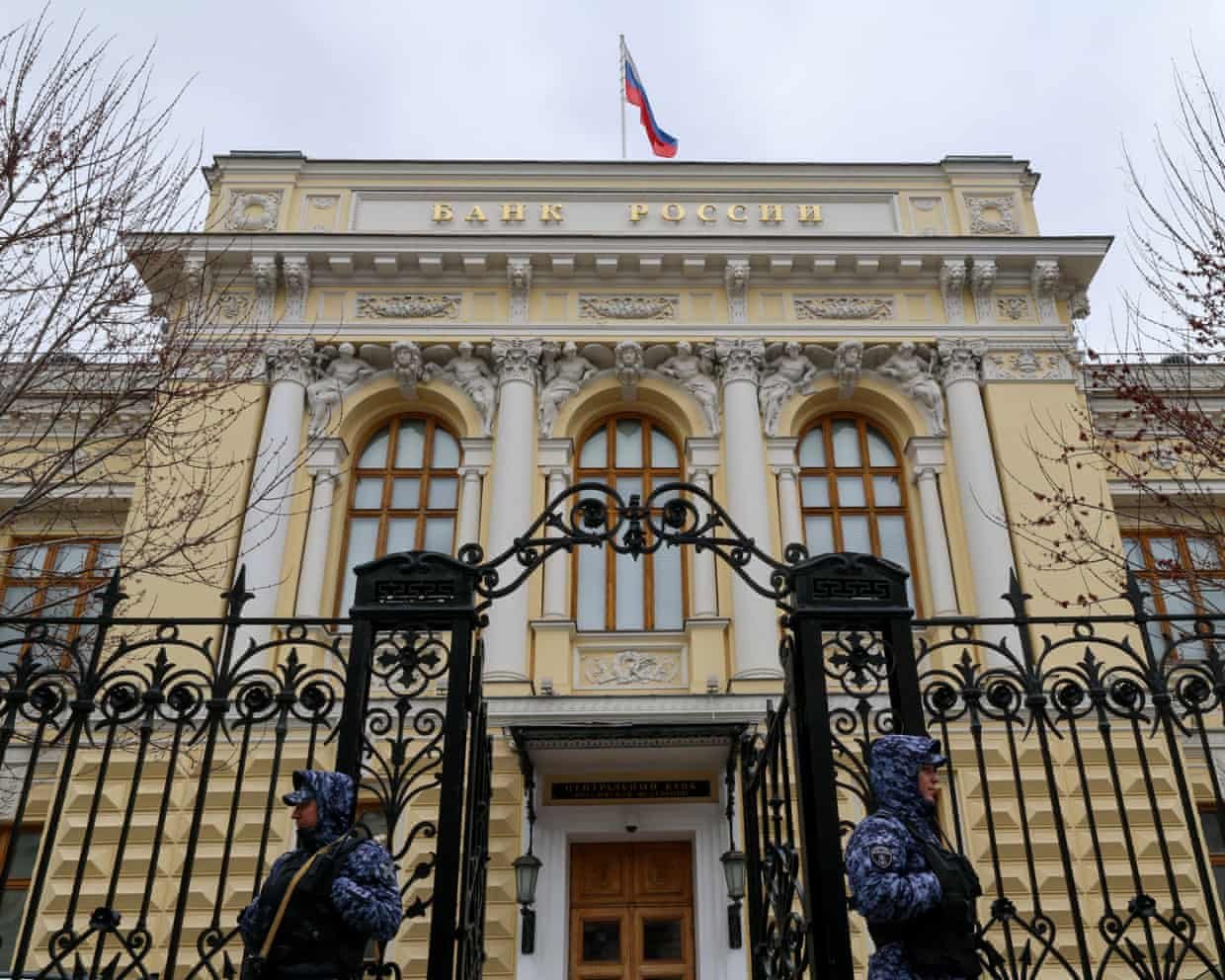
In one of the clearest signs yet of how modern warfare is transforming state institutions, Russia has moved to allow banks and commercial organisations to directly defend themselves against Ukrainian drone attacks.
The development comes as Moscow struggles to contain an increasingly sophisticated Ukrainian long-range drone campaign targeting infrastructure believed to support Russia’s war Economy.
The move also highlights a deeper reality emerging from the conflict: the Ukraine war is evolving into a full-spectrum economic and infrastructure war where financial systems, oil facilities, transport networks, factories, and even diplomatic zones have become strategic targets.
Why Russia Is Arming Banks Against Ukrainian Drones
Russia’s parliament recently passed legislation allowing banks and financial institutions to operate defensive systems and arm personnel against drone threats without relying entirely on state security forces.
The law reportedly affects major institutions including Russia’s largest lender, company,Sberbank,Russian state-owned banking and financial services company.
The decision reflects growing pressure on Russia’s Air Defence network.
Since 2023, Ukraine has dramatically expanded its use of long-range drones capable of striking hundreds and in some cases more than a thousand kilometres from the frontline.
These attacks increasingly focus on:
- Oil refineries
- Fuel depots
- Military factories
- Airbases
- Logistics hubs
- Communication infrastructure
- Financial and industrial facilities
Russia’s enormous geographical size creates a major defensive challenge.
Protecting every economically important site across such vast territory requires enormous air defence resources.
As a result, Moscow has concentrated advanced systems around politically sensitive areas like the capital while leaving other facilities more vulnerable.
The new law effectively decentralises defence responsibilities by forcing major institutions to partially protect themselves.
The Strategic Logic Behind Ukraine’s Drone Campaign
Ukraine’s deep-strike drone strategy is not random.
Kyiv increasingly views infrastructure attacks as a way to impose economic and psychological costs on Russia while compensating for battlefield asymmetries.
Unable to match Russia in traditional military scale, Ukraine has focused on precision disruption.
The strategy aims to:
- Disrupt fuel supplies
- Increase insurance and security costs
- Create uncertainty inside Russia
- Pressure industrial production
- Stretch Russian air defence systems
- Undermine confidence in domestic security
This represents a broader transformation in modern warfare where drones are increasingly used not just for tactical military operations but for Economic Warfare.
In many ways, Ukraine’s drone campaign mirrors how Cyber Warfare targets infrastructure vulnerabilities except with physical explosions instead of digital disruptions.
How Drone Warfare Is Changing Modern Conflict
The Russia-Ukraine war has become one of the defining laboratories for modern drone warfare.
Cheap, scalable, and increasingly sophisticated drones have transformed military strategy worldwide.
Compared with traditional missiles, drones offer several advantages:
- Lower production costs
- Mass deployment capability
- Difficult detection profiles
- Flexible targeting options
- Psychological impact
Perhaps most importantly, drones allow weaker military powers to strike economically sensitive targets far behind enemy lines.
This has fundamentally changed traditional ideas about safe rear areas during wartime.
Financial institutions, factories, energy facilities, and civilian infrastructure are now increasingly part of the active battlespace.
| Traditional Warfare | Modern Drone Warfare |
|---|---|
| Frontline-focused combat | Deep infrastructure targeting |
| Expensive missile dependence | Lower-cost drone swarms |
| Military bases as primary targets | Economic systems also targeted |
| Centralised defence systems | Distributed self-defence measures |
| Limited civilian battlefield exposure | Expanded infrastructure vulnerability |
Russia’s Growing Air Defence Problem
Russia possesses one of the world’s largest air defence networks, including advanced missile systems such as the S-400.
However, the war has exposed a key weakness: scale.
Defending major cities, military facilities, industrial zones, ports, pipelines, rail systems, and energy infrastructure simultaneously across eleven time zones is extraordinarily difficult.
Ukraine’s drone strategy exploits exactly that challenge.
Even relatively small attacks can generate significant disruption because:
- Oil production temporarily halts
- Air traffic faces interruptions
- Factories suspend operations
- Insurance costs rise
- Investor confidence weakens
- Emergency resources are diverted
By authorising companies and banks to directly engage drones, Moscow is effectively acknowledging that state resources alone may not be sufficient to protect every critical site.
Why Financial Institutions Have Become Strategic Targets
The inclusion of banks in Russia’s defensive measures reflects the increasingly blurred line between military and economic warfare.
Modern conflicts are no longer fought only with tanks and artillery.
Financial systems have become central components of national resilience.
Banks help sustain:
- War financing
- Industrial payments
- Trade systems
- Salary distribution
- Government operations
- Supply chain financing
Disruptions to financial infrastructure can therefore create cascading economic consequences.
Even if Ukrainian strikes do not directly destroy banking systems, forcing institutions to spend heavily on security creates additional economic strain.
Diplomatic Tensions Escalate at the United Nations
The conflict has also triggered growing international concern over Russia’s warnings to foreign embassies in Kyiv.
Nearly 50 countries reportedly condemned what they described as Russian threats toward diplomatic institutions.
The controversy emerged after Moscow warned foreign diplomats and civilians to leave Kyiv ahead of what it called systematic strikes targeting Ukrainian “decision-making centres.”
Ukraine and several Western governments interpreted the statements as intimidation tactics designed to pressure diplomatic missions.
The diplomatic backlash illustrates how the war increasingly extends beyond military operations into international political signalling.
Embassies traditionally enjoy protected status under international norms.
Any perceived threats against diplomatic institutions therefore attract especially strong global reactions.
The Economic War Behind the Battlefield
The Ukraine war has evolved into one of the largest economic confrontations of the modern era.
Both sides increasingly target each other’s ability to sustain prolonged conflict.
Ukraine attacks:
- Energy infrastructure
- Industrial production
- Fuel logistics
- Military supply chains
Meanwhile, Russia continues targeting:
- Ukrainian energy grids
- Transportation systems
- Industrial facilities
- Urban infrastructure
The result is a prolonged war of attrition not only on the battlefield but also across economic systems.
This broader economic dimension explains why infrastructure protection is becoming as strategically important as frontline military operations.
The Czech Ammunition Initiative Shows Europe’s Long-Term Strategy
At the same time, European countries continue attempting to strengthen Ukraine’s military sustainability.
The Czech-led initiative to source artillery ammunition globally has emerged as one of Europe’s most important support mechanisms for Kyiv.
The programme reportedly aims to deliver around one million artillery rounds in 2026 after already supplying large quantities in previous years.
The initiative demonstrates how European strategy increasingly focuses on long-term logistical endurance rather than short-term symbolic support.
Artillery ammunition remains one of the most critical resources in the war because both Russia and Ukraine continue relying heavily on large-scale bombardment tactics.
Without consistent ammunition flows, battlefield defence becomes extremely difficult.
Frozen Russian Assets Are Quietly Reshaping the Conflict
One of the lesser-discussed but highly significant developments involves the use of profits generated from frozen Russian assets to help finance aid for Ukraine.
This marks a major shift in how economic sanctions operate during modern conflicts.
Instead of merely restricting Russia economically, Western governments are increasingly redirecting financial pressure into direct support mechanisms for Ukraine.
This creates a new model of economic warfare where frozen sovereign assets indirectly finance military resistance.
Moscow strongly opposes these measures and considers them illegitimate.
However, the policy reflects growing European determination to create sustainable long-term funding structures for Ukraine.
Why the War Shows No Sign of Ending Soon
Despite repeated diplomatic efforts, the war increasingly appears locked in a prolonged strategic stalemate.
Several factors contribute to this:
- Russia continues framing the war as existential
- Ukraine refuses territorial concessions
- Western military support remains active
- Economic sanctions continue escalating
- Neither side sees decisive military victory as impossible
At the same time, technological adaptation keeps changing the battlefield faster than diplomatic frameworks can respond.
Drones, AI-assisted targeting, electronic warfare, and infrastructure attacks are reshaping military calculations almost in real time.
The Bigger Lesson: Civilian Infrastructure Is Now Part of Warfare
Perhaps the most important long-term lesson from the Russia-Ukraine conflict is the collapse of the traditional separation between military and civilian infrastructure.
The decision to arm banks against drones would have sounded extraordinary only a decade ago.
Today, it reflects a new strategic reality.
Modern warfare increasingly targets:
- Financial systems
- Energy production
- Digital infrastructure
- Supply chains
- Transportation networks
- Industrial output
As drones become cheaper and more accessible globally, countries everywhere may eventually face similar security questions about protecting civilian economic infrastructure.
Conclusion: Russia’s Bank Defence Strategy Reveals a New Era of War
Russia’s decision to allow banks and institutions to shoot down Ukrainian drones is more than a temporary wartime adjustment.
It symbolises the emergence of a new kind of conflict where economies, infrastructure, logistics, and civilian systems are deeply integrated into the battlefield.
The Ukraine war is no longer only about territorial control. It is increasingly about endurance, disruption, industrial resilience, and economic survival.
Ukraine’s drone campaign has exposed the vulnerabilities of even heavily militarised states, while Russia’s response shows how governments are adapting by decentralising security responsibilities.
At the same time, diplomatic tensions, ammunition initiatives, and economic sanctions continue expanding the conflict far beyond Eastern Europe.
As the war enters yet another prolonged phase, one reality is becoming impossible to ignore: modern warfare no longer begins and ends at the frontline.
It now reaches banks, factories, embassies, energy systems, and everyday civilian infrastructure changing the very definition of what it means to be at war.
For breaking news and live news updates, like us on Facebook or follow us on Twitter and Instagram. Read more on Latest World on thefoxdaily.com.






COMMENTS 0