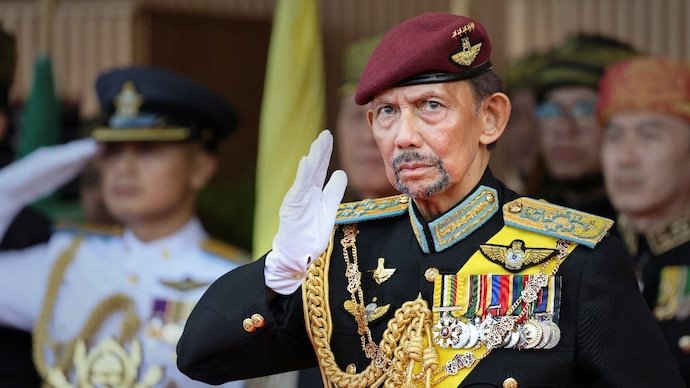
Brunei’s Sultan Hassanal Bolkiah has stripped his daughter-in-law, Pengiran Raabi’atul Adawiyyah, of her royal titles, citing conduct considered “unbecoming” of a member of the Royal Family. The decision has attracted particular attention because authorities have not announced a separation between Raabi’atul Adawiyyah and her husband, Prince Abdul Malik.
The Office of the Grand Chamberlain of Brunei Darussalam said the titles were revoked with immediate effect following a decree issued by the Sultan. The official statement said Raabi’atul Adawiyyah’s conduct was considered inappropriate for the spouse of a member of the royal family and alleged that her actions had damaged the reputation of the monarchy.
However, the statement did not explain what she allegedly did or provide specific details about the conduct described as inappropriate. State broadcaster RTB News similarly reported that the decision was linked to behaviour considered disrespectful towards Sultan Hassanal Bolkiah and harmful to the image of the monarchy, without detailing the allegations.
The absence of further explanation has left the circumstances surrounding the decision unclear, while the unusual Nature of the title removal has drawn attention in Brunei and beyond.
Who is Pengiran Raabi’atul Adawiyyah?
Raabi’atul Adawiyyah, 33, is the wife of Prince Abdul Malik, 43, one of Sultan Hassanal Bolkiah’s sons. Prince Abdul Malik is fourth in line to the Bruneian throne.
The couple married in 2015 in a lavish 10-day royal wedding held in Bandar Seri Begawan, Brunei’s capital. The ceremony was attended by thousands of guests and was one of the prominent royal occasions associated with the Sultan’s family.
Following the Sultan’s decree, Raabi’atul Adawiyyah has lost the title Yang Amat Mulia Pengiran Anak Isteri. The order applies to her royal status, while the supplied information does not indicate that her husband has lost his position or title.
The couple have four daughters: Princess Muthee’ah, Princess Fathiyyah, Princess Khaalishah and Princess Nabeelah. According to the information provided, their children’s royal titles remain unaffected by the decision.
Why the title removal is attracting attention
The most notable aspect of the decision is not simply that a royal title has been withdrawn, but that the circumstances differ from previous high-profile cases involving members of the Sultan’s family.
The official explanation centres on conduct that was allegedly inappropriate and damaging to the reputation of the monarchy. Yet no specific allegation has been publicly detailed in the statements cited in the supplied material.
That leaves an important distinction between what is confirmed and what remains unknown. It is confirmed that the Sultan issued a decree removing Raabi’atul Adawiyyah’s royal titles and that the official explanation referred to conduct considered disrespectful and harmful to the monarchy’s image. The precise nature of that conduct has not been disclosed.
Without additional information from the authorities, it would therefore be inappropriate to speculate about the reasons behind the decision or attribute specific actions to Raabi’atul Adawiyyah.
No official announcement of a separation from Prince Abdul Malik
The decision has generated additional scrutiny because there has been no official announcement that Raabi’atul Adawiyyah and Prince Abdul Malik have divorced or separated.
That point is significant because royal titles have previously been removed from members of Sultan Hassanal Bolkiah’s family following marital breakdowns.
In 2003, the Sultan stripped his second wife, Mariam Abdul Aziz, of her royal titles following their divorce. A similar move took place in 2010 after his divorce from his third wife, Azrinaz Mazhar Hakim.
In Raabi’atul Adawiyyah’s case, however, the supplied information identifies no corresponding official announcement of divorce or separation. Instead, the stated reason is conduct considered unbecoming of a member of the royal family.
That distinction is one reason the decision has attracted attention. It also means that the title revocation should not automatically be interpreted as evidence of a marital separation.
What the official statement says and what it does not
The Office of the Grand Chamberlain’s statement provides a broad explanation for the decision but leaves many details unanswered.
The authorities said Raabi’atul Adawiyyah’s conduct was inappropriate for the spouse of a royal family member. They also said her actions had tarnished the monarchy’s reputation and demonstrated a lack of respect towards Sultan Hassanal Bolkiah.
Those statements establish the official rationale for the title revocation. They do not, however, establish the specific behaviour that prompted the Sultan’s decree.
This is important when assessing reports about the development. In the absence of a detailed allegation or supporting explanation from the authorities, claims about what may have happened would go beyond the information publicly provided in the supplied material.
State broadcaster RTB News has also reported the decision using broadly similar language, describing the conduct as disrespectful towards the Sultan and damaging to the monarchy’s image. It too did not provide details about the alleged misconduct.
A royal status can be separated from family relationships
The case also illustrates that royal titles and family Relationships are not necessarily the same thing. A person can lose a formal royal designation without the available public information establishing that a marriage has ended.
In this instance, the removal concerns Raabi’atul Adawiyyah’s royal title. The supplied information does not state that Prince Abdul Malik has been removed from the line of succession or that the couple’s children have lost their royal titles.
The reported continuation of the children’s titles is particularly relevant because it indicates that the decree, as described in the source material, is specifically directed at Raabi’atul Adawiyyah’s royal status.
Any broader consequences for the family would require further official information.
The wider significance of the decision in Brunei’s monarchy
Brunei is an absolute monarchy in which Sultan Hassanal Bolkiah holds extensive political authority. He has ruled the Southeast Asian country since 1968 and is described in the supplied material as the world’s longest-reigning monarch.
That makes decisions concerning the royal family particularly significant within the country’s political and public structure. Royal titles are not simply ceremonial labels; they are closely connected to membership and status within the ruling family.
The Sultan’s decision therefore demonstrates the authority exercised over royal titles and the importance placed on conduct within the monarchy.
At the same time, the limited public explanation means that the case remains difficult to assess beyond the official account. The decision is clear, but its underlying circumstances remain largely undisclosed.
Who is Sultan Hassanal Bolkiah?
Sultan Hassanal Bolkiah, 80, has ruled Brunei since 1968. He leads the oil-rich Southeast Asian nation under an absolute monarchy and remains one of the world’s longest-serving heads of state.
His long reign has made the Bruneian monarchy one of the most prominent royal institutions in Southeast Asia. The Sultan is also associated with Istana Nurul Iman, the official residence of the royal family.
According to the supplied information, the palace has 1,788 rooms and is recognised as the world’s largest residential palace. The residence has become one of the most recognisable symbols of Brunei’s royal wealth and the scale of the monarchy.
Why the unanswered questions matter
The immediate question surrounding the title revocation is what specific conduct led to the Sultan’s decision. So far, the official explanation uses broad terms rather than identifying a particular incident.
A second question concerns the status of Raabi’atul Adawiyyah’s marriage to Prince Abdul Malik. The available information does not report an official separation, meaning the title decision should not be presented as confirmation of a divorce.
A third issue is whether the royal household will provide any additional explanation. Until that happens, the most reliable account remains limited to the official statement and the reporting that repeats its general explanation.
These unanswered questions also underline the importance of distinguishing confirmed information from speculation. The title revocation is an established decision. The reason, in broad terms, has been given by the authorities. The specific alleged conduct, however, has not been publicly identified in the material available here.
What happens next?
The immediate consequence is clear: Raabi’atul Adawiyyah no longer holds the royal title that was revoked by Sultan Hassanal Bolkiah’s decree.
Her husband remains identified as Prince Abdul Malik and fourth in line to the throne, while the royal titles of their four children are reported to remain unaffected.
Any further developments will depend largely on whether Brunei’s royal authorities issue additional information about the decision or whether there is an official announcement concerning the couple’s relationship.
For now, the case stands out because the Sultan has removed a daughter-in-law’s royal status while publicly citing conduct considered damaging to the monarchy, without disclosing the precise nature of that conduct.
A royal decision surrounded by unanswered questions
Sultan Hassanal Bolkiah’s decision to revoke Pengiran Raabi’atul Adawiyyah’s royal title represents a significant change in her formal status within Brunei’s royal family. The authorities have clearly stated that the action followed conduct they considered inappropriate, disrespectful and harmful to the monarchy’s reputation.
But the public record described in the supplied material stops there. No detailed allegations have been disclosed, and there is no reported official announcement that Raabi’atul Adawiyyah and Prince Abdul Malik have separated.
That makes the development notable not only for what the Sultan has decided, but also for what remains unexplained. Until Brunei’s authorities provide further details, the most defensible conclusion is that a royal title has been revoked on stated grounds of conduct, while the precise circumstances behind the decision remain undisclosed.
For breaking news and live news updates, like us on Facebook or follow us on Twitter and Instagram. Read more on Latest World on thefoxdaily.com.




COMMENTS 0