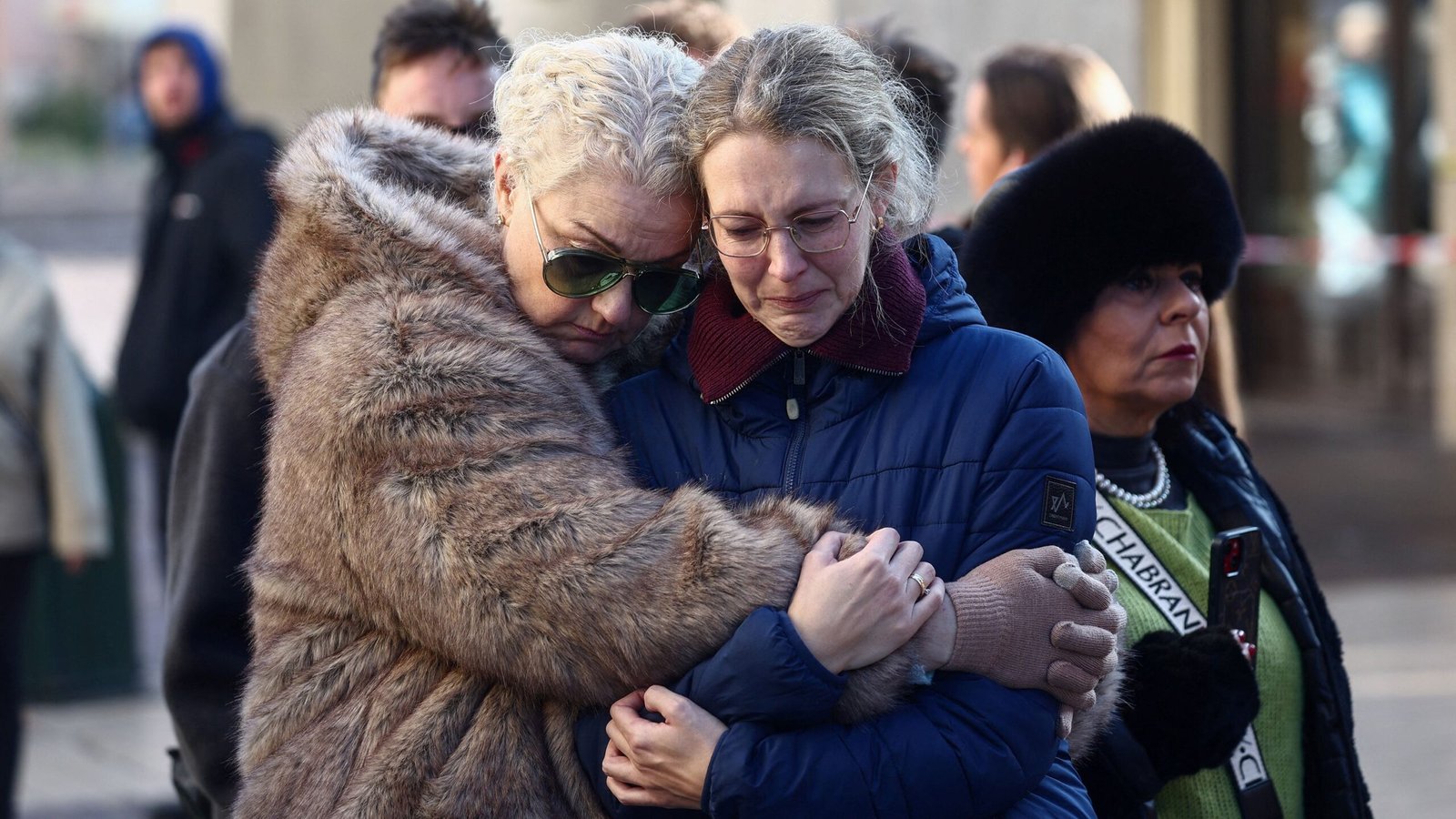
Poland is facing shock and renewed security concerns after a mass shooting in the historic centre of Kraków killed six people and injured 16 others. The attack, which took place in the city’s busy Main Market Square on Saturday, November 7, 2026, has prompted national mourning, tighter security measures and an investigation into a possible terrorist motive.
Authorities said the suspected attacker was a Polish citizen who was shot and seriously injured by police during the incident. Investigators are also examining the deaths of three people found at a property linked to him in Ostrowiec Świętokrzyski, northeast of Kraków. The victims were identified as his sister, mother and father.
Interior Minister Marcin Kierwiński said the suspect was fascinated by far-right ideologies and held what he described as “very radical views”. Investigators have not yet established a complete account of his motive or confirmed whether the killings were part of an organised extremist plot.
How the Kraków mass shooting unfolded
Police began receiving reports of gunfire at approximately 3 pm local time on Saturday. According to Kraków police, the suspect drove into the city’s Main Market Square and began firing randomly at people in the area.
The attack killed four women and two men. Sixteen other people were injured, including two police officers who confronted the suspected gunman.
The Main Market Square is one of Poland’s best-known public spaces. Surrounded by historic buildings, cafes, restaurants and shops, it attracts large numbers of residents and international visitors throughout the year.
The shooting therefore took place in an area that would ordinarily be crowded with people enjoying the city’s restaurants, shopping streets and tourist attractions. The sudden violence transformed the popular destination into a crime scene, with police securing the square and surrounding streets.
Police Deputy Inspector Katarzyna Cisło told Polish broadcaster TVN24 that the suspect wore military-style clothing and used what she described as military weapons. Officers also discovered a substantial quantity of weapons and ammunition in his vehicle.
The suspected attacker was shot and injured by police before being taken to hospital. He underwent several surgical procedures and was later described by a regional police spokesperson as being in a stable but extremely critical condition.
Authorities said he was the only suspected perpetrator being sought in connection with the shooting. Investigators are examining the sequence of events, the weapons used and the circumstances that led to the attack.
Three family members found dead at suspect’s home
The investigation expanded beyond Kraków after police discovered three bodies at a property in Ostrowiec Świętokrzyski, a town approximately 120 miles northeast of the city.
The deceased were identified as the suspect’s sister, mother and father. Prosecutors are investigating whether the deaths were connected to the same series of events as the shooting in Kraków.
On Sunday, November 8, the prosecutor’s office said it was highly likely that the killings in Ostrowiec Świętokrzyski and the attack in Kraków had been carried out by the same person. However, investigators stressed that the circumstances were still being examined.
Eleven firearms were recovered from the two locations, according to a spokesperson for the prosecutor’s office. The number was consistent with the weapons permits issued to the suspect and his father, the spokesperson said.
The discovery of the family members’ bodies has added another dimension to the investigation. Authorities must establish when and how the three people died, whether the deaths occurred before the public shooting and what relationship they had to the suspect’s actions.
Investigators are also examining the weapons recovered from the property and the suspect’s vehicle to establish which firearms were used during the attack and how they were obtained.
Interior minister points to suspect’s far-right views
The suspect’s ideological beliefs have become a central part of the investigation. At a press conference, Interior Minister Marcin Kierwiński said the man was fascinated by far-right ideologies and held “very radical views”.
The statement has raised questions about whether extremist beliefs influenced the attack. However, the minister’s comments do not by themselves establish a confirmed motive, prove membership of an organised extremist group or explain why the victims were targeted.
Authorities are expected to examine the suspect’s background, personal communications, online activity and possible ideological connections as part of the investigation. Such evidence may help establish whether the shooting was motivated by political or extremist beliefs or whether other factors were involved.
Polish prosecutors are investigating the incident as a possible terrorist offence. That classification reflects the seriousness of the suspected crimes and the need to establish whether the attack had an ideological or wider political purpose.
Investigators will also need to determine whether the killings at the family home and the public shooting were connected by a common motive or formed part of a sequence of separate crimes.
Two police officers injured while confronting the gunman
Two police officers were among those injured during the attack. Interior Minister Kierwiński confirmed that both officers required medical treatment and underwent surgery.
Police later said the officers were in stable condition. Their intervention has been credited by Prime Minister Donald Tusk with helping prevent further loss of life.
“The two officers likely saved many lives, without regard for the risk of losing their own,” Tusk wrote on X.
The statement highlighted the danger faced by officers who responded to the shooting in a crowded public area. Their actions are also likely to form part of the official reconstruction of how the attack ended and how the suspect was wounded.
The injured included five foreign nationals from Austria, Germany, Portugal, Russia and Britain, according to an Interior Ministry spokesperson cited by Reuters.
The presence of foreign victims reflects Kraków’s popularity as an international tourist destination. The city attracts visitors throughout the year, particularly to its historic centre, cultural landmarks and restaurants.
Tram struck by bullet and two carriage horses shot
The violence also affected people and animals beyond those directly caught in the shooting. Kraków’s transport agency reported that a bullet struck a tram travelling through the city centre, shattering the driver’s window.
No injuries were reported in the tram incident. Nevertheless, the damage illustrated how the shooting affected the surrounding transport network and public spaces.
Animal rights organisation OTOZ Animals also reported that the suspect had shot two horses pulling carriages in the city centre. Both animals survived and received veterinary treatment.
According to the organisation, the horses were subsequently removed from the area. Their condition and recovery became another concern following the attack, which disrupted the normal activities of the historic square.
Police continued securing the surrounding streets and nearby businesses as investigators worked to collect evidence and establish the full extent of the shooting.
Poland confronts fears after a rare mass shooting
The attack has caused particular alarm because mass shootings are relatively rare in Poland, a country with strict rules governing civilian firearm ownership.
Poland has a population of more than 37 million, but approximately 411,000 people hold gun permits, according to figures reported by the Associated Press. Firearm ownership is regulated, and access to military-style weapons and the ability to carry guns in public are subject to restrictions.
These controls form part of Poland’s wider approach to public safety and weapons regulation. People seeking permission to own firearms must meet legal requirements, and different categories of weapons are governed by specific rules.
However, the discovery of 11 firearms across the two crime scenes has raised questions about how the suspect and his father obtained their weapons and whether all relevant legal requirements were followed.
Poland’s Defence Minister Władysław Kosiniak-Kamysz also rejected reports that the suspect was a member of the armed forces. He said the man “never had anything to do with the military”.
The clarification is significant because the suspect’s military-style clothing and the weapons used during the attack could otherwise create confusion about his background. Officials have made clear that wearing such clothing does not establish military service or membership of the armed forces.
The investigation will need to establish the legal ownership and history of each recovered firearm, including whether any weapons were obtained or used unlawfully.
Residents describe fear and disbelief in Kraków
The shooting has left residents struggling to understand how such violence could take place in one of the city’s most familiar public spaces.
On Sunday morning, a quiet mist settled over Kraków as police officers remained stationed around the Main Market Square. Much of the area was still cordoned off, including nearby streets and small businesses.
Residents described the incident as difficult to comprehend, with some questioning whether the country could continue to regard itself as a particularly safe place.
One resident, Witold Slowikowshi, told Reuters that the shooting was terrible and expressed disbelief that such an attack could happen in Poland. He described the incident as the beginning of what he saw as a new era for his country.
Another resident, Malgorzara Pizon, said the news had left her with goosebumps. She described the events as devastating and said she could not understand what had happened or why.
The reactions reflect the shock caused by an attack in a location associated with everyday public life, tourism and social gatherings. The shooting has also prompted wider discussions about whether existing security arrangements are sufficient to protect crowded public spaces from sudden acts of violence.
St Mary’s Basilica pauses hourly trumpet call in tribute
One of the most symbolic moments following the shooting involved the traditional hourly trumpet call from St Mary’s Basilica, which overlooks Kraków’s Main Market Square.
The melody, known as the Hejnał Mariacki, is a long-established feature of the city’s identity. It is normally played every hour from the basilica’s tower and can be heard across the surrounding square.
Following the attack, the traditional call was not played overnight as a mark of respect for those who had died. Reports described the suspension as the first time the hourly tradition had been interrupted since the Second World War.
The decision turned a familiar feature of daily life into a public expression of mourning. For residents, the absence of the melody provided a visible and audible reminder of the tragedy.
Regional governor Krzysztof Klęczar condemned the violence, describing the events as “immense evil”. He told reporters that Kraków had endured a difficult night.
Disinformation monitoring placed on emergency footing
As news of the shooting spread across social media, Polish officials warned about an increase in false and misleading information surrounding the incident.
Digital Affairs Minister Krzysztof Gawkowski said online safety officials had observed increased disinformation activity. Poland’s Center for Combating Disinformation was moved into an emergency operating mode to monitor claims circulating online.
Gawkowski urged the public to rely on verified information released by government authorities and institutions responsible for public safety and the investigation.
The warning is important during major security incidents, when unverified reports about suspects, victims, motives and possible accomplices can spread quickly. False information can complicate investigations, cause unnecessary fear and lead to the circulation of claims that have not been supported by evidence.
Authorities have therefore emphasised the importance of distinguishing confirmed details from speculation, particularly while investigators are still establishing the suspect’s background and possible motive.
Poland declares mourning as neighbouring countries send condolences
Kraków Mayor Łukasz Gibała declared a period of mourning in the city until November 11. The measure provides an opportunity for residents to remember the victims and express solidarity with their families.
Polish President Karol Nawrocki also expressed sympathy for those affected by the attack. He said his thoughts were with the victims, the injured and their families.
Prime Minister Donald Tusk’s comments about the injured officers highlighted the role of emergency responders, while regional authorities described the shooting as a deeply traumatic event for the city.
Neighbouring countries, including the Czech Republic and Ukraine, sent messages of condolence to Poland. The international response reflects the shock caused by an attack in a city that receives visitors from across Europe and beyond.
The foreign nationals among the injured have also added an international dimension to the tragedy, with authorities and diplomatic representatives likely to remain involved in supporting affected visitors and their families.
What happens next in the Kraków shooting investigation?
Investigators now face several important questions about the attack, the deaths at the suspect’s family home and the weapons recovered from both locations.
One priority is establishing the exact sequence of events. Authorities must determine when the three family members died, how their deaths relate to the shooting in Kraków and whether the suspect acted alone throughout the events.
Investigators will also examine the firearms and ammunition recovered from the vehicle and the property in Ostrowiec Świętokrzyski. The 11 weapons found across the two sites will be important evidence in determining which firearms were used and whether they were legally held.
The suspect’s digital records and communications may also help establish whether far-right ideology influenced his actions. Officials have already described his views as radical, but a final assessment of motive will require evidence from the investigation.
Prosecutors must also establish the circumstances of the injuries suffered by the 16 people and the two police officers, while forensic teams continue examining the shooting locations.
For Kraków, the immediate priority remains supporting the victims, restoring public confidence and allowing residents to mourn those killed. The attack has shaken a city known for its historic centre and busy public life, while raising difficult questions about security in a country where mass shootings are uncommon.
Until investigators establish the full circumstances, the motive behind the killings and the connection between the two crime scenes remain central unanswered questions. What is already clear is that the attack has left six people dead, injured many others and profoundly affected a city and a country struggling to come to terms with an exceptionally rare act of mass violence.
For breaking news and live news updates, like us on Facebook or follow us on Twitter and Instagram. Read more on Latest World on thefoxdaily.com.

COMMENTS 0