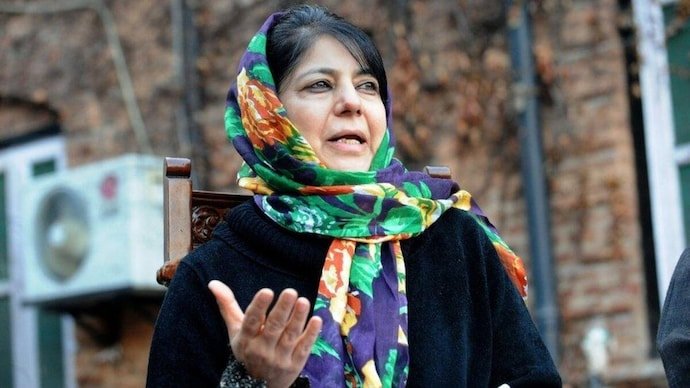
Peoples Democratic Party (PDP) president Mehbooba Mufti is set to visit Tehran to attend the state funeral of Iran‘s Supreme Leader, Grand Ayatollah Seyyed Ali Khamenei, after receiving an official invitation from Iranian authorities. Mufti described the invitation as a rare honour and said she would travel to pay her final respects during the official mourning ceremonies scheduled from July 3 to July 6.
Although the visit is ceremonial in nature, it carries broader diplomatic and geopolitical significance. It comes at a time when Iran remains at the center of major developments in West Asia, while India continues to balance its longstanding civilizational ties with Tehran alongside its expanding partnerships with countries across the Middle East and the West.
Who Is Attending the Funeral and Why?
According to the invitation issued by Iranian authorities, Mehbooba Mufti has been invited as a distinguished guest representing India for the official funeral ceremonies.
The programme includes:
- Official farewell ceremony.
- National commemoration events.
- State mourning observances.
- Funeral procession in Tehran.
Mufti said attending the ceremony would be a once-in-a-lifetime opportunity and an honour given the historical relationship between India and Iran.
Official Invitation From Iran
The invitation was extended by Mohseen Qummi, Director of the International Relations Department in the Office of Iran’s Supreme Leader.
The official communication emphasized the longstanding historical and cultural relationship between India and Iran, expressing hope that Mufti’s participation would symbolize the friendship between the two ancient civilizations.
Such invitations are often extended to political figures, diplomats, religious representatives, and international guests during major state ceremonies.
Who Was Grand Ayatollah Ali Khamenei?
Grand Ayatollah Seyyed Ali Khamenei has been one of the most influential political and religious leaders in modern Iran.
As Supreme Leader, he exercised authority over:
- National security.
- Defense policy.
- Foreign affairs.
- Judiciary oversight.
- Strategic state institutions.
The position of Supreme Leader represents the highest constitutional authority within the Islamic Republic of Iran, combining religious leadership with significant political influence.
Understanding the Role of Iran’s Supreme Leader
Unlike many parliamentary or presidential systems, Iran’s political structure distributes authority across several institutions.
While the President manages the day-to-day administration of government, the Supreme Leader oversees key strategic matters including:
- Military leadership.
- Foreign Policy direction.
- Appointments to major institutions.
- National security decisions.
- Overall constitutional guidance.
This unique political structure makes the office central to Iran’s domestic Governance as well as its international relations.
Why the Funeral Matters Internationally
State funerals for prominent national leaders often become major diplomatic events.
They provide opportunities for:
- International representation.
- Diplomatic engagement.
- Symbolic expressions of respect.
- Bilateral discussions on the sidelines.
- Regional political messaging.
Countries frequently send government officials, diplomats, or political representatives to such ceremonies as part of established diplomatic practice.
India and Iran: A Relationship Spanning Centuries
India and Iran share one of Asia’s oldest civilizational Relationships.
The two countries have historically maintained connections through:
- Trade routes.
- Cultural exchanges.
- Persian language influence.
- Religious interactions.
- Academic cooperation.
Persian served as an important administrative and literary language across large parts of the Indian subcontinent for several centuries, leaving a lasting imprint on Indian art, architecture, literature, and culture.
Strategic Importance of India-Iran Relations
Modern India-Iran relations extend beyond historical ties.
Areas of cooperation have included:
- Energy security.
- Maritime connectivity.
- Regional trade.
- Port development.
- Cultural Diplomacy.
Iran occupies a strategically important position linking South Asia, Central Asia, and West Asia, making bilateral engagement significant for regional connectivity initiatives.
The Broader West Asia Context
The funeral comes during a period of heightened geopolitical activity across West Asia.
The region continues to witness developments involving:
- Regional security.
- Maritime trade routes.
- Energy markets.
- Diplomatic negotiations.
- Strategic realignments.
Leadership transitions in influential regional countries are therefore closely observed by governments, analysts, and international organizations worldwide.
Diplomatic Significance of Political Visits
Attendance at state funerals is often viewed through both ceremonial and diplomatic lenses.
Such visits can:
- Express condolences.
- Reflect historical relationships.
- Maintain diplomatic engagement.
- Provide opportunities for informal discussions.
- Signal continued channels of communication.
However, attendance does not necessarily indicate changes in official foreign policy positions.
India’s Balanced Approach in West Asia
India has traditionally pursued a balanced diplomatic approach across West Asia.
New Delhi maintains relations with multiple regional powers while emphasizing:
- Strategic autonomy.
- Energy security.
- Economic cooperation.
- Counter-terrorism cooperation.
- Regional stability.
This multidirectional engagement has become an increasingly important feature of India’s foreign policy over the past two decades.
Timeline of the Funeral Ceremonies
| Date | Scheduled Event |
|---|---|
| July 3 | Official farewell ceremony at Imam Khomeini Grand Mosalla Complex |
| July 4 | National commemoration events |
| July 3–6 | State mourning ceremonies |
| July 6 | Official funeral procession in Tehran |
What This Means for Regional Diplomacy
Political transitions in influential regional states often generate diplomatic activity extending well beyond national borders.
International participation in official ceremonies helps preserve diplomatic communication even during periods of geopolitical uncertainty.
Observers will likely watch not only WHO attends the funeral but also whether any bilateral meetings or informal diplomatic interactions occur alongside the official events.
A Perspective Often Missing in Headlines
Much of the attention surrounding this visit focuses on the invitation itself. Equally important, however, is the role that symbolic diplomacy continues to play in international relations.
State funerals frequently become occasions where countries reaffirm historical relationships without necessarily altering their strategic policies. Cultural respect, diplomatic protocol, and political communication often coexist during such events, making them significant beyond their ceremonial character.
For India, maintaining engagement with diverse partners across West Asia has become increasingly important as the region continues to influence Global energy markets, maritime trade, and broader geopolitical stability.
While Mehbooba Mufti’s visit is primarily ceremonial, it reflects the enduring importance of diplomatic symbolism in international affairs. In an increasingly complex geopolitical environment, official participation in state ceremonies often serves as a reminder that historical relationships and channels of dialogue remain valuable even amid evolving regional dynamics.
Future Outlook
The funeral ceremonies are expected to attract political leaders, diplomats, and religious representatives from numerous countries, making Tehran the focus of international diplomatic attention during the mourning period. Observers will closely monitor the broader regional response and any subsequent developments in Iran’s leadership and foreign policy direction.
For India, the visit highlights the continuing importance of maintaining constructive engagement with countries across West Asia while balancing multiple strategic partnerships. As regional geopolitical dynamics continue to evolve, diplomatic outreach, historical ties, and dialogue are likely to remain central pillars of India’s approach toward Iran and the wider Middle East.
For breaking news and live news updates, like us on Facebook or follow us on Twitter and Instagram. Read more on Latest India on thefoxdaily.com.

COMMENTS 0