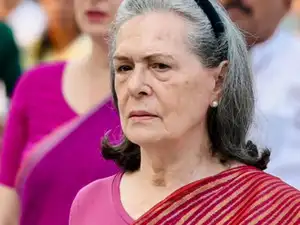
Congress Parliamentary Party chairperson Sonia Gandhi has described the emergency imposed by former Prime Minister Indira Gandhi in 1975 as a mistake, saying she believes her mother-in-law eventually came to recognise that the decision was wrong.
In an interview with The Guardian ahead of the release of her memoir, Belonging: A Journey of Love, Sonia Gandhi offered an account of the divisions within the Gandhi family over the decision. She said her husband, Rajiv Gandhi, had advised his mother to wait until the next election, while his younger brother, Sanjay Gandhi, supported imposing the Emergency.
Sonia also wrote that keeping Sanjay in check could have prevented much of the damage that followed. Her account suggests that the decision was not shaped by one individual alone, however, and that several senior colleagues also placed pressure on Indira Gandhi.
In a separate interview with The Hindu, she said that Sanjay’s role had become particularly prominent in public discussions of the Emergency, but that it would be inaccurate to attribute all the excesses of the period to him.
The remarks revisit one of the most controversial episodes in independent India’s political history. The Emergency lasted from June 25, 1975, until March 21, 1977, and involved restrictions on civil liberties, the detention of opposition leaders, press censorship and the suspension of important democratic protections.
Sonia Gandhi Says Indira Was Never Comfortable With the Emergency
Speaking to The Guardian, Sonia Gandhi said she believed Indira Gandhi was fundamentally committed to democracy, despite having taken the decision to impose the Emergency.
“I always feel that Mrs (Indira) Gandhi was a democrat at heart,” she said.
She added that Indira had not been comfortable with the course of events after the Emergency was imposed and believed the decision had weighed heavily on her.
Sonia described the decision as a mistake and said she believed Indira herself eventually came to feel the same way. Her interpretation is based on her personal relationship with the former prime minister and her understanding of how Indira viewed the period in retrospect.
According to Sonia’s account, the family was divided before the Emergency was declared. Rajiv Gandhi reportedly advised his mother not to take such a step and instead wait for the next election. Sanjay Gandhi, by contrast, argued that the opposition posed a threat to Indira’s political position.
Sonia recalled that Sanjay argued during a family dinner that the opposition would destroy his mother and that it needed to be stopped. Rajiv attempted to challenge his mother’s position, but Indira did not accept his advice.
In her memoir, Sonia wrote: “Keeping Sanjay in check could have prevented much of the damage that followed.”
The account offers a personal perspective on the political atmosphere surrounding the Emergency. It does not, by itself, establish the precise role played by each individual in the formal decision-making process, but it provides insight into the disagreements Sonia says existed within the family.
Sonia Says Sanjay Was Not Solely Responsible for Emergency Excesses
In her interview with The Hindu, Sonia Gandhi offered a broader explanation of the pressures surrounding Indira Gandhi’s decision. She said Sanjay’s influence was significant, but other senior Congress colleagues also played a role in shaping the political environment.
“It was not only Sanjay, though in the public mind he is often seen as synonymous with the Emergency. There was a lot of pressure from some of her senior colleagues, and I think there were very few people around her like Rajiv who had a different point of view,” she told the newspaper.
She added that Indira eventually began to understand the situation and took steps to address it. Sonia said she only came to understand the full gravity of what had happened during the Emergency after the period had ended.
Her comments distinguish between the decision to impose the Emergency and the actions taken during its implementation. Sanjay Gandhi became closely associated with several controversial initiatives, including forced sterilisation drives and slum-clearance campaigns. However, the political responsibility for the Emergency rested with the government led by Indira Gandhi.
Sonia’s account also draws attention to the influence of informal power networks. Sanjay did not hold a formal Cabinet position during the Emergency, but he exercised considerable influence over political and administrative decisions. His role became a major subject of public criticism, particularly because of the coercive nature of some government-linked campaigns.
Why Indira Gandhi Declared the Emergency in 1975
The Emergency was declared against the backdrop of political unrest, economic difficulties and growing opposition to Indira Gandhi’s government. The immediate political crisis followed a judgment by the Allahabad High Court on June 12, 1975, which set aside her 1971 Lok Sabha election victory from Rae Bareli over electoral malpractice findings.
The court’s decision created uncertainty over her position as prime minister. Although the Supreme Court subsequently granted a conditional stay, the political confrontation continued. Opposition parties and leaders associated with the movement led by Jayaprakash Narayan intensified demands for Indira Gandhi’s resignation.
Protests, strikes and demonstrations had already created pressure on the government. Jayaprakash Narayan called for a broad campaign against the government and appealed to public officials and security personnel to follow their conscience when confronted with unlawful orders. Indira Gandhi’s supporters presented the situation as a threat to public order and the functioning of the state.
In this atmosphere, Indira Gandhi advised President Fakhruddin Ali Ahmed to proclaim an Emergency under Article 352 of the Constitution. The proclamation was issued shortly before midnight on June 25, 1975, on the ground of internal disturbance, a constitutional provision that was subsequently changed.
The government said extraordinary measures were necessary to restore order and maintain stability. Critics argued that the Emergency was used to suppress political opposition and protect the prime minister’s position following the court judgment.
The distinction between the circumstances cited by the government and the consequences of the decision remains central to historical assessments of the period. Political unrest was real, but the measures adopted during the Emergency fundamentally altered the relationship between citizens, the government and democratic institutions.
What Happened During the 1975-1977 Emergency?
The Emergency brought sweeping restrictions on political activity and civil liberties. Opposition leaders and activists were detained, newspapers faced censorship and public criticism of the government became increasingly difficult. The normal functioning of democratic institutions was severely constrained.
One of the most significant consequences was the suspension of protections that allowed citizens to seek judicial remedies against unlawful detention. The government also used its emergency powers to restrict civil liberties and strengthen executive authority.
The Supreme Court’s 1976 judgment in the ADM Jabalpur case became one of the most controversial legal developments of the period. By a majority, the court held that during the Emergency, a person could not approach a court to enforce certain fundamental rights, including the right to personal liberty under Article 21, while the relevant presidential order remained in force.
The decision was widely criticised for its implications for individual freedom and judicial protection against arbitrary state action. The Supreme Court later expressly overruled the ADM Jabalpur judgment in its 2017 decision recognising privacy as a fundamental right.
Press censorship was another defining feature. Newspapers faced restrictions on publishing material critical of the government, while political opponents had limited opportunities to organise or communicate their views. The period demonstrated how emergency powers could affect not only political parties but also the media, courts and ordinary citizens.
Some of the most controversial measures were associated with Sanjay Gandhi’s influence. These included aggressive population-control campaigns involving forced sterilisation and demolition drives in urban areas. The implementation of these programmes generated widespread allegations of coercion and abuse of official authority.
Although the government defended its policies as part of efforts to improve administration and address social problems, the methods used during the period became a lasting source of public criticism.
Indira Gandhi Called Elections in 1977 and Emergency Ended
Indira Gandhi announced fresh Lok Sabha elections on January 18, 1977, and political prisoners were released as the country prepared for the vote. The decision marked a major shift after nearly 19 months of Emergency rule.
The election, held in March 1977, resulted in a major defeat for the Congress. Indira Gandhi lost her Rae Bareli seat, while Sanjay Gandhi was also defeated in Amethi. The Janata Party and its allies formed the government, ending Congress’s uninterrupted rule at the Centre since independence.
The Emergency officially ended on March 21, 1977. The election result was widely interpreted as a rejection of the restrictions imposed during the period and demonstrated that voters could still deliver a decisive political verdict once electoral competition resumed.
Sonia Gandhi referred to Indira’s decision to call elections as evidence that her mother-in-law eventually recognised the situation and sought to correct it. She also said Indira later publicly expressed regret and apologised for excesses committed during the Emergency.
However, the decision to hold elections did not erase the consequences of the preceding period. Questions about political accountability, institutional independence, civil liberties and the limits of executive power continued to shape debates about the Emergency.
Sonia Gandhi’s Remarks on the Constitutional Aspect of Emergency
One of the more debated parts of Sonia Gandhi’s interview with The Hindu concerned her description of how democratic rights were curtailed during the Emergency.
“It was only after the Emergency that I came to know the true gravity of what had been happening. Yes, democratic rights had been curtailed and there was a suspension of habeas corpus, but it was done constitutionally,” she said.
She also attempted to explain the situation from Indira Gandhi’s perspective, referring to violent protests, attacks on government offices and public transport, organised unrest and calls for sections of the bureaucracy and armed forces to disobey orders.
Her reference to constitutional procedure needs to be understood carefully. The Emergency was proclaimed using Article 352, which at the time allowed the President to declare an Emergency on the ground of internal disturbance. The proclamation followed the constitutional mechanism then in force.
However, the existence of a formal constitutional procedure does not settle the separate questions of whether the restrictions imposed were justified, whether individual rights were adequately protected or whether government powers were used appropriately. The suspension of civil liberties, detention of political opponents and censorship remain central to criticism of the period.
The constitutional changes introduced after the Emergency reflected concerns about the concentration of executive power. The 44th Constitutional Amendment, enacted in 1978 under the Janata government, replaced the broad ground of internal disturbance with the more specific term armed rebellion for declaring a national Emergency. It also introduced additional safeguards, including requirements for written Cabinet advice and parliamentary approval.
These changes were intended to make it more difficult for a government to impose an Emergency without stronger institutional checks.
How Sonia Gandhi’s Memoir Revisits the Emergency
The remarks form part of Sonia Gandhi’s forthcoming memoir, Belonging: A Journey of Love, which is scheduled for release on November 10, 2026. The book examines her personal life, her relationship with Rajiv Gandhi and Indira Gandhi, and her eventual involvement in Indian Politics.
The Emergency is one of the important historical episodes addressed in the memoir because Sonia was living with the Gandhi family during the period. Her recollections provide a personal account of the disagreements she says took place within the household as Indira faced mounting political pressure.
Her interviews with The Guardian and The Hindu also reveal two related but distinct aspects of her assessment. In the Guardian interview, she focused on the family’s internal divisions and the influence of Sanjay Gandhi. In her conversation with The Hindu, she emphasised the role of senior colleagues and the difficult political circumstances Indira was facing.
She also acknowledged that the full consequences of the Emergency became clear to her only after it ended. This distinction matters because her account is a retrospective personal recollection, rather than a comprehensive record of the government’s decision-making process or the experiences of people affected by its policies.
Emergency Remains a Political Issue in India
More than five decades after its imposition, the Emergency continues to feature prominently in debates about India’s democracy and constitutional institutions. Political parties frequently refer to the period when discussing civil liberties, government accountability and the role of opposition parties.
The Bharatiya Janata Party has repeatedly criticised the Congress over the Emergency, describing it as an attack on democracy. The central government observes June 25 as Samvidhaan Hatya Diwas, or Constitution Murder Day, to commemorate the proclamation and highlight the restrictions imposed during the period.
The Congress, meanwhile, has faced questions about its historical responsibility for the decision. Sonia Gandhi’s latest comments acknowledge that imposing the Emergency was a mistake, while also offering an explanation of the pressures and internal disagreements surrounding Indira Gandhi at the time.
Her remarks do not remove the political responsibility of the government that imposed the Emergency. Instead, they add a personal dimension to an episode that has long been examined through constitutional, political and historical perspectives.
The central lesson of the 1975-1977 period remains the importance of protecting democratic rights and maintaining institutional checks on executive authority, particularly during periods of political instability. Sonia Gandhi’s recollections bring renewed attention to the choices made within the Gandhi family, but the broader historical record also includes the experiences of political detainees, journalists, activists and citizens whose rights were restricted.
With the release of Belonging: A Journey of Love approaching, her account is likely to add further discussion about how Indira Gandhi viewed the Emergency, the influence of Sanjay Gandhi and the role played by those who advised the former prime minister. The debate, however, extends beyond family recollections to questions about political power, constitutional safeguards and the resilience of democratic institutions.
For breaking news and live news updates, like us on Facebook or follow us on Twitter and Instagram. Read more on Latest India on thefoxdaily.com.






COMMENTS 0