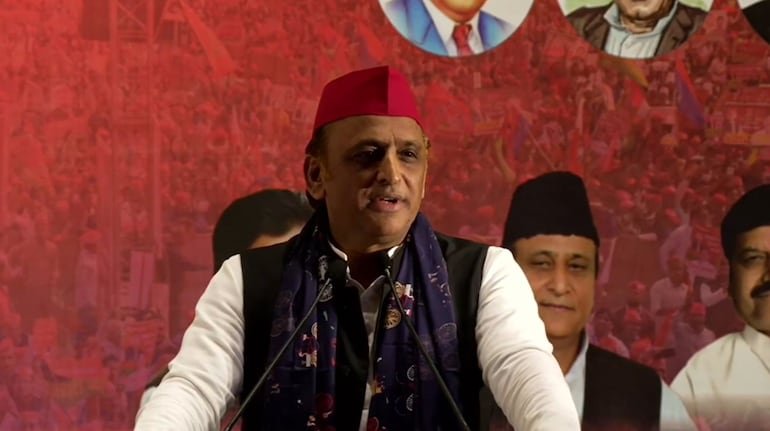
The Samajwadi Party (SP) has directed all its Lok Sabha MPs to oppose the Centre’s proposed delimitation legislation during Parliament’s special session beginning November 30, 2026. In a three-line whip issued on November 28, party Chief Whip Dharmendra Yadav instructed members to remain present throughout the proceedings from November 30 to December 3 and vote against the Bills whenever they are put to a vote.
The directive signals the SP’s opposition to the government’s proposed constitutional and legislative changes, which include increasing the maximum strength of the Lok Sabha to 850 and facilitating the implementation of the 33 per cent reservation for women in Parliament and state legislatures. The party’s position comes amid a wider political contest over how parliamentary constituencies should be redrawn, how states’ representation should be protected and whether Women’s Reservation should be linked to delimitation.
Why the Samajwadi Party Issued a Three-Line Whip
A three-line whip is among the strongest attendance and voting instructions a political party can issue to its legislators. It requires members to remain present during the specified parliamentary proceedings and follow the party’s direction on the matter being voted upon.
For the Samajwadi Party, the directive serves two purposes. First, it seeks to ensure that none of its Lok Sabha MPs are absent when the proposed legislation comes up for consideration or voting. Second, it establishes a coordinated voting position against the government’s legislative package.
Defying an authorised party whip can carry serious consequences under India’s anti-defection framework. Depending on the circumstances and the applicable parliamentary and constitutional provisions, a member who votes or abstains contrary to the party’s direction may face disqualification proceedings. The directive therefore places considerable importance on party discipline during the special session.
The SP’s decision also gives the Opposition a clearer indication of how its parliamentary numbers may be distributed when the Bills are taken up. However, issuing a whip does not automatically determine the outcome of a vote. The final result will depend on the strength of support and opposition when the legislation is considered.
What Are the Three Bills the Centre Plans to Introduce?
The government’s proposed package consists of three legislative measures: the Constitution (132nd Amendment) Bill, 2026, the Delimitation (Second) Bill, 2026, and the Union Territories Laws (Amendment) Second Bill, 2026.
These proposals are connected. The constitutional amendment is intended to establish the framework for implementing women’s reservation through a delimitation exercise, while the Delimitation Bill sets out the proposed changes to parliamentary and Assembly representation. The Union Territories legislation would make corresponding changes to the legal framework governing representation in Union Territories.
The revised proposals follow an earlier legislative attempt in April 2026. At that time, the Constitution (131st Amendment) Bill failed to secure the required special majority in the Lok Sabha. The related delimitation and Union Territories Bills consequently did not proceed further.
The government has now brought forward revised proposals that include a uniform 50 per cent increase in seats allocated to every state and Union Territory. The change addresses concerns raised during the earlier debate about how delimitation could affect the relative representation of different states.
Proposed Increase in Lok Sabha Strength to 850
One of the most significant features of the revised legislative package is the proposal to increase the maximum strength of the Lok Sabha to 850 members. Under the proposed arrangement, the House could have up to 815 representatives from states and 35 from Union Territories.
The package also proposes increasing the number of seats allocated to every state and Union Territory by 50 per cent. A corresponding increase is proposed in the total number of seats in state and Union Territory Legislative Assemblies.
The government argues that expanding the legislatures would create the framework required to implement women’s reservation while increasing the overall number of elected representatives. The proposed changes would affect the size of legislatures and the number of constituencies across the country.
However, the proposal does not mean that the relative share of parliamentary seats among states would automatically change in favour of states with faster population growth. The revised framework seeks to preserve the existing relative distribution between states while increasing the number of seats allocated to each of them.
How the Delimitation Proposal Is Linked to Women’s Reservation
The proposed changes are closely connected to the Nari Shakti Vandan Adhiniyam, formally known as the Constitution (106th Amendment) Act, 2023. The legislation provides for 33 per cent reservation for women in the Lok Sabha, state Legislative Assemblies and the Legislative Assembly of the National Capital Territory of Delhi, subject to the constitutional implementation process.
Under the existing framework, the reservation is linked to a delimitation exercise following the relevant Census. This has created a gap between the passage of the women’s reservation legislation and its actual implementation.
The Centre’s revised proposals seek to accelerate that process by linking the implementation of the quota to a new delimitation exercise and increasing the number of seats across states and Union Territories. The proposed increase would create additional constituencies while making room for the reserved seats.
The government has proposed using the 2011 Census as the population basis for redrawing constituencies and determining seats reserved for Scheduled Castes and Scheduled Tribes. At the same time, the existing relative allocation of Lok Sabha seats among states, based on the 1971 population, is proposed to remain protected until 2051.
This distinction is central to the political debate. Constituency boundaries and the allocation of reserved seats would be determined through the proposed exercise, while the relative distribution of parliamentary seats between states would be protected under the revised framework.
Why the Opposition Is Objecting to the Delimitation Bills
The Opposition’s objections are not limited to the proposed expansion of Parliament. Several parties have supported the principle of women’s reservation while questioning the government’s decision to connect its implementation with the proposed delimitation exercise.
One major concern is the use of the 2011 Census. Opposition parties have argued that constituency delimitation should be based on the latest available Census data rather than figures from an earlier population exercise. They contend that demographic changes since 2011 make updated population information important for determining electoral representation.
Another issue concerns the relationship between population growth and political representation. States have experienced different population trends over several decades. Parties from states that have made substantial progress in population control have raised concerns about how future delimitation could affect their influence in Parliament.
The revised proposal attempts to address part of this concern by providing for a 50 per cent increase in seats for every state and Union Territory while retaining the existing relative distribution between states. Nevertheless, disagreements remain over the Census reference point, the delimitation process and the timing of women’s reservation.
The Opposition’s position is therefore not necessarily opposition to the 33 per cent quota itself. Its central argument is that women’s reservation and constituency delimitation should not be treated as inseparable questions without addressing concerns about population data and the federal balance.
DMK, YSRCP and NCP-SP Indicate Support for Revised Proposals
The Centre’s efforts to secure the required constitutional majority have received support signals from several parties outside the ruling National Democratic Alliance. The DMK, YSR Congress Party (YSRCP) and Nationalist Congress Party-Sharadchandra Pawar (NCP-SP) have indicated support for the revised proposals, according to reports ahead of the special session.
The DMK’s position is particularly important because Tamil Nadu has consistently raised concerns about the relationship between population control and parliamentary representation. The party has supported the proposed 50 per cent increase in seats across states while insisting that Tamil Nadu’s existing 7.18 per cent share of representation should remain protected.
This position reflects an attempt to support an expansion of parliamentary representation without accepting changes that could reduce the state’s relative political influence. The government’s proposal to preserve the existing inter-state allocation ratio until 2051 addresses part of that concern.
The reported support from YSRCP and NCP-SP could also influence the parliamentary arithmetic. However, support for the revised package from individual parties does not necessarily mean that every member’s vote is guaranteed. The final position will become clearer when the Bills are formally considered and voting takes place.
Why the Two-Thirds Majority Is Crucial
Unlike an ordinary Bill, a constitutional amendment requires a special majority under Article 368 of the Constitution. It must receive the support of a majority of the total membership of the House and at least two-thirds of the members present and voting.
This makes the numbers particularly important for the Centre. The proposed constitutional amendment cannot pass simply by securing more votes than the Opposition. It must satisfy both requirements of the special-majority test.
According to the estimates cited ahead of the session, the NDA’s projected support could reach approximately 354 Lok Sabha MPs following the indications from the DMK, YSRCP and NCP-SP. However, that figure would remain below the 360 votes required if all 540 sitting members participated in the voting.
The precise threshold will depend on the House’s total membership and the number of members present and voting. The constitutional requirement is not a fixed two-thirds figure calculated only from the number of MPs who cast votes: the majority of the total membership must also be secured.
This explains why the government is seeking support beyond its existing alliance partners. Even parties that are not part of the NDA could become important to the outcome if the constitutional amendment is to clear the Lok Sabha.
TMC and NCP-SP Also Issue Whips Ahead of Parliament Session
The Samajwadi Party is not the only Opposition party seeking to ensure that its MPs attend the special session. The All India Trinamool Congress (AITC) and NCP-SP have also issued three-line whips to their Lok Sabha members.
The Trinamool Congress has instructed its MPs to remain present for the parliamentary proceedings from November 30 to December 4 and follow the party’s position on the business scheduled to be taken up. The NCP-SP has similarly directed its members to attend the proceedings and support the party’s stand.
The different directives reflect the importance parties are attaching to the upcoming session. While the SP has explicitly instructed its MPs to vote against the three Bills, the TMC and NCP-SP have issued attendance and voting instructions in line with their respective party positions.
The development also highlights the challenge of coordinating Opposition parties on an issue that combines women’s political representation, population data and the federal distribution of parliamentary seats. Although several parties share concerns about the delimitation process, their positions on the revised proposal are not identical.
What to Watch During the November 30 Special Session
The special session beginning November 30 will test the government’s ability to secure support for its revised constitutional amendment package. The Samajwadi Party’s three-line whip has established its position ahead of the proceedings, while other parties are preparing their own parliamentary strategies.
Several developments will be important during the session:
- Introduction of the Bills: The government is scheduled to bring forward the Constitution (132nd Amendment) Bill, the Delimitation (Second) Bill and the Union Territories Laws (Amendment) Second Bill.
- Debate over the Census: Opposition members are expected to raise questions about using the 2011 Census for constituency delimitation and reserved-seat calculations.
- Protection of state representation: The proposed 50 per cent increase in seats and protection of the existing inter-state allocation ratio will be central to discussions.
- Women’s reservation: Parliament will have to consider how the proposed delimitation framework would facilitate the implementation of the 33 per cent quota.
- Constitutional majority: The government’s ability to secure the special majority required under Article 368 will be crucial to the amendment’s passage.
What the Samajwadi Party’s Stand Means for the Delimitation Debate
The SP’s directive makes clear that its Lok Sabha MPs have been instructed to oppose the government’s proposed legislative package. By issuing a three-line whip before the special session, the party has sought to prevent uncertainty over attendance and voting among its parliamentary members.
However, the wider contest will depend on more than the SP’s position. The government needs to satisfy the constitutional special-majority requirement, while Opposition parties must decide how to approach a package that combines women’s reservation with a nationwide restructuring of legislative representation.
The debate is significant because delimitation can influence how citizens are represented in Parliament and state legislatures for decades. Questions about population data, the balance between states, reserved constituencies and the implementation of women’s reservation therefore extend well beyond the immediate political confrontation.
As Parliament begins its special session on November 30, the focus will shift from party directives and pre-session negotiations to the actual legislative debate. The SP has already instructed its MPs to vote against the Bills. Whether the Centre can secure the numbers needed to pass the constitutional amendment will become clearer as the proceedings unfold.
For breaking news and live news updates, like us on Facebook or follow us on Twitter and Instagram. Read more on Latest India on thefoxdaily.com.




COMMENTS 0