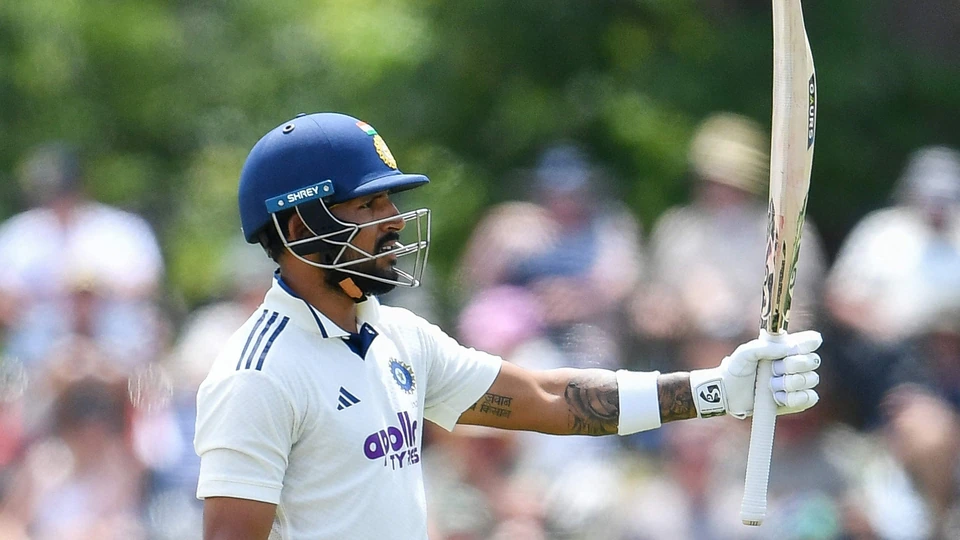
Every time Indian wicketkeeper-batter Dhruv Jurel reaches a major milestone on the cricket field, he has a special way of celebrating it: he looks towards his father, Nem Chand Jurel, and salutes. The gesture may last only a few seconds, but it carries a story shaped by military service, sacrifice and a family’s journey through the uncertainty of war.
More than two decades ago, before heading into the Kargil War in 1999, Nem Chand wrote a letter to his wife explaining how to access the family’s savings and fixed deposits if he did not return. A soldier with the 8th Jat Regiment, he wanted to ensure that his family would know how to manage its finances in his absence. Today, the former Army personnel watches his son represent India in international cricket, with Dhruv’s salute serving as a personal tribute to his father’s service.
The story brings together two very different forms of national representation: a soldier who served on the battlefield during one of India’s most significant military conflicts and a cricketer who now wears the national colours on the international stage.
The Letter Nem Chand Jurel Wrote Before the Kargil War
In 1999, as tensions escalated into the Kargil conflict, Nem Chand Jurel prepared for the possibility that he might not return home. Like many soldiers deployed in dangerous conditions, he had to consider not only the risks of combat but also the future of the family he would leave behind if the worst happened.
Before heading into the conflict, he wrote a letter to his wife. Rather than simply expressing emotions or saying goodbye, the letter contained practical financial instructions. He explained where the family’s savings and fixed deposits were kept and how his wife could access the money if he lost his life during the war.
Speaking about the letter to news agency Press Trust of India (PTI), Nem Chand recalled the advice he had given his wife.
“When the war started, I remember writing a letter to my wife. I told her about all my savings and fixed deposits and how she could arrange for money in case something happened to me. I also told her to paise ka sadupyog karna (use the money wisely),” Nem Chand was quoted as saying by PTI.
The letter reflected the responsibilities that accompany military service. Even while preparing to face the dangers of the battlefield, Nem Chand was thinking about his family’s financial security and the practical challenges his wife might face without him.
His words also reveal a deeply personal side of a soldier’s life. Behind the uniform and military responsibilities is a family that must deal with uncertainty whenever a loved one is sent into a conflict zone. For Nem Chand, the letter was a way to prepare his wife for a situation no family wants to imagine.
From the 8th Jat Regiment to the Kargil Battlefield
Nem Chand served in the 8th Jat Regiment of the Indian Army and participated in the Kargil War. The conflict took place in 1999, when Indian forces fought to push back Pakistani soldiers and intruders who had occupied positions on the Indian side of the Line of Control in the Kargil sector of Jammu and Kashmir.
The fighting involved difficult high-altitude operations in mountainous terrain, where soldiers had to operate in harsh weather and challenging conditions. The Indian military’s campaign culminated in the recapture of key positions, and July 26 is observed every year as Kargil Vijay Diwas to commemorate India’s victory and honour those who lost their lives.
For Nem Chand, the experience remains an important chapter of his life. Recalling the regiment’s return from the mountains after the conflict, he described the moment when the soldiers reached the plains.
“Akdum jum ke Kargil yuddh lade thee (We fought the Kargil War with everything we had). Mujhe yaad hai jab war khatm hua, 8th Jat was the first regiment jo neeche aaya thaa from hills. When we reached the plain land after winning, it felt surreal,” he told PTI.
He also remembered the sequence of events surrounding the end of the military operations.
“July 26 was declared Vijay Diwas and on July 27, we came down from the hills.”
Nem Chand’s recollections provide a personal perspective on the aftermath of the conflict. For soldiers who had spent weeks in difficult mountain conditions, returning to the plains after the fighting represented a significant transition from the uncertainty of combat to the relief of coming back from the frontline.
He continued his Army career after the war and eventually took voluntary retirement in 2008.
Dhruv Jurel’s Salute: A Tribute to His Father’s Military Service
Years after Nem Chand’s service in Kargil, his son Dhruv Jurel has built a career representing India in cricket. The young wicketkeeper-batter has developed a distinctive habit of acknowledging his father whenever he reaches an important milestone during a match.
Rather than limiting his celebration to the usual expressions of excitement, Dhruv looks towards Nem Chand and salutes. The gesture connects his achievements on the cricket field with the sacrifices and discipline associated with his father’s military career.
For spectators, the salute is an emotional moment that stands out during a sporting contest. For the Jurel family, it carries a more personal meaning. It is a son’s way of recognising the man who served the country in uniform and supported his ambitions away from the battlefield.
The gesture also reflects how military service can shape a family’s identity across generations. Dhruv was not yet born when the Kargil War took place, but the experience remained part of his family’s history through his father’s memories and service.
Nem Chand’s journey from the mountains of Kargil to the cricket stadiums where his son plays has given the salute an added significance. One served India as a soldier; the other represents the country through sport. Their roles are different, but the national pride connecting them is unmistakable.
Nem Chand Jurel Says There Was No Compromise on Dhruv’s Cricket
Nem Chand’s support for his son did not begin when Dhruv made it to the international cricket stage. He recalled that Dhruv was academically bright during his early school years, but his priorities gradually changed as cricket became a central part of his life.
As the young cricketer devoted more time to the sport, his academic performance suffered. Nem Chand said his son managed to pass his Class 10 board examinations, although studies had taken a back seat to cricket.
“He was very bright academically in the initial years, but once cricket became his priority, studies took a back seat. Somehow, he scraped through his Class 10 board examinations,” he said.
Despite the shift in focus, Nem Chand did not discourage his son’s sporting ambitions. Instead, he made sure Dhruv had the equipment required to train and improve his game. From bats to cricket shoes, the former soldier said he never wanted financial or equipment-related limitations to become an obstacle to his son’s progress.
“I have never ever let Dhruv compromise on anything when he took to cricket. Whether it was a bat, cricket shoes or other equipment, there was no compromise,” he said.
His remarks offer an insight into the family support behind Dhruv’s cricketing journey. Developing as a professional cricketer requires years of practice, access to suitable equipment and the ability to compete at increasingly demanding levels. Nem Chand’s commitment helped ensure that his son could pursue the sport seriously.
The former Army personnel’s approach also reflects a form of support that goes beyond encouraging words. He understood that Dhruv’s ambitions would require practical investment and made sure the young cricketer had what he needed to continue developing his skills.
Nem Chand’s First Overseas Trip to Watch Dhruv Play
As Dhruv’s career has progressed, Nem Chand has also experienced new moments as the father of an international cricketer. One of them was travelling abroad for the first time with his wife to watch their son play.
Speaking about the trip, he said Dhruv had invited his parents to come and watch him. He also suggested that the family might decide on a holiday after the cricket series ended.
“Pehli baar videsh aaye hain. Dhruv ne kaha, papa aa jaao. Ab series ke baad woh decide karega ki kahin ghoomne jaana hai. Woh kam bolta hai, hum kam poochte hain,” he said.
His comment about Dhruv being less talkative offers a glimpse into their relationship. Nem Chand described a family dynamic in which his son does not say much and his parents do not ask too many questions, even as they follow his career and support his decisions.
For the former soldier, travelling overseas to watch his son represent India was a different kind of experience from the military journeys he had undertaken earlier in life. Instead of following a regiment into difficult terrain, he was now travelling with his wife to support his son’s sporting ambitions.
Why Nem Chand Missed Dhruv’s International Debut
Despite his pride in Dhruv’s achievements, Nem Chand did not attend his son’s international debut. Instead, he chose to visit Banke Bihari Temple in Vrindavan, reflecting the importance of faith in his personal life.
He recalled that Dhruv had invited him to attend the occasion, but he decided to visit the temple instead.
“Jab uska debut ho raha tha, main tab Banke Bihari ke darshan karne gaya tha (in Vrindavan). Dhruv ne bulaya tha lekin maine mana kar diya. Hum Thakur ji ke bhakt hain,” he said.
His decision reflects a personal choice rooted in religious devotion. Although he did not attend the debut in person, his support for his son’s cricketing career remained clear through his continued involvement and pride in Dhruv’s progress.
Nem Chand is not particularly expressive about his emotions, according to his account, but his comments reveal how closely he follows his son’s journey. His faith and his family remain important parts of his life after retirement from the Army.
From a Soldier’s Sacrifice to a Cricketer’s National Pride
The story of Nem Chand and Dhruv Jurel is about more than a celebration on a cricket field. It connects two generations through different forms of service and achievement. Nem Chand faced the uncertainty of war, wrote a letter to protect his family and served with the 8th Jat Regiment before retiring from the Army in 2008. His son has pursued a career in cricket and earned the opportunity to represent India.
The salute Dhruv offers after reaching milestones brings these experiences together. It acknowledges a father’s military service while recognising the support that helped him pursue his own ambitions.
For Nem Chand, the emotions of watching his son play for India are different from the experiences he remembers from Kargil. The uncertainty of the battlefield has been replaced by the tension and excitement of international cricket, while the pride of seeing a family member serve the country continues in a new form.
The letter written in 1999 remains a reminder of what soldiers and their families face during wartime. The salute on the cricket field, meanwhile, shows how those experiences can remain part of a family’s story long after the conflict has ended.
Dhruv’s gesture may appear simple, but its meaning is rooted in years of sacrifice, encouragement and shared pride. Every time he turns towards his father and salutes, he acknowledges the soldier who once prepared his family for the possibility of losing him and who later ensured that his son had every opportunity to follow his dream.
For breaking news and live news updates, like us on Facebook or follow us on Twitter and Instagram. Read more on Latest India on thefoxdaily.com.





COMMENTS 0