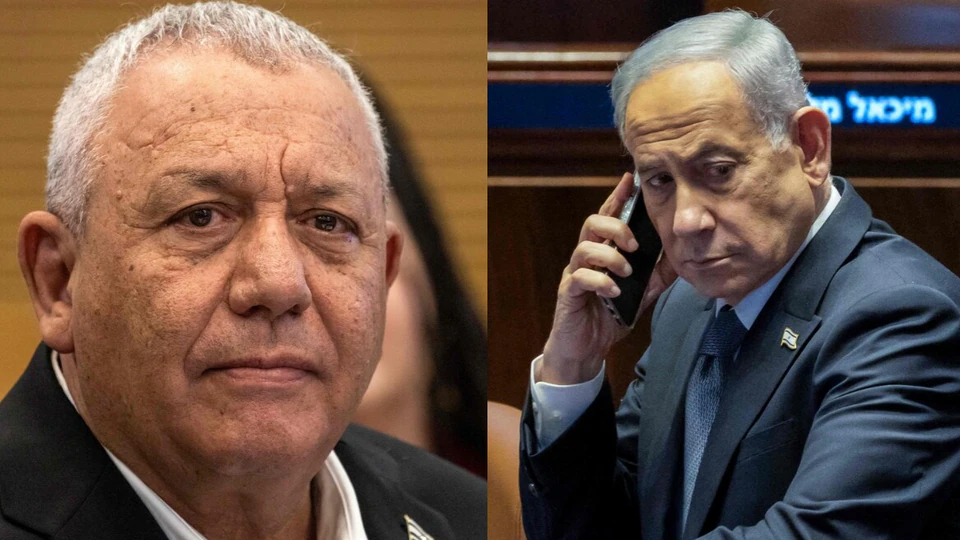
Israeli political rival Gadi Eisenkot has given Benjamin Netanyahu 24 hours to demonstrate that the Likud party is serious about forming a genuine national unity government, setting the stage for crucial coalition negotiations on Sunday, November 29, 2026. Netanyahu, Israel’s caretaker prime minister, has offered to step aside initially and allow Eisenkot to serve as prime minister under a rotating leadership arrangement in an attempt to break the political deadlock following inconclusive elections in late October.
The two leaders are scheduled to meet at 10 am local time (1:30 pm IST) at the Dan Accadia Hotel in Herzliya, a coastal city in central Israel. The meeting could determine whether Likud is prepared to join an Eisenkot-led government or whether negotiations will collapse, leaving the opposition leader with limited options ahead of the December 6 deadline for forming a government.
The proposal represents a significant political shift for Netanyahu, Israel’s longest-serving prime minister, who has indicated his willingness to serve as alternate prime minister while Eisenkot takes the top position at the beginning of the government’s term. However, Eisenkot has made clear that an agreement on the leadership arrangement alone will not be enough. He wants concrete commitments on policy, governance and the direction of the proposed government.
Why Netanyahu has offered Eisenkot the prime minister’s position
Netanyahu’s offer comes after elections in late October failed to give either of Israel’s main political blocs the parliamentary majority required to form a government. The resulting deadlock has left Eisenkot with the responsibility of trying to assemble a coalition capable of commanding support in the 120-member Knesset.
In a statement posted on social media on Saturday evening, Netanyahu called for the formation of a national unity government, arguing that Israel faced serious security challenges that required political stability and broad-based leadership.
He said he was prepared to put aside his position that the largest party should lead the government and allow Eisenkot to become prime minister first. Netanyahu would initially serve as alternate prime minister under the proposed rotation arrangement.
Netanyahu explained his decision by referring to what he described as an existential threat facing Israel and the risk of forming a government that might not be capable of responding effectively to it.
His proposal is an attempt to turn the coalition negotiations towards a broader agreement rather than allowing the political deadlock to continue. By offering Eisenkot the first term as prime minister, Netanyahu has addressed one of the central questions surrounding the formation of a unity government: who would lead it.
However, the proposal has not automatically secured the support of Eisenkot’s existing political partners, some of whom have already ruled out joining a government led by Netanyahu. Their positions could become a major obstacle even if the two leaders reach an understanding.
Eisenkot gives Likud 24 hours to prove its commitment
Eisenkot responded cautiously to Netanyahu’s offer, saying he was prepared to examine whether Likud genuinely wanted a unity government. He made clear that the next 24 hours would be important in determining whether the proposal represented a serious attempt at negotiations or simply a political manoeuvre.
In his statement, the Yashar party leader said: “If Likud is ready for genuine unity, I am prepared to see how serious it is over the next 24 hours.”
He invited Netanyahu and his negotiating team to meet him at the Dan Accadia Hotel in Herzliya, where Eisenkot was staying with his team. Likud confirmed the meeting in a statement late on Saturday, according to Agence France-Presse.
Eisenkot also revealed that he had already sent Netanyahu a detailed proposal through a confidential communication channel established at the prime minister’s request. The proposal reportedly covered substantive policy questions and included significant compromises in certain areas.
According to Eisenkot, however, Netanyahu had not responded to those proposals despite weeks of efforts to initiate meaningful discussions.
He said his team had been seeking genuine negotiations for approximately three weeks but had encountered what he described as refusal and evasion. His latest statement therefore suggests that he wants the Sunday meeting to move beyond discussions about ministerial positions and the rotation of the prime minister’s office.
What Eisenkot wants from a national unity government
For Eisenkot, the proposed unity government is not simply an arrangement to distribute political power between rival parties. He has argued that any agreement must establish a different political direction and bring together Israelis across political and social divisions.
He said he was committed to forming a government that represented all Israeli citizens, including people who had not voted for him or his political partners.
In explaining his position, Eisenkot said: “The unity Israel needs, which I am committed to and for which I am prepared to pay political prices, is unity among Israel’s citizens based on values; unity around a new and different path that will honour and celebrate the Israeli solidarity I see as a fundamental component of Israel’s national security.”
His remarks indicate that policy commitments and the broader character of the government will be central to the negotiations. The proposal would need to address the differences between parties that have agreed to work with Eisenkot, particularly on security, governance and the role of religious and Arab political groups.
Eisenkot has also indicated that he does not intend to use the full time available to him simply to prolong negotiations. A day before Netanyahu’s offer, he said he would announce the formation of a new government by the official December 6 deadline without seeking the additional 14-day extension available under the government-formation process.
Netanyahu’s opponents reject the unity proposal
Netanyahu’s offer has faced criticism from political opponents who argue that a power-sharing arrangement would not resolve the underlying problems that led to the current political deadlock.
Youssef Jabareen, leader of the Arab-majority Joint List, which is expected to support an Eisenkot-led government without formally joining it, said the public had already expressed its opposition to Netanyahu’s government.
Jabareen called for Netanyahu’s removal and said the political outcome should reflect what he described as the shared will of Jewish and Arab citizens. His statement underlined the importance of Arab political representation in the negotiations, particularly because support from Arab lawmakers could be necessary to secure a parliamentary majority.
Former prime minister Yair Lapid, who co-chairs the centrist Beyachad party, also dismissed Netanyahu’s proposal. He described it as “yet another transparent con by a serial fraudster who has deceived every partner and violated every agreement”.
These reactions demonstrate that Netanyahu’s proposal faces opposition not only from parties negotiating with Eisenkot but also from political figures who believe the incumbent should leave office rather than enter a new power-sharing arrangement.
The criticism also creates a political challenge for Eisenkot. He must decide whether negotiations with Likud can produce a government acceptable to his existing partners and whether the proposed arrangement would undermine the commitments he has made to voters and allied parties.
Eisenkot’s coalition remains short of the 61-seat majority
Even before Netanyahu’s latest offer, Eisenkot’s attempts to form a government faced a difficult parliamentary arithmetic. His Yashar party has reached coalition agreements with the left-leaning Democrats and the right-wing Yisrael Beiteinu party.
Together, the three parties account for 36 lawmakers in the 120-member Knesset. That leaves Eisenkot well short of the 61 seats required to command a parliamentary majority and form a stable government.
The numbers explain why negotiations with Likud have become so important. Without support from additional parties, Eisenkot’s existing coalition agreements are insufficient to establish a government.
He has also faced difficulties involving the possible support of Arab-Israeli parties and ultra-Orthodox political groups. Their participation or external backing could help close the parliamentary gap, but each option involves political compromises.
Arab parties have faced opposition from some political groups that reject relying on their support for government formation. At the same time, ultra-Orthodox parties have their own demands, particularly concerning military service exemptions and the role of religious institutions.
The negotiations therefore involve more than adding seats to an existing coalition. Eisenkot must build an arrangement in which parties with significantly different political priorities are willing to support the same government.
Why the Likud meeting could determine the next political direction
The proposed meeting between Netanyahu and Eisenkot could become a turning point in Israel’s coalition negotiations. If Likud agrees to discuss Eisenkot’s policy proposals and accepts the possibility of a rotating prime ministership, the two sides could begin working towards a broader agreement.
However, a leadership compromise would not automatically resolve disagreements over government policy or guarantee support from Eisenkot’s existing partners. The Democrats and Yisrael Beiteinu have previously opposed a unity government involving Netanyahu without their approval, making their reactions to any agreement particularly important.
There is also the question of whether Netanyahu’s offer includes arrangements acceptable to the ultra-Orthodox parties and other potential coalition partners. Without a sufficiently broad agreement, even a deal between Likud and Yashar could fail to secure the required majority.
For Eisenkot, the 24-hour deadline creates pressure to establish whether Netanyahu is prepared to negotiate on the substance of government policy rather than only offering a change in leadership. For Netanyahu, the proposal provides a possible route back into government as alternate prime minister, even if he does not initially hold the top position.
December 6 deadline adds urgency to negotiations
The December 6 deadline is now a central factor in the negotiations. Eisenkot has said he intends to announce a government by that date and will not seek the additional 14-day extension available to him.
This leaves limited time for the parties to settle their differences, negotiate coalition agreements and secure sufficient parliamentary support. The Sunday meeting could indicate whether the two political rivals are moving towards a compromise or whether the proposed power-sharing arrangement will become another failed attempt to resolve the deadlock.
Israel’s next government will have to address security challenges and domestic political divisions while maintaining the support of a parliamentary majority. The outcome of the negotiations will also determine whether Netanyahu remains part of the governing leadership or whether Eisenkot succeeds in forming a government without him.
For now, Netanyahu’s offer has opened a new possibility, but Eisenkot’s demand for genuine negotiations shows that the leadership arrangement alone is not enough. The decisive question is whether Likud can agree to the policy and governance commitments needed to turn the proposal into a workable coalition before the December 6 deadline.
For breaking news and live news updates, like us on Facebook or follow us on Twitter and Instagram. Read more on Latest India on thefoxdaily.com.






COMMENTS 0