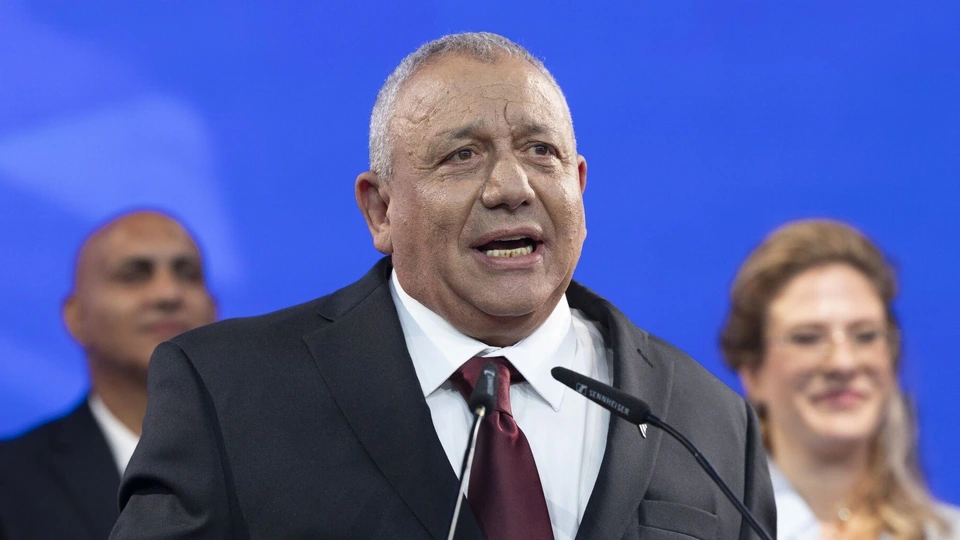
Israel’s efforts to form a new government have produced an unusual political alignment, with ultra-Orthodox Jewish parties and Arab political groups exploring ways to support a coalition led by former military chief Gadi Eisenkot. The discussions could reshape parliamentary alliances as caretaker Prime Minister Benjamin Netanyahu faces growing pressure from parties that have traditionally supported his leadership.
United Torah Judaism (UTJ), a long-time Netanyahu ally, has signalled its willingness to begin talks with Eisenkot’s bloc. At the same time, Mansour Abbas, leader of the Arab-Israeli party Ra’am, has indicated that his party could join an Eisenkot-led government or support it in a parliamentary vote. Another Arab political grouping, the Joint List, has also expressed openness to providing outside support.
The negotiations reflect the complex arithmetic of Israel’s 120-member Knesset, where neither of the main political camps has secured a clear majority. Eisenkot’s bloc has 48 seats, compared with 53 held by Netanyahu’s coalition, according to the figures provided in the report. The possibility of bringing together parties with sharply different religious and political identities has added a new dimension to the government-formation process.
United Torah Judaism Opens the Door to Talks With Eisenkot
United Torah Judaism’s decision to consider negotiations with Eisenkot marks a significant development because the ultra-Orthodox party has long been associated with Netanyahu’s political camp.
According to The Washington Post, UTJ said on Thursday that it was prepared to begin discussions about joining forces with Eisenkot. The move follows its departure from Netanyahu’s government after disagreements over legislation intended to strengthen exemptions from compulsory military service for Haredi Jewish men.
The dispute over military conscription has become a major political issue in Israel. Most Jewish men are required to serve in the military, but ultra-Orthodox communities have historically received exemptions that allow many religious students to continue their studies in yeshivas.
Ultra-Orthodox parties argue that full military conscription would interfere with religious study and their way of life. Other political groups, particularly those representing communities whose members serve in the armed forces, have increasingly challenged the continuation of these exemptions.
UTJ’s willingness to speak with Eisenkot therefore does not mean its disagreements with other parties have disappeared. Instead, it suggests that negotiations over government participation and policy commitments could take priority as political leaders search for a viable parliamentary arrangement.
Ra’am and the Joint List Could Provide Support
The possibility of an Eisenkot-led government receiving support from Arab parties has added another unusual element to the negotiations.
Mansour Abbas, who leads Ra’am, has said his party could consider joining Eisenkot’s government or at least voting in favour of allowing it to take office. The distinction is important: supporting a government in a confidence or formation vote does not necessarily require a party to hold ministerial positions or become a full coalition partner.
The Joint List, another Arab political grouping, has also indicated that it could provide support from outside the government. Such an arrangement could help Eisenkot secure parliamentary backing without requiring every supporting party to participate directly in the cabinet.
Arab parties won 19 seats in the election, according to the report, giving them a significant presence in the Knesset. Their parliamentary strength makes them difficult to ignore in a situation where the two main political camps have fallen short of the 61 seats required for a majority in the 120-member legislature.
Netanyahu and his supporters have previously criticised the idea of relying on Arab parties to form a government, portraying such cooperation as a security risk. Those objections have become part of the political debate over whether Arab representatives should participate in national governing arrangements.
For Abbas and other Arab political leaders, the negotiations also raise questions about what their communities could gain through parliamentary cooperation, including government investment, public services and action on domestic concerns.
Why the Possible Alliance Is Politically Unusual
Ultra-Orthodox Jewish parties and Arab political groups come from very different religious, cultural and political backgrounds. Their cooperation in a government-formation process would therefore be notable, particularly given the long-standing divisions in Israeli politics.
However, the potential alignment does not necessarily mean that the parties share a common ideological programme. Their willingness to negotiate may reflect overlapping interests on specific policy matters and a shared interest in influencing the composition of the next government.
Both ultra-Orthodox and Arab parties have historically placed importance on public funding and government support for their communities. They also hold socially conservative positions on several issues, although their religious traditions, political identities and national perspectives are fundamentally different.
These areas of limited common ground could provide a starting point for negotiations, but they would not automatically resolve disagreements over military service, national security, religion, education or the Israeli-Palestinian conflict.
The proposed arrangement also includes parties from different ends of Israel’s political spectrum. Eisenkot’s bloc reportedly brings together a hard-line nationalist party and a left-wing party that agreed to cooperate after neither of the two main camps could form a majority.
The coalition talks are therefore less about creating a unified ideological alliance and more about assembling enough parliamentary support to establish a functioning government.
Military Service Exemptions Remain a Major Obstacle
The question of compulsory military service is one of the most difficult issues that Eisenkot would face if he brings UTJ into his coalition.
Israel’s military service system requires most Jewish men and women to enlist, subject to exemptions and other legal provisions. Haredi men studying in religious institutions have historically benefited from arrangements that allowed them to defer or avoid service.
Ultra-Orthodox parties have defended these arrangements as essential to preserving religious education and community life. They argue that full conscription could undermine the institutions and traditions that define their communities.
Opponents of the exemptions argue that military obligations should be distributed more equally, particularly as Israel continues to face security challenges and demands on its armed forces. Supporters of Avigdor Liberman’s Yisrael Beiteinu party have been especially critical of the exemptions, according to The Washington Post report.
The issue has become more politically sensitive since the outbreak of the war involving Israel and multiple fronts in 2023. Military demands have intensified public scrutiny of who serves, who receives exemptions and how the burden of national defence is shared.
For Eisenkot, whose political profile is closely connected to his former military leadership, any agreement with UTJ could require difficult negotiations over the future of conscription policy. The party’s willingness to talk does not establish that it has accepted Eisenkot’s position on military service.
Netanyahu’s Previous Relationship With Arab Parties
The current negotiations are also drawing attention to Netanyahu’s own political history with Arab parties. Although he and his allies have criticised the prospect of an Eisenkot government relying on Arab support, Netanyahu previously attempted to build political relationships with Arab voters and leaders.
In 2021, Netanyahu campaigned in Arab towns and sought to bring Mansour Abbas into a potential coalition arrangement. That effort was eventually abandoned after far-right politician Bezalel Smotrich refused to serve in a government that included Abbas.
Ra’am subsequently joined the coalition led by Naftali Bennett, marking a significant moment in Israeli parliamentary politics. The party’s participation demonstrated that an Arab political group could become part of a governing arrangement even when other coalition partners held sharply different positions.
Bennett later apologised for the alliance and had previously opposed forming a government dependent on Arab parties, according to the report. His changing position illustrated the political pressures that can arise when parliamentary arithmetic forces parties to reconsider earlier commitments.
Netanyahu’s earlier outreach to Abbas also complicates the argument that cooperation between Jewish and Arab parties is inherently outside the boundaries of Israeli coalition politics. The central question has often been whether a particular arrangement is politically acceptable to the parties whose support is needed to form a government.
Israel Has Previously Relied on Arab and Ultra-Orthodox Support
Although the possible combination of ultra-Orthodox and Arab support is unusual in the current political context, Israeli governments have relied on both groups in different ways before.
In 1992, Yitzhak Rabin’s Labour-led government included the ultra-Orthodox Shas party while also relying on outside support from Arab parties. This arrangement showed that parties with different ideological and religious identities could contribute to the formation or survival of a government without necessarily sharing a common political platform.
The distinction between formal coalition membership and external parliamentary support is particularly important. A party can help a government secure the votes needed to take office or survive parliamentary challenges without taking ministerial responsibility.
That model could become relevant again if Eisenkot secures support from UTJ, Ra’am and the Joint List through different arrangements. The parties may negotiate separate commitments rather than join a single, unified coalition structure.
Netanyahu Considers a Rotating Prime Minister Arrangement
As Eisenkot’s negotiations continue, Netanyahu is reportedly considering another route to remain in power: a national unity government based on a rotating prime minister agreement.
Under the reported proposal, Eisenkot would serve as prime minister first, with Netanyahu taking over the position later. Such an arrangement would attempt to bring the rival political camps into one government while offering both leaders a route to the top office.
The proposal highlights the competing strategies in the government-formation process. Eisenkot is exploring whether support from parties outside Netanyahu’s traditional coalition can produce a parliamentary majority, while Netanyahu is reportedly considering whether a power-sharing agreement could prevent his removal.
However, the rotating arrangement remains a reported possibility rather than a confirmed agreement. Its viability would depend on the willingness of the parties involved to accept the terms and overcome disagreements over policy, leadership and coalition membership.
What the Coalition Talks Mean for Israel’s Political Future
The negotiations illustrate how fragmented parliamentary politics can create alliances that would once have appeared unlikely. Ultra-Orthodox parties, Arab political groups, nationalists and left-wing representatives are now part of overlapping discussions about the formation of Israel’s next government.
For Eisenkot, the challenge is to convert discussions with different political groups into reliable parliamentary support. He would need to balance demands over military conscription, religious policy, public spending and security while maintaining cooperation among parties that do not share the same political priorities.
For Netanyahu, the talks represent a challenge to the alliances that have supported his leadership for years. The possibility that UTJ could negotiate with Eisenkot, combined with potential backing from Arab parties, changes the parliamentary calculations facing the caretaker prime minister.
Yet negotiations and expressions of willingness are not the same as a completed coalition agreement. UTJ’s talks, Ra’am’s possible participation and the Joint List’s offer of outside support would all need to translate into concrete commitments before Eisenkot could establish a government.
The coming discussions will therefore determine whether these unusual political alignments can produce a workable majority or whether the parties ultimately return to alternative arrangements, including a possible unity government. For now, the most significant development is that groups with very different political identities are considering cooperation as Israel’s parties search for a way out of the parliamentary deadlock.
For breaking news and live news updates, like us on Facebook or follow us on Twitter and Instagram. Read more on Latest World on thefoxdaily.com.






COMMENTS 0