The emerging US-Iran peace framework may be moving closer to reality, but for Israel, the central question remains unchanged: will any agreement genuinely eliminate the security threats posed by Iran’s nuclear programme and its regional military influence?
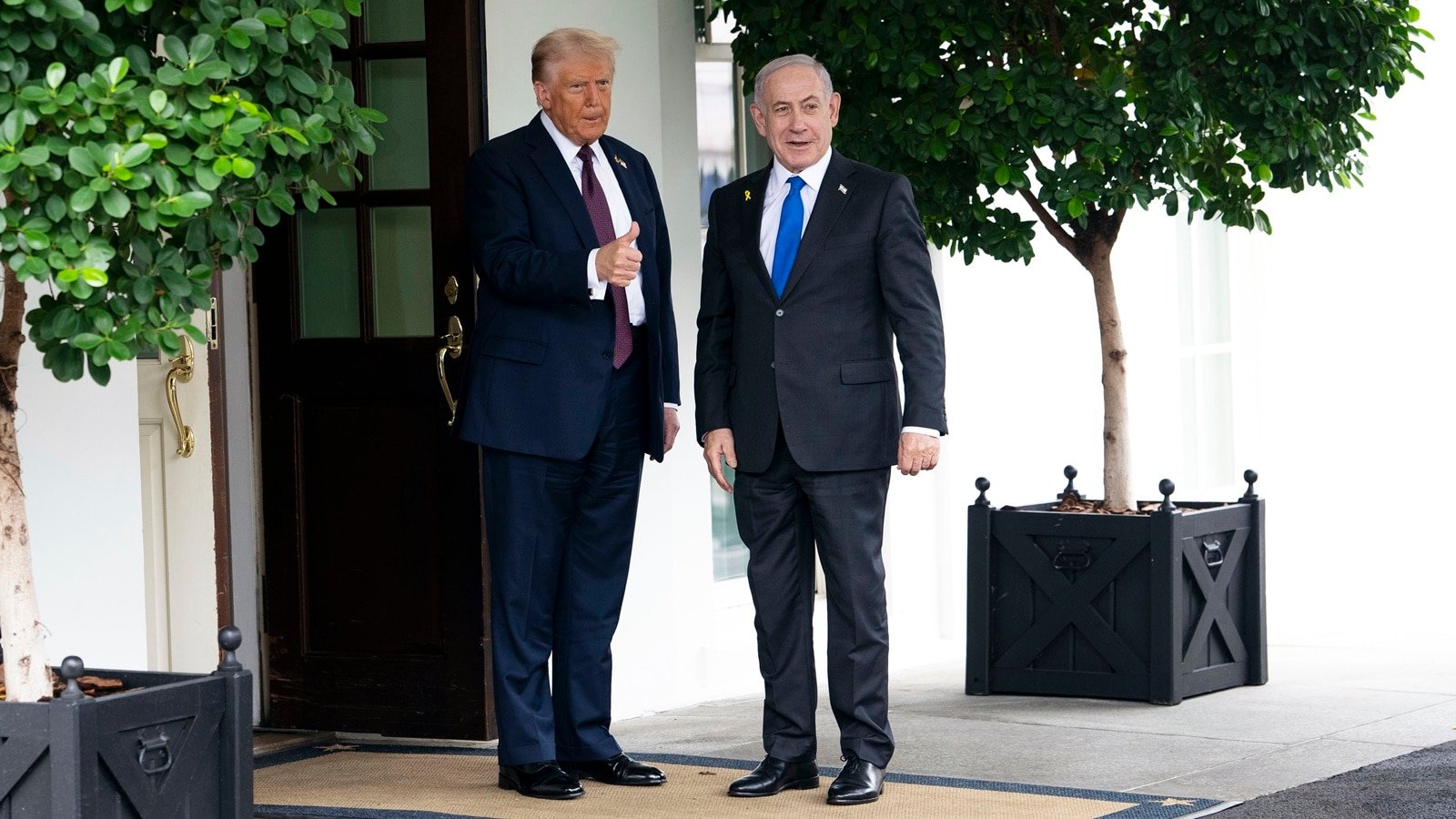
According to reports citing senior diplomatic sources, US President Donald Trump has assured Israeli Prime Minister Benjamin Netanyahu that no final deal with Tehran will ignore the issues that originally triggered military confrontation between the United States, Israel, and Iran. Those issues include Iran’s nuclear activities, ballistic missile programme, and support for armed groups such as Hezbollah.
The assurances come at a critical moment. While Washington and Tehran appear to be discussing an initial framework aimed at ending months of conflict and reopening the Strait of Hormuz, the more difficult negotiations over Iran’s military capabilities have yet to begin.
As a result, the future of the proposed agreement may depend less on the ceasefire itself and more on what eventually happens to Iran’s nuclear Infrastructure and regional influence.
Why Israel Remains Focused on Iran’s Nuclear Programme
For decades, Israel has viewed Iran’s nuclear programme as its most serious National Security challenge. Israeli governments across multiple administrations have argued that a nuclear-armed Iran would fundamentally alter the balance of power in the Middle East.
Israeli officials maintain that Tehran’s enrichment activities, missile development programmes, and support for regional armed groups form part of a broader strategy that threatens regional stability.
Prime Minister Benjamin Netanyahu has consistently placed opposition to Iran’s nuclear ambitions at the center of his foreign and security policies. Long before the current conflict, Netanyahu repeatedly warned international leaders about the risks of allowing Tehran to expand its nuclear capabilities.
The latest diplomatic discussions therefore represent more than a routine peace negotiation from Israel’s perspective. They are viewed as a potential turning point that could determine whether Iran emerges from the conflict weaker, unchanged, or stronger.
Trump-Netanyahu Conversations Signal Shared Objectives
Recent communications between Trump and Netanyahu suggest that both leaders remain aligned on the core objectives of future negotiations.
According to statements attributed to Israeli officials, discussions focused on several key conditions that Israel believes must be included in any final settlement:
- Removal of Iran’s stockpile of enriched nuclear material
- Dismantling of sensitive enrichment infrastructure
- Long-term restrictions on nuclear activities
- Limits on missile production and development
- An end to support for regional proxy organisations
These demands mirror many of the concerns that have shaped Western policy toward Iran for years.
While the proposed memorandum currently focuses on ending active hostilities and establishing a framework for future talks, Israel wants assurances that these broader security concerns will not be postponed indefinitely.
The Nuclear Question Remains Unresolved
Perhaps the most important reality emerging from the negotiations is that the nuclear issue has not yet been resolved.
Current discussions reportedly envision a phased process in which immediate military de-escalation is followed by dedicated negotiations over Tehran’s nuclear future.
This means that any initial agreement would likely create breathing room for Diplomacy without immediately determining the fate of Iran’s nuclear programme.
For supporters of the negotiations, this approach allows both sides to reduce tensions before tackling more controversial issues.
For critics, however, postponing the nuclear question creates uncertainty and leaves the most difficult challenge unresolved.
What Washington Appears to Be Seeking
Reports from officials familiar with the negotiations suggest that the United States is pursuing a performance-based framework.
Under such a model, Iran would receive economic benefits only after fulfilling specific commitments.
Possible requirements could include:
- Reducing uranium enrichment levels
- Eliminating highly enriched uranium stockpiles
- Accepting enhanced international inspections
- Providing greater transparency regarding nuclear facilities
- Limiting future expansion of sensitive nuclear infrastructure
The objective appears to be preventing Iran from maintaining a rapid pathway toward nuclear weapons capability while preserving opportunities for peaceful civilian nuclear activities.
Whether Tehran will accept all these conditions remains one of the biggest unanswered questions.
The Missile Programme Is Becoming a Bigger Issue
Although nuclear activities dominate headlines, Iran’s missile programme is increasingly becoming a central focus of negotiations.
Modern missile capabilities significantly influence regional military balances because they determine how far and how effectively conventional or unconventional payloads can be delivered.
Israeli officials have repeatedly argued that any meaningful agreement must address missile development alongside nuclear restrictions.
The reasoning is straightforward.
Even if a nuclear programme is limited, a sophisticated missile infrastructure could still present long-term strategic concerns if future political conditions change.
This is why missile restrictions are now being discussed as part of broader security guarantees rather than as a separate issue.
Why Hezbollah Remains a Major Concern
Another major issue in discussions between Washington and Jerusalem involves Hezbollah.
The Lebanon-based organisation has long been viewed by Israel as one of the most powerful non-state military actors in the region.
Israeli policymakers argue that Iran’s support for proxy groups has allowed Tehran to project influence across multiple countries without direct military confrontation.
As a result, Israeli officials believe that a comprehensive agreement should not focus solely on nuclear facilities but should also address broader regional security networks.
This reflects a wider strategic debate about whether long-term stability can be achieved through nuclear restrictions alone or whether regional military relationships must also be included.
How Iran Sees the Negotiations
Iranian officials continue to present a very different interpretation of the talks.
Tehran has consistently maintained that its nuclear programme serves peaceful purposes and that any future arrangement must respect Iran’s sovereignty.
Iranian leaders have also emphasized that no final agreement has yet been reached despite optimistic statements from Washington.
This difference in messaging highlights one of the major challenges facing negotiators.
While American officials often emphasize progress, Iranian officials frequently stress that significant disagreements remain unresolved.
Such differences are common during complex international negotiations but can complicate public expectations and political calculations.
The Strategic Importance of the Strait of Hormuz
The negotiations are also heavily influenced by the future of the Strait of Hormuz.
This narrow waterway is one of the world’s most important energy corridors, carrying a substantial share of globally traded oil and natural gas.
Disruptions during the conflict demonstrated how quickly regional instability can affect international markets.
The proposed reopening of Hormuz would provide immediate economic benefits:
- More stable energy supplies
- Lower shipping risks
- Reduced pressure on fuel prices
- Improved investor confidence
- Greater regional economic stability
Because of these factors, many governments view reopening the waterway as an essential first step toward broader diplomatic progress.
Could Regime Change Become a Future Issue?
One of the more significant claims emerging from diplomatic reporting involves the possibility of regime change discussions if negotiations ultimately collapse.
According to diplomatic sources cited in media reports, some policymakers believe that continued military escalation or a complete breakdown of talks could eventually shift attention toward broader political questions inside Iran.
At present, however, there is no indication that regime change forms part of the current memorandum framework.
The primary focus remains conflict reduction, economic stabilization, and nuclear negotiations.
Nevertheless, the existence of such discussions highlights the stakes involved if diplomacy fails.
What a Final Agreement Might Look Like
Although details remain fluid, analysts generally see several components that could eventually appear in a comprehensive agreement.
| Issue Area | Potential Outcome |
| Nuclear Programme | Enrichment limits and enhanced inspections |
| Uranium Stockpile | Removal, dilution or monitored storage |
| Missile Programme | Restrictions on development and deployment |
| Sanctions | Gradual, performance-based relief |
| Strait of Hormuz | Immediate reopening for international shipping |
| Regional Security | Discussions involving proxy groups and stability measures |
The final balance between these elements will determine whether the agreement is viewed as a temporary truce or a genuine long-term settlement.
Why These Negotiations Matter Globally
The implications extend far beyond the United States, Iran, and Israel.
Energy-importing economies across Asia and Europe are closely watching developments because regional stability directly affects global oil markets, shipping routes, inflation trends, and economic growth.
Financial markets have already responded positively to signs of diplomatic progress, reflecting hopes that a lasting agreement could reduce geopolitical risk across the Middle East.
At the same time, investors remain cautious because previous attempts to resolve disputes surrounding Iran’s nuclear programme have faced setbacks, disagreements, and political opposition.
Conclusion: The Real Negotiations Are Still Ahead
President Trump’s reported assurances to Prime Minister Netanyahu highlight a central reality of the current diplomatic process: ending the war is only the first step. The far more challenging task will be negotiating the future of Iran’s nuclear programme, missile capabilities, and regional influence.
Israel wants guarantees that Iran’s ability to threaten regional security will be permanently reduced. The United States appears to be seeking a framework that combines security restrictions with conditional economic incentives. Iran, meanwhile, insists on protecting its sovereignty and preserving peaceful nuclear activities.
The emerging peace framework may create the conditions for diplomacy, but the success or failure of the broader process will ultimately depend on whether these competing objectives can be reconciled.
For now, the possibility of a breakthrough appears closer than at any point during the conflict. Yet the most difficult negotiations the ones that will shape Middle Eastern security for years to come have only just begun.
For breaking news and live news updates, like us on Facebook or follow us on Twitter and Instagram. Read more on Latest World on thefoxdaily.com.





COMMENTS 0