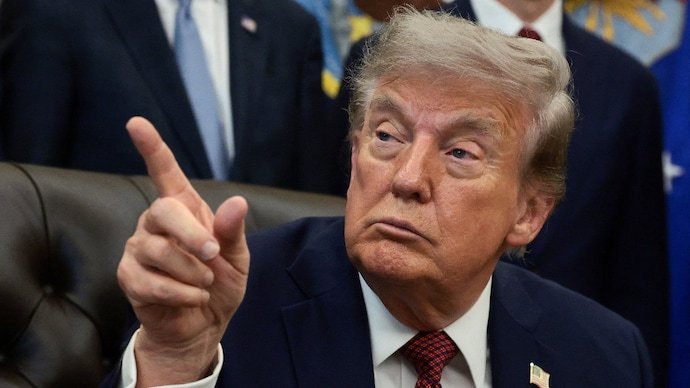
The latest statements from US President Donald Trump have once again placed the spotlight on one of the world’s most sensitive geopolitical flashpoints: US-Iran Relations. Speaking at the White House, Trump said he believes Iran is approaching negotiations with greater seriousness than in previous rounds. At the same time, he emphasized that the United States remains fully prepared to escalate military operations if diplomatic efforts fail.
The remarks come at a critical moment, as tensions continue to ripple across the Middle East following recent military exchanges, concerns over Iran’s nuclear program, and renewed diplomatic contacts aimed at preventing a wider regional conflict. While Trump expressed hope that negotiations could produce an agreement, he also made it clear that Washington has not ruled out stronger military measures.
The combination of diplomacy and military readiness reflects a long-standing US strategy toward Iran maintaining pressure while leaving the door open for negotiations. Whether this approach succeeds could shape security, energy markets, and international diplomacy for years to come.
Trump: Diplomacy Remains the Preferred Option
Addressing reporters, Trump said the United States is actively engaged in discussions with Iranian officials and believes Tehran is showing more willingness to negotiate than it has in recent years.
“We’re locked and loaded. We’re ready to go, but we’re talking to them,” Trump said, suggesting that diplomacy still has a chance to succeed despite ongoing military tensions.
According to Trump, negotiations remain unpredictable, and no breakthrough should be assumed until an actual agreement is reached. While expressing optimism, he acknowledged that diplomacy often changes rapidly depending on developments on the ground.
His comments indicate that the administration is attempting to balance military deterrence with continued diplomatic engagement, hoping to secure concessions without triggering a larger conflict.
Two Paths Forward: Military Escalation or a Negotiated Deal
Trump outlined what he described as two possible outcomes for the current crisis.
- A continued military campaign that could expand significantly if negotiations fail.
- A diplomatic agreement designed to reduce tensions and address concerns surrounding Iran’s nuclear activities.
According to Trump, a negotiated settlement remains the “smarter strategy,” although military planning continues in parallel. This dual-track approach has historically been used by multiple US administrations dealing with complex international security issues.
The statement also serves as a message to both allies and adversaries that the United States intends to maintain leverage throughout negotiations.
Iran Rejects Pressure and Military Threats
Iran responded firmly to Trump’s remarks. Iranian Foreign Minister Abbas Araghchi said Tehran would not negotiate under threats or military pressure.
According to Iranian officials, the primary obstacle to improved US-Iran relations is not communication but what Tehran describes as Washington’s continued reliance on Sanctions, coercion, and military pressure.
Iran maintains that any future agreement must respect its national sovereignty while addressing mutual security concerns through diplomacy rather than force.
The exchange highlights the deep mistrust that continues to define relations between both countries despite repeated attempts at negotiations over the past two decades.
Why US-Iran Relations Remain So Fragile
The current tensions cannot be understood without examining the broader history of US-Iran relations.
Relations deteriorated significantly after the 1979 Iranian Revolution, leading to decades of sanctions, diplomatic disputes, proxy conflicts, and disagreements over Iran’s nuclear ambitions.
One of the most significant diplomatic efforts came in 2015 with the Joint Comprehensive Plan of Action (JCPOA), commonly known as the Iran nuclear deal. The agreement imposed limits on Iran’s nuclear program in exchange for sanctions relief.
However, the United States later withdrew from the agreement, leading Iran to gradually reduce compliance with several nuclear restrictions. Since then, negotiations aimed at restoring or replacing the agreement have repeatedly stalled.
The latest diplomatic efforts represent another attempt to prevent further escalation while addressing concerns surrounding nuclear development, regional security, and international sanctions.
Understanding the Nuclear Issue
Iran insists that its nuclear program is intended for peaceful civilian purposes, including electricity generation, scientific research, and medical applications.
However, several Western governments have expressed concern that highly enriched uranium could eventually be used in the development of nuclear weapons if safeguards fail.
The International Atomic Energy Agency (IAEA) continues to monitor Iran’s nuclear facilities under international agreements, although disagreements over inspections and transparency have complicated verification efforts.
Future negotiations are expected to focus on uranium enrichment levels, monitoring mechanisms, sanctions relief, and guarantees from both sides.
Timeline of Recent Developments
| Period | Key Development |
|---|---|
| Recent weeks | Military exchanges increase regional tensions. |
| White House remarks | Trump says Iran appears more serious about negotiations. |
| Diplomatic discussions | US continues talks while maintaining military readiness. |
| Iran’s response | Tehran rejects negotiations conducted under military pressure. |
| Upcoming diplomacy | Trump prepares to meet Israeli Prime Minister Benjamin Netanyahu. |
Strategic Importance of the Middle East
The current situation extends far beyond bilateral relations between Washington and Tehran. The Middle East remains one of the world’s most strategically important regions because of its energy resources, shipping routes, and security alliances.
Several major maritime trade corridors pass through nearby waters, making regional stability essential for global commerce. Any prolonged military confrontation could affect shipping, insurance costs, and supply chains across multiple continents.
Countries throughout Europe, Asia, and the Gulf are closely monitoring developments because the outcome could influence regional security partnerships for years.
Economic Impact Could Reach Beyond the Region
One of the immediate consequences of escalating tensions is uncertainty in global financial markets.
Investors closely watch developments involving Iran because disruptions to oil production or transportation routes can influence international energy prices.
Even the possibility of military escalation often contributes to higher market volatility, affecting industries ranging from transportation and manufacturing to aviation and logistics.
Although energy markets have become more diversified over the past decade, the Middle East remains a major supplier of crude oil and natural gas to the global economy.
What Trump’s Comments Signal to Allies
Trump’s remarks are directed not only at Iran but also at key US allies.
By emphasizing that military forces remain prepared while diplomacy continues, the administration seeks to reassure partners that the United States remains committed to regional security.
This messaging is particularly significant ahead of Trump’s scheduled meeting with Israeli Prime Minister Benjamin Netanyahu, whose government closely follows developments related to Iran’s military and nuclear capabilities.
Israel has consistently argued that preventing Iran from acquiring nuclear weapons remains a top national security priority.
Military Pressure as a Negotiating Tool
Throughout modern diplomacy, governments have sometimes combined negotiations with visible military preparedness to strengthen their bargaining position.
This strategy attempts to convince the opposing side that refusing compromise could carry greater costs than reaching an agreement.
However, the approach also carries risks. Increased military activity can raise the possibility of miscalculations, accidental confrontations, or rapid escalation that neither side initially intended.
Balancing deterrence with diplomacy therefore requires careful communication and restraint from all parties involved.
Comparison: Military Escalation vs Diplomatic Agreement
| Approach | Potential Advantages | Potential Risks |
|---|---|---|
| Military escalation | Immediate pressure on strategic targets and stronger deterrence. | Regional conflict, civilian disruption, economic instability, and broader security risks. |
| Diplomatic agreement | Reduced tensions, international cooperation, and greater long-term stability. | Lengthy negotiations, political disagreements, and challenges in implementation. |
Expert Insight: Why Negotiations Appear More Serious Now
One notable aspect of Trump’s latest comments is his suggestion that Iran is negotiating more seriously than before. While no agreement has been announced, such statements often indicate that behind-the-scenes diplomatic contacts may be more active than publicly acknowledged.
International negotiations frequently involve multiple rounds of indirect discussions, technical meetings, and mediation by third-party governments before formal announcements are made.
Even when public rhetoric remains confrontational, diplomatic channels often continue operating quietly to reduce misunderstandings and explore areas of compromise.
This dual-track communication has historically played an important role in preventing larger military conflicts.
What Happens Next?
Several developments are likely to shape the next phase of the crisis.
- Continued diplomatic discussions between US and Iranian representatives.
- Assessment of military options by US defense officials.
- Regional consultations with key allies.
- International monitoring of Iran’s nuclear activities.
- Potential announcements following upcoming high-level diplomatic meetings.
Whether negotiations produce meaningful progress will depend on issues including sanctions, nuclear inspections, regional security guarantees, and political willingness from both governments.
Future Outlook
The coming weeks may prove decisive for the direction of US-Iran relations. If negotiations continue to gain momentum, there remains an opportunity to reduce tensions through diplomacy and avoid a broader regional conflict.
However, Trump’s repeated emphasis that the United States remains “locked and loaded” demonstrates that military planning continues alongside diplomatic efforts. This combination of pressure and negotiation creates both opportunities and significant risks.
For governments, businesses, and global markets, the outcome extends well beyond Washington and Tehran. Regional stability influences international trade, energy security, investment confidence, and diplomatic relations across multiple continents.
Conclusion
President Donald Trump’s latest remarks underscore a delicate balancing act between diplomacy and deterrence. While he believes Iran is engaging in negotiations with greater seriousness than before, he has also made clear that the United States is fully prepared to intensify military operations if talks fail.
Iran, meanwhile, continues to reject negotiations conducted under pressure, insisting that meaningful dialogue must occur without threats or coercion. As diplomatic efforts continue alongside military preparedness, the world will be watching closely for signs of either a breakthrough or further escalation.
Ultimately, the path chosen by both nations will have consequences far beyond bilateral relations, influencing Middle East stability, Global Energy Markets, international security, and the future of nuclear diplomacy for years to come.
For breaking news and live news updates, like us on Facebook or follow us on Twitter and Instagram. Read more on Latest World on thefoxdaily.com.




COMMENTS 0