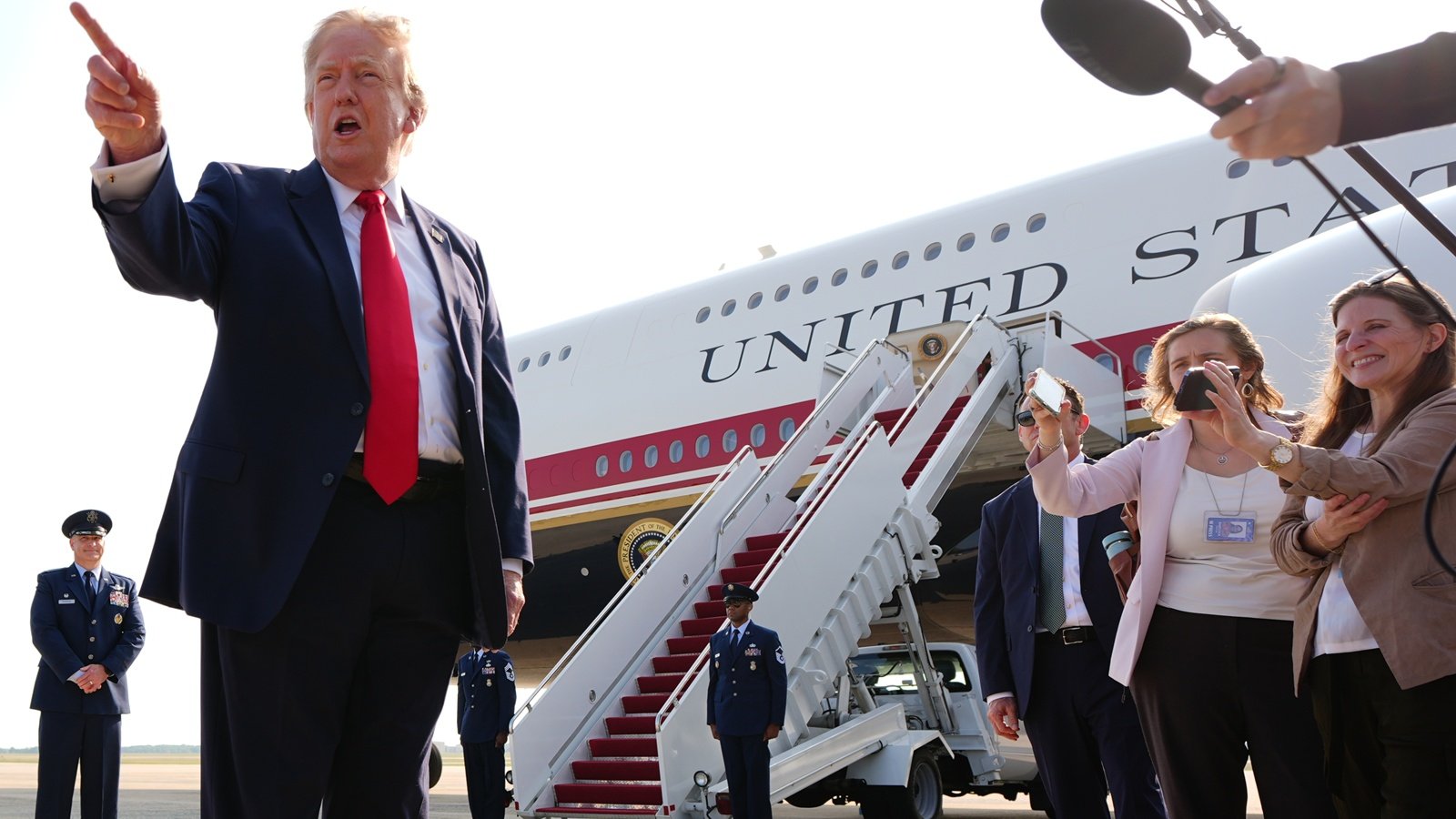
The relationship between the United States and Iran has entered another critical phase, with military confrontation occurring alongside renewed diplomatic engagement. Speaking before departing Joint Base Andrews, US President Donald Trump said the United States had “hit Iran very hard” during recent military operations but emphasized that negotiations over Iran’s nuclear program were progressing positively.
His remarks came as American and Iranian representatives continued indirect technical discussions in Doha through international mediators. The negotiations reportedly focus on several interconnected issues, including Iran’s nuclear activities, maritime security in the Strait of Hormuz, regional ceasefire efforts, and broader Middle East stability.
The simultaneous use of military force and diplomatic negotiations reflects a strategy that has frequently shaped US-Iran relations over the past several decades. While both governments continue to disagree on fundamental issues, recent talks suggest that diplomatic channels remain active despite persistent tensions.
What Trump Said About Iran
Addressing reporters, President Trump expressed optimism regarding ongoing negotiations while also highlighting recent US military operations.
According to his public remarks, he said:
- Negotiations on Iran’s nuclear program are progressing well.
- Recent meetings involving regional mediators have been constructive.
- The United States conducted significant military strikes against Iranian targets.
- Despite military action, relations surrounding the negotiations are improving.
The comments underscore Washington’s effort to combine diplomatic engagement with continued pressure on Tehran.
Why the Doha Talks Matter
The latest discussions in Doha represent an important diplomatic channel at a time when direct US-Iran engagement remains limited.
Qatar has frequently served as a mediator between Washington and Tehran because it maintains working Relationships with both governments and has played a similar role during previous regional negotiations.
The talks reportedly involve technical discussions covering several sensitive issues that extend beyond the nuclear program itself.
Among the principal topics are:
- Iran’s nuclear activities.
- Freedom of navigation in the Strait of Hormuz.
- Regional ceasefire arrangements.
- Maritime security.
- Long-term regional stability.
Resolving any one of these issues could contribute to reducing broader tensions across the Middle East.
Understanding the Iran Nuclear Issue
Iran’s nuclear program has remained one of the world’s most closely monitored security issues for more than two decades.
The central concern for Western governments has been ensuring that Iran’s nuclear activities remain exclusively peaceful. Iran has consistently maintained that its nuclear program is intended for civilian purposes, including energy production and scientific research.
Successive rounds of negotiations have sought to establish verification mechanisms, transparency measures, and limits on nuclear activities in exchange for sanctions relief and broader diplomatic engagement.
The latest negotiations appear aimed at building upon interim understandings while exploring a more durable framework.
.@POTUS: “The denuclearization of Iran is moving along well… the stock market is setting records virtually every day. The oil price is way down… lower than when I started the attack on Iran so that they’d never have a nuclear weapon.” pic.twitter.com/7EEill1jAy
— Rapid Response 47 (@RapidResponse47) July 1, 2026
What Is Denuclearisation?
Denuclearisation generally refers to steps intended to prevent the development or expansion of nuclear weapons capabilities.
In the context of Iran, discussions have historically focused on:
- Limits on uranium enrichment.
- Monitoring by international inspectors.
- Transparency regarding nuclear facilities.
- Verification mechanisms.
- Confidence-building measures.
Any comprehensive agreement would likely require detailed technical arrangements alongside political commitments from multiple parties.
The Strait of Hormuz: A Key Negotiating Issue
One of the most significant elements of the current talks concerns the Strait of Hormuz, one of the world’s most strategically important maritime corridors.
A substantial share of globally traded crude oil and liquefied natural gas passes through this narrow waterway each day, making uninterrupted navigation essential for international energy markets.
Recent negotiations have reportedly focused on ensuring continued commercial shipping while addressing Iran’s calls for greater control over navigation procedures.
| Issue | Why It Matters |
|---|---|
| Freedom of Navigation | Supports uninterrupted global trade. |
| Regional Security | Reduces risks of military confrontation. |
| Energy Markets | Helps stabilize global oil supplies. |
| International Shipping | Maintains predictable maritime commerce. |
Any long-term arrangement regarding the strait would have significant implications for global energy security.
Military Pressure and Diplomacy: A Dual Strategy
The current situation illustrates a longstanding feature of US foreign policy toward Iran: combining diplomatic engagement with military deterrence.
Supporters argue that maintaining military pressure strengthens negotiating leverage, while critics contend that military actions can complicate diplomatic progress.
History shows that negotiations between the two countries have often continued even during periods of heightened regional tensions.
Qatar’s Growing Role as a Mediator
Qatar has emerged as one of the Middle East’s most active diplomatic intermediaries.
Its ability to communicate with multiple regional and international actors has enabled it to facilitate indirect negotiations on issues ranging from humanitarian exchanges to regional security.
During the latest discussions, Qatari officials have continued working with both sides in an effort to maintain dialogue and encourage diplomatic solutions.
Timeline of Recent Developments
| Stage | Development |
|---|---|
| Recent Military Operations | United States conducts strikes against Iranian targets. |
| Interim Understanding | Temporary arrangements discussed regarding shipping through the Strait of Hormuz. |
| Doha Meetings | Technical discussions continue through mediators. |
| Public Statements | President Trump expresses optimism about negotiations. |
| Ongoing Diplomacy | Further discussions expected on long-term regional stability. |
Why Global Markets Are Watching Closely
Financial markets closely monitor developments involving the United States and Iran because geopolitical events in the Middle East frequently influence investor sentiment.
Areas particularly sensitive to developments include:
- Crude oil prices.
- Natural gas markets.
- Shipping costs.
- Global equity markets.
- Currency movements.
Reduced tensions generally support greater market stability, while renewed conflict can increase volatility across multiple asset classes.
What Businesses Should Watch
International businesses with exposure to energy markets or global supply chains are paying particular attention to the negotiations.
Potential outcomes could affect:
- Fuel costs.
- Maritime insurance.
- Freight rates.
- International trade flows.
- Regional investment confidence.
Even incremental diplomatic progress may help reduce uncertainty affecting global commerce.
Challenges That Remain
Despite encouraging public statements, several major issues continue to complicate negotiations.
Among the most significant challenges are:
- Long-term verification of nuclear commitments.
- Regional security concerns.
- Future sanctions arrangements.
- Maritime navigation rights.
- Trust between negotiating parties.
These issues have remained unresolved through multiple diplomatic initiatives over many years.
Comparison: Military Action vs Diplomatic Negotiation
| Military Pressure | Diplomatic Engagement |
|---|---|
| Immediate deterrence. | Long-term conflict management. |
| Raises operational risks. | Builds opportunities for compromise. |
| Can influence negotiating leverage. | Seeks mutually acceptable agreements. |
| Produces rapid tactical outcomes. | Requires sustained political commitment. |
The current approach combines elements of both strategies, illustrating the complexity of modern international diplomacy.
A Broader Perspective: Regional Stability Is the Larger Goal
Although much attention focuses on Iran’s nuclear program, the negotiations encompass a much wider regional agenda.
Stability in the Middle East affects:
- Global energy security.
- International shipping.
- Counterterrorism cooperation.
- Regional economic development.
- Humanitarian conditions.
Progress in one area may create opportunities for broader diplomatic engagement across multiple regional issues.
The significance of the latest US-Iran discussions extends beyond nuclear negotiations. They represent an effort to manage one of the world’s most consequential geopolitical relationships through diplomacy even as military deterrence remains part of the broader strategic landscape.
Future Outlook
The coming weeks will be critical in determining whether the current diplomatic momentum can be translated into more comprehensive agreements. Technical negotiations are expected to continue, with mediators working to bridge differences on nuclear issues, maritime security, and broader regional concerns.
While President Trump’s optimistic assessment suggests confidence in the direction of the talks, significant policy differences remain unresolved. Any lasting agreement will likely require detailed verification mechanisms, sustained political commitment, and continued mediation by regional partners.
For the international community, the stakes remain exceptionally high. A successful diplomatic outcome could contribute to greater stability in the Middle East, improved security for international shipping through the Strait of Hormuz, and reduced volatility in global energy markets. Conversely, setbacks in negotiations could quickly renew geopolitical uncertainty. As diplomacy and strategic pressure continue side by side, the evolution of US-Iran relations will remain one of the defining international stories shaping Global security and economic stability.
For breaking news and live news updates, like us on Facebook or follow us on Twitter and Instagram. Read more on Latest World on thefoxdaily.com.





COMMENTS 0