- The Remark: Humor With Strategic Undertones
- Context Matters: A Broader Campaign Against Cuba
- Sanctions Strategy: Expanding Pressure Beyond Borders
- Cuba’s Response: Defiance and Criticism
- The Business Angle: Why Companies Are Watching Closely
- Military Rhetoric vs Economic Reality
- Historical Context: A Long and Complex Relationship
- Comparison: Tools of Pressure in Modern Foreign Policy
- Strategic Interpretation: Joke or Signal?
- Future Outlook: What Comes Next?
- Conclusion: When Words and Policy Converge
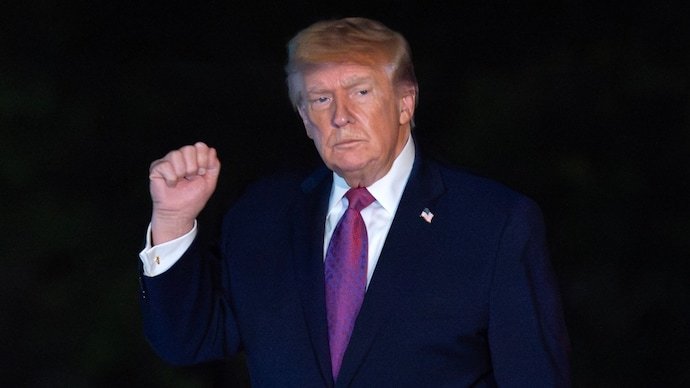
A seemingly offhand joke by US President Donald Trump has triggered serious geopolitical discussion. Speaking at an event, Trump suggested that a US Aircraft Carrier could compel Cuba to surrender “on the way back from Iran.” While delivered humorously, the remark lands in the middle of a broader and intensifying US campaign against Havana raising questions about whether such statements are merely rhetoric or part of a calculated pressure strategy.
Who is involved? The United States and Cuba, with global businesses and allies watching closely. What happened? Trump joked that US naval power could quickly force Cuba to give up. When? During a recent public speech amid ongoing policy actions. Where? In remarks tied to broader US Foreign Policy discussions. Why? Against the backdrop of mounting pressure on Cuba for reforms. How? Through a mix of rhetoric, expanded Sanctions, and strategic signaling.
The Remark: Humor With Strategic Undertones
Trump’s comment imagined a scenario where a US aircraft carrier approaches Cuban shores, prompting an immediate surrender. On the surface, it appears as a typical example of his improvisational speaking style blunt, dramatic, and designed to draw attention.
However, in Geopolitics, even jokes can carry weight. When a sitting president references Military action, even hypothetically, it can be interpreted as a signal of intent or capability. This is especially true in sensitive regions like the Caribbean, where historical tensions between the US and Cuba remain unresolved.
The key question is not whether the remark was serious but how it is perceived by different audiences.
Context Matters: A Broader Campaign Against Cuba
The comment did not occur in isolation. It comes amid a months-long push by the Trump administration to pressure Cuba into making sweeping political and economic changes. This includes tightening sanctions, increasing diplomatic pressure, and issuing repeated warnings about potential consequences.
On the same day as the remark, Trump signed an executive order expanding US sanctions against Cuba. These measures target individuals and entities linked to the Cuban government, particularly in sectors such as:
- Energy
- Defence
- Financial services
- Mining and infrastructure
The order also introduces secondary sanctions, meaning foreign companies doing Business with Cuba could face penalties significantly widening the scope of US influence.
Sanctions Strategy: Expanding Pressure Beyond Borders
The latest sanctions represent a shift from targeted restrictions to a more व्यापक economic strategy. By extending penalties to “any foreign person” involved in key Cuban sectors, the US is effectively internationalizing its policy.
This has two major implications:
- Global Business Risk: Companies outside the US must now reconsider their exposure to Cuba
- Economic Isolation: Cuba faces increasing difficulty accessing international markets
This approach mirrors broader trends in US foreign policy, where economic tools are used as primary instruments of pressure instead of direct military action.
Cuba’s Response: Defiance and Criticism
Cuban leadership has responded strongly, condemning the sanctions as coercive and harmful. President Miguel Díaz-Canel described the measures as part of a long-standing blockade, while Foreign Minister Bruno Rodríguez called them “collective punishment.”
This response reflects a familiar pattern: Cuba frames US actions as unjust external pressure, while the US frames them as necessary steps toward reform. The result is a persistent cycle of accusation and resistance.
The Business Angle: Why Companies Are Watching Closely
One of the most immediate impacts of the new sanctions is on global businesses. Experts warn that companies previously insulated from US jurisdiction may no longer be protected.
For international firms, the risks include:
- Loss of access to US markets
- Financial penalties and legal exposure
- Operational uncertainty in Cuba
This creates a difficult choice: continue operations in Cuba with higher risk, or withdraw to maintain compliance with US regulations.
Military Rhetoric vs Economic Reality
Despite Trump’s reference to naval power, the primary tool of US policy toward Cuba remains economic pressure. Direct military action is highly unlikely given the political, legal, and international consequences.
However, military rhetoric serves a purpose it reinforces the seriousness of US demands and signals that escalation, while unlikely, is not entirely off the table.
This combination of economic pressure and rhetorical strength is a hallmark of modern strategic policy.
Historical Context: A Long and Complex Relationship
US-Cuba relations have been shaped by decades of tension, dating back to the Cold war. While there have been periods of rapprochement, the relationship has largely been defined by sanctions, political اختلافات, and mutual distrust.
Understanding this History is essential to interpreting current events. Statements that might seem exaggerated in another context carry deeper meaning when viewed against this backdrop.
Comparison: Tools of Pressure in Modern Foreign Policy
| Tool | Description | Effectiveness |
|---|---|---|
| Sanctions | Economic restrictions on trade and finance | High long-term pressure |
| Military Threats | Rhetorical or actual force projection | Short-term deterrence |
| Diplomacy | Negotiations and agreements | Potential for lasting solutions |
| Secondary Sanctions | Penalties on third-party actors | Expands global impact |
The US approach to Cuba currently relies heavily on sanctions and secondary sanctions, with rhetoric reinforcing the overall strategy.
Strategic Interpretation: Joke or Signal?
So how should Trump’s remark be interpreted?
- As Humor: A rhetorical flourish meant to entertain and emphasize US power
- As Messaging: A subtle signal reinforcing the administration’s tough stance
- As Strategy: Part of a broader narrative designed to pressure Cuba
In reality, it is likely a mix of all three. Modern political communication often blends humor and strategy, making it difficult to separate intent from impact.
Future Outlook: What Comes Next?
The trajectory of US-Cuba relations will depend on several factors:
- Whether Cuba responds to pressure with reforms or resistance
- How international partners react to expanded sanctions
- The broader geopolitical environment, including US priorities elsewhere
While immediate escalation is unlikely, tensions are expected to remain high, with economic measures continuing to play a central role.
Conclusion: When Words and Policy Converge
Donald Trump’s remark about Cuba may have been delivered as a joke, but it reflects a deeper reality: US policy toward Cuba is entering a more assertive phase. With expanded sanctions, global implications for businesses, and continued rhetorical pressure, the situation is evolving beyond مجرد words.
In geopolitics, even casual statements can carry strategic weight. And in this case, the line between humor and policy is thinner than it appears. As Washington tightens its grip and Havana pushes back, the world is left watching how far rhetoric will translate into action.
For breaking news and live news updates, like us on Facebook or follow us on Twitter and Instagram. Read more on Latest World on thefoxdaily.com.


COMMENTS 0