- Understanding the Context: A Long History of US-Iran Tensions
- Key Developments: Ceasefire Under Pressure
- Why the Strait of Hormuz Matters
- Deep Analysis: Why Diplomacy Is Struggling
- Real-World Impact: What This Means for the World
- Unique Insight: A Shift Toward Economic Warfare
- Comparison: Then vs Now
- Prediction: What Happens Next?
- Conclusion: A Critical Moment for Global Stability
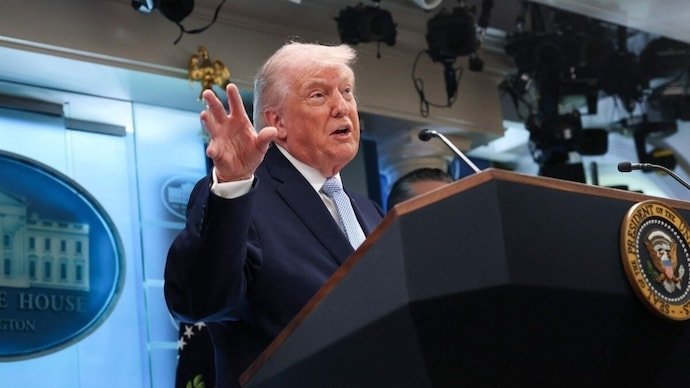
The possibility of renewed military escalation between the United States and Iran has returned to the forefront of global concern. As a critical deadline approaches, US President Donald Trump has warned that military action could resume if a broader agreement with Iran is not finalized. The situation raises urgent questions: Who is involved? The US and Iran. What is at stake? A fragile ceasefire and broader regional stability. When? Within days. Where? Primarily in the Gulf region, particularly around vital maritime routes. Why? Deep disagreements over sanctions, nuclear commitments, and security. How? Through stalled negotiations and rising pressure tactics such as naval blockades.
This unfolding situation is more than a bilateral dispute it is a high-stakes geopolitical standoff with implications for global energy supply, international law, and the future of Diplomacy in conflict resolution.
Understanding the Context: A Long History of US-Iran Tensions
To fully grasp the current crisis, it’s essential to understand the historical backdrop. Relations between the US and Iran have been strained for decades, marked by ideological differences, economic sanctions, and intermittent diplomatic efforts. The nuclear issue has remained central, with international agreements attempting but often failing to establish long-term stability.
Recent developments have seen tensions intensify due to disagreements over nuclear activities, economic sanctions, and regional influence. While diplomatic channels have not entirely collapsed, progress has been slow and fragile, often overshadowed by military posturing.
Timeline of Recent Escalations
| Period | Key Development |
|---|---|
| Mid-April | US initiates naval blockade targeting Iranian ports |
| Late April | Indirect diplomatic talks fail to achieve breakthrough |
| Early May | Iran warns of potential restrictions in strategic waterways |
| Current Week | US sets deadline for broader agreement; escalation warnings issued |
Key Developments: Ceasefire Under Pressure
The current ceasefire between the US and Iran is fragile at best. While it has temporarily reduced direct conflict, it is heavily conditional and subject to political calculations on both sides. The recent warning from Washington indicates that this pause in hostilities may be nearing its end.
At the core of the issue lies a lack of agreement on several critical areas:
- Sanctions Relief: Iran seeks economic relief, while the US demands compliance with strict conditions.
- Nuclear Commitments: Disputes persist over the scope and verification of Iran’s nuclear activities.
- Maritime Security: Control and access to key shipping routes remain contentious.
The naval blockade imposed by the US has further complicated matters. While intended as a pressure tactic, it has been viewed by Iran as a provocative move, escalating tensions rather than encouraging compromise.
Why the Strait of Hormuz Matters
One of the most critical aspects of this crisis is the Strait of Hormuz, a narrow waterway that serves as a lifeline for global energy supply. Roughly one-fifth of the world’s oil and liquefied natural gas passes through this corridor.
Any disruption in this region has immediate and far-reaching consequences. Even the suggestion of restricted access can trigger volatility in global markets. This makes the current standoff not just a regional issue, but a global economic concern.
Key Facts About the Strait of Hormuz
- Handles nearly 20% of global oil shipments
- Critical for energy exports from Gulf countries
- Narrow and strategically vulnerable
- Highly sensitive to geopolitical tensions
If tensions escalate further, even partial disruption could lead to rising fuel prices, supply chain challenges, and economic instability worldwide.
Deep Analysis: Why Diplomacy Is Struggling
Despite both sides expressing openness to a deal, meaningful progress has been elusive. Several factors explain why diplomacy is currently stalled:
1. Mistrust and Strategic Calculations
Years of strained relations have eroded trust. Both sides are cautious, often interpreting concessions as weaknesses rather than opportunities for compromise.
2. Domestic Political Pressures
Leaders in both countries face internal pressures that limit their negotiating flexibility. Public perception, political opposition, and national pride all play roles in shaping decisions.
3. Diverging Objectives
While the US focuses on security and non-proliferation, Iran prioritizes economic recovery and sovereignty. These differing priorities make it difficult to find common ground.
4. Use of Pressure Tactics
Measures such as sanctions and blockades are designed to force compliance but often harden positions instead. This creates a cycle where escalation undermines negotiation.
Real-World Impact: What This Means for the World
The implications of this standoff extend far beyond the US and Iran. Here’s how different sectors and regions could be affected:
Global Energy Markets
Uncertainty in the Gulf region often leads to fluctuations in oil prices. A prolonged conflict could tighten supply and drive prices higher, affecting consumers and industries worldwide.
International Trade
Shipping routes through the Gulf are essential for global trade. Disruptions could lead to delays, increased costs, and logistical challenges.
Regional Stability
Neighboring countries could be drawn into the conflict, either directly or indirectly. This raises the risk of a broader regional crisis.
Financial Markets
Geopolitical instability tends to impact investor confidence. Markets may react with increased volatility, particularly in energy and defense sectors.
Unique Insight: A Shift Toward Economic Warfare
One underreported aspect of this situation is the increasing reliance on economic and logistical pressure rather than traditional military engagement. The use of blockades, sanctions, and trade restrictions reflects a broader shift in how conflicts are managed.
This approach has several advantages it avoids immediate large-scale conflict and allows for gradual escalation. However, it also creates prolonged uncertainty, which can be just as damaging as direct confrontation.
In many ways, this crisis represents a hybrid model of conflict, combining elements of economic warfare, diplomacy, and military readiness.
Comparison: Then vs Now
| Aspect | Past Conflicts | Current Situation |
|---|---|---|
| Military Engagement | Direct and immediate | Conditional and delayed |
| Economic Measures | Secondary role | Primary strategy |
| Diplomacy | Limited | Ongoing but stalled |
| Global Impact | Regional focus | Highly globalized |
This comparison highlights how modern conflicts are evolving, with economic and strategic considerations playing a more central role.
Prediction: What Happens Next?
As the deadline approaches, several scenarios are possible:
- Short-Term Extension: The ceasefire may be extended to allow more time for negotiations.
- Limited Escalation: Targeted actions could resume without full-scale conflict.
- Diplomatic Breakthrough: Though less likely, a last-minute agreement could stabilize the situation.
- Prolonged Standoff: Continued tension without resolution, leading to ongoing uncertainty.
The most probable outcome may lie somewhere in between a mix of continued pressure and intermittent negotiation.
Conclusion: A Critical Moment for Global Stability
The current standoff between the United States and Iran represents a pivotal moment in International Relations. With a fragile ceasefire hanging in the balance, the coming days could determine whether the region moves toward stability or renewed conflict.
Beyond the immediate implications, this situation underscores broader trends in global politics shifting strategies, evolving forms of conflict, and the growing importance of economic leverage. For policymakers, businesses, and citizens alike, the stakes are high.
As the deadline nears, the world watches closely. Whether diplomacy prevails or tensions escalate, the outcome will shape not only the future of US-Iran Relations but also the broader landscape of global security and economic stability.
For breaking news and live news updates, like us on Facebook or follow us on Twitter and Instagram. Read more on Latest World on thefoxdaily.com.




COMMENTS 0