- Why the Strait of Hormuz Matters So Much
- Why Mine-Clearing Takes So Long
- What the US Navy Is Deploying
- The Hidden Challenge: Are There Even Mines?
- Iran’s Strategic Advantage: The “Threat Effect”
- Why Reopening the Strait Isn’t Just About Clearing Mines
- Economic Impact: Why the World Is Watching Closely
- Comparison: Laying Mines vs Clearing Them
- A Critical Insight: This Is as Much Psychological Warfare as Physical Warfare
- What Happens Next?
- Conclusion: A Slow Path to Stability
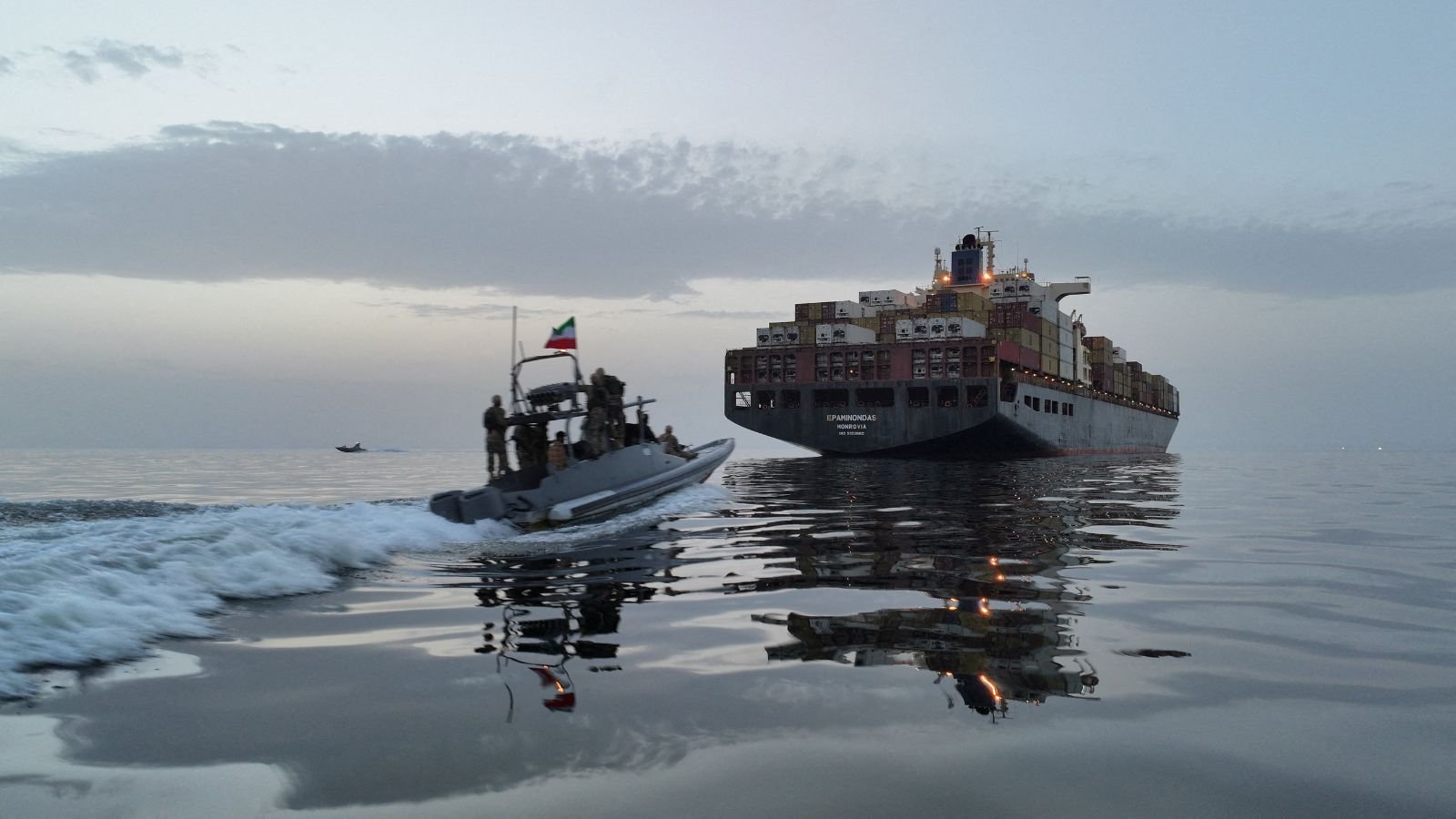
The Strait of Hormuz arguably the most important oil transit route on the planet is once again at the center of global attention. The United States Navy has launched an intensified operation to detect and clear suspected Iranian sea mines in the narrow waterway, but experts warn the process could take up to six months.
This timeline is not just a technical estimate it reflects the extreme complexity of naval mine warfare, the uncertainty surrounding Iran’s actions, and the broader geopolitical tensions shaping the region. With roughly one-fifth of global Oil Supply passing through this corridor, any disruption carries immediate and far-reaching consequences for the Global Economy.
Why the Strait of Hormuz Matters So Much
The Strait of Hormuz is not just another shipping lane it is a strategic artery of global energy flow. Connecting the persian gulf to international waters, it serves as the primary export route for major oil-producing nations.
Key Facts About the Strait
- Handles nearly 20% of global oil trade
- Critical for shipments from Gulf producers
- Extremely narrow, making it vulnerable to disruption
- Limited alternative routes for large-scale energy transport
Even a temporary slowdown in traffic can trigger oil price spikes, inflationary pressure, and economic instability worldwide.
Why Mine-Clearing Takes So Long
At first glance, six months may seem excessive. But naval experts emphasize that mine-clearing is one of the most painstaking operations in modern warfare.
Unlike visible threats, sea mines are designed to remain hidden either anchored below the surface or resting on the seabed. Detecting them requires precision, patience, and advanced technology.
Two Different Operations: Minehunting vs Minesweeping
| Operation | Description | Speed | Purpose |
|---|---|---|---|
| Minehunting | Locating and neutralizing individual mines | Slow | Create safe navigation paths |
| Minesweeping | Clearing large areas using specialized equipment | Faster but less precise | Post-conflict area clearance |
Think of minehunting as carefully removing individual hazards one by one, while minesweeping is more like clearing broader zones after immediate risks are reduced. In active Conflict conditions, the former is far more critical and time-consuming.
What the US Navy Is Deploying
To tackle the challenge, the US Navy is using a combination of advanced ships, unmanned systems, and specialized teams.
Core Assets in the Operation
- Littoral Combat Ships: Equipped with mine-detection systems and unmanned vehicles
- Avenger-class Minesweepers: Dedicated ships designed specifically for mine warfare
- Uncrewed Underwater Vehicles: Use sonar to locate hidden explosives
- Explosive Ordnance Disposal (EOD) Teams: Divers trained to neutralize mines manually
- Helicopters with Laser Detection: Scan water surfaces for anomalies
This multi-layered approach increases effectiveness but also adds complexity, coordination challenges, and time requirements.
The Hidden Challenge: Are There Even Mines?
One of the most unusual aspects of this situation is uncertainty. It remains unclear whether mines have actually been deployed in large numbers or at all.
This ambiguity creates a strategic dilemma. The US must act as if mines are present to ensure safety, even without definitive proof. That means extensive scanning, verification, and cautious clearance operations.
In Naval Warfare, uncertainty is itself a weapon.
Iran’s Strategic Advantage: The “Threat Effect”
Even without widespread mine deployment, Iran holds a powerful advantage the ability to create fear and hesitation.
Sea mines are relatively cheap and easy to deploy. They can be dropped from small boats or Submarines and remain undetected for long periods. In contrast, clearing them requires advanced technology, skilled personnel, and significant time.
This imbalance creates what analysts call a “psychological deterrent.”
- Shipping companies delay routes due to uncertainty
- Insurance premiums rise sharply
- Global markets react to perceived risk, not just actual danger
In simple terms, the mere possibility of mines can disrupt global trade almost as effectively as their actual presence.
Why Reopening the Strait Isn’t Just About Clearing Mines
Even if the US Navy successfully clears key routes, reopening the Strait of Hormuz fully is not guaranteed.
Several factors complicate the situation:
- Trust Deficit: Shipping companies need assurance that routes are safe
- Insurance Constraints: Insurers may still classify the area as high-risk
- Ongoing Tensions: Threats of retaliation create uncertainty
- Alternative Threats: Mines are just one risk among missiles, drones, and seizures
This means that “cleared waters” do not automatically translate into “normal operations.”
Economic Impact: Why the World Is Watching Closely
The global economy is tightly linked to energy flows through the Strait of Hormuz. Any disruption real or perceived has immediate ripple effects.
Global Consequences
- Oil Price Volatility: Prices rise with even minor disruptions
- Inflation Pressure: Higher energy costs impact goods and services
- Supply Chain Disruptions: Delays affect industries worldwide
- Political Fallout: Governments face domestic pressure over fuel costs
For energy-importing countries, especially in Asia, the stakes are particularly high.
Comparison: Laying Mines vs Clearing Them
| Aspect | Mine Deployment | Mine Clearance |
|---|---|---|
| Cost | Low | High |
| Time Required | Minutes to hours | Weeks to months |
| Technology | Basic to moderate | Advanced and specialized |
| Risk | Low for deployer | High for clearance teams |
This imbalance explains why mine warfare remains a powerful tool despite being one of the oldest naval tactics.
A Critical Insight: This Is as Much Psychological Warfare as Physical Warfare
One of the most overlooked aspects of the current situation is that the battle is not just happening in the water it’s happening in perception.
If shipping companies believe the strait is unsafe, traffic slows down. If insurers raise premiums, costs rise. If markets panic, prices spike.
All of this can happen even before a single mine is confirmed.
This makes the operation uniquely challenging: the US must not only clear potential threats but also restore confidence a far more difficult task.
What Happens Next?
The coming months will likely see a combination of Military operations and diplomatic maneuvering.
- Continued mine-clearing efforts: Focus on creating safe transit corridors
- Monitoring Iranian activity: Prevent further escalation
- Gradual return of shipping: Dependent on risk assessments
- Potential negotiations: To reduce long-term tensions
The pace of recovery will depend not just on military success, but on political developments.
Conclusion: A Slow Path to Stability
The effort to secure the Strait of Hormuz highlights a fundamental reality of modern conflict: some of the most disruptive threats are also the hardest to eliminate.
Even with advanced technology and increased operational intensity, clearing sea mines is a slow, deliberate process. Add geopolitical tension and uncertainty into the mix, and the timeline stretches further.
Future Outlook: While partial reopening of the strait may happen sooner through controlled corridors, full normalization could take months. Until then, the global economy will remain sensitive to every development in this narrow but critical waterway.
In the end, reopening the Strait of Hormuz is not just about removing mines it’s about restoring trust in one of the world’s most vital trade routes.
For breaking news and live news updates, like us on Facebook or follow us on Twitter and Instagram. Read more on Latest World on thefoxdaily.com.





COMMENTS 0