- A Crisis at Sea and a New Digital Threat
- Why the Strait of Hormuz Matters So Much
- The Perfect Storm for Scammers
- Inside the Scam: How It Works
- Why Cryptocurrency Is Central to the Fraud
- Real-World Consequences: More Than Just Financial Loss
- Comparison: Traditional Maritime Risks vs Modern Cyber Threats
- A New Kind of Maritime Vulnerability
- What Shipping Companies Can Do
- Broader Implications: A Warning for Global Trade
- Conclusion: When Crisis Meets Cybercrime
A Crisis at Sea and a New Digital Threat
When global trade slows, opportunists move fast.
In the strategically vital Strait of Hormuz, where geopolitical tensions have already disrupted shipping routes, a new and unexpected threat has emerged not from missiles or blockades, but from inboxes.
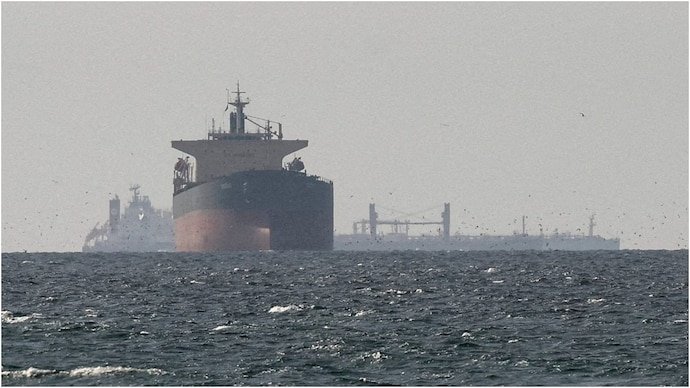
Shipping companies with vessels stranded in the region are now being targeted by phishing scams promising “safe passage” in exchange for cryptocurrency payments. What appears to be a lifeline is, in reality, a carefully crafted trap.
This development reveals a growing intersection between geopolitical conflict and cybercrime where uncertainty becomes a weapon, and desperation becomes an entry point.
Why the Strait of Hormuz Matters So Much
The Strait of Hormuz is not just another shipping lane it is one of the most critical chokepoints in the global energy supply chain.
At its peak, the strait has handled:
- Nearly 20% of the world’s oil shipments
- A significant share of global liquefied natural gas (LNG) trade
Any disruption here sends ripple effects across global markets, impacting fuel prices, supply chains, and economic stability.
In recent months, however, the strait has become increasingly unpredictable, with restrictions, closures, and military tensions creating a bottleneck for maritime traffic.
For shipping companies, this means uncertainty, delays, and mounting financial pressure.
The Perfect Storm for Scammers
Where there is uncertainty, scams often follow and the current situation in Hormuz is a textbook example.
Hundreds of vessels have been left waiting, unsure of when or if they will be able to pass through safely. This creates an environment where:
- Time-sensitive decisions are critical
- Communication channels are stretched
- Verification processes may be rushed or bypassed
Scammers exploit exactly these conditions.
By posing as officials or intermediaries, they send messages offering guaranteed transit in exchange for payment often in cryptocurrencies like Bitcoin or Tether.
To a company facing heavy losses from delays, such offers can appear tempting.
Inside the Scam: How It Works
The phishing operation follows a familiar but highly targeted pattern.
Step 1: Impersonation
Fraudsters pose as representatives of authorities controlling access to the strait, lending credibility to their messages.
Step 2: Urgency
Messages emphasize limited windows for safe passage, pushing recipients to act quickly.
Step 3: Payment Demand
Victims are asked to pay a “clearance fee” in cryptocurrency often justified as a transit toll or security charge.
Step 4: Disappearance
Once payment is made, the scammers vanish, leaving the vessel stranded and the company at a loss.
This model is not new, but its application in a maritime geopolitical context is relatively rare and particularly dangerous.
Why Cryptocurrency Is Central to the Fraud
Cryptocurrencies play a key role in enabling these scams.
They offer:
- High anonymity for recipients
- Irreversible transactions
- Global accessibility without traditional banking oversight
For scammers, this makes Crypto the ideal payment method.
For victims, it makes recovery nearly impossible.
This dynamic highlights a broader challenge: as digital currencies become more mainstream, they are also becoming more attractive tools for fraud.
Real-World Consequences: More Than Just Financial Loss
The impact of these scams goes beyond immediate financial damage.
Companies that fall victim may face:
- Extended delays if decisions are based on false information
- Operational disruptions affecting supply chains
- Reputational damage with clients and partners
In some cases, misinformation linked to scams could even lead vessels into unsafe situations, compounding the risks.
In a high-stakes environment like the Strait of Hormuz, the margin for error is extremely small.
Comparison: Traditional Maritime Risks vs Modern Cyber Threats
| Risk Type | Traditional Threats | Modern Cyber Threats |
|---|---|---|
| Nature | Physical (piracy, conflict) | Digital (phishing, fraud) |
| Visibility | Visible and trackable | Hidden and deceptive |
| Response | Security forces, escorts | Cybersecurity and verification |
| Impact | Immediate physical danger | Financial and operational damage |
A New Kind of Maritime Vulnerability
This situation highlights a shift in how vulnerabilities are emerging in global trade.
Historically, risks at sea were primarily physical piracy, storms, or military conflict. Today, digital threats are becoming just as significant.
The Hormuz phishing scams demonstrate that:
- Cyber threats can exploit real-world crises
- Operational stress increases susceptibility to fraud
- Global trade systems are only as secure as their weakest communication link
This convergence of physical and digital risk represents a new frontier for maritime security.
What Shipping Companies Can Do
To counter these threats, companies must adopt stricter verification and cybersecurity practices.
- Verify all communications through official government channels
- Avoid making payments based on unsolicited messages
- Train staff to पहचान phishing attempts and suspicious requests
- Use secure communication systems for sensitive decisions
In high-risk zones, caution is not optional it is essential.
Broader Implications: A Warning for Global Trade
The Hormuz scams are not an isolated phenomenon. They are part of a larger trend where cybercriminals adapt quickly to global events.
Whether it is conflict zones, natural disasters, or economic disruptions, crises create opportunities for exploitation.
This means that:
- Cybersecurity must be integrated into risk management strategies
- Real-time intelligence sharing is critical
- Companies must remain vigilant even under pressure
Ignoring these lessons could leave industries vulnerable to similar attacks in the future.
Conclusion: When Crisis Meets Cybercrime
The phishing scams in the Strait of Hormuz reveal a stark reality: modern conflicts are no longer confined to physical spaces.
They extend into digital realms, where misinformation and fraud can be just as disruptive as blockades and gunfire.
For shipping companies, the challenge is no longer just navigating dangerous waters it is also navigating deceptive information.
In a world where uncertainty is rising, the ability to distinguish between opportunity and deception may be the most valuable skill of all.
For breaking news and live news updates, like us on Facebook or follow us on Twitter and Instagram. Read more on Latest World on thefoxdaily.com.






COMMENTS 0