- What Is the Pakistan “Cypher” Controversy?
- Why Imran Khan’s Foreign Policy Became Controversial
- Pakistan’s Military: The Real Power Center?
- Why the Leak Matters Politically
- Could the Leak Change Public Opinion?
- The US-Pakistan Relationship Has Always Been Transactional
- The China Factor Behind the Crisis
- The Ukraine War Connection
- Why Imran Khan Remains Politically Dangerous
- Could This Affect Pakistan-US Relations?
- Conclusion
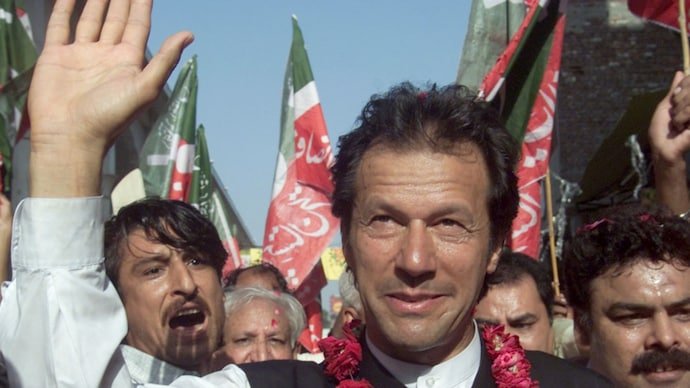
The release of a leaked Pakistani diplomatic cable linked to former Prime Minister Imran Khan’s ouster has once again shaken Pakistan’s already volatile political landscape.
The classified document, reportedly detailing a conversation between Pakistan’s former ambassador to the United States and senior US State Department official Donald Lu, has revived allegations that Washington quietly supported political efforts to remove Khan from power in 2022.
For Khan’s supporters, the leak represents long-awaited validation of claims that were once dismissed as political theatre. For critics, however, the Controversy still falls short of proving a direct US-engineered regime change operation.
Regardless of which interpretation ultimately prevails, the leak has reopened deeper questions about Pakistan’s fragile democracy, the role of its Military establishment, and the country’s historically complicated relationship with the United States.
And in a region already shaped by great-power rivalry involving China, Russia, the Gulf states, and the US, the implications stretch far beyond Islamabad.
What Is the Pakistan “Cypher” Controversy?
The controversy centers around a diplomatic cable commonly referred to in Pakistan as the “cypher” allegedly sent by Pakistan’s ambassador in Washington to Islamabad following a meeting with US officials shortly before Imran Khan lost a no-confidence vote in April 2022.
According to reports, the cable documented concerns expressed by US officials regarding Khan’s foreign policy positions and hinted that relations between Washington and Islamabad could improve if political changes occurred in Pakistan.
The phrase “all will be forgiven,” allegedly used during the discussion, has become the most politically explosive element of the leak.
Khan has long argued that his removal was not merely the result of domestic opposition Politics, but part of a coordinated effort involving:
- Sections of Pakistan’s military establishment
- Opposition political parties
- Foreign powers unhappy with his policies
The United States has repeatedly denied any involvement.
Washington has consistently maintained that Pakistan’s political transition was a constitutional domestic process.
Why Imran Khan’s Foreign Policy Became Controversial
At the heart of the controversy is Imran Khan’s attempt to pursue what he described as an “independent foreign policy.”
During his tenure, Khan increasingly signaled that Pakistan would not automatically align with US geopolitical priorities.
Several developments strained ties between Islamabad and Washington:
| Issue | Why It Mattered |
|---|---|
| Refusal to host US military bases | Complicated US post-Afghanistan strategy |
| Closer engagement with China | Raised concerns amid US-China rivalry |
| Moscow visit during Ukraine invasion | Created diplomatic friction with the West |
| Neutral position on Russia-Ukraine war | Frustrated US and European allies |
| Emphasis on strategic autonomy | Reduced traditional dependence on Washington |
The timing of Khan’s Moscow visit became particularly controversial.
He arrived in Russia on the same day Moscow launched its invasion of Ukraine a moment that instantly transformed the visit into a geopolitical embarrassment for both Pakistan and the West.
Although Khan argued the trip had been planned earlier and focused on economic cooperation, critics accused him of poor diplomatic judgment.
The visit intensified perceptions in Washington that Pakistan under Khan was drifting away from traditional US alignment.
Pakistan’s Military: The Real Power Center?
No analysis of Pakistani politics is complete without discussing the military establishment.
For decades, Pakistan’s army has remained the country’s most powerful institution, shaping National Security, foreign policy, and often civilian politics itself.
Even during periods of civilian rule, military influence has remained deeply embedded in Governance.
Many political analysts argue that no Pakistani Prime Minister can govern effectively without at least tacit support from the military leadership.
Imran Khan himself was once widely viewed as having a relatively cooperative relationship with the military establishment during the early phase of his government.
However, reports of tensions later emerged over:
- Military appointments
- Foreign policy direction
- Control over intelligence institutions
- Economic management
- Political authority
According to claims surrounding the leaked cable, sections of Pakistan’s military may have begun distancing themselves from Khan well before the no-confidence vote.
If true, that would fit a long historical pattern in Pakistan where civilian leaders lose power after relations with the military deteriorate.
Why the Leak Matters Politically
The significance of the leak lies less in proving a Hollywood-style coup and more in reinforcing public perceptions.
In Pakistan, perceptions often become political reality.
For Khan’s supporters, the cable strengthens three core beliefs:
- Foreign powers opposed Khan’s independent policies
- Pakistan’s military establishment abandoned him
- Domestic opposition parties benefited from external pressure
This narrative has become central to Khan’s political identity since his removal.
He has increasingly portrayed himself as:
- An anti-establishment figure
- A nationalist resisting foreign influence
- A victim of elite political engineering
- A leader punished for strategic independence
That messaging has resonated strongly with many younger Pakistani voters frustrated by traditional political dynasties and economic instability.
Could the Leak Change Public Opinion?
Possibly but perhaps not in the way some expect.
Pakistan’s political Environment is already deeply polarized.
For Khan supporters, the leak confirms what they already believed. For opponents, it may still fall short of proving direct US orchestration.
The real impact may therefore be institutional rather than purely electoral.
The leak could further damage:
- Public trust in political institutions
- Confidence in civilian governance
- Relations between civilian leaders and the military
- Pakistan-US public perception
It may also deepen anti-American sentiment among sections of the Pakistani population.
The US-Pakistan Relationship Has Always Been Transactional
The controversy also highlights the complicated history between Pakistan and the United States.
For decades, the relationship has largely revolved around strategic interests rather than ideological alignment.
Pakistan has been important to Washington because of:
- Its location near Afghanistan
- Its nuclear arsenal
- Counterterrorism cooperation
- Regional intelligence operations
- Its rivalry with India
- Its proximity to China and Iran
But the relationship has also been marked by deep mistrust.
American officials have frequently accused Pakistan of maintaining links with extremist networks, while Pakistani leaders have accused Washington of abandoning Pakistan whenever strategic priorities change.
This cycle of cooperation and suspicion has defined relations for decades.
The leaked cable controversy fits directly into that broader historical pattern.
The China Factor Behind the Crisis
One of the most overlooked aspects of the controversy is China.
Pakistan’s growing partnership with China especially through the China-Pakistan Economic Corridor (CPEC) has significantly altered regional Geopolitics.
China views Pakistan as a critical strategic partner in South Asia.
For the US, however, expanding Chinese influence in Pakistan creates strategic concerns, particularly as Washington’s rivalry with Beijing intensifies globally.
Khan’s government was often viewed as strongly supportive of deeper China ties.
Some analysts believe Washington became increasingly uncomfortable with Pakistan moving closer to China while simultaneously resisting American strategic requests.
That does not automatically prove regime-change involvement. But it helps explain why geopolitical tensions around Khan’s government intensified.
The Ukraine War Connection
The leaked report’s claims regarding Pakistan’s alleged military supplies linked to the Ukraine war add another layer of complexity.
If accurate, they suggest that Pakistan’s strategic orientation shifted noticeably after Khan’s removal.
This would reinforce the perception among Khan supporters that the post-Khan government aligned itself more closely with Western geopolitical priorities.
The timing matters because the Ukraine war dramatically increased global pressure on countries to choose sides diplomatically.
Pakistan traditionally prefers balancing relationships rather than openly aligning with one major power bloc.
Khan’s removal therefore became intertwined with broader global realignment narratives.
Why Imran Khan Remains Politically Dangerous
Despite imprisonment and legal challenges, Imran Khan remains one of Pakistan’s most influential political figures.
His popularity stems from several factors:
- Anti-corruption messaging
- Nationalist rhetoric
- Youth support
- Celebrity status from cricket
- Opposition to dynastic politics
- Claims of resisting foreign interference
The leaked cable could strengthen his political mythology even further.
In many ways, Khan has transformed from a traditional politician into a broader anti-establishment symbol.
That makes him uniquely difficult for Pakistan’s political system to neutralize completely.
Could This Affect Pakistan-US Relations?
Officially, probably not dramatically in the immediate term.
Strategically, both countries still need each other for regional security cooperation.
However, the leak could further complicate public perceptions and political trust between Islamabad and Washington.
In Pakistan, accusations of foreign interference carry enormous emotional and political weight because of the country’s long history of military rule, external alliances, and geopolitical dependency.
Even unproven allegations can significantly shape domestic political narratives.
The controversy may therefore continue influencing Pakistani politics long after the immediate headlines fade.
Conclusion
The leaked Pakistani diplomatic cable has reignited one of the most explosive political controversies in recent South Asian history.
While the document may not conclusively prove a direct US-led conspiracy to remove Imran Khan, it has strengthened perceptions that geopolitical pressure, military calculations, and domestic political maneuvering intersected during Pakistan’s 2022 political crisis.
The leak matters because it touches the deepest fault lines within Pakistan:
- Civilian versus military power
- National sovereignty versus foreign influence
- Strategic independence versus geopolitical dependence
- Democratic legitimacy versus institutional control
For Imran Khan’s supporters, the cable represents vindication. For critics, it remains circumstantial evidence wrapped in political narrative.
But regardless of interpretation, the controversy reveals an enduring truth about Pakistan: politics in Islamabad is rarely just domestic.
It is almost always connected to larger Global Power struggles and those battles often shape the fate of leaders long before voters do.
For breaking news and live news updates, like us on Facebook or follow us on Twitter and Instagram. Read more on Latest World on thefoxdaily.com.




COMMENTS 0