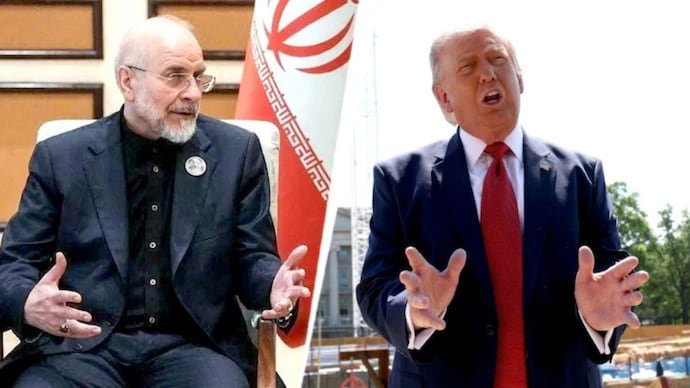
The latest round of Iran-US negotiations has encountered significant turbulence after senior Iranian officials publicly declared that Tehran will not move forward with any agreement unless it receives concrete guarantees and measurable benefits before fulfilling its own obligations. The comments reflect a broader pattern of distrust that has defined relations between the two countries for decades and highlight the complex challenges facing diplomats attempting to reach a breakthrough.
At the center of the dispute is Iran’s insistence that any future agreement must deliver immediate and verifiable outcomes rather than relying on political assurances from Washington. The remarks come amid reports that the United States has presented a revised framework with tougher conditions related to Iran’s nuclear activities, regional behavior, and broader security commitments.
As negotiations continue against the backdrop of ongoing regional tensions, the stakes extend far beyond Tehran and Washington. The outcome could influence Global Energy Markets, Middle East stability, international shipping routes, and the future of nuclear non-proliferation efforts.
Why Iran Says It No Longer Trusts US Promises
The central theme emerging from Iran’s latest position is a lack of confidence in American commitments.
Iranian Parliament Speaker and chief negotiator Mohammad Bagher Qalibaf made it clear that Tehran’s approach is now based on outcomes rather than assurances. According to Iranian officials, previous experiences have convinced the country that promises alone cannot protect its economic and strategic interests.
The issue is deeply rooted in the history of nuclear negotiations between the two countries. Iranian policymakers frequently argue that past agreements failed to deliver the economic relief they expected, while Washington maintains that Tehran did not fully address international concerns regarding its nuclear program and regional activities.
This mutual distrust has created a negotiation environment where every proposal is scrutinized not only for its content but also for the mechanisms that guarantee implementation.
The Core Disagreements Blocking a Breakthrough
Despite months of diplomatic engagement, several major obstacles continue to prevent a final agreement.
Nuclear Restrictions
The United States continues to prioritize preventing Iran from developing nuclear weapons capabilities. Washington seeks stronger verification measures, broader inspection access, and long-term restrictions designed to ensure that Iran’s nuclear activities remain peaceful.
Iran maintains that its nuclear program is intended for civilian purposes and insists on retaining what it describes as its legitimate rights under international agreements.
Sanctions Relief
One of Tehran’s biggest demands remains economic relief.
Iran wants meaningful access to frozen assets, restored financial channels, and reduced economic pressure before making major concessions. Iranian officials argue that Sanctions Relief must be immediate, measurable, and irreversible.
The United States, however, generally prefers a phased approach where relief is tied to verified compliance.
Verification and Guarantees
Perhaps the most difficult issue involves guarantees.
Iran wants assurances that future US administrations cannot easily abandon a new agreement. From Tehran’s perspective, long-term stability is impossible if political changes in Washington can overturn years of diplomatic work.
This demand presents a challenge because US presidents cannot fully bind future administrations to international arrangements without broader institutional support.
The Strategic Importance of the Strait of Hormuz
Another major point of contention involves the Strait of Hormuz, one of the world’s most important maritime chokepoints.
The narrow waterway connects the Persian Gulf to global markets and serves as a critical route for energy exports.
Any disruption in the strait can immediately impact:
- Global oil prices
- Natural gas shipments
- Shipping insurance costs
- Energy-importing economies
- International trade flows
The recent dispute over future management of the waterway highlights how negotiations now extend beyond nuclear issues into broader questions of regional security and economic influence.
While US officials have suggested that future arrangements could guarantee unrestricted maritime passage, Iranian sources have publicly disputed those claims, demonstrating the communication gaps that continue to complicate Diplomacy.
Why the Strait of Hormuz Matters to the Entire World
The significance of the Strait of Hormuz cannot be overstated.
| Factor | Global Importance |
|---|---|
| Energy Exports | Major route for oil and gas shipments |
| Trade Security | Critical shipping corridor |
| Regional Stability | Key strategic location in the Gulf |
| Market Impact | Influences global energy prices |
| Geopolitical Influence | Important leverage point for regional powers |
Even limited disruptions can trigger market volatility, making any agreement involving the strait highly significant for governments and businesses worldwide.
Trump’s Focus on Nuclear Guarantees
US President Donald Trump has consistently framed the negotiations around one primary objective: ensuring that Iran does not develop nuclear weapons.
From Washington’s perspective, this remains the foundation upon which all other aspects of a future agreement must be built.
American officials argue that strong verification systems are necessary because of the strategic implications of nuclear proliferation in an already volatile region.
For the United States and many of its allies, preventing a nuclear arms race in the Middle East remains a top security priority.
Iran, however, contends that its nuclear activities have been repeatedly mischaracterized and insists that any future agreement must recognize its sovereignty and technological rights.
The Economic Dimension Often Overlooked
Much of the public discussion focuses on diplomacy and security, but economics may ultimately determine whether a deal succeeds.
Years of sanctions have significantly affected Iran’s Economy, limiting access to international financial systems, foreign investment, and global trade networks.
As a result, Iranian negotiators increasingly emphasize economic outcomes rather than symbolic diplomatic victories.
For Tehran, the success of any agreement will likely be judged by measurable improvements in:
- Foreign investment flows
- Access to international banking
- Energy export revenues
- Economic growth
- Currency stability
- Employment opportunities
This focus on tangible economic benefits explains why Iranian officials repeatedly stress the need for practical results before implementing commitments.
Regional Implications Beyond Iran and the US
The negotiations have consequences that extend far beyond bilateral relations.
Countries across the Middle East are closely monitoring developments because the outcome could reshape regional power dynamics.
A successful agreement could potentially:
- Reduce Military tensions
- Improve maritime security
- Stabilize energy markets
- Encourage regional dialogue
- Lower the risk of direct confrontation
Conversely, a collapse in negotiations could increase uncertainty and elevate the risk of further escalation.
Regional governments, international investors, and energy markets are therefore treating the talks as a critical geopolitical event rather than merely a diplomatic exercise.
A Comparison With Previous Nuclear Negotiations
The current talks differ significantly from earlier negotiation rounds.
| Previous Negotiations | Current Negotiations |
|---|---|
| Focused heavily on nuclear restrictions | Broader focus including regional security |
| Emphasis on diplomatic commitments | Emphasis on tangible guarantees |
| Gradual sanctions relief | Demand for immediate economic benefits |
| Less focus on shipping routes | Hormuz plays a major role |
| Different geopolitical environment | Heightened regional tensions |
This evolution demonstrates how the negotiation landscape has become more complex, involving economic, military, and strategic considerations that go well beyond nuclear issues alone.
A Unique Insight: Trust Has Become More Valuable Than Sanctions Relief
One overlooked aspect of the current standoff is that trust itself may now be the most valuable currency in negotiations.
Historically, agreements often focused on technical details such as enrichment limits, inspection regimes, and sanctions schedules. Today, the debate increasingly centers on whether either side believes the other will honor its commitments.
This shift represents a deeper challenge.
Even if negotiators resolve technical disputes, the absence of confidence could still undermine implementation. In many ways, rebuilding trust may be harder than drafting the agreement itself.
Without credible enforcement mechanisms, even well-designed diplomatic frameworks risk becoming politically unsustainable.
What Happens If Talks Fail?
The possibility of negotiations collapsing remains a real concern.
If no agreement is reached, several scenarios could emerge:
- Continued economic sanctions
- Increased regional tensions
- Greater uncertainty in energy markets
- Expanded military deterrence measures
- More difficult future negotiations
None of these outcomes are particularly attractive to either side, which explains why diplomatic channels remain active despite the public disagreements.
However, both Washington and Tehran appear determined to avoid making concessions that could be perceived domestically as weakness.
Future Outlook
The latest statements from Iran indicate that negotiations have entered a critical phase. Tehran’s demand for guarantees and tangible results reflects lessons it believes it learned from previous diplomatic experiences, while the United States continues to prioritize strong nuclear safeguards and regional stability.
Although the talks remain alive, major differences persist over sanctions relief, verification mechanisms, nuclear commitments, and the future status of strategic assets such as the Strait of Hormuz.
The most likely outcome in the near term is continued negotiation rather than a rapid breakthrough. Both sides still appear interested in reaching an agreement, but neither seems willing to compromise on its core demands.
Conclusion
Iran’s declaration that it has “no trust” in promises without tangible results underscores the fundamental challenge facing current Iran-US negotiations. Beyond disputes over nuclear activities and sanctions, the talks have evolved into a broader test of whether decades of mistrust can be overcome through practical guarantees and verifiable commitments.
As discussions continue, the outcome will influence not only relations between Tehran and Washington but also global energy markets, regional security dynamics, and international diplomacy. Whether negotiators can bridge the gap between political assurances and enforceable guarantees may ultimately determine the success or failure of one of the world’s most consequential diplomatic efforts.
For breaking news and live news updates, like us on Facebook or follow us on Twitter and Instagram. Read more on Latest World on thefoxdaily.com.






COMMENTS 0