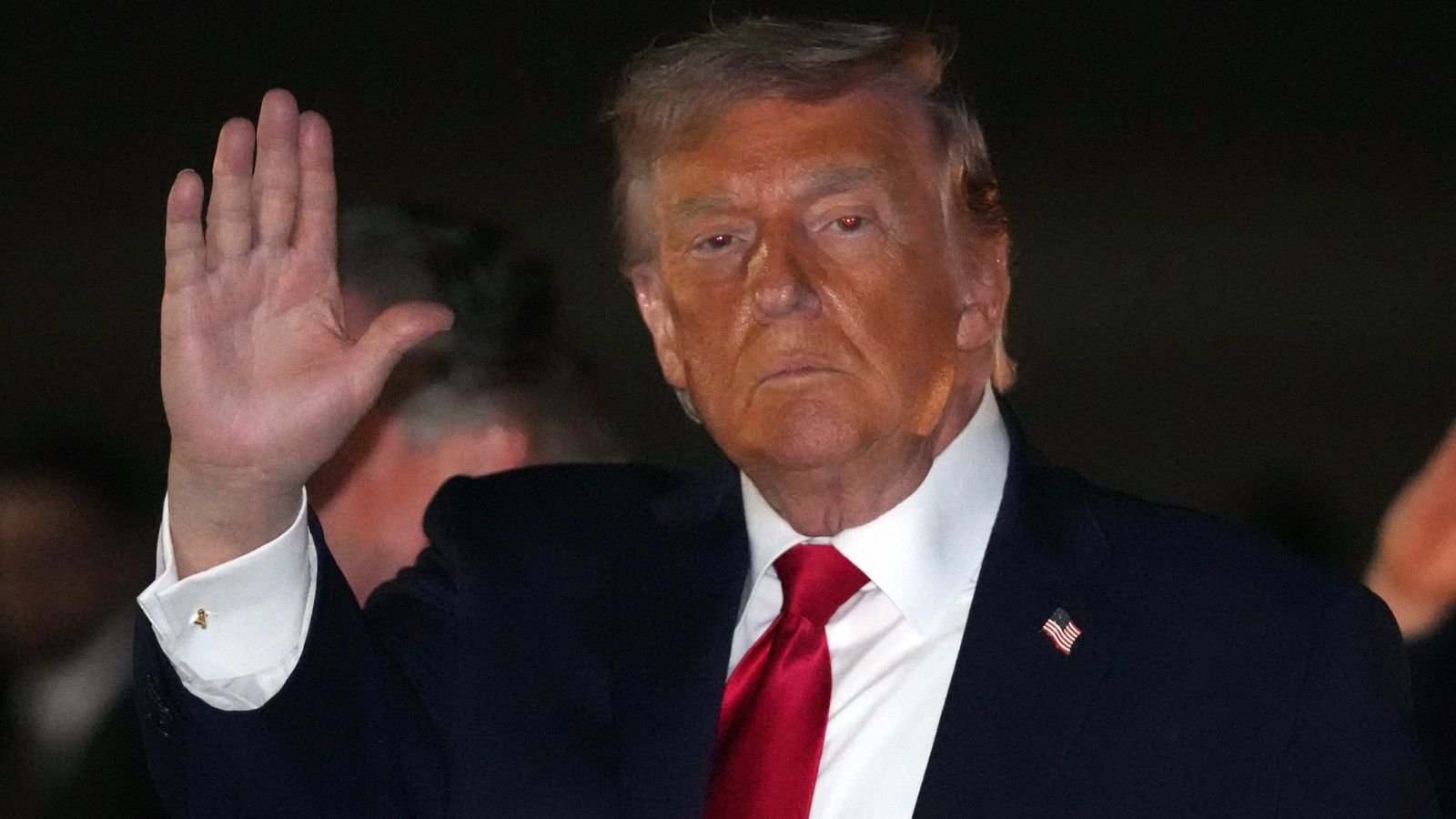
The debate over America’s military involvement in Iran has entered a new phase after the US Senate approved a War Powers Resolution directing President Donald Trump to halt military operations against Tehran. The vote has triggered a fierce political battle in Washington, with Trump accusing lawmakers of undermining National Security while opponents argue that congress is simply exercising its constitutional authority over war-making powers.
The controversy highlights a longstanding tension in American Politics: who ultimately decides when the United States goes to war—the president or Congress? While the immediate dispute centers on Iran, the broader implications could shape future US military interventions, presidential authority, and America’s role in the Middle East for years to come.
What Is the Iran War Powers Resolution?
The War Powers Resolution approved by the Senate seeks to require the president to cease military operations against Iran unless Congress explicitly authorizes continued action.
The measure is rooted in the War Powers Resolution of 1973, legislation passed in the aftermath of the Vietnam War to limit a president’s ability to commit US forces to prolonged military engagements without congressional approval.
The law requires presidents to notify Congress when introducing US forces into hostilities and generally limits military operations without authorization to a specific timeframe.
The Senate’s approval marks a significant political moment because it reflects bipartisan concern over the scope and duration of military action against Iran.
Why Donald Trump Is Furious
Trump reacted strongly to the Senate vote, arguing that lawmakers intervened at precisely the wrong moment.
According to the president, Iran was under intense pressure and showing signs of willingness to negotiate. He claimed that congressional efforts to restrict military action sent the wrong signal to Tehran and complicated ongoing diplomatic and strategic efforts.
His argument is based on a traditional negotiating principle: maintaining maximum leverage over an adversary.
From Trump’s perspective, any public indication that Washington is divided internally could encourage Iran to adopt a tougher negotiating stance.
The president went further by suggesting that the resolution effectively communicated weakness to a longtime adversary and reduced America’s bargaining power.
The Constitutional Question at the Center of the Debate
The dispute is not merely political—it touches one of the most important constitutional questions in American Governance.
The US Constitution divides military authority between Congress and the president.
- Congress has the power to declare war.
- The president serves as Commander-in-Chief of the armed forces.
- Congress controls military funding.
- The executive branch manages military operations.
Over time, presidents from both parties have expanded their ability to conduct military actions without formal declarations of war.
Examples include:
- Korea
- Vietnam
- Kosovo
- Afghanistan
- Iraq
- Syria
- Counterterrorism operations worldwide
As a result, Congress has repeatedly sought mechanisms to reassert its authority over military engagements.
Why Some Lawmakers Supported the Resolution
Supporters argue that military action against Iran carries significant risks that require broader democratic oversight.
Several lawmakers expressed concerns that prolonged conflict could:
- Trigger a wider regional war
- Increase Energy Market instability
- Put American troops at greater risk
- Create long-term financial burdens
- Escalate tensions with Iran-backed groups across the Middle East
Many senators also believe that Congress should play a more active role in authorizing major military campaigns, especially when operations could evolve into a sustained conflict.
Their position is less about supporting Iran and more about preserving constitutional checks and balances.
How Iran Fits Into the Bigger Middle East Picture
The Senate vote comes amid a highly complex regional environment.
Iran remains one of the most influential actors in West Asia through its political, military, and economic networks.
The country maintains relationships with various regional groups and plays a central role in several geopolitical flashpoints.
Any major military confrontation involving Iran could affect:
- Global oil markets
- Shipping through strategic waterways
- Regional security arrangements
- US alliances in the Middle East
- International trade routes
These factors explain why policymakers across Washington remain deeply divided over the best approach toward Tehran.
The Economic Stakes Are Enormous
One often overlooked aspect of the debate is the economic impact of prolonged instability involving Iran.
Iran sits near critical energy transportation routes that carry a significant portion of the world’s oil exports.
Any escalation can influence:
- Crude oil prices
- Inflation levels
- Global shipping costs
- Energy security strategies
- Financial market sentiment
For major economies already dealing with inflationary pressures, disruptions in Energy Markets could create additional economic challenges.
| Issue | Potential Impact |
|---|---|
| Military Escalation | Higher regional security risks |
| Oil Supply Disruption | Rising energy prices globally |
| Congress-President Dispute | Policy uncertainty in Washington |
| Extended Conflict | Increased defence spending |
| Diplomatic Breakdown | Reduced chances of negotiated settlement |
Political Implications for Trump
The Senate vote also reveals a shifting political landscape.
Historically, presidents often receive broad support from their party during military conflicts. However, the Iran resolution demonstrates that concerns about executive authority can sometimes override partisan loyalty.
For Trump, the vote presents both challenges and opportunities.
On one hand, it creates an institutional obstacle that could complicate military planning. On the other hand, it allows him to portray himself as a leader being constrained by political opponents at a critical moment.
This narrative could resonate with supporters who favor a strong executive approach to national security.
How Previous Presidents Faced Similar Battles
Trump is far from the first president to clash with Congress over military authority.
Presidents from both parties have encountered similar disputes.
- Richard Nixon faced congressional pushback during Vietnam.
- Ronald Reagan encountered scrutiny over military operations abroad.
- Bill Clinton faced questions during interventions in the Balkans.
- George W. Bush dealt with debates over Iraq and Afghanistan.
- Barack Obama confronted challenges regarding Libya and Syria.
The recurring nature of these conflicts illustrates the enduring tension between executive flexibility and legislative oversight.
What This Means for US-Iran Relations
The immediate impact on US-Iran Relations remains uncertain.
If negotiations continue, both sides may attempt to use the political developments in Washington to strengthen their bargaining positions.
Iranian officials could interpret congressional opposition as evidence that the United States lacks a unified strategy.
Conversely, American negotiators may argue that diplomatic progress is necessary precisely because domestic political support for extended conflict is limited.
The outcome will likely depend on whether both sides see greater advantages in negotiation or confrontation.
A Critical Insight Many Analysts Overlook
Much of the discussion focuses on military operations, but the larger issue may be credibility.
Modern geopolitical competition increasingly revolves around perception, alliances, economic influence, and strategic signaling.
When major powers display internal divisions during international crises, adversaries and allies alike pay close attention.
The Senate vote therefore matters not only because of its legal implications but because of the message it sends about how American institutions manage national security decisions during periods of conflict.
Future Outlook: A Defining Test of Presidential War Powers
The Senate’s approval of the Iran War Powers Resolution represents one of the most significant congressional challenges to presidential military authority in recent years.
For Donald Trump, it is a direct political and strategic setback that he argues weakens American leverage against Iran. For supporters of the resolution, it is a necessary reaffirmation of Congress’s constitutional role in decisions involving war and peace.
The coming weeks will determine whether the dispute remains a domestic political battle or evolves into a broader constitutional confrontation. Much will also depend on developments in US-Iran negotiations, regional security conditions, and whether Diplomacy can prevent further escalation.
Regardless of the immediate outcome, the episode underscores a larger reality: in modern Geopolitics, the struggle over military power is often fought not only on the battlefield but also within the institutions of government itself.
For breaking news and live news updates, like us on Facebook or follow us on Twitter and Instagram. Read more on Latest World on thefoxdaily.com.





COMMENTS 0