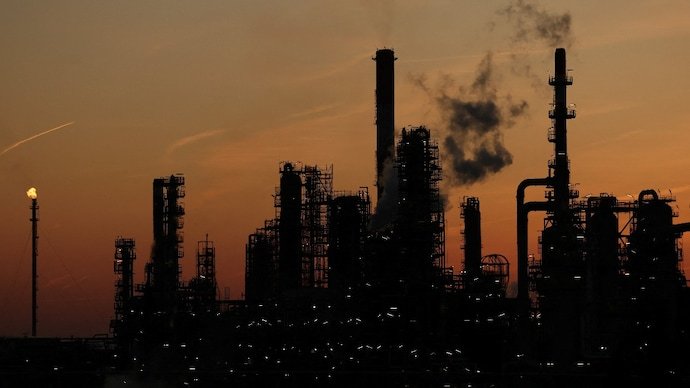
- What Is Driving Iran’s Oil Storage Crisis?
- The Strait of Hormuz Factor: A Critical Chokepoint
- How Fast Is the Situation Escalating?
- Why Production Cuts Are More Serious Than They Sound
- Domestic Impact: Could Iran Face a Fuel Shortage?
- Global Ripple Effects: Will Oil Prices Rise?
- Alternative Routes: Why Rail Is Not a Real Solution
- Comparison: Storage Crisis vs Supply Shock
- A Unique Insight: The Hidden Lag in Economic Impact
- What Happens If the Crisis Continues?
- Conclusion: A Tipping Point with Global Implications
Iran is approaching a dangerous tipping point in its oil sector. As geopolitical tensions intensify and export routes tighten, the country is running out of space to store its crude. What might sound like a technical constraint is, in reality, a high-stakes economic and geopolitical problem. If storage capacity is exhausted, Iran could be forced to shut down production wells an outcome that carries both immediate and long-term consequences.
The situation raises a pressing question: could Iran’s oil storage crisis evolve into a broader fuel disruption, affecting not just its domestic economy but also global Energy Markets?
What Is Driving Iran’s Oil Storage Crisis?
The core issue is simple: oil continues to be produced, but it cannot be exported at normal levels. As a result, excess crude is being diverted into storage facilities on land and at sea. However, these storage options are finite and rapidly filling up.
Recent estimates suggest Iran has only a limited window before storage reaches its practical limits. Once that happens, the country will have little choice but to slow or halt production. Unlike other industries, oil extraction cannot always be paused and resumed easily. Shutting down wells can damage reservoirs and reduce future output potential.
This creates a cascading problem. Reduced exports lead to storage pressure. Storage pressure forces production cuts. Production cuts weaken long-term capacity. Each stage amplifies the next.
The Strait of Hormuz Factor: A Critical Chokepoint
At the center of this crisis lies one of the world’s most strategic waterways: the Strait of Hormuz. A significant portion of global oil shipments passes through this narrow corridor, making it a vital artery for energy trade.
Disruptions in this region whether due to military tensions, blockades, or sanctions have an outsized impact. In Iran’s case, restrictions on tanker movement have sharply reduced its ability to ship crude to international buyers. This has effectively trapped oil within the country’s supply chain.
When exports slow dramatically but production continues, the imbalance becomes unsustainable. Storage tanks begin to fill, floating storage options become saturated, and logistical flexibility disappears.
How Fast Is the Situation Escalating?
The pace of change has been striking. Within a matter of weeks, Iran’s export volumes have reportedly dropped significantly. Where millions of barrels per day once moved through global markets, only a fraction is now being shipped.
This sharp decline has forced a rapid buildup of inventory. Onshore storage facilities are nearing operational limits, and even floating storage often used as a temporary buffer is becoming constrained.
The timeline matters here. Oil systems require buffer capacity to function efficiently. Once that buffer disappears, even minor disruptions can trigger major operational challenges.
Why Production Cuts Are More Serious Than They Sound
At first glance, reducing oil production might seem like a manageable adjustment. But in reality, it carries deeper risks. Oil wells and reservoirs are complex systems that rely on consistent pressure and flow. Abrupt shutdowns can lead to:
- Permanent damage to reservoirs
- Reduced long-term output capacity
- Higher costs when restarting production
- Technical complications in maintaining field stability
This means that the consequences of a storage-driven shutdown could extend far beyond the current crisis. It could reshape Iran’s production capabilities for years.
Domestic Impact: Could Iran Face a Fuel Shortage?
Ironically, a country rich in oil resources can still face fuel shortages under certain conditions. This happens when refining, distribution, or import systems are disrupted.
If production slows and Logistics remain constrained, Iran could struggle to maintain a steady supply of refined fuels such as petrol and diesel. This would affect transportation, industry, and daily life.
Fuel shortages often lead to:
- Rising domestic prices
- Long queues at fuel stations
- Increased inflationary pressure
- Public dissatisfaction and economic strain
Such outcomes can quickly turn an industrial issue into a broader socio-economic challenge.
Global Ripple Effects: Will Oil Prices Rise?
The global oil market is highly sensitive to supply disruptions. Even a modest reduction in output from a major producer can influence prices, especially if it coincides with geopolitical uncertainty.
However, the impact depends on several factors:
- Whether other oil-producing nations increase output to compensate
- The current level of global demand
- Existing запас reserves held by major economies
- Market expectations and investor sentiment
If other producers step in to fill the gap, price shocks may be limited. But if the disruption persists or escalates, it could tighten supply and push prices upward.
Alternative Routes: Why Rail Is Not a Real Solution
Facing export constraints, Iran has explored alternative methods to move its oil, including transporting crude by rail to international markets. While technically feasible, this approach comes with significant limitations.
Rail transport is slower, more expensive, and far less efficient than maritime Shipping. It also lacks the scale required to handle large volumes of crude oil. As a result, it cannot replace traditional export routes.
This makes it more of a temporary workaround than a sustainable solution. Its use highlights the severity of the current constraints rather than offering a long-term fix.
Comparison: Storage Crisis vs Supply Shock
| Factor | Storage Crisis | Supply Shock |
|---|---|---|
| Primary Cause | Excess oil with nowhere to go | Sudden drop in production or exports |
| Immediate Effect | Production cuts | Price spikes |
| Long-Term Impact | Damage to production capacity | Market volatility |
| Global Influence | Indirect | Direct and immediate |
Iran’s situation is unique because it sits at the intersection of both scenarios. A storage crisis is forcing production cuts, which could eventually translate into a supply shock.
A Unique Insight: The Hidden Lag in Economic Impact
One often-overlooked aspect of oil disruptions is the time lag between physical supply changes and financial consequences. Oil shipments can take weeks to reach buyers, and payments may take even longer to process.
This means that the full economic impact of reduced exports may not be immediately visible. Revenue losses could surface months after the initial disruption, creating a delayed but potentially severe financial strain.
This lag can complicate policy responses, as governments must act before the full extent of the problem becomes clear.
What Happens If the Crisis Continues?
If current conditions persist, several outcomes are likely:
- Further production cuts as storage limits are reached
- Increased pressure on domestic fuel supply
- Potential tightening of global oil markets
- Greater reliance on alternative and less efficient export methods
The longer the situation continues, the more difficult it becomes to reverse. Oil systems are built for stability, not prolonged disruption.
Conclusion: A Tipping Point with Global Implications
Iran’s oil storage crisis is more than a logistical challenge it is a signal of deeper structural stress within its energy sector. With limited space left to store crude and restricted ability to export it, the country faces tough choices that could shape its economic future.
While the immediate effects are being felt domestically, the broader implications could extend far beyond its borders. Energy markets are interconnected, and disruptions in one region often ripple outward.
The key question now is not just whether Iran will run out of storage, but how the world will respond if it does. Will other producers stabilize the market, or will the imbalance trigger a wider fuel shock?
In the coming weeks, that answer may become clearer. For now, one thing is certain: The situation is evolving – and the stakes are rising.
For breaking news and live news updates, like us on Facebook or follow us on Twitter and Instagram. Read more on Latest World on thefoxdaily.com.






COMMENTS 0