- What Happened in the Latest Gaza Strikes?
- Why Ceasefire Talks Are Failing Again
- The Bigger Shift Happening Inside Gaza
- The Humanitarian Crisis Is Deepening Again
- Israel’s Strategy Appears to Be Evolving
- Why Hamas Is Still Difficult to Eliminate
- The Regional Dimension Is Becoming More Dangerous
- Why a Post-War Gaza Plan Remains Elusive
- The Civilian Cost Is Reshaping Global Opinion
- Could the Conflict Continue for Years?
- Conclusion
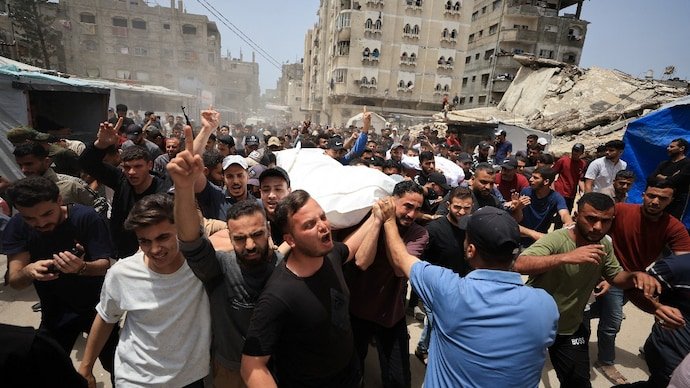
The fragile hopes for a Gaza ceasefire suffered another major setback after fresh Israeli airstrikes killed at least eight Palestinians across different parts of the enclave, underscoring how Diplomacy and battlefield realities continue moving in opposite directions.
As indirect negotiations involving Israel, Hamas, the United States, and regional mediators remain deadlocked, violence on the ground has intensified once again. Israeli Military operations are expanding, Hamas continues attempting to preserve operational control inside Gaza, and civilians remain trapped between military escalation and political paralysis.
The latest strikes targeted multiple locations including Khan Younis and Deir al-Balah, with Israel saying it was targeting Hamas militants and commanders involved in planning attacks. Palestinian health officials, meanwhile, reported civilian casualties, including deaths near a community kitchen and a tent encampment.
The renewed violence highlights a harsh reality increasingly acknowledged by analysts across the region: even after months of warfare, neither side appears close to achieving a decisive political breakthrough.
What Happened in the Latest Gaza Strikes?
According to Palestinian medical officials, Israeli strikes on Sunday killed at least eight people across several parts of Gaza.
The attacks reportedly included:
- A strike near a police post in Khan Younis
- An attack near a tent encampment sheltering displaced people
- An Airstrike near a community kitchen in Deir al-Balah
- Additional strikes near a bakery and urban areas in central Gaza
Israel said the operations targeted Hamas militants and commanders posing threats to Israeli forces.
The Israeli military stated that one strike specifically targeted a Hamas commander involved in developing anti-tank missile systems.
Separately, Israel announced the killing of senior Hamas military figures, including Izz al-Din al-Haddad and Bahaa Baroud, whom it accused of orchestrating attacks against Israeli troops and civilians.
Hamas confirmed some of the deaths but did not immediately issue strong retaliatory rhetoric, something regional observers found notable given the group’s historical messaging patterns.
Why Ceasefire Talks Are Failing Again
The latest escalation reflects deeper problems within ongoing ceasefire negotiations.
At the core of the deadlock are fundamentally incompatible demands.
| Israel’s Position | Hamas Position |
|---|---|
| Hamas must disarm | Israeli military must fully withdraw |
| Long-term security guarantees | Permanent ceasefire guarantees |
| Prevention of Hamas rearmament | End of blockade and restrictions |
| Hostage and prisoner arrangements | Political survival and governance role |
| International oversight mechanisms | Recognition of Palestinian authority and rights |
Neither side currently appears willing to compromise on its core objectives.
For Israel, allowing Hamas to remain militarily operational is viewed as an unacceptable security risk after the October attacks.
For Hamas, disarmament without major political guarantees would effectively amount to surrender.
That gap remains enormous.
The Bigger Shift Happening Inside Gaza
One of the most important developments often overlooked in headline coverage is the changing balance of control inside Gaza itself.
Although Israel maintains military superiority and controls large portions of territory, Hamas continues demonstrating an ability to:
- Maintain underground operational networks
- Preserve local influence
- Reassert authority in some areas
- Coordinate attacks despite losses
- Exploit governance vacuums
This matters because modern conflicts are rarely decided purely through territorial control.
Urban warfare increasingly becomes a contest of endurance, local legitimacy, and political survival.
Even weakened militant groups can remain strategically relevant if they retain organizational cohesion and ideological support.
That is one reason why the conflict continues despite enormous destruction.
The Humanitarian Crisis Is Deepening Again
Every renewed round of fighting worsens Gaza’s already catastrophic humanitarian situation.
Large sections of the population remain displaced, infrastructure has been heavily damaged, and essential services continue operating under extreme pressure.
Critical concerns include:
- Food shortages
- Hospital overcrowding
- Unsafe drinking water
- Disease risks
- Fuel scarcity
- Mental health trauma
- Collapse of local economic activity
The strike near a community kitchen particularly highlighted how civilian survival systems themselves are increasingly vulnerable.
In modern urban conflicts, aid distribution points, shelters, and civilian infrastructure often become dangerously close to military activity, intentionally or otherwise.
That dramatically raises civilian risks.
Israel’s Strategy Appears to Be Evolving
In recent weeks, Israeli military operations in Gaza appear increasingly focused on:
- Targeted eliminations of Hamas commanders
- Precision strikes on operational infrastructure
- Preventing Hamas regrouping
- Maintaining territorial pressure
- Reducing large-scale troop exposure
This reflects a broader strategic shift seen in prolonged conflicts where initial high-intensity campaigns gradually transition into sustained counterinsurgency-style operations.
Instead of attempting total battlefield dominance through continuous large offensives, militaries increasingly rely on:
- Intelligence-driven strikes
- Drone surveillance
- Special operations
- Precision targeting
- Containment strategies
However, such approaches can prolong conflicts rather than resolve them politically.
Why Hamas Is Still Difficult to Eliminate
One major reason ceasefire talks remain complicated is that Hamas is not simply a conventional military organization.
It functions simultaneously as:
- A militant group
- A political movement
- A social network
- A governing authority in parts of Gaza
- An ideological resistance organization
That structure makes complete military eradication extraordinarily difficult.
History shows that insurgent movements embedded within civilian populations often survive even under overwhelming military pressure.
In many conflicts globally, battlefield losses do not necessarily translate into political disappearance.
That reality complicates Israel’s long-term objectives.
The Regional Dimension Is Becoming More Dangerous
The Gaza conflict no longer exists in isolation.
Regional tensions involving:
- Iran
- Hezbollah
- US military presence
- Red Sea attacks
- Syrian militias
- Gulf diplomacy
have transformed Gaza into part of a much larger geopolitical confrontation.
The recent period following the Israel-Iran escalation has further intensified regional instability.
Analysts increasingly warn that prolonged fighting in Gaza risks creating:
- Wider regional radicalization
- Diplomatic fragmentation
- Economic instability
- Long-term humanitarian displacement
- Expanded proxy warfare
This is one reason global powers continue pushing for ceasefire frameworks despite repeated failures.
Why a Post-War Gaza Plan Remains Elusive
One of the biggest unanswered questions is what happens after the fighting eventually stops.
There is still no universally accepted post-war governance model for Gaza.
Several possibilities have been discussed internationally:
- Return of Palestinian Authority governance
- International peacekeeping arrangements
- Temporary Arab-led administration
- Long-term Israeli security oversight
- Technocratic interim governance structures
But every proposal faces enormous political obstacles.
Neither Israel nor Hamas fully trusts many of the proposed frameworks, while regional actors remain divided over responsibility-sharing.
Without a credible political roadmap, military operations risk becoming cyclical rather than transformative.
The Civilian Cost Is Reshaping Global Opinion
International reactions to the Gaza conflict have become increasingly polarized.
While many countries continue recognizing Israel’s security concerns after Hamas attacks, growing civilian casualties and humanitarian suffering in Gaza have intensified criticism worldwide.
Public opinion shifts are especially visible among:
- Younger global audiences
- Human rights organizations
- University movements
- Civil society groups
- International humanitarian networks
The conflict has increasingly become not only a military confrontation, but also a global information and legitimacy battle.
Images from Gaza now influence international diplomacy almost as much as battlefield developments themselves.
Could the Conflict Continue for Years?
Many regional analysts now fear that Gaza could enter a prolonged low-intensity conflict phase rather than moving toward a decisive resolution.
Several factors support that concern:
- No clear political settlement framework
- Persistent ideological hostility
- Deep mutual distrust
- Regional proxy dynamics
- Humanitarian collapse risks
- Fragmented international diplomacy
Modern urban conflicts increasingly evolve into drawn-out cycles of:
- Military escalation
- Temporary ceasefires
- Political negotiations
- Renewed violence
That pattern now appears increasingly visible in Gaza.
Conclusion
The latest Israeli strikes in Gaza and the faltering ceasefire talks reveal how far the conflict remains from a sustainable resolution.
Despite military operations, diplomatic pressure, and international mediation efforts, both Israel and Hamas continue holding positions that leave little room for immediate compromise.
The battlefield dynamics are evolving, but the underlying political crisis remains unresolved.
Meanwhile, civilians in Gaza continue paying the highest price as humanitarian conditions worsen and hopes for lasting peace repeatedly collapse under the weight of mistrust, security fears, and competing political goals.
The central challenge now is no longer simply ending one round of fighting.
It is determining whether any realistic political framework exists that can prevent the next one.
For breaking news and live news updates, like us on Facebook or follow us on Twitter and Instagram. Read more on Latest World on thefoxdaily.com.






COMMENTS 0