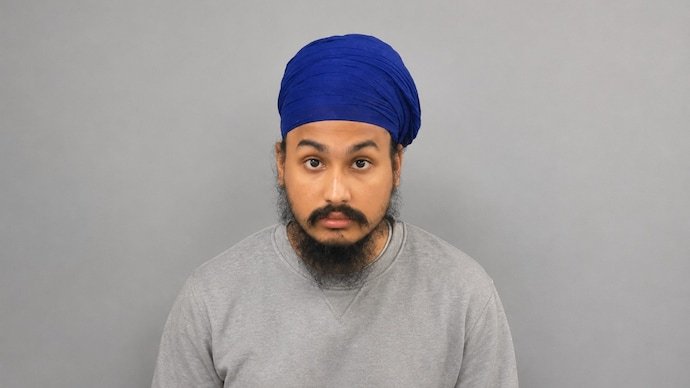
The murder of 18-year-old Henry Nowak in Southampton has become one of the most debated criminal cases in the United Kingdom, not only because of the tragic loss of a young life but also because of the political, religious, and social controversies that emerged in its aftermath. What began as a criminal trial has evolved into a national conversation about religious identity, public safety, Immigration, community relations, and the responsibilities of political leaders during periods of heightened tension.
Following the conviction of 23-year-old Vickrum Digwa for the fatal stabbing, Sikh lawmakers, community organizations, and government officials have sought to clarify a key point: the crime should not be associated with Sikhism, and the weapon used in the attack was not legally recognized as a kirpan.
The debate has since expanded beyond the courtroom, touching on broader questions about how societies balance religious freedoms with public safety while preventing isolated criminal acts from being used to stigmatize entire communities.
The Case That Triggered National Attention
The case centered on the fatal stabbing of Henry Nowak in Southampton, a city on England’s south coast. Following a criminal Investigation and trial, Vickrum Digwa was convicted of murder and sentenced to life imprisonment with a minimum term of 21 years.
During the legal proceedings, Digwa reportedly argued that the blade he carried was connected to Sikh religious practice. However, the court rejected that argument and concluded that the weapon involved was an offensive weapon rather than a protected religious article.
This distinction became central to the Controversy because British law provides specific protections for the carrying of kirpans under certain circumstances. The court’s ruling effectively separated the criminal act from legitimate Sikh religious practice.
Despite that legal clarification, public debate intensified after the case gained widespread attention on Social Media and political platforms.
Understanding the Kirpan and Its Religious Significance
At the heart of the controversy lies widespread public misunderstanding about the kirpan.
The kirpan is one of the Five Ks, articles of faith traditionally worn by initiated Sikhs. It is not viewed as a weapon by practicing Sikhs but as a symbol of responsibility, justice, courage, and the duty to protect the vulnerable.
The kirpan represents spiritual values rather than violence. For centuries, it has formed an important part of Sikh religious identity across the world.
Many countries, including the United Kingdom, Canada, India, and the United States, recognize the religious significance of the kirpan and have developed legal accommodations allowing Sikhs to carry it under specific conditions.
These protections exist because the kirpan is considered an essential expression of Religious Freedom.
Why Sikh MPs Felt Compelled to Intervene
As public discussion intensified, a group of British Members of Parliament of Sikh heritage issued a joint statement emphasizing that the crime should not be linked to Sikhism.
The lawmakers argued that the court had already established an important fact: the weapon used in the attack was not protected under religious exemptions and therefore could not be characterized as a kirpan in the legal sense.
The intervention reflected concerns that misinformation could lead to misunderstandings about Sikh beliefs and unfairly associate an entire faith community with the actions of a single individual.
Community leaders often face such challenges after high-profile criminal incidents when public attention shifts from individual accountability toward broader questions of identity, religion, or ethnicity.
The Legal Difference Between a Kirpan and an Offensive Weapon
One of the most important yet often overlooked aspects of the case is the legal distinction between a ceremonial religious article and an offensive weapon.
British law recognizes the right of Sikhs to carry a kirpan as part of their faith. However, that protection is not unlimited.
The legal system examines factors such as:
- The purpose of carrying the blade.
- Its design and characteristics.
- The circumstances in which it is carried.
- Whether it is being used for religious observance.
- Whether it is used in a criminal act.
When a blade is used to commit a violent crime, legal protections associated with religious practice do not apply.
The court’s ruling reinforced this principle by determining that the weapon involved in the murder was not protected under religious exemptions.
How Social Media Amplified the Controversy
Modern criminal cases rarely remain confined to courtrooms. Social media platforms can rapidly transform local incidents into national and even international controversies.
The Southampton case gained additional attention after footage from the incident circulated online and became the subject of commentary from prominent political figures.
As often happens in the digital era, competing narratives emerged.
Some focused on criminal accountability and public safety. Others framed the incident through the lens of immigration policy, religious identity, or alleged institutional bias.
The result was a highly polarized discussion that extended far beyond the facts established during the trial.
Immigration Politics and the Expansion of the Debate
The controversy intensified further when political commentary linked the case to broader immigration debates.
Across Europe and North America, questions surrounding migration, integration, public safety, and national identity have become increasingly prominent political issues.
High-profile criminal incidents often become focal points within these debates, regardless of whether they accurately represent broader trends.
Critics argue that using individual criminal cases to make sweeping conclusions about entire communities risks inflaming tensions and distorting public understanding.
Supporters of stricter immigration policies, meanwhile, frequently cite such incidents as evidence supporting their concerns.
The challenge for policymakers is separating legitimate policy discussions from rhetoric that could contribute to social division.
The Importance of Community Relations in Diverse Societies
The United Kingdom is one of the world’s most diverse democracies, with communities representing a wide range of religious, ethnic, and cultural backgrounds.
Maintaining social cohesion requires careful handling of sensitive incidents that have the potential to create misunderstandings between communities.
When criminal acts become associated with religious or ethnic identities, innocent individuals often experience consequences despite having no connection to the offense.
This is one reason community leaders and elected representatives frequently emphasize the distinction between individual responsibility and collective identity.
The statements issued by Sikh MPs and community organizations reflect efforts to preserve that distinction.
Why the Victim’s Family’s Message Matters
One of the most significant aspects of the controversy has been the response from those closest to the tragedy.
According to government statements, the family of Henry Nowak expressed a desire that his death not be used to fuel hatred, division, or community tensions.
This message highlights a broader issue that often emerges after high-profile crimes.
Victims and their families frequently seek justice and accountability while rejecting attempts to politicize personal tragedies for broader ideological purposes.
Their perspective serves as a reminder that behind political debates and social media discussions lies the profound human cost of violent crime.
The Challenge of Balancing Religious Freedom and Public Safety
The case also raises important questions about how liberal democracies balance religious rights with public safety concerns.
Religious freedom remains a cornerstone of democratic societies, protecting the ability of individuals to practice their faith without discrimination.
At the same time, governments have a responsibility to ensure public safety and prevent violence.
The Southampton case demonstrates that these objectives are not necessarily in Conflict.
By distinguishing between legitimate religious practice and criminal behavior, legal systems can protect both religious liberty and public Security.
| Issue | Religious Freedom Perspective | Public Safety Perspective |
|---|---|---|
| Kirpan | Protected religious article | Subject to legal safeguards |
| Religious Rights | Protected by law | Balanced with public interest |
| Criminal Acts | No religious exemption applies | Full legal accountability |
| Community Relations | Avoid collective blame | Promote social stability |
What the Case Reveals About Modern Political Discourse
Beyond the criminal proceedings, the controversy highlights how quickly modern political debates can evolve.
Social media platforms, international political commentary, and rapid information sharing can transform local incidents into global discussions within hours.
This creates both opportunities and risks.
Important issues receive greater public attention, but misinformation, emotional reactions, and polarized narratives can spread just as rapidly.
As societies become increasingly interconnected, responsible communication from political leaders, media organizations, and community representatives becomes more important than ever.
The Future of the Kirpan Debate in Britain
The case is unlikely to end broader discussions about the kirpan and religious accommodations in Britain.
However, legal experts generally expect the established framework protecting Sikh religious practice to remain intact because the court’s ruling clearly distinguished between legitimate religious observance and criminal misuse of a weapon.
Sikh organizations are likely to continue public Education efforts aimed at improving understanding of the faith and preventing misconceptions.
At the same time, policymakers may face renewed calls to review existing regulations governing knives, weapons, and religious exemptions.
Any future discussions will need to balance constitutional freedoms, public safety concerns, and community trust.
Conclusion
The murder of Henry Nowak remains, first and foremost, a tragic criminal case that resulted in the loss of a young life and a life sentence for the perpetrator. Yet the controversy that followed demonstrates how modern societies often struggle to separate individual criminal responsibility from broader questions of religion, identity, and Politics.
The court’s ruling established a clear legal position: the weapon used was an offensive weapon and not a protected kirpan. Sikh MPs, community leaders, and government officials have reinforced that distinction, emphasizing that the crime should not be linked to Sikhism as a faith.
As public debate continues, the case serves as a reminder that justice requires both accountability for criminal acts and fairness toward communities that bear no responsibility for them. In an era of rapid information sharing and political polarization, preserving that balance may be more important than ever.
For breaking news and live news updates, like us on Facebook or follow us on Twitter and Instagram. Read more on Latest World on thefoxdaily.com.






COMMENTS 0