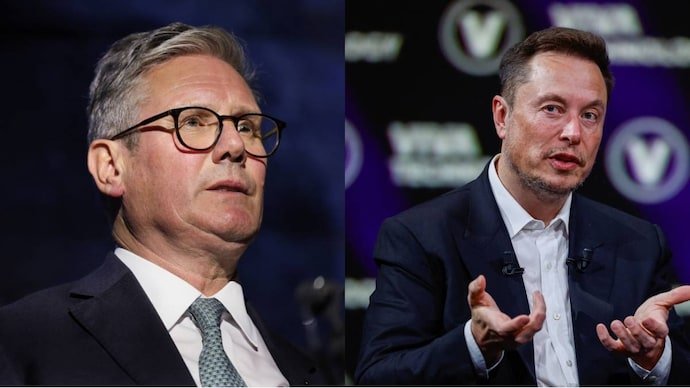
A new political and technological battle is unfolding in Britain, and at its center are two powerful figures with very different visions of the internet: UK Prime Minister Keir Starmer and tech billionaire Elon Musk.
The Controversy began after the British government unveiled plans to prohibit children under 16 from accessing major social media platforms. Supporters describe the proposal as a necessary step to protect young people from harmful content, online addiction, cyberbullying, and mental health risks. Critics, however, argue that the policy could become a gateway to broader surveillance and restrictions on online freedom.
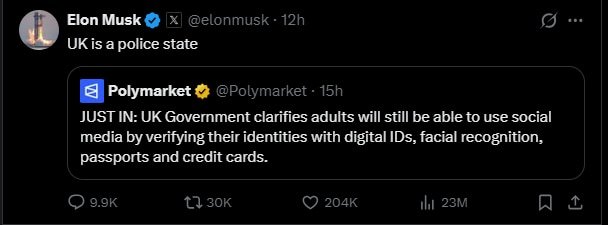
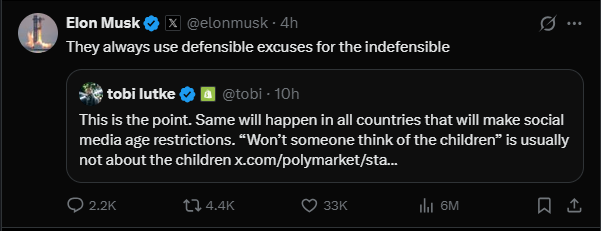
Among those critics is Elon Musk, owner of X and one of the world’s most influential voices in Technology. His description of Britain as a “police state” has transformed a domestic policy proposal into an international debate about the future of the internet.
Why Is Britain Planning a Social Media Ban for Under-16s?
The British government says the internet children use today is fundamentally different from the one that existed even a decade ago.
Modern social media platforms rely heavily on sophisticated recommendation algorithms designed to maximize engagement. While these systems help users discover content, critics argue they can also expose young people to harmful material, excessive screen time, misinformation, and unhealthy social comparisons.
The proposed legislation seeks to address several concerns:
- Growing mental health challenges among teenagers
- Cyberbullying and online harassment
- Exposure to harmful or inappropriate content
- Addictive platform design features
- Sleep disruption linked to excessive screen usage
- Online exploitation and grooming risks
Prime Minister Keir Starmer has positioned the proposal as part of a broader effort to prioritize children’s wellbeing over technology companies’ engagement-driven business models.
The government hopes to pass legislation by the end of the year, with implementation expected in the following spring.
What Exactly Has Elon Musk Objected To?
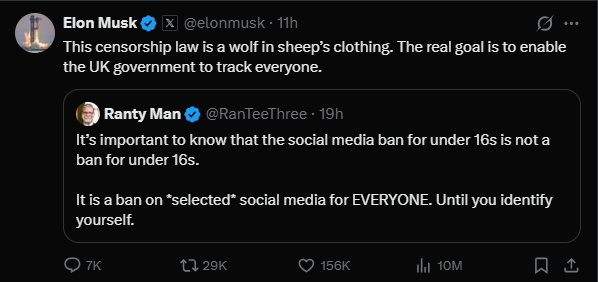
Elon Musk’s criticism extends beyond the concept of protecting children online.
His primary concern centers on how such restrictions would be enforced.
Age-based social media bans generally require platforms to verify a user’s age. In practice, this can involve identity checks using government documents, facial recognition technology, credit card verification, or digital identity systems.
Musk argues that these verification mechanisms create a far larger issue than the ban itself.
In several posts on X, he suggested that mandatory identity verification could give authorities unprecedented visibility into citizens’ online activities.
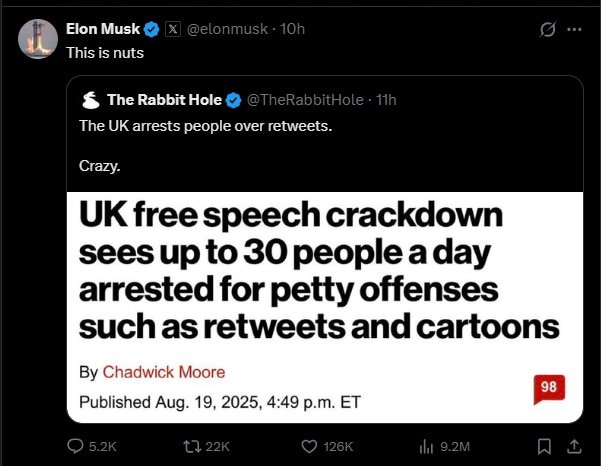
His criticism reflects a broader concern shared by Privacy advocates worldwide: that systems initially introduced for Child Protection can eventually expand into wider monitoring frameworks.
The Core Debate: Child Safety vs Digital Privacy
The dispute highlights one of the most important policy questions of the digital age.
How can governments protect children online without compromising the privacy and freedoms of everyone else?
Supporters and critics often view the issue through completely different lenses.
| Supporters of the Ban | Critics of the Ban |
|---|---|
| Protects children from harmful content | May require intrusive identity verification |
| Reduces excessive social media usage | Could expand government oversight |
| Addresses mental health concerns | Raises privacy and surveillance concerns |
| Limits online exploitation risks | Creates potential data security risks |
| Places responsibility on platforms | May reduce online anonymity |
The challenge for policymakers is balancing these competing concerns without creating unintended consequences.
Why Age Verification Is Becoming a Global Flashpoint
Age verification has emerged as one of the most controversial issues in internet regulation.
To prevent underage access, platforms must first determine who is underage. That sounds simple in theory but becomes far more complex in practice.
Several verification methods are currently being considered globally:
- Government-issued identity documents
- Facial age estimation technology
- Digital identity wallets
- Banking and payment verification
- Mobile network verification
- Third-party age-checking services
Each method presents trade-offs between convenience, privacy, security, and effectiveness.
Privacy advocates worry that once identity verification becomes mandatory, anonymous participation online could become increasingly difficult.
The Global Trend Toward Social Media Restrictions
Britain is not acting in isolation.
Governments around the world are becoming increasingly concerned about the impact of social media on young people.
Australia made headlines by becoming the first country to introduce a nationwide Social Media Ban for users under 16.
Other nations are considering similar approaches, including stricter age limits, parental controls, screen-time restrictions, and content moderation requirements.
The growing momentum reflects a broader shift in how governments view technology platforms.
For years, regulators largely focused on competition and data privacy. Today, children’s Online Safety has become a major policy priority.
What Research Says About Social Media and Young People
The push for stricter regulations is driven partly by a growing body of research examining the effects of social media usage among adolescents.
Researchers have identified several potential concerns:
- Increased anxiety and stress
- Sleep disruption
- Lower attention spans
- Body image issues
- Cyberbullying exposure
- Reduced face-to-face interaction
However, the research is not entirely one-sided.
Many studies also highlight benefits associated with online communities, educational resources, creative expression, and maintaining social connections.
This complexity explains why governments continue to struggle with finding the right regulatory balance.
Why Musk Sees a Bigger Threat
For Musk, the debate is not merely about social media.
It is about the future structure of the internet itself.
Throughout his public statements, Musk has consistently argued that governments frequently justify new regulatory powers using broadly supported goals such as safety, security, or child protection.
His concern is that such powers can gradually expand beyond their original purpose.
This perspective reflects a long-standing libertarian view within the technology sector that prioritizes individual freedom, minimal government intervention, and strong protections for online anonymity.
Whether one agrees with Musk or not, his criticism taps into broader concerns shared by privacy advocates, digital rights organizations, and some Cybersecurity experts.
The Economic Impact on Technology Platforms
The proposed restrictions could also have significant business implications.
Social media companies generate enormous value from user engagement.
Teenagers represent an important demographic for many platforms because they are among the most active users.
Mandatory age restrictions could affect:
- User growth rates
- Advertising revenue
- Platform engagement metrics
- Data collection practices
- Product development strategies
Companies may also face substantial compliance costs associated with implementing age-verification systems.
A Comparison With Previous Internet Regulation Battles
The current debate resembles earlier conflicts over internet regulation.
Over the past two decades, governments have introduced measures targeting:
- Copyright infringement
- Online extremism
- Misinformation
- Data privacy
- Cybersecurity threats
- Harmful content
Each regulatory effort generated similar questions about the balance between public protection and individual freedoms.
The under-16 social media ban may ultimately become another defining chapter in this ongoing struggle.
The Hidden Question Competitors Are Missing
Much of the public discussion focuses on whether children should use social media.
But a more important question may be whether social media itself needs to be redesigned.
Critics of current platforms argue that the real issue is not children’s access but engagement-driven algorithms optimized to maximize attention.
If governments focus solely on age restrictions without addressing platform design, some experts believe the root causes of the problem may remain unresolved.
This perspective suggests that future regulation could increasingly target recommendation systems, addictive design features, and algorithmic transparency rather than simply restricting access based on age.
What Happens Next?
The British government is expected to release additional details regarding the legislation and enforcement mechanisms in the coming months.
Several critical questions remain unanswered:
- How will age verification work?
- What data will platforms collect?
- Who will oversee compliance?
- How will privacy be protected?
- What penalties will platforms face?
- Will exemptions exist?
The answers to these questions will likely determine whether public support grows or weakens.
Conclusion: A Defining Battle for the Future of the Internet
The clash between Elon Musk and the UK government is about far more than a social media ban.
It represents a broader conflict between two competing priorities of the digital age: protecting vulnerable users and preserving individual freedoms.
Supporters believe stronger regulation is necessary to shield children from the harmful effects of online platforms. Critics fear that the same measures could normalize identity verification, reduce privacy, and expand government oversight of digital life.
As Britain moves closer to implementing its proposed restrictions, the outcome could influence policymakers worldwide. Other countries are closely watching the experiment, and whatever happens next may help shape the future of social media regulation for years to come.
The real question is no longer whether governments will regulate social media. It is how far they will go and whether citizens are willing to accept the trade-offs that come with it.
For breaking news and live news updates, like us on Facebook or follow us on Twitter and Instagram. Read more on Latest Technology on thefoxdaily.com.






COMMENTS 0