British Politics has once again entered a period of rapid change. Prime Minister Keir Starmer’s surprise resignation has triggered a Labour leadership race that could reshape the direction of the government, the economy and Britain’s political landscape years before the next general election is due.
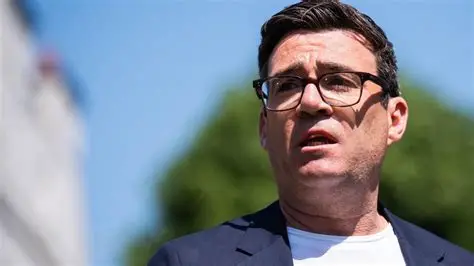
At the centre of the unfolding drama is Andy Burnham, the mayor of Greater Manchester and a veteran Labour politician WHO is widely regarded as the leading contender to replace Starmer. With key figures already lining up behind him and potential rivals hesitating, Burnham may be closer than ever to achieving an ambition that has eluded him for more than a decade: leading the Labour Party and governing from Downing Street.
The coming weeks will determine whether Labour opts for a swift coronation or a competitive leadership contest. Either way, the decision could influence Britain’s political trajectory well beyond the next election.
Why Keir Starmer’s Resignation Matters
Starmer’s departure is significant because it comes barely two years after he secured a commanding electoral victory and returned Labour to power.
When Labour won the 2024 general election, many expected Starmer to oversee a long period of political stability after years of turbulence under both Conservative and Labour governments. Instead, his administration struggled to meet public expectations.
Several factors contributed to declining support:
- Sluggish economic growth
- Persistent cost-of-living pressures
- Public service challenges
- Pressure from opposition parties on both left and right
- Internal dissatisfaction within Labour ranks
- Difficulty translating electoral victory into sustained public enthusiasm
His resignation reflects a broader reality facing modern British politics: electoral victories no longer guarantee long-term political security.
Who Is Andy Burnham?
Andy Burnham is one of Labour’s most recognizable political figures. First elected to Parliament in 2001, he served in several senior government roles, including Health Secretary, before becoming Mayor of Greater Manchester in 2017.
Over the past decade, Burnham has transformed his political image from Westminster insider to regional leader focused on practical solutions.
His leadership during major crises, including the Covid-19 pandemic and negotiations over regional funding, elevated his national profile and earned him support beyond traditional Labour voters.
Many political observers believe Burnham’s strength lies in his ability to connect with voters on a personal level, a quality some critics felt was lacking in Starmer’s more technocratic approach.
Understanding “Manchesterism”
One of Burnham’s most frequently discussed ideas is what supporters call “Manchesterism.”
The concept centers on greater regional empowerment, local decision-making and investment-led growth outside London.
Key principles include:
- Devolution of powers to regional authorities
- Improved public transport systems
- Affordable housing initiatives
- Skills and employment programs
- Local economic development strategies
- Community-focused public services
Burnham argues that many of Britain’s economic and social challenges stem from excessive centralization in London. His supporters believe applying Greater Manchester’s model nationally could help rebalance the economy.
How the Labour Leadership Election Works
Unlike presidential systems, Britain does not require a national election whenever a prime minister resigns.
Under the parliamentary system, the governing party simply chooses a new leader, who then becomes prime minister if they command a majority in the House of Commons.
| Leadership Race Stage | Timeline |
|---|---|
| Nominations Open | July 9 |
| Nominations Close | July 16 |
| Potential Immediate Appointment | July 17 |
| If Contest Required | Before Parliament Returns on September 1 |
Candidates must secure support from at least one-fifth of Labour MPs, creating a significant barrier to entry and limiting the number of viable contenders.
Why Wes Streeting’s Decision Changed Everything
The leadership race shifted dramatically when Wes Streeting declined to challenge Burnham and instead offered his backing.
Streeting had been viewed as one of the few figures capable of mounting a serious challenge. His decision removes a major obstacle and significantly strengthens Burnham’s position.
Political endorsements matter because they help signal where party power is consolidating. When influential figures unite behind a candidate early, potential challengers often reconsider their chances.
This is one reason many analysts now view Burnham as the overwhelming favourite.
Will Labour Choose Unity or Competition?
The central question facing Labour is whether a quick transition serves the party better than a contested race.
Supporters of a swift appointment argue that Britain needs political stability.
They believe:
- A long contest could expose internal divisions
- Media attention would focus on party disagreements
- Government decision-making could slow down
- Opposition parties would gain political opportunities
Others argue that leadership contests perform an important democratic function.
They believe candidates should be challenged publicly on:
- Economic policy
- Taxation
- Public spending
- Healthcare reform
- Defence priorities
- Immigration strategy
A competitive race, they argue, helps strengthen the eventual leader’s mandate.
The Bigger Challenge: Rebuilding Labour’s Popularity
Replacing Starmer will not automatically solve Labour’s political problems.
The next leader will inherit several significant challenges.
Britain’s economy continues to face slow productivity growth and persistent pressure on household finances. Public services remain under strain, while government finances leave limited room for large spending increases.
Meanwhile, Labour faces pressure from multiple directions.
| Political Rival | Challenge for Labour |
|---|---|
| Conservatives | Economic credibility and fiscal management |
| Reform UK | Immigration and working-class voters |
| Green Party | Progressive and younger voters |
| Liberal Democrats | Centrist and suburban constituencies |
The next Labour leader must find a way to hold together these diverse voter groups while maintaining government credibility.
How Britain’s Political System Creates Leadership Volatility
Starmer’s resignation highlights a broader trend in modern British politics.
Over the past decade, Britain has experienced an extraordinary turnover of prime ministers. Leadership changes that once occurred over many years now happen with increasing frequency.
Several factors contribute to this trend:
- Faster news cycles
- Increased social media scrutiny
- Economic uncertainty
- Higher voter expectations
- Growing ideological fragmentation
- Pressure from smaller political parties
This environment makes political leadership more difficult and less predictable than at any point in recent History.
What Burnham’s Leadership Could Mean for the Economy
Investors and business leaders will be watching Burnham closely if he becomes leader.
His reputation suggests a focus on regional investment and Infrastructure development rather than dramatic ideological shifts.
Areas likely to receive attention include:
- Transport modernization
- Housing development
- Skills training
- Regional economic growth
- Industrial policy
- Public service reform
However, Burnham has yet to present a detailed national economic programme, which is why some Labour MPs want a full leadership contest before handing him the keys to Downing Street.
The Political Opportunity Burnham Sees
Burnham’s supporters believe the timing may be ideal for his leadership bid.
Voters increasingly appear frustrated with ideological battles and are looking for practical solutions to everyday problems.
His image as a problem-solving regional leader aligns with this mood.
Unlike many Westminster politicians, Burnham has spent recent years governing outside London’s political bubble. Supporters argue this gives him a better understanding of issues facing ordinary communities.
Whether that perception translates into national popularity remains one of the biggest unanswered questions.
Prediction: A Swift Transition Appears Most Likely
While surprises remain possible, the political momentum currently favours a rapid leadership transition.
Burnham’s growing support among Labour MPs, combined with the reluctance of major rivals to challenge him, suggests the party may prioritize unity over a prolonged contest.
If no credible challenger emerges, Labour could complete the transition within weeks and focus on rebuilding public confidence before the next election cycle intensifies.
However, if additional candidates enter the race, Labour may face a more complicated debate about its future direction than many currently expect.
Conclusion
Keir Starmer’s resignation marks another major turning point in Britain’s increasingly volatile political era. The focus now shifts to Andy Burnham, whose rise from Greater Manchester mayor to Labour leadership frontrunner reflects both his personal political resilience and the party’s search for a fresh direction.
Whether Labour chooses a swift transition or a competitive contest, the stakes are exceptionally high. The next leader will inherit economic challenges, political fragmentation and growing voter frustration. Yet they will also have an opportunity to redefine Labour’s identity and shape Britain’s future before the next general election.
For now, Burnham stands closest to Downing Street. The coming weeks will reveal whether Labour views him as merely the frontrunner or as the leader capable of restoring the party’s fortunes and guiding Britain through its next chapter.
For breaking news and live news updates, like us on Facebook or follow us on Twitter and Instagram. Read more on Latest World on thefoxdaily.com.





COMMENTS 0