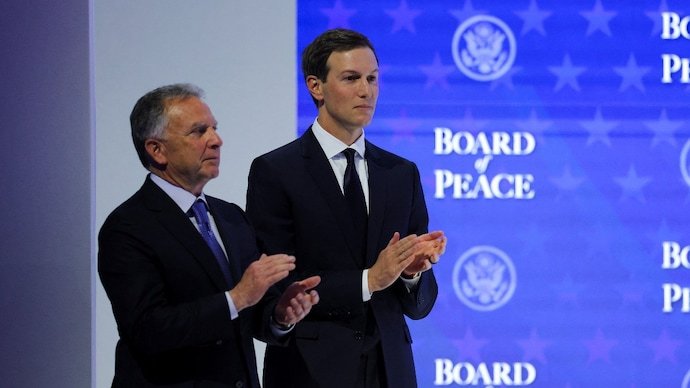
Diplomatic breakthroughs rarely begin with public announcements. More often, they start behind closed doors, far away from cameras and political speeches. That appears to be the case with reports that senior members of President Donald Trump‘s inner circle recently visited one of the United States‘ most sensitive nuclear research facilities as Washington intensifies efforts to secure a framework agreement with Iran.
The reported visit by Steve Witkoff and Jared Kushner to Tennessee’s Oak Ridge National Laboratory has drawn significant attention because of what it potentially reveals about the state of US-Iran negotiations. While officials have not publicly described the trip as part of a formal negotiating process, the timing and location suggest preparations are underway for a possible next stage in nuclear Diplomacy.
At stake is far more than a bilateral agreement. The outcome could influence regional Security, global oil markets, nuclear non-proliferation efforts, and the geopolitical balance of power across the Middle East for years to come.
What Happened and Why It Matters
Reports indicate that two of President Donald Trump’s most trusted advisers recently visited Oak Ridge National Laboratory, one of America’s premier nuclear research centers. The visit reportedly involved consultations with specialists in uranium processing, centrifuge technology, and nuclear verification systems.
The timing of the trip is significant. It comes as Washington and Tehran continue discussions aimed at establishing a memorandum of understanding that could eventually pave the way for comprehensive nuclear negotiations and a broader reduction in regional tensions.
While no agreement has been announced, the reported consultations suggest the United States is preparing for the technical realities of a potential deal rather than simply discussing political possibilities.
This distinction is important because successful nuclear agreements require far more than diplomatic signatures. They demand extensive scientific planning, verification mechanisms, and implementation frameworks that can take years to execute.
The Strategic Importance of Oak Ridge National Laboratory
The location itself may be the biggest clue about the seriousness of the negotiations.
Oak Ridge National Laboratory was established during the Manhattan Project and remains one of the world’s leading centers for nuclear science and advanced energy research. The nearby Y-12 National Security Complex is also deeply involved in managing sensitive nuclear materials and national security programs.
These facilities house some of America’s foremost experts in nuclear technology, enrichment processes, and non-proliferation efforts.
When senior policymakers seek advice from Oak Ridge specialists, it typically indicates discussions have progressed beyond broad diplomatic principles and into the realm of practical implementation.
In other words, officials may be preparing for what happens after a deal, not merely whether a deal can be reached.
The Real Challenge Behind Any Iran Nuclear Agreement
Public debate often focuses on political negotiations, but the technical side of nuclear diplomacy is equally important.
Even if Washington and Tehran reach a political understanding, experts would still need to solve numerous complex issues.
- How much uranium can Iran retain?
- What enrichment levels would be permitted?
- How would compliance be monitored?
- Who would conduct inspections?
- How would disputes be resolved?
- What safeguards would prevent future violations?
These questions require scientific expertise rather than political rhetoric.
The reported creation of a team of approximately 100 technical experts suggests that preparations are already underway to address these challenges should negotiations move forward.
The Core Disagreement: Uranium Enrichment
The central obstacle remains Iran’s uranium enrichment program.
The United States insists that any agreement must ensure Iran cannot develop a nuclear weapon. Iran, meanwhile, maintains that its nuclear activities are intended for peaceful purposes and argues that it has the right to enrich uranium for civilian energy production and scientific research.
This disagreement has been at the heart of nuclear diplomacy for more than two decades.
For Washington, enrichment capabilities raise concerns about potential weaponization. For Tehran, limiting enrichment is often viewed as a restriction on national sovereignty and technological advancement.
Bridging these competing perspectives remains the most difficult task facing negotiators.
Why Iran’s Uranium Stockpile Is So Important
One of the most sensitive issues in any future agreement will likely involve the management of Iran’s enriched uranium stockpile.
Nuclear material management is often one of the most technically demanding aspects of arms-control agreements.
Experts must determine how existing material is stored, monitored, transported, diluted, or repurposed. Each option requires extensive planning and verification.
The expertise available at Oak Ridge makes it uniquely positioned to provide guidance on these issues.
This helps explain why consultations with nuclear specialists could be a crucial part of the negotiation process.
How Recent Regional Tensions Changed the Negotiating Environment
The current diplomatic efforts are taking place against a backdrop of heightened instability across the Middle East.
Recent conflicts have disrupted trade routes, increased uncertainty in Energy Markets, and heightened concerns about regional security.
These developments have increased pressure on all parties to explore diplomatic solutions.
For governments, prolonged instability carries economic and political costs. For businesses, uncertainty creates risks that affect investment decisions and supply chains.
The result is a stronger incentive to pursue arrangements that reduce tensions and improve predictability.
The Economic Stakes Extend Far Beyond Washington and Tehran
A successful agreement would have implications far beyond the two countries directly involved.
| Sector | Potential Impact |
|---|---|
| Energy Markets | Greater supply stability and reduced volatility |
| Global Trade | Improved confidence in shipping routes |
| Investment | Increased regional economic activity |
| Manufacturing | More predictable energy costs |
| Financial Markets | Reduced geopolitical risk premiums |
Because oil and energy remain fundamental to the global economy, any reduction in geopolitical tensions can have widespread consequences.
A Comparison With Previous Nuclear Negotiations
Earlier rounds of diplomacy often focused primarily on political agreements before technical implementation plans were fully developed.
The current approach appears different.
Reports suggest technical experts are being consulted earlier in the process, potentially reflecting lessons learned from previous negotiations.
Preparing implementation frameworks in advance can reduce delays, misunderstandings, and compliance disputes later.
This proactive strategy may improve the chances of a future agreement functioning effectively if one is reached.
The Insight Most Analysts Are Missing
Much of the attention surrounding the story has focused on the secrecy of the visit.
However, the more significant development may be what the visit reveals about the confidence level of policymakers.
Governments do not typically mobilize large teams of nuclear specialists unless they see a realistic possibility of progress.
The real story is not that senior advisers visited a nuclear laboratory.
The real story is that planning appears to be shifting from theoretical discussions toward practical implementation.
That transition often occurs only when negotiators believe a diplomatic pathway is genuinely achievable.
Challenges That Could Still Prevent a Deal
Despite signs of progress, substantial obstacles remain.
- Disagreements over enrichment rights.
- Verification requirements.
- Sanctions-related concerns.
- Regional security disputes.
- Domestic political pressures.
- Questions about long-term compliance.
History demonstrates that even advanced negotiations can collapse when parties fail to resolve final differences.
Technical preparation increases readiness but does not guarantee success.
Future Outlook: A Potential Turning Point in US-Iran Relations
The reported consultations at Oak Ridge suggest that American policymakers are preparing for a scenario in which negotiations move beyond preliminary discussions and enter a more substantive phase.
If that happens, technical specialists will become just as important as diplomats and political leaders.
A successful agreement could reduce regional tensions, improve economic stability, and create a foundation for broader engagement between Washington and Tehran.
Failure, however, could deepen uncertainty and reinforce existing divisions.
The coming months may therefore represent one of the most consequential periods in US-Iran Relations in recent years.
Conclusion
The reported visit by Steve Witkoff and Jared Kushner to Oak Ridge National Laboratory offers a rare glimpse into the behind-the-scenes mechanics of modern diplomacy. While public attention often focuses on political negotiations, the success of any future agreement with Iran will ultimately depend on the technical expertise required to implement and verify its terms.
The consultations suggest that Washington is preparing seriously for the possibility of a breakthrough. Although significant challenges remain, the involvement of nuclear specialists indicates that discussions may be progressing beyond political rhetoric and toward practical planning.
Whether a final agreement emerges remains uncertain. What is clear, however, is that the reported Oak Ridge visit signals a level of preparation that reflects growing seriousness around the diplomatic process. In international negotiations, preparation often reveals more than public statements and this preparation appears unusually significant.
For breaking news and live news updates, like us on Facebook or follow us on Twitter and Instagram. Read more on Latest World on thefoxdaily.com.






COMMENTS 0