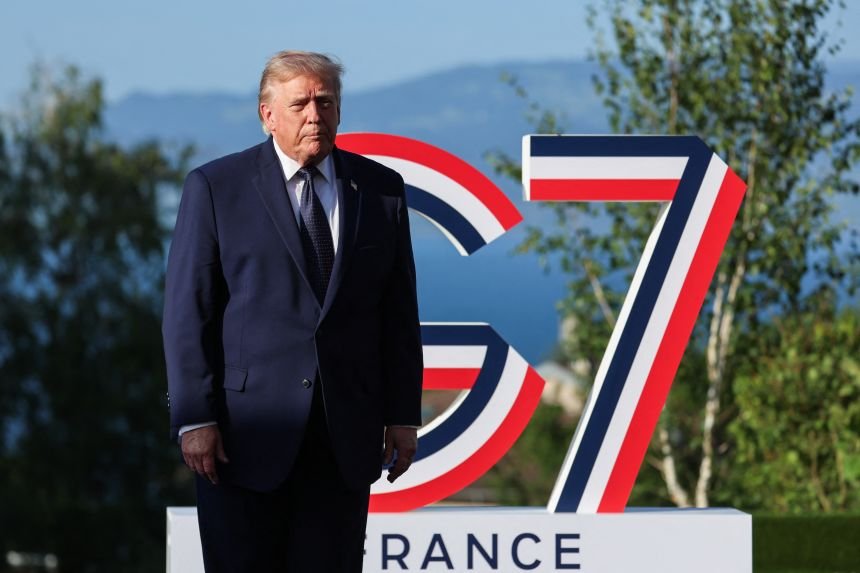
Few issues have defined Donald Trump’s Foreign Policy brand more than his opposition to the Iran nuclear deal negotiated during Barack Obama’s presidency. For nearly a decade, Trump argued that allowing Iran access to frozen assets amounted to funding terrorism, empowering a hostile regime, and weakening America’s negotiating position.
Today, however, Trump finds himself facing a politically sensitive challenge. Recent comments from Vice President JD Vance regarding a potential reconstruction and investment fund worth as much as $300 billion for Iran have triggered criticism from both opponents and some conservatives who see parallels with the very policies Trump once condemned.
While administration officials insist the situations are fundamentally different, the controversy highlights a broader debate over Sanctions, Diplomacy, economic incentives, and the realities of negotiating with geopolitical adversaries.
The issue is not simply about money. It is about political credibility, foreign policy consistency, and the difficult balance between maintaining pressure on Iran while encouraging long-term stability in the Middle East.
What Is the Proposed Iran Reconstruction Fund?
The controversy emerged after comments suggesting that Iran could potentially gain access to a reconstruction or investment fund valued at up to $300 billion as part of a broader peace framework.
Administration officials quickly clarified several important points:
- The money would not come from American taxpayers.
- The funding would likely originate from Gulf nations and foreign investors.
- Access would be conditional upon Iran meeting specific requirements.
- The investments would depend on compliance with any future agreement.
- The objective would be economic reconstruction rather than direct financial transfers.
Supporters argue that this distinction is crucial because the United States would not be directly funding Iran. Instead, other countries would potentially invest in Iran’s economy if Tehran met certain diplomatic and security conditions.
However, critics argue that regardless of the source, the end result is similar: Iran would gain access to substantial financial resources as part of a negotiated agreement.
Why the Debate Matters Politically
The current controversy is significant because it intersects directly with Trump’s long-standing criticism of previous Iran policies.
Throughout his political career, Trump repeatedly argued that the 2015 nuclear agreement gave Iran a massive financial windfall.
His central argument was straightforward:
- Financial relief strengthens Iran.
- Additional resources can indirectly support destabilizing activities.
- Economic concessions weaken negotiating leverage.
- Washington should prioritize pressure over incentives.
These arguments became a cornerstone of Trump’s broader “maximum pressure” strategy toward Tehran during his first presidency.
As a result, any proposal involving significant economic benefits for Iran inevitably invites comparisons to Trump’s previous statements.
Understanding the 2015 Iran Nuclear Deal
To understand the current debate, it is important to revisit the agreement that remains at the center of the controversy.
The Joint Comprehensive Plan of Action (JCPOA), signed in 2015, involved Iran agreeing to restrictions on its nuclear program in exchange for sanctions relief.
A key component involved releasing access to Iranian assets that had been frozen under international sanctions.
Supporters of the agreement argued that:
- The money already belonged to Iran.
- The deal imposed strict nuclear restrictions.
- International monitoring increased transparency.
- Diplomacy reduced the risk of military conflict.
Opponents countered that releasing financial resources strengthened the Iranian government and potentially enabled activities contrary to Western interests.
The disagreement became one of the most divisive foreign policy debates of the past decade.
The Key Difference Between Then and Now
Although comparisons are inevitable, the two situations are not identical.
| Issue | 2015 Nuclear Deal | Proposed Reconstruction Fund |
|---|---|---|
| Source of Funds | Frozen Iranian Assets | Potential Foreign Investment |
| US Taxpayer Money | No | No |
| Purpose | Sanctions Relief | Reconstruction and Economic Development |
| Access Conditions | Nuclear Compliance | Peace Deal Compliance |
| Estimated Value | Approximately Tens of Billions | Up to $300 Billion |
The most notable distinction is that the current proposal appears centered on future investment rather than releasing frozen assets.
Nevertheless, critics argue that both approaches ultimately involve providing economic incentives to encourage behavioral changes from Iran.
The Concept of “Fungibility” and Why It Keeps Returning
One of the most important economic concepts in this debate is fungibility.
In simple terms, money is interchangeable. If a government gains access to new financial resources, it can redirect existing funds elsewhere.
For example:
- Foreign investment funds infrastructure projects.
- Domestic government funds become available for other priorities.
- Overall budget flexibility increases.
- Financial pressure decreases.
This argument was frequently used by critics of the 2015 agreement.
Even if released funds were designated for peaceful purposes, opponents argued that the broader economic benefits could indirectly strengthen the government and its regional activities.
The same reasoning is now being applied by critics examining the proposed reconstruction framework.
Why Some Conservatives Are Concerned
Opposition to the proposal is not limited to political rivals.
Some conservative commentators and foreign policy hawks have expressed concerns that large-scale economic engagement could undermine years of sanctions pressure.
Their concerns include:
- Reduced economic leverage.
- Difficulty monitoring fund usage.
- Potential regional security implications.
- Questions about enforcement mechanisms.
- Risk of non-compliance after receiving benefits.
These concerns mirror many of the arguments that dominated debates over previous agreements with Iran.
Supporters See a Different Opportunity
Advocates of economic engagement argue that incentives can sometimes achieve goals that sanctions alone cannot.
Their perspective rests on several assumptions:
- Economic development can encourage stability.
- International investment creates accountability.
- Peace agreements require tangible benefits.
- Economic integration can reduce incentives for conflict.
- Long-term engagement may produce more sustainable outcomes.
This school of thought has influenced diplomatic negotiations around the world for decades.
Rather than relying exclusively on punishment, it seeks to reward compliance and cooperation.
The Middle East’s Changing Economic Landscape
Another factor shaping the debate is the dramatic transformation occurring across the Gulf region.
Countries such as Saudi Arabia, the United Arab Emirates, and Qatar are investing heavily in economic diversification, infrastructure, technology, logistics, and renewable energy.
These nations increasingly view regional stability as essential to long-term economic growth.
From this perspective, reconstruction and investment initiatives are not merely diplomatic tools they are economic strategies aimed at creating a more predictable regional environment.
This broader context helps explain why foreign investment has become a central component of modern Middle Eastern diplomacy.
The Historical Challenge of US-Iran Relations
Relations between Washington and Tehran have remained strained for decades.
Major points of tension have included:
- Nuclear development concerns.
- Regional security disputes.
- Sanctions regimes.
- Military confrontations.
- Proxy conflicts.
- Diplomatic isolation.
Successive administrations have alternated between engagement and pressure, often with mixed results.
The debate surrounding the proposed reconstruction fund reflects a larger unresolved question: can economic incentives fundamentally change behavior, or do they merely provide temporary leverage?
The Political Risk for Trump
For Trump, the issue is particularly sensitive because it touches directly on past campaign messaging.
Political opponents are likely to highlight apparent inconsistencies between previous criticism and current proposals.
At the same time, supporters may argue that there is a meaningful difference between releasing frozen assets and conditioning future investment on specific behavioral changes.
The success of that argument will largely depend on the final details of any agreement.
As negotiations evolve, the administration may face increasing pressure to explain exactly how any economic framework differs from arrangements it previously opposed.
The Bigger Question: Can Economic Incentives Deliver Lasting Peace?
Beyond partisan politics, the controversy raises a deeper strategic question.
Modern diplomacy increasingly relies on economic tools rather than purely military or political measures.
Governments frequently use:
- Trade agreements.
- Investment incentives.
- Infrastructure funding.
- Development assistance.
- Sanctions relief.
to influence international behavior.
The effectiveness of these strategies varies widely, but they remain central components of Global Diplomacy.
The proposed Iran framework appears to follow this broader trend by linking economic opportunity to political and security commitments.
What Happens Next?
Much remains uncertain.
Negotiations are reportedly still developing, and critical questions remain unanswered:
- What specific conditions would Iran need to meet?
- How would compliance be verified?
- Who would oversee investment flows?
- What penalties would exist for violations?
- How much funding would ultimately become available?
The answers to these questions will determine whether the proposal gains broader political support or becomes another flashpoint in the long-running debate over Iran policy.
Conclusion: A Foreign Policy Debate Coming Full Circle
The discussion surrounding a potential $300 billion reconstruction and investment framework for Iran highlights the complex realities of international diplomacy. While administration officials emphasize that the proposal involves foreign investment rather than American taxpayer money, the broader political challenge remains unavoidable.
For years, Donald Trump criticized previous agreements that provided Iran access to financial resources, arguing that economic relief strengthened a hostile regime. Now, his administration must explain why a new framework involving potentially far larger sums should be viewed differently.
The debate ultimately extends beyond partisan politics. It reflects a fundamental disagreement about how nations influence adversaries: through pressure, incentives, or a combination of both.
As negotiations continue, the proposed framework could become one of the most closely scrutinized foreign policy initiatives of Trump’s current term. Whether it is ultimately seen as a pragmatic path toward stability or a contradiction of past positions may depend less on political rhetoric and more on the details of the final agreement.
For breaking news and live news updates, like us on Facebook or follow us on Twitter and Instagram. Read more on Latest World on thefoxdaily.com.






COMMENTS 0