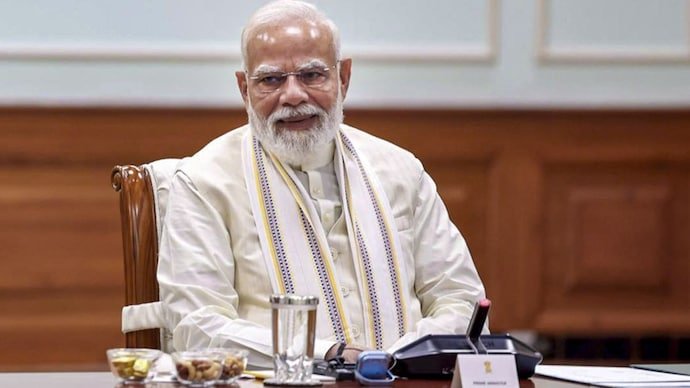
Prime Minister Narendra Modi on Monday welcomed the reported understanding reached between the United States and Iran to end more than three months of conflict in West Asia, describing it as an important step toward restoring regional stability and protecting global economic interests.
The Prime Minister’s remarks came after reports emerged that Washington and Tehran had agreed to a draft framework aimed at halting hostilities, reopening the strategically vital Strait of Hormuz, and restarting negotiations over Iran’s nuclear programme.
For India, which relies heavily on imported energy and international maritime trade, the development carries significant economic and strategic importance. The prolonged conflict had triggered concerns over oil supplies, rising energy prices, disruptions to global shipping, and the possibility of a wider regional war.
By welcoming the agreement, India has signaled its support for diplomatic solutions and emphasized the importance of peace and stability in one of the world’s most critical geopolitical regions.
PM Modi’s Message on the US-Iran Understanding
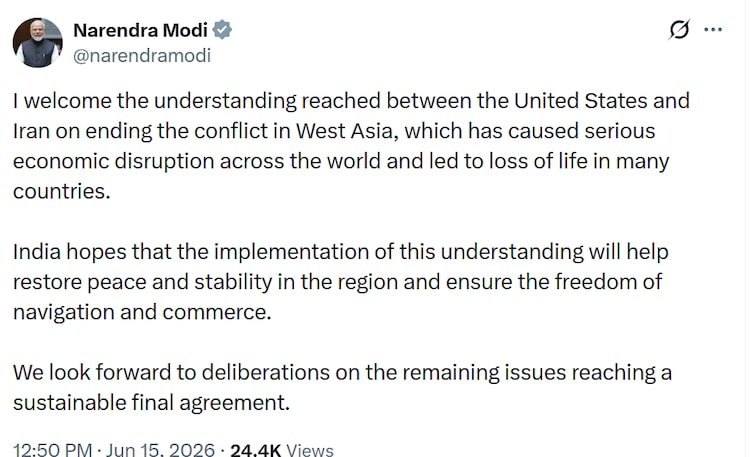
In a message posted on Social Media platform X, Prime Minister Modi said the conflict had caused severe economic disruption across the world and resulted in loss of life in multiple countries.
He expressed optimism that the understanding between the two nations would help restore normalcy and create conditions for sustainable peace.
According to the Prime Minister, India hopes the implementation of the agreement will bring stability to West Asia and ensure uninterrupted freedom of navigation and commerce through crucial international shipping routes.
He also stated that New Delhi looks forward to continued discussions between the United States and Iran on unresolved issues, with the aim of achieving a comprehensive and durable final agreement.
Why the Development Matters for India
The significance of the reported US-Iran understanding extends far beyond Diplomacy.
India imports more than 85% of its crude oil requirements, making it one of the world’s largest energy importers. A substantial portion of those imports originates from the Gulf region and passes through the Strait of Hormuz.
The waterway serves as one of the most important energy corridors on the planet. Nearly one-fifth of global oil trade moves through this narrow maritime passage connecting the Persian Gulf to the Arabian Sea.
Any disruption in Hormuz immediately impacts international energy markets, driving up crude prices, increasing shipping costs, and creating uncertainty for economies dependent on imported fuel.
During the conflict, fears of disruptions to maritime traffic contributed to volatility in oil markets and raised concerns about inflation, trade costs, and economic growth prospects worldwide.
The reported agreement has therefore been welcomed by many countries that rely heavily on stable energy supplies and uninterrupted trade routes.
Reopening the Strait of Hormuz Could Ease Global Concerns
One of the most significant reported elements of the framework is the reopening of the Strait of Hormuz to normal commercial shipping.
The route is critical not only for oil exports from Gulf producers but also for broader international trade. Energy shipments, liquefied natural gas exports, and commercial cargo regularly pass through the strait.
For India, smoother movement of vessels through Hormuz could help reduce shipping risks, lower freight costs, and stabilize crude Oil Prices.
These developments could eventually contribute to lower inflationary pressures and improved economic confidence.
The Prime Minister’s reference to freedom of navigation and commerce highlights the importance New Delhi places on maintaining open and secure maritime trade routes.
Inside the Reported US-Iran Framework
Although the complete text of the proposed agreement has not been publicly released, reports suggest the framework focuses on immediate de-escalation while creating a pathway toward a broader settlement.
Key provisions reportedly include:
- Ending active hostilities between the United States and Iran
- Reopening the Strait of Hormuz to commercial shipping
- Lifting restrictions affecting Iranian ports
- Temporary sanctions relief for Iran
- Release of frozen Iranian financial assets
- A 60-day period for negotiating unresolved issues
- Renewed discussions on Iran’s nuclear programme
- Measures aimed at regional de-escalation
Iranian media have described the arrangement as part of a broader 14-point framework, though many details remain unverified by independent international sources.
The agreement is being viewed as an interim framework rather than a final peace treaty, with more comprehensive negotiations expected in the coming weeks.
Potential Economic Benefits for India
If the agreement succeeds in reducing geopolitical tensions, India could experience several economic advantages.
Lower Crude Oil Prices
Reduced risks to energy supplies generally lead to lower crude prices. A decline in oil prices can help reduce India’s import bill and ease pressure on inflation.
Stronger Rupee
Lower energy costs often improve the country’s current account balance, supporting the rupee and reducing foreign exchange pressures.
Improved Investor Confidence
Geopolitical stability typically boosts investor sentiment. Foreign investors are generally more willing to allocate capital to emerging markets when global risks decline.
Reduced Inflation
Fuel prices influence transportation, logistics, manufacturing, and food costs. Stable energy prices can help moderate inflation across the economy.
Better Fiscal Management
Lower oil prices can reduce subsidy burdens and improve government finances, providing additional flexibility for infrastructure and development spending.
A Diplomatic Win for Regional Stability
The reported understanding also reflects the continued importance of diplomacy in addressing complex international disputes.
Relations between the United States and Iran have remained strained for decades, with disagreements over sanctions, regional security, and nuclear activities repeatedly fueling tensions.
The latest framework appears to focus on reducing immediate risks while creating a structured process for resolving long-standing disagreements.
For countries such as India, which maintain strategic relationships across the Middle East while prioritizing regional stability, diplomatic progress between major powers is generally viewed positively.
New Delhi has consistently advocated dialogue and peaceful resolution of international disputes, particularly when regional conflicts threaten Global Trade and economic stability.
Challenges Remain Despite Optimism
While the reported agreement has generated optimism, significant challenges remain.
Several key issues still require negotiation, including long-term sanctions relief, verification mechanisms related to Iran’s nuclear programme, regional security arrangements, and broader geopolitical concerns.
The success of the framework will ultimately depend on implementation and the willingness of both sides to maintain diplomatic engagement during the proposed negotiation period.
Political opposition within various countries and developments involving regional actors could also influence the agreement’s future.
As a result, governments and financial markets will continue to monitor the situation closely.
India Looks Toward a More Stable Future
Prime Minister Narendra Modi’s welcome of the reported US-Iran understanding reflects India’s broader interest in regional peace, stable energy markets, and secure global trade routes.
For an economy that remains heavily dependent on imported energy, any reduction in tensions around the Strait of Hormuz carries significant strategic and economic value.
The reopening of critical maritime corridors, the prospect of lower oil prices, and renewed diplomatic engagement between Washington and Tehran could provide meaningful benefits not only for India but for the Global Economy as a whole.
While many details of the agreement remain to be finalized, the development represents an important step toward de-escalation after more than 100 days of conflict. If negotiations continue successfully and peace holds, the reported framework could mark the beginning of a more stable chapter for West Asia and a welcome source of relief for energy-importing nations around the world.
For breaking news and live news updates, like us on Facebook or follow us on Twitter and Instagram. Read more on Latest India on thefoxdaily.com.





COMMENTS 0