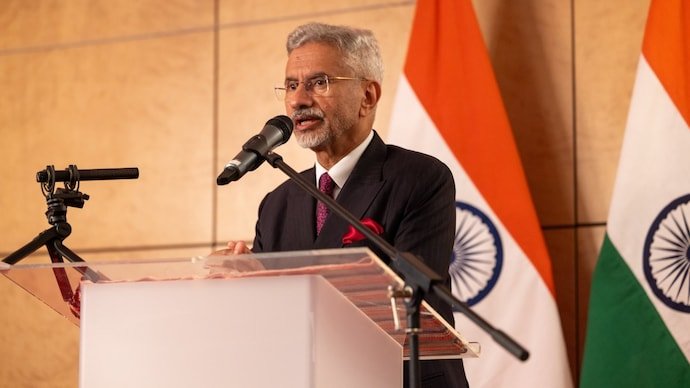
India has formally launched its latest diplomatic campaign at the United Nations Security Council (UNSC), with External Affairs Minister S. Jaishankar emphasizing that Maritime security, the safety of seafarers, and combating terrorism financing will remain among New Delhi’s highest international priorities. His remarks come at a time when conflicts across West Asia, disruptions to global shipping routes, increasing cyber threats, and growing geopolitical competition have elevated maritime security from a regional concern to a global strategic necessity.
Speaking during India’s UNSC outreach, Jaishankar said the country would ensure that issues relating to a free, open, inclusive, and rules-based maritime order receive the attention they deserve. His statement reflects India’s broader diplomatic strategy of promoting international law, secure trade routes, and regional stability while strengthening cooperation with global partners.
The announcement coincided with several major international developments including rising tensions in the Strait of Hormuz, expanding India-china trade, humanitarian incidents involving Indian citizens overseas, and continued conflicts in Ukraine, Sudan, and West Asia that collectively highlight the increasingly interconnected nature of diplomacy, security, and economic resilience.
India’s UNSC Priorities: More Than Traditional Diplomacy
India’s latest diplomatic messaging signals an expanded vision of international security. Rather than focusing solely on traditional military concerns, New Delhi is advocating a comprehensive approach that links maritime security, global commerce, counterterrorism, humanitarian protection, and international law.
According to Jaishankar, India intends to focus on several interconnected priorities:
- Protecting freedom of navigation.
- Supporting a free, open, and rules-based maritime order.
- Ensuring the safety of commercial shipping and seafarers.
- Strengthening international cooperation against terrorism financing.
- Promoting stability through multilateral institutions.
These objectives align with India’s long-standing support for peaceful dispute resolution and adherence to international maritime law.
Why Maritime Security Has Become a Global Priority
Maritime security has emerged as one of the defining geopolitical issues of the decade. More than 80% of global merchandise trade by volume is transported by sea, making uninterrupted shipping lanes essential for international commerce, energy supplies, and food security.
For India, whose economy depends heavily on maritime trade and imported energy resources, secure sea lanes are critical to national economic growth.
Recent geopolitical developments including attacks on commercial vessels, piracy, regional conflicts, and threats to major shipping corridors have demonstrated how disruptions at sea can quickly affect global inflation, fuel prices, and supply chains.
| Why Maritime Security Matters | Global Impact |
|---|---|
| Energy transportation | Ensures uninterrupted oil and LNG supplies. |
| International trade | Supports global supply chains and commerce. |
| Food security | Facilitates agricultural exports and imports. |
| Regional stability | Reduces risks of conflict affecting shipping routes. |
| Economic growth | Protects international investment and trade flows. |
Strait of Hormuz Highlights India’s Maritime Concerns
Jaishankar’s emphasis on maritime security comes as tensions continue to escalate in the Strait of Hormuz, one of the world’s most strategically important shipping corridors.
The region has witnessed increasing military activity, with commercial vessels facing heightened security risks. An Indian crew member was recently killed and several others, including Indian nationals, were injured during strikes involving UAE shipping tankers operating near the Strait of Hormuz.
The incident illustrates why India places such importance on protecting seafarers and maintaining freedom of navigation across critical international waterways.
Given India’s significant dependence on imported crude oil and energy supplies transiting through the Gulf region, maintaining maritime stability remains a strategic national interest.
Countering Terror Financing Remains a Core Objective
Alongside maritime security, India continues to advocate stronger international cooperation against terrorism financing.
Financial networks play a critical role in sustaining terrorist organizations by facilitating recruitment, logistics, arms procurement, and operational planning. India has consistently supported global initiatives aimed at strengthening financial oversight, improving intelligence sharing, and preventing illicit funding channels.
By placing terror financing on its UNSC agenda, New Delhi seeks to reinforce international mechanisms that promote accountability and cross-border cooperation.
Jaishankar Meets UN Secretary-General Antonio Guterres
As part of his diplomatic engagements, Jaishankar also held discussions with United Nations Secretary-General Antonio Guterres.
The meeting covered several ongoing international crises, including:
- Conflict in West Asia.
- The war in Ukraine.
- The humanitarian situation in Sudan.
- Broader global security developments.
These discussions reflect India’s growing role as a major diplomatic actor engaging with multiple regions simultaneously while advocating dialogue and peaceful conflict resolution.
India’s Expanding Global Role Beyond Security
The day’s developments also underscored India’s increasing involvement across science, trade, humanitarian assistance, and international diplomacy.
Among the highlights was NASA astronaut Anil Menon’s launch aboard the Soyuz MS-29 spacecraft for an eight-month mission to the International Space Station. Menon’s participation highlights the expanding role of scientists and professionals of Indian origin in global space exploration.
Meanwhile, India’s diplomatic missions continued coordinating assistance for citizens affected by international emergencies, including the repatriation of victims following a boating accident in Vietnam.
India-China Trade Continues to Expand Despite Imbalance
Fresh customs data released by China revealed that bilateral trade between India and China reached approximately USD 91.72 billion during the first half of 2026.
Although exports from both countries increased, the figures also highlighted the continuing imbalance in trade.
| Trade Indicator | First Half of 2026 |
|---|---|
| Total Bilateral Trade | USD 91.72 Billion |
| China’s Exports to India | USD 79.41 Billion |
| India’s Exports to China | USD 12.31 Billion |
| India’s Trade Deficit | USD 67.1 Billion |
The widening deficit underscores one of the major economic challenges facing policymakers as India seeks to strengthen domestic manufacturing while expanding exports to international markets.
Protecting Indian Citizens Abroad Remains a Diplomatic Priority
Another important aspect of India’s foreign policy is ensuring the welfare of its citizens overseas.
The recent death of an Indian crew member in the Gulf and the repatriation of Indian tourists following the speedboat tragedy in Vietnam demonstrate the growing importance of consular diplomacy.
India’s embassies and diplomatic missions increasingly play a critical role in emergency response, evacuation planning, legal assistance, and coordination with local authorities during international crises.
Global Developments Reflect an Increasingly Complex World
The day’s international events extended beyond India’s diplomatic activities.
Key developments included:
- Singapore High Court’s ruling in a high-profile defamation case.
- Political developments involving former Bangladesh Prime Minister Sheikh Hasina.
- China’s anti-corruption action against a senior Communist Party leader.
- Counterterrorism discussions between Pakistani officials and the FBI.
- Legislative developments in the United Kingdom concerning deportation laws.
Although unrelated individually, these developments collectively illustrate the increasingly interconnected challenges governments face in areas ranging from governance and law enforcement to diplomacy and international security.
How India’s Foreign Policy Is Evolving
India’s diplomatic priorities have broadened considerably over the past decade.
In addition to traditional security concerns, New Delhi now emphasizes:
- Maritime security.
- Supply chain resilience.
- Technology cooperation.
- Energy security.
- Counterterrorism.
- Climate resilience.
- Humanitarian assistance.
- Global health cooperation.
This multidimensional approach reflects India’s expanding role in international institutions and its ambition to contribute to shaping global governance.
Why Maritime Security Will Remain Central to India’s Strategy
India occupies a strategically important position in the Indian Ocean Region, making maritime security fundamental to both national security and economic development.
As international trade continues to depend heavily on sea routes, safeguarding maritime infrastructure, commercial shipping, and regional stability will remain among India’s long-term foreign policy objectives.
Increasing cooperation with international partners through naval exercises, information sharing, humanitarian missions, and multilateral forums is expected to remain a key component of this strategy.
Key Timeline of the Day’s Developments
| Development | Significance |
|---|---|
| Jaishankar launches India’s UNSC campaign. | Maritime security and counterterrorism prioritized. |
| Meeting with UN Secretary-General. | Discussions on global conflicts and diplomacy. |
| Anil Menon launches to ISS. | Major milestone in international space cooperation. |
| India-China trade data released. | Trade deficit widens despite stronger exports. |
| Indian seafarer killed in Gulf conflict. | Highlights risks to global maritime security. |
Conclusion
India’s latest diplomatic outreach at the United Nations reflects a broader understanding of modern international security, where maritime stability, economic resilience, humanitarian protection, and counterterrorism are increasingly interconnected. By placing maritime security and the safety of seafarers at the center of its UNSC campaign, New Delhi is reinforcing its commitment to safeguarding Global Trade routes while advocating adherence to international law.
As geopolitical tensions continue to reshape international relations from conflicts in West Asia to expanding economic competition and technological cooperation India’s evolving foreign policy demonstrates a growing emphasis on proactive diplomacy, multilateral engagement, and strategic partnerships. The coming months will reveal how these priorities translate into concrete initiatives at the United Nations and across the wider international community.
For breaking news and live news updates, like us on Facebook or follow us on Twitter and Instagram. Read more on Latest World on thefoxdaily.com.






COMMENTS 0