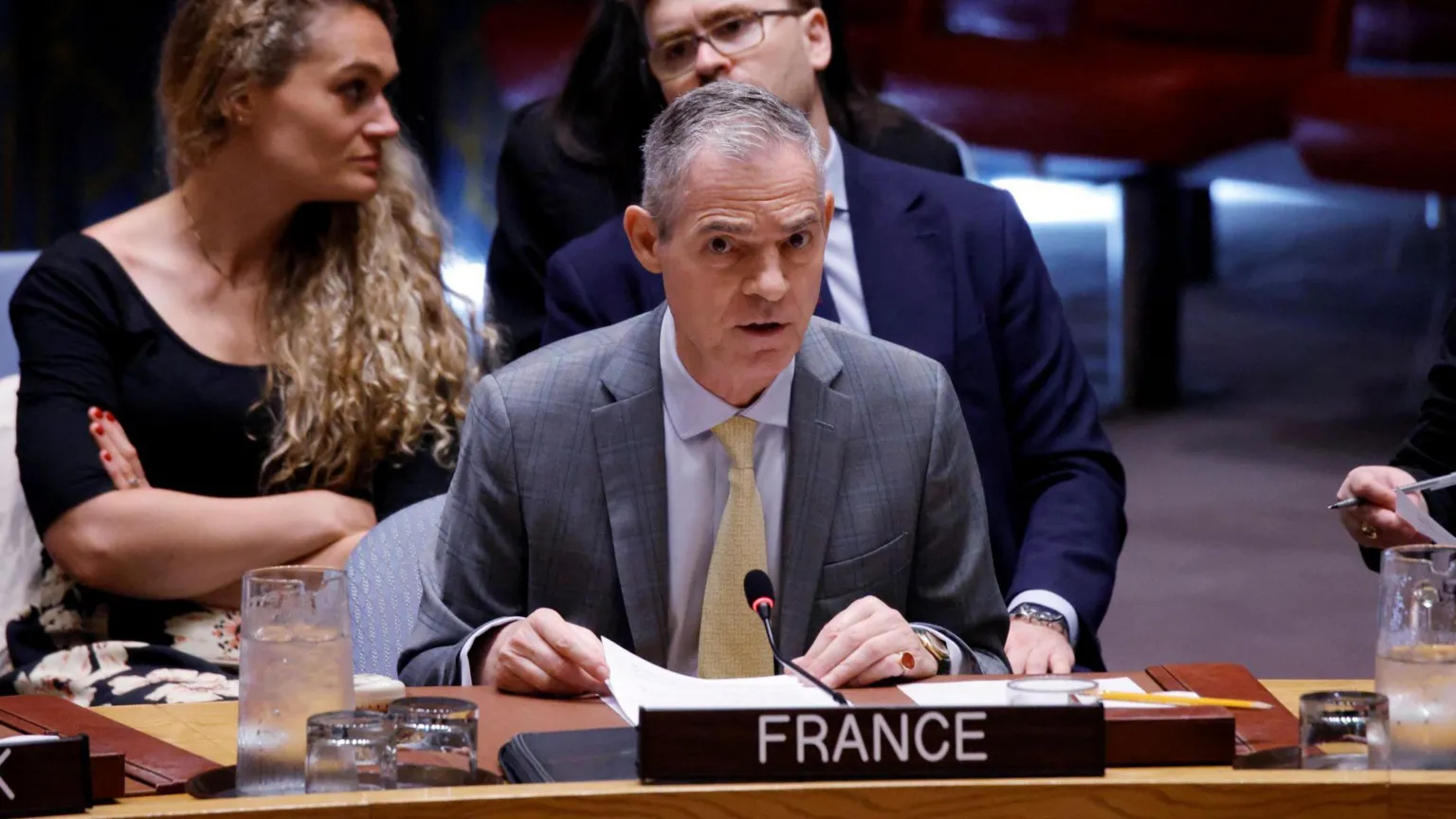
A dramatic diplomatic confrontation unfolded at the United Nations Security Council when the United States delegation walked out during remarks by France’s ambassador, signaling one of the most visible disagreements between two long-standing allies in recent months. The protest came after France sharply criticized Washington for its voting position on the reappointment of the UN High Commissioner for Human Rights, accusing the US of aligning itself with countries that have frequently faced criticism over their human rights records.
Although the immediate dispute centered on a UN vote, the incident reflects broader tensions over international diplomacy, the role of human rights institutions, and the future of US engagement with the United Nations. As geopolitical competition intensifies, disagreements among traditional allies are increasingly becoming public, influencing debates on global governance and international cooperation.
What Happened at the UN Security Council?
The diplomatic row reached a new level during an emergency meeting of the UN Security Council focused on the Russia-Ukraine conflict. While France’s Permanent Representative addressed the Council, the United States delegation left the chamber in protest.
According to US officials, the walkout was intended as a response to remarks made by France following a recent United Nations vote concerning the extension of the mandate of the UN High Commissioner for Human Rights. Washington argued that France’s public criticism crossed diplomatic boundaries and unfairly portrayed the United States alongside authoritarian governments.
The protest demonstrated that disagreements between allies can extend beyond policy differences into questions of diplomatic conduct and international messaging.
Background: The Vote That Triggered the Dispute
The controversy began during the United Nations General Assembly’s consideration of extending the term of the UN High Commissioner for Human Rights.
The proposal received overwhelming international support, with a large majority of member states voting in favor. However, the United States voted against the extension, placing itself among a relatively small group of countries that opposed the measure.
Following the vote, French officials publicly criticized Washington’s position, arguing that the United States had departed from its traditional role as a global advocate for human rights. Those remarks prompted a strong response from American representatives, who defended their decision and questioned the performance of the human rights office.
Timeline of Key Events
| Event | Development |
|---|---|
| UN General Assembly Vote | Member states vote on extending the Human Rights Commissioner’s term. |
| France’s Response | French officials publicly criticize the US voting position. |
| US Reaction | American representatives reject France’s criticism. |
| Security Council Meeting | US delegation walks out during France’s remarks. |
| Aftermath | Both countries defend their positions while diplomatic tensions continue. |
Why the Human Rights Vote Became So Sensitive
The office of the UN High Commissioner for Human Rights plays an important role in monitoring human rights situations across the world, issuing reports, and encouraging governments to uphold international legal standards.
Supporters of the extension argued that continuity in leadership is important during periods of growing global instability. Critics, however, questioned whether the office had applied international standards consistently and fairly across different regions and political situations.
The disagreement therefore extends beyond one individual appointment and reflects contrasting views about how international institutions should operate.
The United States’ Position
American officials argued that their opposition was based on concerns regarding the direction and effectiveness of the UN human rights system rather than opposition to the institution itself.
US representatives maintained that international organizations must remain impartial and avoid selective criticism when evaluating the actions of member states.
Washington also indicated that it would review aspects of its future engagement with certain UN institutions, continuing a broader policy debate over how international organizations should function.
France’s Perspective
France defended both its public criticism and its support for the continuation of the UN human rights leadership.
French diplomats emphasized the importance of independent international institutions capable of addressing human rights concerns without political interference. They argued that protecting the credibility of global human rights mechanisms remains essential regardless of disagreements among major powers.
France also reaffirmed its commitment to multilateral diplomacy and cooperation through established international institutions.
Why the Walkout Matters
Diplomatic walkouts are uncommon during high-level Security Council meetings involving close allies. Such actions are generally intended to communicate strong political disagreement without completely ending diplomatic engagement.
Unlike formal sanctions or treaty disputes, a walkout is largely symbolic. However, symbolism carries significant weight in international diplomacy because it signals dissatisfaction not only to the country involved but also to the broader international community.
The incident illustrates how diplomatic messaging has become increasingly public, with governments using both international forums and social media to communicate policy disagreements.
Comparison: Diplomatic Protest vs Formal Diplomatic Action
| Diplomatic Measure | Purpose | Typical Impact |
|---|---|---|
| Walkout | Express immediate political disagreement. | Primarily symbolic. |
| Official Protest | Register formal diplomatic objection. | Can influence negotiations. |
| Sanctions | Apply economic or political pressure. | Higher practical consequences. |
| Withdrawal from Organizations | Reduce institutional engagement. | Long-term diplomatic implications. |
The Broader Context: Changing US-UN Relations
The latest dispute forms part of a wider conversation about the relationship between the United States and the United Nations. In recent years, debates have emerged over funding, institutional reforms, peacekeeping operations, human rights oversight, and the effectiveness of multilateral organizations.
Supporters of reform argue that international institutions must evolve to remain credible and effective in addressing modern challenges. Others contend that weakening multilateral organizations could reduce international cooperation during global crises.
The balance between national sovereignty and collective international action remains one of the defining debates in global diplomacy.
Impact on International Diplomacy
Although the disagreement is unlikely to fundamentally alter the long-standing relationship between the United States and France, it demonstrates that even close allies can publicly disagree on major international issues.
The incident may also influence future discussions within the United Nations, particularly on questions involving institutional independence, leadership appointments, and the role of human rights mechanisms.
Diplomatic disagreements of this nature often encourage broader conversations about transparency, accountability, and reform within international organizations.
A Unique Insight: Symbolic Diplomacy Is Becoming More Powerful
One of the most significant lessons from this episode is the growing importance of symbolic diplomacy. Walkouts, public statements, and carefully timed political messaging increasingly shape international narratives alongside traditional negotiations.
Governments now communicate not only through closed-door diplomacy but also through highly visible actions designed for global audiences. These symbolic gestures influence public opinion, media coverage, and diplomatic leverage, making them an increasingly important tool in international relations.
As digital communication accelerates the global news cycle, symbolic political actions are likely to become even more influential in shaping diplomatic outcomes.
What Happens Next?
Despite the public disagreement, both countries remain key partners on numerous international issues, including security, economic cooperation, and global diplomacy.
Future discussions within the United Nations are expected to continue addressing institutional reforms, human rights oversight, and international cooperation. While disagreements may persist, diplomatic engagement between Washington and Paris is expected to continue through established bilateral and multilateral channels.
The evolution of this relationship will be closely watched by other UN member states, particularly as debates over global governance continue.
Conclusion
The US walkout during France’s remarks at the UN Security Council represents more than a diplomatic protest—it highlights broader disagreements over human rights governance, multilateral institutions, and the future direction of international cooperation. What began as a dispute over a leadership vote quickly evolved into a public exchange between two longstanding allies.
While the immediate controversy may eventually subside, the underlying issues surrounding UN reform, institutional credibility, and the balance between national interests and international cooperation are likely to remain central topics in global diplomacy. As international challenges grow increasingly complex, the ability of major powers to manage disagreements while maintaining constructive dialogue will remain essential for the effectiveness of the global rules-based system.
For breaking news and live news updates, like us on Facebook or follow us on Twitter and Instagram. Read more on Latest World on thefoxdaily.com.




COMMENTS 0