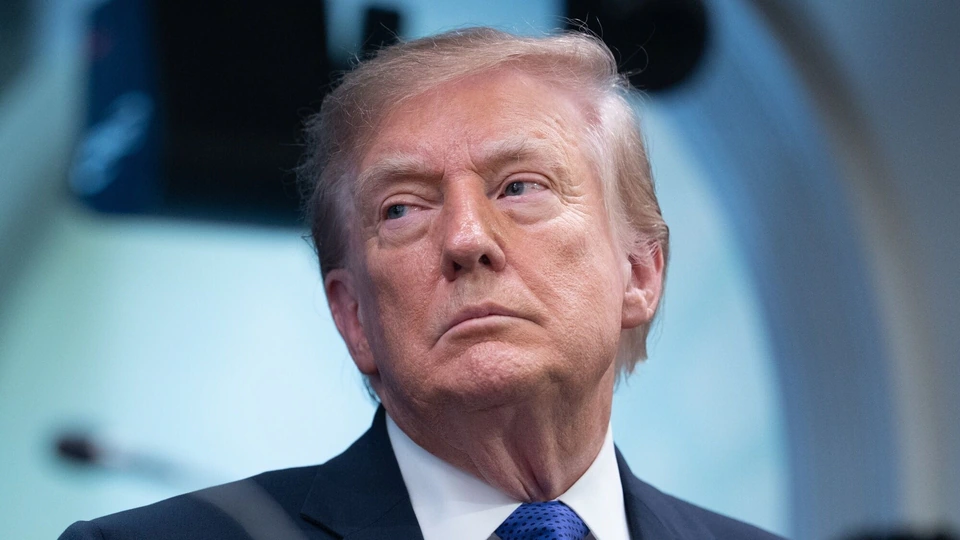
US President Donald Trump has linked the recent decline in global Oil Prices to the outcome of the November 3 midterm elections, claiming that he had predicted the market movement months earlier. In a lengthy post on Truth Social, Trump accused Democrats and Iran of trying to keep crude prices elevated and argued that voters had failed to understand the consequences of their decisions before casting their ballots.
Trump described the developments as a “Giant Hoax” and claimed that two other predictions he had made before the elections had also come true: a substantial decline in stock markets following Democratic gains and an increase in Iranian attacks. He said the United States and its allies had intercepted incoming drones and missiles, preventing damage.
His remarks come as the US-Israel war against Iran continues to create uncertainty across the Middle East. Attacks on shipping and concerns about energy infrastructure remain important risks for oil markets. Yet crude prices have fallen for three consecutive weeks, with recovering Middle Eastern exports and expectations of a global supply surplus putting pressure on benchmarks.
The contrast between Trump’s political explanation and the wider market developments highlights how oil prices are influenced by several factors, including supply, demand, inventories, geopolitical risks and investor expectations.
Trump Says He Predicted Oil Price Decline Before Midterm Elections
In his Sunday Truth Social post, Trump questioned the political outcome of the November 3 midterm elections and argued that developments in financial and energy markets had supported his earlier warnings.
“Isn’t it interesting that Oil prices have dropped precipitously after the Midterm Elections? I said that was going to happen. The whole thing is a Giant Hoax!” Trump wrote.
The president then recalled two predictions he said he had made before voters went to the polls. According to Trump, he had warned that a Democratic victory would lead to a substantial fall in stock markets and that Iran would become more aggressive if Democrats made political gains.
Trump claimed both developments had occurred. He also alleged that Iran had launched more drones and missiles during the previous week than at any point in more than a year.
However, he maintained that American and allied defence systems had successfully intercepted the incoming attacks.
“Don’t worry, they’ve all been knocked down, and done no damage,” he added.
Trump’s post connected the political outcome, military developments and oil market movements as part of a broader argument about the consequences of the midterm elections. However, his claims about the relationship between Democratic gains, Iranian actions and crude prices were not supported by evidence in the post.
Trump Accuses Democrats and Iran of Keeping Oil Prices High
Trump also accused Democrats and Iran of attempting to prevent oil prices from falling, although he did not provide supporting evidence for the allegation.
He argued that Iranian leaders considered Democrats weak and ineffective and said he would not allow the United States to be weakened by their policies.
“Iranian leaders consider the Democrats weak, ineffective, and Country destroying, but I won’t let that happen!” he wrote.
The president then claimed that both Democrats and Iran had tried to keep crude prices elevated for as long as possible. Referring to the decline following the elections, he said: “Both the Dems and Iran fought like hell to keep the Oil price up as long as possible and, since the Election, the Oil price has dropped by a record level.”
He questioned why voters had not understood what he described as the political and economic consequences before the election, adding that the contest had been “very ‘strange.'”
Trump’s remarks did not explain how Democratic political activity could have directly influenced global oil prices or how Iran and US opposition politicians had supposedly coordinated to maintain higher crude prices.
Oil is traded in an international market, where prices respond to production decisions, export flows, consumption expectations, inventories, financial conditions and geopolitical developments. A fall in prices after an election does not, by itself, establish that the election caused the decline.
Oil Prices Extend Losing Streak Despite Middle East Tensions
While Trump focused on the political significance of falling crude prices, the energy market’s recent movement has reflected a combination of improving supply conditions and concerns about global demand.
Oil prices moved lower again on Monday, November 23, extending their decline into a third consecutive week. Brent crude futures fell 0.65% to $91.97 per barrel, while US West Texas Intermediate (WTI) crude slipped 0.59% to $82.92 per barrel as of 0844 GMT.
The latest losses followed a difficult week for both benchmarks. Brent declined approximately 4% over the previous week, while WTI fell around 5%.
Broader weakness across financial markets also contributed to the negative sentiment. Concerns about technology company valuations, substantial artificial intelligence spending and the outlook for global economic growth have raised questions about future energy consumption.
When investors expect slower economic activity, they may anticipate weaker demand for transport fuels, industrial energy and other petroleum products. Such expectations can put pressure on crude prices even when geopolitical risks remain elevated.
The recent decline therefore does not necessarily mean that the Middle East conflict has stopped influencing oil markets. Instead, concerns about potential supply disruptions are competing with signs of recovering exports and expectations that global production could exceed consumption.
Recovering Gulf Oil Exports Ease Supply Concerns
One of the major factors behind the recent weakness in crude prices has been the recovery of oil shipments from the Middle East.
The Strait of Hormuz is among the world’s most important energy shipping routes. It connects the Persian Gulf with international markets and normally handles approximately one-fifth of global petroleum consumption. Any serious disruption to traffic through the waterway can affect crude supplies, shipping costs and energy prices across the world.
The conflict involving the United States, Israel and Iran severely disrupted shipments through the region, creating fears of a prolonged energy supply crisis. However, export flows have gradually recovered through alternative routes and shipping arrangements.
The International Energy Agency’s November 13 Oil Market Report provided further evidence of improving supply conditions. According to the agency, global oil supply increased by 2.3 million barrels per day in October, reaching 105.4 million barrels per day.
Gulf oil exports, excluding Oman, climbed to 18.4 million barrels per day during the month. Crude shipments also recovered to approximately 82% of their prewar levels, indicating that a significant portion of the disrupted supply had returned to international markets.
The IEA also reported that global oil inventories increased by 52 million barrels in October, equivalent to a build of approximately 1.7 million barrels per day.
Rising inventories generally indicate that more oil is entering storage than is being consumed or removed from the market. This can weaken prices because buyers have greater access to available supplies and concerns about immediate shortages become less severe.
These developments have helped ease some of the supply concerns that previously supported crude prices. However, the recovery remains vulnerable to fresh attacks on shipping, ports and energy infrastructure.
IEA Warns of Potential Global Oil Supply Surplus
Beyond the recovery in Middle Eastern exports, expectations of a global supply surplus are another important factor weighing on oil prices.
According to the IEA’s November assessment, the global oil market is showing signs of rebalancing, with supply expected to exceed demand during the fourth quarter of 2026.
The agency expects global oil supply to recover further in 2027, potentially reaching an average of 108.1 million barrels per day. At the same time, global oil demand is forecast to decline by 2.7 million barrels per day in 2026 to approximately 102.3 million barrels per day.
The combination of recovering production, improving exports and weaker consumption expectations has strengthened the possibility of a market surplus.
A surplus occurs when the amount of oil available exceeds the quantity buyers require. If the excess supply accumulates in storage, sellers may face pressure to offer lower prices to attract buyers.
However, supply forecasts are not guarantees. Production disruptions, changes in economic activity, decisions by major oil-producing countries and unexpected geopolitical developments can all alter the market balance.
The IEA has also cautioned that the recovery remains vulnerable to renewed attacks on shipping and energy infrastructure across the Middle East. Any major disruption could quickly reverse some of the recent improvement in supply conditions.
Iran War Keeps Oil Market Uncertainty High
The fall in crude prices comes despite an unresolved conflict that continues to threaten energy infrastructure and maritime trade in the Middle East.
The US-Israel war against Iran has created uncertainty over the security of oil production facilities and shipping routes. The Strait of Hormuz remains particularly important because of the large volume of energy exports that passes through it.
Fresh attacks on vessels and concerns about regional infrastructure have kept the possibility of further supply disruptions in focus. Even when exports recover, the threat of renewed escalation can influence trading decisions and increase volatility.
The conflict has also lasted longer than Trump initially suggested. At the beginning of the military campaign, he indicated that it would last only weeks. However, the war has now entered its ninth month, with continuing attacks and regional tensions complicating efforts to restore stability.
This creates a difficult situation for oil markets. On one side, recovering shipments and rising inventories are reducing immediate supply concerns. On the other, the possibility of renewed military confrontation means traders cannot ignore the risk of another disruption.
Trump Says Iran Wants a Deal but Rejects Tehran’s Terms
Diplomatic uncertainty has added another layer to the outlook for energy markets. Speaking to reporters on Friday, Trump said Iran wanted to reach an agreement with Washington but suggested that Tehran was not prepared to offer terms acceptable to him.
His remarks have fuelled speculation about whether negotiations could eventually reduce the risk of further escalation. However, they did not establish that an agreement was imminent or that the two sides had resolved their differences.
A diplomatic breakthrough could reduce fears of attacks on energy infrastructure and shipping routes, potentially removing some of the geopolitical risk premium from crude prices. Conversely, a return to full-scale fighting could revive concerns about disrupted exports and push prices higher.
For now, the market is balancing these competing possibilities. Improving supply and expectations of weaker demand are weighing on prices, while the unresolved conflict continues to create the risk of sudden increases.
What Trump’s Oil Price Claims Mean for the Global Energy Market
Trump’s attempt to connect the decline in oil prices with the midterm elections places energy market movements at the centre of a wider political argument. However, the available market indicators point to several economic and geopolitical forces behind the recent decline.
Recovering Gulf exports, higher global inventories and expectations of supply exceeding demand have all contributed to the weaker price trend. Broader financial market concerns have also affected investor sentiment.
At the same time, the war involving Iran continues to pose a risk to global energy security. A disruption to the Strait of Hormuz or attacks on major oil infrastructure could change the supply outlook quickly, regardless of the recent downward trend.
For oil-importing countries, including India, changes in international crude prices can influence import costs, fuel pricing pressures and the broader economic outlook. A sustained decline could offer some relief, but renewed instability in the Middle East could limit those benefits.
Ultimately, Trump’s claims about his predictions remain part of his political interpretation of the market. The direction of crude prices will depend on the balance between actual supply, demand, inventories and geopolitical developments rather than the timing of the midterm elections alone.
For breaking news and live news updates, like us on Facebook or follow us on Twitter and Instagram. Read more on Latest World on thefoxdaily.com.





COMMENTS 0