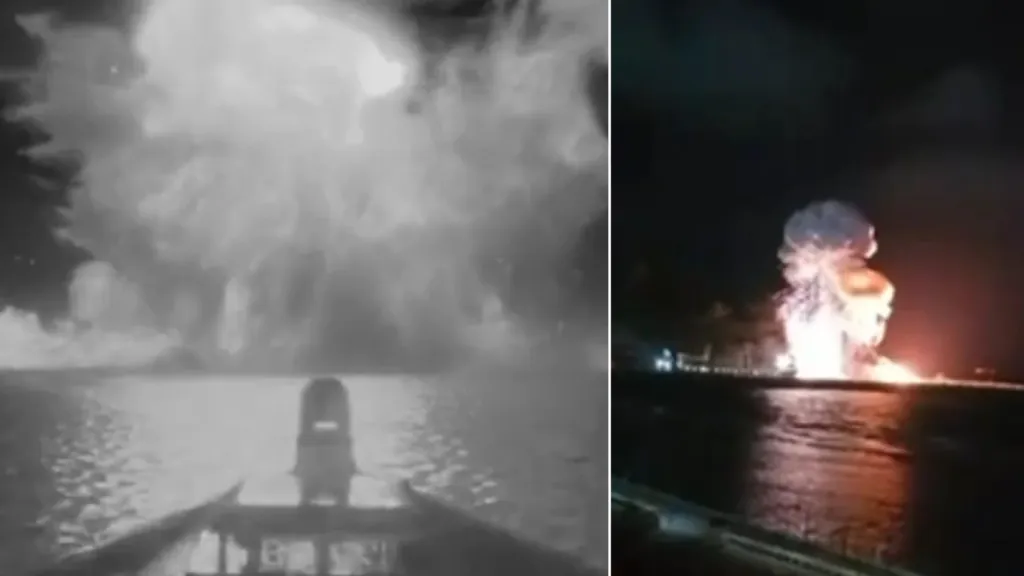
Ukraine has claimed responsibility for a long-range naval drone attack that sank a Russian warship at a naval base in Libya, marking a significant expansion of Kyiv’s operations against Russian military assets beyond the immediate battlefield. Ukrainian President Volodymyr Zelenskyy said seven domestically manufactured sea drones were deployed in the Mediterranean operation, which also targeted a Russian cargo vessel allegedly used to transport military equipment.
The attack took place near Benghazi in eastern Libya, approximately 2,400 kilometres (1,500 miles) from the front line in Ukraine. Zelenskyy said the Russian Navy corvette Merkury was sunk, a Ka-27 military helicopter aboard the vessel was destroyed and the dry cargo ship MV Angara was also hit.
While Ukraine described the operation as a success, Russian officials had not immediately commented on Kyiv’s claims. Libyan officials cited by The Associated Press said the corvette was severely damaged during the attack, while residents reported explosions and flames at the naval base.
The incident highlights Ukraine’s growing use of domestically developed unmanned naval systems to target Russian military and logistical assets far from the main war zone. It also raises questions about the security of Russian naval movements in the Mediterranean and the wider implications of the conflict for Libya.
Zelenskyy Says Seven Ukrainian Sea Drones Sank Russian Corvette Merkury
In a statement on Monday, November 23, Zelenskyy said Ukrainian forces carried out the operation using seven Ukrainian-made naval drones. He described the mission as an exemplary response to Russia’s invasion and said the military objectives had been achieved.
The Ukrainian president identified the primary target as the Russian Navy corvette Merkury, which he described as one of Russia’s newest warships. According to Zelenskyy, the vessel was commissioned in 2023, after Moscow launched its full-scale invasion of Ukraine in February 2022.
He said the operation also destroyed a Ka-27 combat helicopter associated with the corvette and struck the Russian dry cargo ship MV Angara, which Ukraine alleges was being used to transport weapons.
Zelenskyy praised Ukraine’s Security Service and other defence personnel involved in the mission, saying the operation had been carefully planned and carried out despite Russian attempts to stop the attacking drones.
His announcement also underscored Kyiv’s emphasis on developing domestic weapons systems that can reach targets beyond the immediate front line.
Attack on Russian Warship Took Place 1,500 Miles From Ukraine’s Front Line
The location of the attack makes it particularly significant. The Benghazi naval base is approximately 2,400 kilometres from the front line in Ukraine, placing the operation well beyond the areas where most of the war’s naval and ground engagements have taken place.
Ukraine has increasingly relied on unmanned systems to offset Russia’s larger military resources. Naval drones have been especially important in operations against Russian vessels, while aerial drones have been used to strike military installations and infrastructure deep inside Russian territory.
The latest operation in Libya suggests that Kyiv is continuing to explore ways to extend the reach of its unmanned weapons systems. However, the precise route, launch arrangements and operational details of the attack have not been independently established.
In a video address to the NATO Parliamentary Assembly in Berlin on Monday, Zelenskyy said Ukrainian forces had also targeted Russian oil refineries as far away as western Siberia and Russian warships in the Mediterranean.
He said Ukraine continued to find ways to recover after Russian attacks and maintain its ability to strike back. His remarks presented the Libya operation as part of a wider campaign against Russian military capabilities and logistical networks.
Ukraine’s Earlier Long-Range Drone Operations Against Russia
The attack in Libya follows a series of Ukrainian operations targeting Russian military assets far from the main battlefield.
One of the most prominent examples was Operation Spiderweb in June 2025, when Ukrainian drones launched from trucks struck aircraft at several Russian air bases. Ukraine said the operation targeted more than 40 military aircraft, demonstrating how relatively small unmanned systems could threaten high-value assets deep inside Russian territory.
Along the approximately 1,250-kilometre front line across eastern and southern Ukraine, drones and ground robots have also become increasingly important to battlefield operations. They are used for reconnaissance, surveillance, attacks and other tasks that can reduce the exposure of personnel to direct combat.
Russia, meanwhile, has continued its campaign against Ukrainian energy infrastructure. Its attacks have damaged power facilities and civilian infrastructure, increasing pressure on Ukraine as winter approaches.
A Russian strike on a five-storey apartment building in a village near Kyiv killed 11 people, according to regional police. Rescue workers said a seven-year-old child and a 79-year-old woman were pulled from the rubble following the attack on Sunday morning.
The contrast between the attacks illustrates the widening nature of the conflict: Ukraine is attempting to disrupt Russian military and logistical operations, while Russian strikes continue to cause destruction inside Ukrainian cities and communities.
Ukrainian Personnel Reportedly Operating From Western Libya
The reported presence of Ukrainian military personnel in western Libya has added another dimension to the incident. Libyan officials cited by The Associated Press said Ukrainian forces, including drone specialists, had been operating in the country under a covert arrangement reportedly endorsed by Western countries.
According to the officials, Ukrainian personnel were primarily based at an air base in Misrata, a coastal city in western Libya. They were also reportedly operating from other military facilities in Tripoli and the coastal town of Zawiya.
The reported presence of Ukrainian specialists in Libya had previously attracted attention following an attack on a Russian tanker in the Mediterranean in March. Libyan officials had said the country’s territory was used in connection with that operation.
The latest attack, however, took place at Benghazi Naval Base in eastern Libya, an area controlled by the eastern-based authorities and the self-styled Libyan National Army. The reported involvement of personnel operating from western Libya has raised questions about how the operation was planned and whether different parts of the divided country were used in its preparation.
The eastern Libyan authorities said the Russian vessel had docked at Benghazi to refuel and receive supplies under a cooperation agreement with the eastern-based government. They did not disclose details about the ship’s cargo.
Following the attack, the eastern authorities wrote to UN Secretary-General António Guterres and the UN Security Council, requesting an international investigation into the possible use of western Libya to prepare and launch the operation.
Libyan Officials Say Drones Hit Russian Corvette at Benghazi Naval Base
Accounts from Libyan officials and residents provided additional details about the attack, although they did not fully match Ukraine’s description of the outcome.
Officials briefed on the operation told The Associated Press that at least four drones were intercepted, while two struck the Russian warship. They said the corvette was severely damaged during the attack.
Residents of Benghazi reported hearing loud explosions and seeing flames at the naval base early on Sunday. Civil defence units were sent to the location and extinguished the fire, according to authorities in eastern Libya.
One Libyan official said at least 10 people, including Libyan and Russian nationals, were wounded. The officials who provided information to the AP were affiliated with the Libyan National Army and spoke anonymously because they were not authorised to discuss the incident publicly.
UK-based maritime security and risk intelligence firm Ambrey said some of the explosions at the naval base were likely caused by ammunition detonating aboard the Russian warship. Such secondary explosions can occur when fire reaches ammunition or other explosive materials stored on a military vessel.
The reports of severe damage from Libyan officials and the claim by Zelenskyy that the ship sank have not been reconciled in the available accounts. Independent confirmation of the vessel’s final condition was not provided.
Second Sea Drone Strike Reported Against Commercial Vessel Off Benghazi
The attack on the Russian corvette was followed hours later by another reported sea drone strike targeting a Maltese-flagged commercial vessel sailing off Benghazi, according to the Libyan coast guard.
The incident raised further concerns about maritime security in the waters around eastern Libya. The reported attack also demonstrated how military operations involving unmanned naval systems can create risks for commercial shipping operating near conflict-related targets.
The available information did not establish the identity of the force responsible for the second strike or whether it was directly connected to the operation against the Russian warship.
Any further incidents involving commercial vessels could complicate shipping activity in the Mediterranean, particularly if operators begin reassessing the risks of travelling through waters near military installations.
Ukraine Says Sanctioned Cargo Ship MV Angara Was Used to Transport Weapons
Ukraine’s Security Service, known as the SBU, described the operation as unique and claimed that the Russian dry cargo ship MV Angara was under international sanctions and had been used to transport Russian military equipment.
The agency also said the corvette Merkury regularly escorted Russian naval convoys, including providing protection to the Angara. If established, that role would make the warship part of a wider maritime logistics network supporting Russian operations.
According to the SBU, the Ukrainian sea drones were transported to a designated location before being launched from a so-called mothership near the targets. The use of a larger vessel to carry and release smaller unmanned systems could allow an attacking force to operate at a considerable distance from its home territory.
The agency said Russian forces attempted to intercept the drones using air, sea and land-based defences. It also claimed that the Ka-27 helicopter aboard the corvette was destroyed during the attack.
The SBU said the operation demonstrated that Russian naval forces and their logistics networks could be targeted far beyond the Black Sea. However, the agency’s statements remain claims from one side of the conflict, and independent verification of the full damage and the cargo carried by the Angara was not provided.
Why the Attack Matters for Russia’s Mediterranean Presence
The reported strike on the Merkury has implications beyond the loss or damage of a single Russian vessel. It raises questions about the security of Russian naval assets operating in the Mediterranean, particularly when they rely on ports and logistical arrangements in countries experiencing political division.
Russia has maintained ties with authorities in eastern Libya, including through security and military cooperation. The reported docking of the corvette at Benghazi under an agreement with the eastern-based government illustrates the importance of such relationships for access to supplies and port facilities.
Ukraine’s ability to threaten a Russian warship in the Mediterranean, if confirmed in full, would complicate Moscow’s efforts to protect military assets and maintain secure maritime logistics outside the Black Sea.
The incident also highlights Libya’s continuing vulnerability to becoming a theatre for wider international rivalries. The country remains politically divided between rival authorities, and the reported presence of foreign military personnel and the use of its territory for operations could increase diplomatic pressure.
What Happens Next?
The immediate questions concern the final condition of the Merkury, the extent of damage to the MV Angara and the number of casualties reported at the naval base. Russian officials had not immediately commented on Ukraine’s claims, while eastern Libyan authorities have sought an international investigation into the alleged use of western Libya to prepare the attack.
Further scrutiny is also likely to focus on the reported presence of Ukrainian drone specialists in Libya, the alleged launch arrangements and the security implications for commercial shipping around Benghazi.
For Ukraine, the operation represents another attempt to use domestically developed unmanned weapons to challenge Russia’s military reach and logistical networks. For Moscow, the reported attack highlights the difficulty of protecting naval assets operating far from the main battlefield.
Whether the Merkury was completely sunk or severely damaged, as described in different accounts, remains a key point requiring independent confirmation. What is clear is that the incident has brought the Russia-Ukraine War into sharper focus in the Mediterranean and raised fresh questions about the security of Russian military operations in Libya.
For breaking news and live news updates, like us on Facebook or follow us on Twitter and Instagram. Read more on Latest World on thefoxdaily.com.






COMMENTS 0