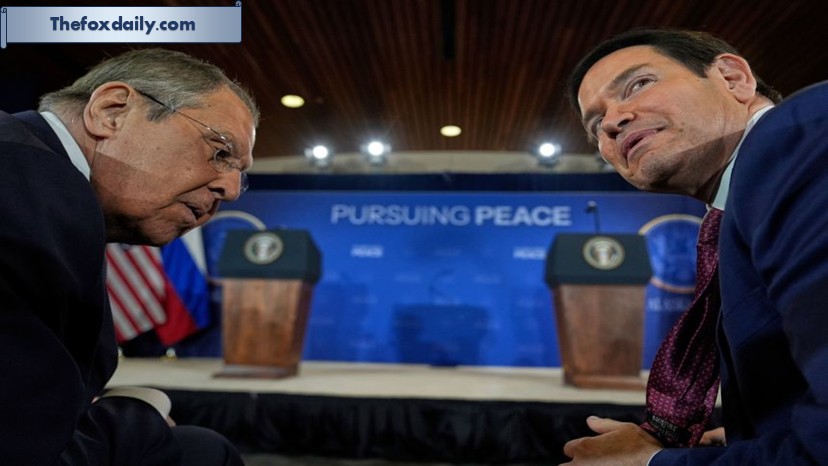
Diplomatic engagement between the United States and Russia returned to the spotlight after US Secretary of State Marco Rubio met Russian Foreign Minister Sergey Lavrov in Manila during the annual Association of Southeast Asian Nations (ASEAN) Foreign Ministers’ Meeting. Although no major breakthrough was announced, the meeting carried significant diplomatic importance as both countries explored whether stalled discussions over the war in Ukraine could be restarted.
The meeting took place against a backdrop of multiple international crises, including the continuing war in Ukraine, instability in the Middle East, rising tensions in the South china Sea, and growing concerns over strategic competition among major global powers. While expectations remained cautious, the dialogue reflected an important principle of International Diplomacy: maintaining communication even during periods of deep political disagreement.
For policymakers and analysts, the significance of the meeting lies not only in what was discussed but also in the fact that senior officials from the world’s two largest nuclear powers continue to engage directly despite profound differences on security, Sanctions, and regional conflicts.
Why the Rubio-Lavrov Meeting Matters
Direct meetings between senior American and Russian officials have become increasingly rare since relations deteriorated following the outbreak of the Ukraine conflict. Diplomatic channels remain essential because they help reduce misunderstandings, manage crises, and create opportunities for future negotiations.
The Manila discussions were viewed as an opportunity to evaluate whether conditions exist for renewed diplomatic engagement after previous indirect negotiations slowed in recent months.
Although officials did not immediately disclose detailed outcomes, the meeting demonstrated that communication between Washington and Moscow continues even during periods of heightened geopolitical tension.
Ukraine Peace Talks: Why Diplomacy Has Stalled
Efforts to negotiate an end to the war in Ukraine have faced numerous challenges since the conflict began. While multiple rounds of talks have taken place through various diplomatic channels, fundamental disagreements remain regarding territorial issues, security guarantees, military operations, reconstruction, and long-term regional stability.
Several factors have complicated negotiations:
- Continuing military operations on the battlefield.
- Competing security demands from both sides.
- International sanctions and economic measures.
- Changing political priorities among global powers.
- Broader geopolitical crises affecting diplomatic attention.
The recent escalation of tensions in the Middle East has also diverted diplomatic resources that might otherwise have focused more heavily on Ukraine.
Why ASEAN Became the Venue
The annual ASEAN Foreign Ministers’ Meeting provides one of the few multilateral forums where leaders from competing global powers gather in the same location.
Although ASEAN primarily focuses on Southeast Asian cooperation, its meetings frequently become venues for important bilateral discussions involving countries from outside the region.
Holding discussions during international summits allows governments to engage diplomatically without organizing separate high-profile state visits.
Key Topics Discussed in Manila
While Ukraine remained a central issue, the broader agenda extended far beyond a single conflict.
| Topic | Importance |
|---|---|
| Ukraine conflict | Assessing prospects for renewed peace negotiations. |
| US-Russia relations | Maintaining diplomatic communication despite disagreements. |
| Middle East security | Regional instability affecting global diplomacy. |
| South China Sea | Maritime security and territorial tensions. |
| Regional military activity | Growing concerns over strategic competition. |
Why Continuous Dialogue Matters
International diplomacy rarely produces immediate breakthroughs during complex conflicts. Instead, sustained communication helps governments:
- Reduce the risk of miscalculation.
- Clarify strategic intentions.
- Exchange humanitarian concerns.
- Explore confidence-building measures.
- Identify future opportunities for negotiation.
Even when disagreements remain substantial, regular diplomatic engagement can lower the risk of unintended escalation.
The Strategic Importance of US-Russia Relations
The United States and Russia possess the world’s largest nuclear arsenals and remain permanent members of the United Nations Security Council. As a result, their bilateral relationship influences numerous international issues beyond Ukraine.
Areas where communication remains particularly important include:
- Nuclear stability.
- Arms control.
- Counterterrorism.
- Regional conflict management.
- Humanitarian coordination.
- Crisis prevention.
Diplomatic engagement does not necessarily imply agreement, but it helps preserve mechanisms for managing international security risks.
Ukraine’s Evolving Political and Military Situation
Developments inside Ukraine continue to shape the diplomatic landscape.
Military operations, leadership changes, defense planning, and international assistance all influence negotiating positions. Governments involved in mediation must consider battlefield realities alongside political objectives when evaluating prospects for future talks.
Any meaningful diplomatic progress is likely to depend on both military developments and political willingness among the parties directly involved.
South China Sea Tensions Add Another Layer
The ASEAN meetings also highlighted growing concern regarding security developments in the Indo-Pacific region.
Maritime disputes in the South China Sea remain one of Asia’s most sensitive geopolitical issues. Competing territorial claims, naval deployments, and military activities continue attracting close attention from regional governments and international partners.
Security discussions involving major powers increasingly connect European and Indo-Pacific strategic issues as global alliances become more interconnected.
China’s Military Activities Draw Regional Attention
Another significant issue discussed during the Manila meetings involved concerns surrounding recent Chinese military activities.
Regional governments emphasized the importance of:
- Military transparency.
- Advance notification of missile tests.
- Freedom of navigation.
- Regional confidence-building measures.
- Avoiding unnecessary escalation.
China has maintained that its military exercises are routine and conducted in accordance with its national security requirements.
Comparison: Diplomacy vs Military Pressure
| Diplomatic Approach | Military Approach |
|---|---|
| Negotiation and dialogue | Operational pressure |
| Confidence-building measures | Strategic deterrence |
| Conflict de-escalation | Territorial control |
| Long-term agreements | Immediate battlefield objectives |
| International mediation | Alliance-based security planning |
Expert Insight: Why Informal Meetings Can Be Highly Significant
Diplomatic experts often note that informal meetings held alongside international summits can sometimes prove more productive than formal negotiations.
Without the pressure of announcing immediate agreements, senior officials can openly assess political positions, identify areas of possible compromise, and establish communication channels that may become valuable during future crises.
Many historic diplomatic breakthroughs have been preceded by months or even years of quiet discussions before formal negotiations gained momentum.
Challenges Facing Any Future Ukraine Agreement
Although diplomatic contacts continue, achieving a comprehensive settlement remains extremely challenging.
Major issues that negotiators would eventually need to address include:
- Long-term security guarantees.
- Territorial arrangements.
- Humanitarian concerns.
- Post-conflict reconstruction.
- International monitoring mechanisms.
- Economic recovery and sanctions.
Each issue involves complex political, legal, and security considerations that require sustained international engagement.
Global Economic Implications
The continuation of the Ukraine conflict influences far more than regional security.
International markets continue monitoring developments because prolonged geopolitical instability affects:
- Energy prices.
- Food security.
- Global supply chains.
- Shipping routes.
- Investment confidence.
- Defense spending.
Progress toward diplomatic solutions would likely improve economic confidence across multiple sectors, although meaningful negotiations typically require considerable time.
What Comes Next?
The Manila meeting should be viewed as an exploratory diplomatic engagement rather than a formal peace negotiation.
Observers will closely monitor several developments in the coming weeks:
- Whether additional US-Russia meetings are scheduled.
- Changes in military activity in Ukraine.
- Statements from Kyiv and Moscow.
- Potential involvement of additional mediating countries.
- Future international security summits.
Continued dialogue alone does not guarantee progress, but maintaining communication remains one of the essential foundations of conflict resolution.
The Bigger Picture: A Multipolar Security Environment
The discussions in Manila demonstrated how today’s geopolitical challenges are increasingly interconnected. Conflicts in Europe, tensions in the Middle East, and strategic competition in the Indo-Pacific are no longer isolated issues. Decisions made in one region frequently influence diplomatic calculations elsewhere.
This interconnected environment makes international forums such as ASEAN increasingly important, providing opportunities for leaders to address multiple crises simultaneously while reducing the risk of broader geopolitical escalation.
Conclusion
The meeting between US Secretary of State Marco Rubio and Russian Foreign Minister Sergey Lavrov in Manila represents a cautious but important step toward maintaining diplomatic engagement during one of the most challenging periods in recent International Relations. While no immediate breakthrough emerged, the willingness of both sides to continue dialogue highlights the enduring importance of diplomacy in managing Global Security challenges.
As the Ukraine conflict continues alongside rising tensions in the Middle East and the Indo-Pacific, sustained communication between major powers remains essential for reducing risks, exploring future negotiations, and preserving international stability. Whether these exploratory discussions eventually lead to renewed peace talks will depend on political developments, military realities, and the continued commitment of all parties to pursuing diplomatic solutions alongside broader international cooperation.
For breaking news and live news updates, like us on Facebook or follow us on Twitter and Instagram. Read more on Latest World on thefoxdaily.com.






COMMENTS 0