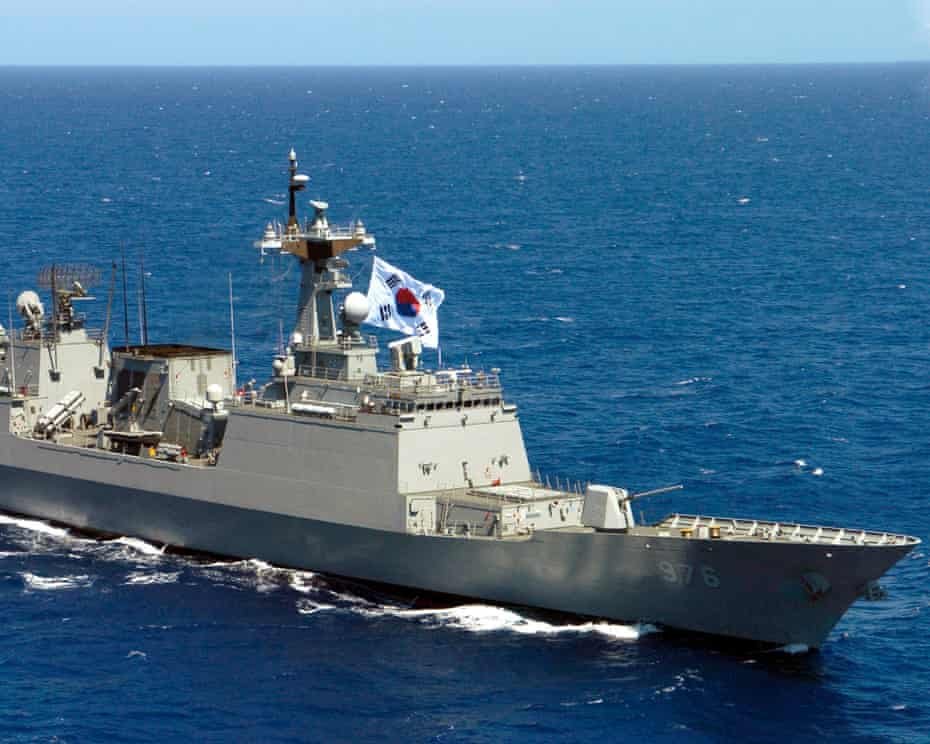
South Korea plans to expand the operating area of its anti-piracy naval unit closer to the strategically important Strait of Hormuz, as the government seeks to protect commercial shipping and safeguard the country’s energy supplies amid the ongoing Iran War. The proposed move follows criticism from US President Donald Trump, who has questioned Seoul’s level of support for the US-led military campaign against Iran.
South Korea’s defence ministry said the government would seek parliamentary approval to extend the operational area of the Cheonghae anti-piracy unit towards waters near Duqm, a port city in Oman located approximately 650 kilometres (403 miles) from the Strait of Hormuz.
The proposed expansion is intended to strengthen Maritime Security without directly involving South Korean forces in combat operations. A defence ministry official said the unit would operate independently of allied forces and remain restricted to international waters south of Oman.
The plan reflects a difficult balance for Seoul: protecting its dependence on Middle Eastern oil shipments while avoiding military involvement that could draw the country directly into the conflict with Iran.
South Korea Seeks Parliamentary Approval to Expand Cheonghae Unit
South Korea’s government plans to submit a motion to parliament seeking an expansion of the Cheonghae unit’s area of operation. The proposed operational zone would extend towards waters near the Omani port of Duqm, bringing the South Korean naval presence closer to the Strait of Hormuz.
The proposal also requires approval from President Lee Jae Myung and the cabinet. Parliamentary approval is therefore an important step before the expanded mission can be implemented.
A defence ministry official said the purpose of the mission was to protect South Korean citizens and economic interests. The official emphasised that the reinforcement would be strictly non-combat in nature.
The distinction is significant because South Korea is seeking to increase its contribution to maritime security without committing its military to direct hostilities involving Iran.
Why South Korea Is Moving Its Naval Operations Closer to Hormuz
The Strait of Hormuz is one of the world’s most important maritime energy routes. It connects the Persian Gulf with the Gulf of Oman and the Arabian Sea, providing a critical passage for oil and other commercial shipments from the Middle East.
South Korea is particularly exposed to disruptions in this region because of its reliance on imported energy. According to the country’s industry ministry, approximately 70% of South Korea’s oil supplies in 2025 came from the Middle East, with most of those shipments passing through the Strait of Hormuz.
Any prolonged disruption to shipping through the waterway could therefore affect South Korea’s energy security, transportation costs and wider economy.
Expanding the Cheonghae unit’s operating area could give Seoul a stronger presence in waters closer to the route used by commercial vessels. It would also provide additional capacity to monitor maritime conditions and support the protection of South Korean shipping interests.
South Korea Rules Out Direct Combat Operations Near Iran
Although South Korea plans to move its naval operations closer to the Strait of Hormuz, the defence ministry has stressed that the expanded mission will not involve direct combat against Iran.
According to the official, the Cheonghae unit will operate independently rather than becoming part of allied military forces. Its operations will remain limited to open waters south of Oman.
The ministry also specified restrictions on the use of maritime patrol aircraft. The aircraft will not be permitted to target or monitor Iranian territory, Iran’s territorial waters or the interior of the Strait of Hormuz during their missions.
These restrictions are intended to maintain a clear separation between maritime security operations and military activities directed against Iran.
The approach allows South Korea to respond to concerns about commercial shipping without formally committing its forces to the wider conflict. However, the final scope of the mission will depend on the approved parliamentary motion and the operational arrangements adopted by the government.
What Military Assets Will South Korea Add to the Cheonghae Unit?
The proposed expansion involves more than changing the unit’s geographical operating area. South Korea also plans to reinforce its maritime capabilities by deploying a P-8A Poseidon maritime patrol aircraft and adding approximately 75 personnel.
The Cheonghae unit currently operates with a 4,400-ton-class destroyer, a maritime operations helicopter, up to three rigid-hull inflatable boats and around 300 service members. Following the proposed reinforcement, its personnel strength would increase to approximately 395.
The additional personnel and equipment are intended to strengthen surveillance, maritime security and mine-countermeasure capabilities.
P-8A Poseidon Maritime Patrol Aircraft
The P-8A Poseidon is a maritime patrol aircraft designed to monitor large areas of ocean and detect potential threats to shipping. Its deployment would expand South Korea’s ability to observe maritime activity beyond the immediate operating area of its destroyer.
The aircraft is expected to support surveillance operations and help identify suspicious vessels and other potential maritime threats. South Korea is considering operating the aircraft from Djibouti, although the final arrangements will depend on consultations with the country.
Its deployment would give the Cheonghae unit an additional surveillance capability while keeping its mission focused on maritime security rather than direct combat operations.
Additional Mine-Clearing and Explosive Disposal Capabilities
South Korea’s revised deployment plan also includes an explosive ordnance disposal team and unmanned mine-countermeasure equipment. The proposed equipment includes unmanned surface and underwater vehicles, along with remotely operated underwater systems.
These capabilities are relevant because naval mines can create serious risks for commercial shipping, particularly in narrow and strategically important waterways such as the Strait of Hormuz.
However, South Korean officials have distinguished between preparing for possible future maritime-security operations and immediately entering the strait. The additional mine-clearing capabilities could help the country’s personnel gain experience for potential post-war operations, but any deployment inside the Strait of Hormuz would require a separate parliamentary approval.
South Korea Also Wants to Extend the Cheonghae Unit’s Deployment
The proposed motion is not limited to expanding the unit’s operational area. It also seeks to extend the deployment of South Korean military personnel in the region beyond its existing authorisation, which is scheduled to expire on December 31, 2026.
Under the revised proposal reported on November 5, the deployment would continue through December 31, 2027, subject to parliamentary approval.
South Korea’s overseas military deployments require legislative authorisation. The government therefore needs to secure approval for the revised mission before it can implement the expanded arrangements.
The proposed extension would allow the Cheonghae unit to continue its existing anti-piracy responsibilities while taking on a broader maritime-security role in waters south of Oman.
The government has also proposed adding support for restoring freedom of navigation along international shipping routes to the unit’s existing responsibilities. This would formally reflect the wider scope of the mission.
Why Is the Cheonghae Unit Important to South Korea?
The Cheonghae unit has been stationed in the Gulf of Aden since 2009. Its original purpose was to help protect commercial shipping, combat piracy and support safe navigation in waters off Somalia.
The Gulf of Aden is an important international shipping corridor connecting the Red Sea with the Arabian Sea. Vessels travelling between Europe and Asia frequently use this route, making maritime security in the region important for international trade.
South Korea has a significant interest in keeping these routes safe because its economy depends heavily on international shipping and imported energy. The Cheonghae unit helps protect South Korean commercial vessels and crews operating in the region.
Its responsibilities have become more complicated as military conflicts and security concerns across the Middle East have affected the deployment of international naval forces.
Rising Piracy Is Another Reason for the Expansion
South Korea’s defence ministry has also pointed to increasing piracy activity in the waters off Somalia as a reason for strengthening the Cheonghae unit.
According to figures cited by South Korean officials, reported pirate incidents increased from 11 in 2025 to 36 during 2026. Officials have attributed the rise partly to the movement of multinational naval forces towards the Red Sea and the Strait of Hormuz amid regional conflicts.
As more naval resources are redirected towards other security priorities, fewer forces may be available to patrol traditional anti-piracy areas. South Korea’s proposed expansion is intended to help address this changing maritime-security environment.
The broader operating area would allow the unit to monitor waters south of Oman while continuing its responsibilities in the Gulf of Aden and surrounding shipping corridors.
How Trump’s Criticism Has Put Pressure on South Korea
The planned expansion comes amid diplomatic pressure from US President Donald Trump, who has criticised South Korea for what he described as insufficient support for the war involving Iran.
Trump’s criticism has placed Seoul in a difficult position. South Korea is a close US security ally, but its government has been cautious about deploying military assets in a way that could draw the country directly into the conflict.
The disagreement has also affected discussions about military cooperation between the two countries. Trump scaled back major joint military exercises during the summer, a move that unsettled the US ally.
South Korea’s decision to expand the Cheonghae unit’s mission could therefore be viewed in the context of both its own maritime-security requirements and its relationship with Washington.
However, the government has repeatedly emphasised that the proposed deployment is not intended to support combat operations against Iran. Its stated objectives are to protect South Korean citizens, safeguard economic interests and maintain safe navigation for commercial vessels.
President Lee Jae Myung’s Position on the Iran War
South Korean President Lee Jae Myung has previously expressed caution about sending military assets to the Middle East. On September 18, he said Seoul would not deploy forces in a way that could draw the country into the conflict.
At the same time, Lee indicated that South Korea was reviewing how it could play a greater role in protecting maritime navigation in the region.
The proposed Cheonghae expansion reflects that distinction. Seoul is seeking to increase its contribution to maritime security while maintaining restrictions intended to prevent direct involvement in the war.
The government has also made clear that the unit will remain under South Korean command and will not operate as part of allied combat forces. Any future participation in mine-clearing operations inside the Strait of Hormuz would require separate approval and appropriate security conditions.
This approach gives Seoul a way to contribute to the protection of international shipping without abandoning its stated position against direct military intervention in the conflict.
Why the Strait of Hormuz Matters to South Korea’s Energy Security
The Strait of Hormuz is a narrow maritime passage connecting the Persian Gulf with the Gulf of Oman and the Arabian Sea. It is one of the world’s most important routes for international oil transportation.
South Korea’s dependence on Middle Eastern energy makes the waterway particularly important. The country’s industry ministry reported that approximately 70% of its oil supplies came from the Middle East in 2025, with most of those shipments transported through the Strait of Hormuz.
A disruption to commercial shipping in the region could affect the availability and cost of energy imports. For an industrial economy such as South Korea, higher oil prices and shipping disruptions can create wider economic pressure, affecting transportation, manufacturing and other energy-dependent industries.
Protecting maritime routes is therefore not simply a military concern for Seoul. It is also connected to the stability of its energy supply chains and the functioning of its wider economy.
By extending the Cheonghae unit’s presence towards Oman, South Korea would be positioning additional resources closer to an important regional shipping corridor without formally entering the Strait of Hormuz.
Will South Korean Naval Forces Enter the Strait of Hormuz?
The proposed expansion does not authorise South Korean naval forces to operate inside the Strait of Hormuz. The announced mission area is limited to open waters south of Oman, with the southern area near Duqm serving as the proposed extension point.
South Korean officials have also said that maritime patrol aircraft will not target or monitor Iranian territory, territorial waters or the interior of the strait.
There is, however, a distinction between the current mission and possible future operations. The proposed deployment of mine-clearing equipment could help prepare South Korean personnel for international efforts to restore safe navigation if the conflict ends or Washington and Tehran reach an agreement that allows such operations.
Even in that situation, South Korea would need separate parliamentary approval before sending its forces into the strait for mine-clearing activities.
The government has therefore not announced an immediate plan to deploy its naval unit inside the waterway. Its current proposal is focused on operations in international waters south of Oman.
What the Expansion Means for Regional Maritime Security
South Korea’s decision highlights how the Iran conflict is affecting countries that depend on Middle Eastern energy and international shipping, even when they are not direct participants in the fighting.
The Strait of Hormuz is important to several major Asian economies, including South Korea, because large volumes of their energy imports originate in the Middle East. Any prolonged threat to shipping through the region can create pressure far beyond the immediate conflict zone.
The proposed expansion also reflects a changing security environment in the Gulf of Aden and the Arabian Sea. Naval forces that previously concentrated on anti-piracy operations are facing additional demands linked to regional conflicts and the protection of strategic shipping routes.
For South Korea, adding maritime surveillance aircraft, mine-countermeasure equipment and personnel could strengthen its ability to respond to these overlapping challenges.
Nevertheless, the effectiveness of the expanded mission will depend on parliamentary approval, operational coordination and the security situation in the region. Its restrictions on combat involvement also mean that it will have a different role from forces directly participating in military operations around the strait.
Conclusion
South Korea plans to expand the operating area of its Cheonghae anti-piracy unit towards waters near Oman’s port of Duqm, approximately 650 kilometres from the Strait of Hormuz. The proposed changes include deploying a P-8A maritime patrol aircraft, adding mine-clearing capabilities and increasing the unit’s personnel by 75 to approximately 395.
The move comes as Seoul faces pressure from Donald Trump to provide greater support during the Iran war, while also trying to protect its dependence on Middle Eastern oil supplies. Around 70% of South Korea’s oil imports came from the region in 2025, with most transported through the Strait of Hormuz.
However, the government has stressed that the expanded mission will remain non-combat in nature. South Korean forces will operate independently, remain in open waters south of Oman and stay outside Iranian territory and the interior of the strait.
The proposal also seeks to extend the unit’s deployment through the end of 2027, subject to parliamentary approval. For now, Seoul’s approach is to strengthen maritime security and protect commercial shipping without committing its military to direct involvement in the conflict with Iran.
For breaking news and live news updates, like us on Facebook or follow us on Twitter and Instagram. Read more on Latest World on thefoxdaily.com.




COMMENTS 0