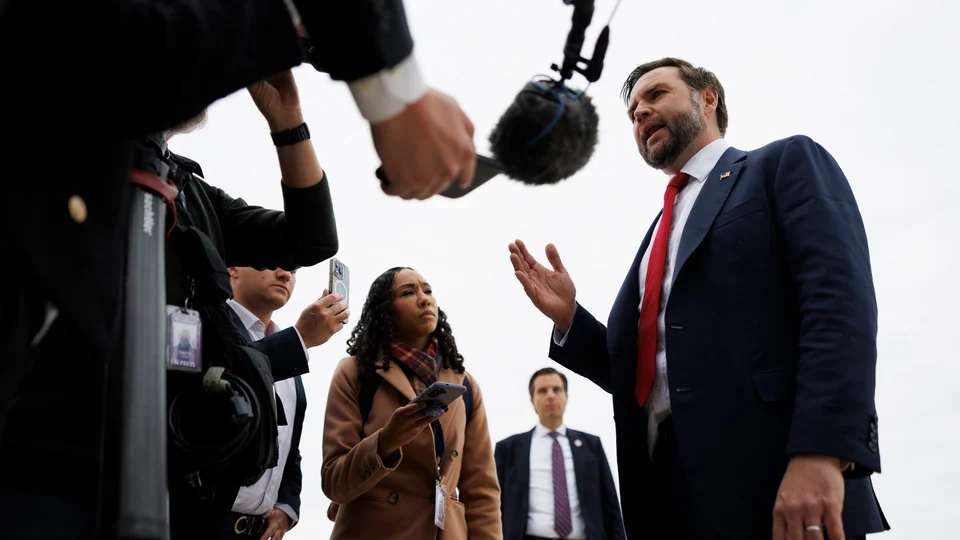
Vice President JD Vance has placed the Iran war at the centre of his explanation for the Republican Party’s sweeping defeat in the November 2026 midterm elections. In a lengthy post on X on November 4, Vance argued that the conflict was the principal reason voters who supported Donald Trump in 2024 turned towards Democrats this time. His comments have triggered a debate over the administration’s foreign policy, the economic consequences of the war and the political calculations shaping the Republican Party’s future.
Vance’s intervention came as Democrats secured control of both chambers of Congress, delivering a major setback to Trump and his party. Rather than presenting the result as a consequence of several interconnected problems, the vice president placed particular emphasis on ending the war, describing it as the central issue behind the electoral losses.
However, his explanation has attracted criticism because it gives limited attention to other issues that influenced voters, including government corruption, the cost of living, tariffs and immigration enforcement. It has also raised questions about whether Vance is distancing himself from Trump’s decisions as the Republican Party begins looking beyond the current administration.
JD Vance Blames Iran War for Republican Election Defeat
In his November 4 post, Vance offered a direct assessment of why Republicans lost the midterm elections. He wrote that the real reason for the defeat was obvious and identified the war with Iran as the central factor.
“The real reason we lost is obvious,” Vance wrote. “The reason we lost is the war.”
He argued that many voters who had supported the Trump-Vance ticket in 2024 switched their votes to Democratic candidates in 2026 because they were unhappy with the administration’s direction.
Vance said Republican data analysts had focused on the composition of the electorate and whether turnout patterns resembled those of the previous presidential election. According to his account, Republican voters were still participating, but a significant number were choosing Democratic candidates instead.
His argument therefore shifted attention away from turnout and towards voter dissatisfaction with the administration’s policies. He suggested that Republicans could regain some of the voters they had lost by changing their approach to the Iran conflict and addressing concerns about the economy and America’s international priorities.
The vice president also acknowledged that Republican economic messaging had not been sufficiently effective during the campaign. However, he maintained that the war was the decisive reason for the party’s defeat.
Vance’s Four Suggestions for Winning Back Voters
Vance identified four broad changes that he believed could help Republicans reconnect with voters who had supported Trump in 2024 but backed Democrats in the midterms.
- End the war: Bring the conflict with Iran to an end through a resolution that addresses the political and economic concerns surrounding the military campaign.
- Focus on the cost of living: Make inflation and household affordability central priorities rather than allowing economic messaging to lose focus.
- Put America first: Reconsider foreign-policy decisions and ensure that American interests remain central to the administration’s approach.
- Change the relationship with Israel: Reassess aspects of the United States’ relationship with Israel as part of a broader discussion about foreign policy.
The list goes beyond criticism of the Iran war. It suggests that Vance believes the Republican Party needs to reconsider several parts of its political and policy agenda if it wants to rebuild support among voters who previously backed Trump.
His emphasis on the cost of living is particularly significant because economic concerns remained prominent throughout the election campaign. However, his decision to place the Iran war at the centre of the explanation has drawn attention to the differences between his position and Trump’s continued defence of the military campaign.
Why Vance’s Explanation Has Been Criticised
The criticism of Vance’s post centres on its selective treatment of the issues that influenced voters. Although he acknowledged the need for stronger economic messaging, his explanation focused heavily on the Iran war and gave less attention to other areas where the administration faced public dissatisfaction.
Government corruption was one of the major concerns identified in election polling. According to the figures cited in the original analysis, 90 per cent of voters considered corruption a crucial or major factor in their decision. Yet Vance did not make it a central part of his explanation for the Republican defeat.
The cost of living was another major issue. The cited exit-poll figures placed it among the most important concerns for voters, with 89 per cent describing it as crucial or major to their vote.
Tariffs also remained controversial because of their potential effects on businesses, imports and household prices. Critics of the administration’s trade policy argued that changing tariff decisions had increased uncertainty and added to the economic pressures facing consumers and businesses.
Immigration was another issue that received substantial attention. The cited polling figures placed it close to the Iran war in terms of voter importance, while a majority of respondents said the administration’s enforcement measures had gone too far.
By concentrating on the war, Vance’s post left these other concerns relatively unexplored. The criticism is that the Republican defeat cannot be understood through a single foreign-policy issue when voters were also expressing dissatisfaction with economic conditions, government conduct and domestic enforcement policies.
The Iran War and Vance’s Earlier Position
Vance’s public assessment has attracted additional attention because of reports that he had reservations about the Iran war before and during the military campaign. Although he had previously defended aspects of the administration’s position, reports based on unidentified sources suggested that he was less enthusiastic about the conflict than some other senior officials.
The vice president’s November 4 statement has therefore been interpreted as an effort to distinguish his position from Trump’s. By identifying the war as the principal reason for the Republican defeat, Vance placed himself closer to voters who opposed the military action and called for a diplomatic settlement.
His message included a pointed acknowledgement directed at people who had warned against the conflict. Vance wrote:
“To the people who are pissed off and want to say, ‘I told you so’: you’re right, you did tell us so.”
The remark appeared to recognise that some critics had anticipated the political consequences of the war. It also allowed Vance to present himself as someone willing to acknowledge that the administration had ignored warnings about the conflict.
However, critics argue that the vice president cannot entirely separate himself from the administration’s record. As a senior member of Trump’s government, he has been part of the leadership responsible for its policies, even if he disagreed with particular decisions behind the scenes.
This creates a political dilemma. Vance can argue that he favoured a diplomatic approach, but his position as vice president makes it difficult to present the Republican defeat as a problem created entirely by other members of the administration.
Vance’s Call for a Diplomatic Resolution Raises Questions
One of the most consequential parts of Vance’s post was his support for a diplomatic resolution to the conflict. He argued that ending the war should be a priority if Republicans wanted to recover voters who had become dissatisfied with the administration.
Diplomacy is not necessarily inconsistent with military pressure. Governments frequently use negotiations, sanctions, military operations and economic measures together when trying to secure an agreement. However, the timing and conditions of negotiations can significantly influence the outcome.
The original criticism of Vance’s position is that publicly declaring the political need to end the war could weaken Washington’s negotiating position. If Iran’s leadership believes the US administration is under domestic pressure to withdraw, Tehran could conclude that it has an opportunity to demand more favourable terms.
This concern becomes particularly important in negotiations involving Iran’s nuclear programme and the Strait of Hormuz, a strategically important shipping route through which significant volumes of global energy supplies move.
President Trump has treated the possibility of ending the US blockade of Iranian ports and halting military operations as part of a wider negotiation. The administration’s position, as described in the supplied analysis, has been that Iran would need to make substantial concessions in return.
Vance’s public emphasis on ending the conflict could complicate that approach. The concern is not simply that he supports diplomacy, but that presenting an end to the war as an urgent domestic political requirement could give Iran an indication of Washington’s immediate priorities.
Why Public Statements Could Affect US-Iran Negotiations
Negotiations between governments depend partly on the leverage each side believes it possesses. Military capabilities, economic pressure, international support and domestic political stability can all influence the calculations of negotiating parties.
When a senior American official publicly argues that the United States needs to end a conflict to avoid further political damage, Iran could interpret the statement as evidence that Washington has limited room to continue its current strategy.
This does not automatically mean that Tehran would secure better terms. The outcome would depend on the actual military and diplomatic situation, the demands made by both governments and the willingness of each side to compromise.
Nevertheless, the criticism of Vance’s intervention is that it could reduce Trump’s flexibility at a sensitive moment. If the president has presented the blockade and military pressure as sources of leverage, a public declaration that the war must end could make it harder for him to insist that Iran make concessions before the United States changes its position.
The distinction between supporting negotiations and publicly announcing political pressure to end a war is important. A government can pursue diplomacy while maintaining a negotiating position that does not reveal how urgently it wants an agreement.
Could Vance Continue as America’s Lead Negotiator With Iran?
Vance’s public position has also raised questions about his credibility as a potential lead negotiator with Iran. The vice president has been associated with efforts to pursue diplomatic solutions, but his post-election comments have introduced a new political dimension into that role.
A negotiator must be able to communicate the administration’s objectives while maintaining confidence that the government will support the position being presented at the negotiating table. Publicly emphasising the domestic political necessity of ending a conflict could make that task more complicated.
Iranian officials could question whether Washington is negotiating from a position of strategic preference or domestic political pressure. They could also attempt to use divisions within the American administration to strengthen their own bargaining position.
At the same time, support for diplomacy does not automatically disqualify Vance from negotiations. A diplomatic settlement may be the preferred outcome for both political and strategic reasons. The central question is whether he can continue representing the administration’s position while publicly advocating an end to the war.
The disagreement has therefore created uncertainty about the vice president’s role in future discussions. Any change in negotiating responsibilities would depend on decisions by Trump and the administration.
Exit Polls Show the Iran War Was Not the Only Voter Concern
The election figures cited in the debate provide a more complicated picture than Vance’s explanation alone suggests. The Iran war was unpopular, but other issues also generated significant dissatisfaction.
According to the cited exit-poll figures, 63 per cent of voters believed the decision to attack Iran was wrong, while 37 per cent considered it the right decision. These numbers indicate substantial opposition to the military campaign.
However, the figures also show that economic concerns and tariffs were important parts of the election environment. Around 66 per cent of voters said tariffs had hurt the economy, while 21 per cent believed they had helped it.
Immigration enforcement also attracted criticism. The supplied figures indicated that 58 per cent of voters believed Trump’s enforcement policies had gone too far.
These findings suggest that the Republican setback involved several connected concerns. The war may have increased fuel prices and intensified economic pressure, but voters were also evaluating the administration’s trade policy, immigration approach and handling of government institutions.
It is therefore difficult to establish the Iran war as the sole cause of the election outcome. Exit polls can show what voters considered important, but they do not independently prove that one issue determined the result for every voter or that the same issue affected all states equally.
Economic Pressure and Rising Fuel Prices Added to the Political Cost
The Iran war became particularly damaging politically because of its connection to energy prices. Disruptions to shipping and uncertainty surrounding the Strait of Hormuz contributed to pressure on global energy markets, increasing the importance of fuel costs for American households.
For voters already concerned about affordability, higher petrol prices added another financial burden. The conflict therefore became linked to a domestic economic issue that affected people beyond those closely following foreign policy.
The supplied analysis also points to a decline in Trump’s approval rating on the economy. It cites a fall from 52 per cent at the end of his first term to 38 per cent by the time the Iran war began, followed by a further decline to 29 per cent by October 2026.
These figures, if considered alongside the election results, illustrate the political difficulty facing the administration. A president who campaigned on improving economic conditions can face pressure when voters continue to experience high living costs and associate those difficulties with government decisions.
However, the war was not the only factor behind economic dissatisfaction. Tariffs, inflation and broader cost pressures also influenced how voters assessed the administration’s economic performance.
Trump Agrees the War Had a Political Cost but Defends the Military Action
Trump’s response to Vance’s assessment has highlighted the difference between recognising the political consequences of the war and changing the administration’s strategic position.
The president has acknowledged that the conflict contributed to Republican losses. In comments following the election, he said Iran was part of the reason for the result and indicated that the war had affected the party’s electoral performance.
However, Trump has continued to defend the decision to take military action. He has argued that preventing Iran from acquiring a nuclear weapon remains a major national security objective.
Trump’s position has been that the political cost does not necessarily mean the military operation was a mistake. He has repeatedly maintained that he would take the same action again if faced with the same circumstances.
“At the same time, if I had to do it again, I’d have to do it again because long-term, it’s the only answer. You can’t let Iran have a nuclear weapon.”
This creates a clear distinction between the president and vice president. Vance has emphasised the need to end the war as part of the Republican Party’s political recovery, while Trump continues to defend the strategic justification for the campaign.
Trump has described Vance as largely correct about the political cost of the conflict, while also stressing that Iran was only one part of the election result. His comments suggest that he recognises the electoral damage without accepting that ending the war immediately is necessarily the right response.
The Israel Question Adds Another Layer to the Republican Debate
Vance’s proposal to change America’s relationship with Israel has also attracted attention. The issue is politically sensitive because support for Israel has long been an important part of Republican foreign-policy thinking, although views within the party are not uniform.
The essay criticises the suggestion by linking it to commentary circulating in conservative podcast circles, including discussions promoted by Tucker Carlson, a political commentator and ally of Vance.
However, the election figures cited in the analysis suggest that foreign-policy issues were not the leading concern for most voters. Only 4 per cent reportedly ranked foreign policy as their first issue.
This raises questions about the electoral value of making the relationship with Israel a central part of the Republican response to defeat. Although the issue may matter to particular groups of voters, the broader electorate appeared more focused on economic conditions, corruption and other domestic concerns.
Vance’s proposal therefore reflects a wider debate within the Republican Party about how America should approach its international commitments and how those positions relate to the political priorities of its supporters.
Is JD Vance Positioning Himself for the 2028 Presidential Race?
Vance’s post-election intervention has also fuelled speculation about his political ambitions. As vice president, he is one of the most prominent figures in the Republican Party and is widely discussed as a potential candidate for the 2028 presidential election.
His decision to publicly identify the Iran war as the principal reason for the Republican defeat could help distinguish him from Trump on an issue that has become unpopular among voters.
By emphasising that he had supported diplomacy, Vance may be attempting to demonstrate that he recognised the risks of the conflict earlier than other members of the administration. Such a position could become relevant if he seeks to build a political identity beyond his role as Trump’s vice president.
However, the strategy carries risks. Vance has been part of the administration throughout the conflict and cannot easily separate his political record from the government’s decisions. Critics may argue that accepting responsibility privately while publicly blaming a single policy is not the same as acknowledging the administration’s broader failures.
His future prospects within the Republican Party will also depend on how Trump’s supporters respond. Many voters who remain loyal to the president may not welcome an attempt to distance himself from a major administration decision, particularly while Trump continues to defend it.
What the Republican Defeat Means for Trump’s Remaining Presidency
The Democratic victories in the 2026 midterms have changed the political environment for the remainder of Trump’s presidency. With Democrats controlling both chambers of Congress, the administration faces a more difficult legislative landscape.
Congressional control can influence government funding, oversight, legislation and the administration’s ability to advance its priorities. The election results also give Democrats greater opportunities to investigate government decisions and challenge the president’s policies.
For Republicans, the immediate challenge is understanding why voters who supported the party in 2024 moved towards Democrats in the midterms. The disagreement between Trump and Vance over the Iran war is one part of that debate, but it is unlikely to resolve the party’s wider questions about economic policy, immigration, corruption and foreign relations.
The conflict has also created a difficult decision for Trump. Continuing military pressure could preserve negotiating leverage, according to the administration’s position, but prolonging the war could deepen domestic opposition and add to the economic costs already facing voters.
Ending the conflict could reduce some of those pressures, but the terms of any settlement would determine whether the administration could present the outcome as a strategic success.
Conclusion: JD Vance’s Election Analysis Creates a New Challenge for Trump
JD Vance’s explanation for the Republican Party’s 2026 midterm defeat has exposed an important disagreement within the Trump administration. The vice president has argued that the Iran war was the central reason voters abandoned Republicans and has called for an end to the conflict as part of the party’s political recovery.
Trump, meanwhile, has acknowledged that the war contributed to the electoral setback but continues to defend the military action as necessary to prevent Iran from acquiring nuclear weapons.
The disagreement is about more than the timing of a ceasefire. It involves the balance between domestic political pressure, national security objectives and America’s negotiating position with Iran. Vance’s public comments could complicate those calculations by signalling that the administration faces pressure to end the conflict.
At the same time, the election results point to a wider set of problems for Republicans. Cost-of-living concerns, tariffs, immigration enforcement and government corruption all featured prominently in voter dissatisfaction. Ending the Iran war alone may therefore be insufficient to rebuild the party’s electoral support.
Trump now faces a difficult choice: continue the military and economic pressure on Iran while defending the strategic objectives of the campaign, or pursue an agreement that could ease domestic pressure but invite criticism over the terms of the settlement. Vance has made his preferred direction clear. Whether Trump follows that advice will shape not only the future of the conflict but also the political relationship between the president and his vice president as the Republican Party looks towards 2028.
For breaking news and live news updates, like us on Facebook or follow us on Twitter and Instagram. Read more on Latest World on thefoxdaily.com.




COMMENTS 0