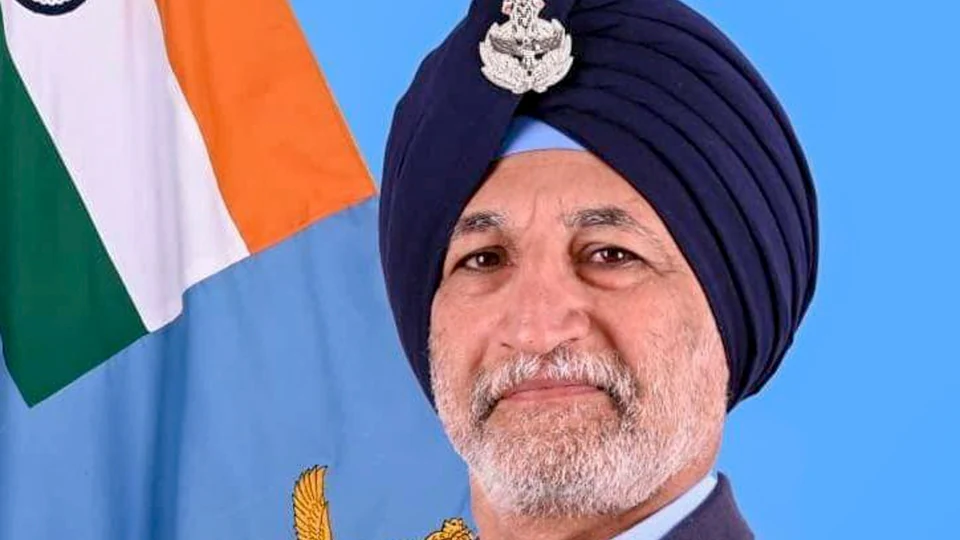
Air Marshal Inderpal Singh Walia has been appointed as the next Vice Chief of the Air Staff (VCAS) of the Indian Air Force (IAF), the Ministry of Defence announced on Friday, October 30, 2026. He will assume the new responsibility with effect from November 1, succeeding Air Marshal Ashutosh Dixit, who is set to take charge as the 29th Chief of the Air Staff on October 31.
Air Marshal Walia is currently serving as the Air Officer Commanding-in-Chief (AOC-in-C) of the IAF’s Eastern Air Command. An experienced fighter pilot and senior military officer, he has held several operational, command, training and administrative positions during a career spanning nearly four decades.
The appointment comes as the Indian Air Force prepares for a change at the top of its leadership. Air Marshal Dixit, who is currently serving as Vice Chief of the Air Staff, will succeed Air Chief Marshal Amar Preet Singh as the next Chief of the Air Staff. Walia’s elevation will fill the vacancy created by Dixit’s transition to the top post.
Air Marshal Inderpal Singh Walia Appointed Vice Chief of the Air Staff
According to the Ministry of Defence announcement, Air Marshal Inderpal Singh Walia, AVSM, VM, will take over as Vice Chief of the Air Staff from November 1, 2026. He currently heads the Eastern Air Command, one of the Indian Air Force’s operational commands.
The appointment places Walia in one of the senior leadership positions within the IAF. The Vice Chief of the Air Staff works at the service’s headquarters and is part of the senior leadership responsible for overseeing the force’s functioning and supporting the Chief of the Air Staff in managing its responsibilities.
Walia will succeed Air Marshal Ashutosh Dixit, who has been appointed as the next Chief of the Air Staff. The government had announced Dixit’s appointment earlier in October, confirming that he would assume the position in the rank of Air Chief Marshal from the afternoon of October 31.
The transition will therefore take place over two consecutive days. Dixit will take charge as the IAF chief on October 31, while Walia will assume the Vice Chief’s position on November 1.
Who Is Air Marshal Inderpal Singh Walia?
Air Marshal Inderpal Singh Walia is a senior Indian Air Force officer and an alumnus of the National Defence Academy (NDA). He was commissioned into the fighter stream of the IAF on June 11, 1988.
His service career has included flying assignments, fighter squadron command, leadership of specialist operational establishments and senior staff responsibilities. He has also represented India in diplomatic and defence-related assignments overseas.
Over the years, Walia has gained experience across several areas of military aviation. His qualifications include all variants of the MiG-21, MiG-23, MiG-27, Jaguar and Su-30MKI fighter aircraft. These platforms represent different generations of fighter aviation operated by the Indian Air Force.
The Ministry of Defence has described his career as spanning almost four decades, during which he has held a range of command and staff appointments. His professional background combines operational flying experience with responsibilities involving training, inspection, strategic studies and international defence relations.
Fighter Aircraft Flown by Air Marshal Walia
One of the notable aspects of Walia’s career is his qualification on several fighter aircraft operated by the Indian Air Force. The Ministry of Defence has confirmed that he is qualified on all variants of the MiG-21, MiG-23, MiG-27, Jaguar and Su-30MKI.
These aircraft have played different roles in the development of India’s combat aviation capabilities. The MiG-21 became one of the most widely operated fighter aircraft in the IAF’s history, while the MiG-23 and MiG-27 served in different combat roles. The Jaguar was inducted for strike and deep-penetration missions, while the Su-30MKI represents a more modern multirole fighter platform.
Experience across these aircraft gave Walia exposure to different generations of fighter technology, operating requirements and combat aviation procedures. His flying background also formed part of the foundation for his later command responsibilities.
In February 2026, Walia took over as Air Officer Commanding-in-Chief of the Eastern Air Command. Before that appointment, he served as the Senior Air Staff Officer of the same command. The Ministry of Defence has also previously stated that he had accumulated more than 3,200 hours of accident- and incident-free flying.
Command Experience in Fighter Squadrons and TACDE
Walia has commanded a frontline fighter squadron during his career. Commanding a fighter squadron involves responsibility for its personnel, operational preparedness, training standards and the maintenance of its assigned aircraft and equipment.
He also commanded the Tactics and Air Combat Development Establishment (TACDE), a specialised institution associated with the development and refinement of air combat tactics. The establishment has an important role in advanced combat training and the professional development of fighter aircrew.
Experience at TACDE involves more than routine flying duties. It is associated with evaluating tactical methods, improving air combat skills and developing approaches to meet changing operational requirements. Walia’s command of the establishment added a specialised training and tactical dimension to his service record.
Another significant assignment was his tenure as Air Officer Commanding of Air Force Station Bareilly. The position involved leadership at an operational air force station and responsibility for its functioning. His command appointments have therefore included both frontline fighter operations and the management of an air force base.
Senior Staff and Inspection Responsibilities
Alongside his operational and command assignments, Walia has held important administrative and staff positions within the Indian Air Force. He headed the Directorate of Air Staff Inspection (DASI), an organisation involved in examining and assessing various aspects of the service’s functioning.
Air Staff Inspection is an important part of maintaining professional standards across the force. Such responsibilities involve reviewing operational and administrative practices and assessing whether units are functioning in accordance with established requirements.
Walia also served as the Senior Air Staff Officer of the Eastern Air Command before becoming its Air Officer Commanding-in-Chief. The experience provided him with exposure to the command’s staff functions before he assumed its top leadership position in February 2026.
His career has also included assignments at Air Headquarters. These positions, together with his command experience, gave him exposure to the organisational and policy-related responsibilities involved in managing a large military service.
Defence Attaché Roles in Japan and South Korea
Walia’s professional experience extends beyond India’s military establishments. He served as Defence Attaché at the Indian embassies in Japan and South Korea, undertaking defence-related diplomatic assignments in two important countries in East Asia.
A defence attaché represents a country’s defence establishment at an overseas diplomatic mission. The role can involve maintaining official defence contacts, supporting military exchanges and facilitating communication between the host country’s institutions and the visiting country’s defence authorities.
Japan and South Korea are important countries in the Indo-Pacific region, with advanced defence industries and established military relationships with several international partners. Walia’s postings in these countries provided him with experience in the diplomatic dimensions of defence cooperation.
These assignments were different from his fighter and command responsibilities, but they formed another part of his professional experience. His career has consequently included operational aviation, military administration and international defence engagement.
Military Education and Postgraduate Qualifications
Air Marshal Walia is an alumnus of the National Defence Academy, where he received his initial military training before joining the Indian Air Force. He was commissioned into the fighter stream on June 11, 1988.
He has also undergone the Advanced Command and Staff Course in the United Kingdom. The programme is designed to provide military officers with advanced professional education in command, staff work and defence-related subjects.
In addition, the Ministry of Defence has confirmed that Walia attended the National Defence College course in Bangladesh. The institution provides senior-level professional education for military officers and other officials, with a focus on national security and strategic affairs.
Walia holds three postgraduate degrees in Defence and Strategic Studies. His academic qualifications complement his operational experience and reflect a professional background that includes formal study of military and strategic issues.
The combination of military training, advanced command education and postgraduate qualifications has been a recurring feature of his career as he moved through increasingly senior positions in the Indian Air Force.
Vayu Sena Medal and Ati Vishisht Seva Medal
In recognition of his service, Air Marshal Walia has received two major military decorations. He was awarded the Vayu Sena Medal (VM) in 2008 and the Ati Vishisht Seva Medal (AVSM) in 2018.
The Vayu Sena Medal is awarded for acts of exceptional devotion to duty or courage in the Air Force. The Ati Vishisht Seva Medal recognises distinguished service of an exceptional order. Both awards form part of India’s military honours system.
The decorations reflect recognition of Walia’s contributions during different stages of his service career. His latest appointment follows a series of command and staff responsibilities that have taken him from fighter aviation to senior leadership within the IAF.
Air Marshal Ashutosh Dixit to Become the 29th Chief of the Air Staff
Walia’s appointment is directly linked to the elevation of Air Marshal Ashutosh Dixit, the current Vice Chief of the Air Staff, to the position of Chief of the Air Staff.
The government announced on October 6 that Dixit would become the 29th Chief of the Air Staff in the rank of Air Chief Marshal, with effect from the afternoon of October 31, 2026. He will succeed Air Chief Marshal Amar Preet Singh, who is scheduled to superannuate on the same date.
Dixit is also an alumnus of the National Defence Academy and was commissioned into the fighter stream of the Indian Air Force on December 6, 1986. His career has included operational, training and strategic assignments, including service as Chief of Integrated Defence Staff to the Chairman, Chiefs of Staff Committee and Air Officer Commanding-in-Chief of the Central Air Command.
He is an Experimental Test Pilot and a Qualified Flying Instructor, with more than 3,500 hours of flying experience on several aircraft. His decorations include the Param Vishisht Seva Medal, Ati Vishisht Seva Medal, Vishisht Seva Medal and Vayu Sena Medal.
With Dixit moving to the top position, Walia will take over the responsibility of Vice Chief. The change represents a transition in the IAF’s senior command structure at the end of October and the beginning of November.
What Does the Vice Chief of the Air Staff Do?
The Vice Chief of the Air Staff is one of the most senior appointments in the Indian Air Force. The officer works at Air Headquarters and assists the Chief of the Air Staff in overseeing the service’s responsibilities.
The IAF has a broad range of functions, including maintaining combat readiness, managing aircraft and support systems, training personnel, planning operations and coordinating activities across its commands. These responsibilities require coordination between operational formations and different branches of the service.
The Vice Chief’s position forms part of the senior leadership structure through which the Air Force manages these functions. The appointment carries significant institutional responsibilities, although the exact allocation of duties can depend on the organisation and requirements of the service.
Walia’s experience across fighter operations, command appointments, inspection duties and strategic education provides the background to his new senior position. His previous role as head of the Eastern Air Command also means that he is moving to Air Headquarters after leading one of the IAF’s major operational commands.
What Walia’s Appointment Means for the IAF Leadership Transition
The appointment of Walia comes at a time when the Indian Air Force is changing two of its most senior officeholders. Air Marshal Dixit will become the Chief of the Air Staff on October 31, while Walia will take over as Vice Chief the following day.
Such appointments are part of the regular leadership structure of the armed forces. The Chief of the Air Staff heads the Indian Air Force, while the Vice Chief supports the service’s senior leadership and its institutional responsibilities.
Walia’s career has covered several areas of the IAF, from flying frontline fighter aircraft to commanding operational units and specialist establishments. His experience in defence diplomacy and senior staff roles adds further dimensions to his professional record.
His appointment also follows his tenure as the head of Eastern Air Command, a position he assumed on February 1, 2026. The move to Vice Chief will take him from command leadership to a senior role at the service’s headquarters.
The Ministry of Defence’s announcement confirms that Air Marshal Inderpal Singh Walia will assume office as Vice Chief of the Air Staff from November 1, 2026. He will succeed Air Marshal Ashutosh Dixit, who is scheduled to become the Indian Air Force’s 29th Chief of the Air Staff on October 31.
For breaking news and live news updates, like us on Facebook or follow us on Twitter and Instagram. Read more on Latest India on thefoxdaily.com.




COMMENTS 0