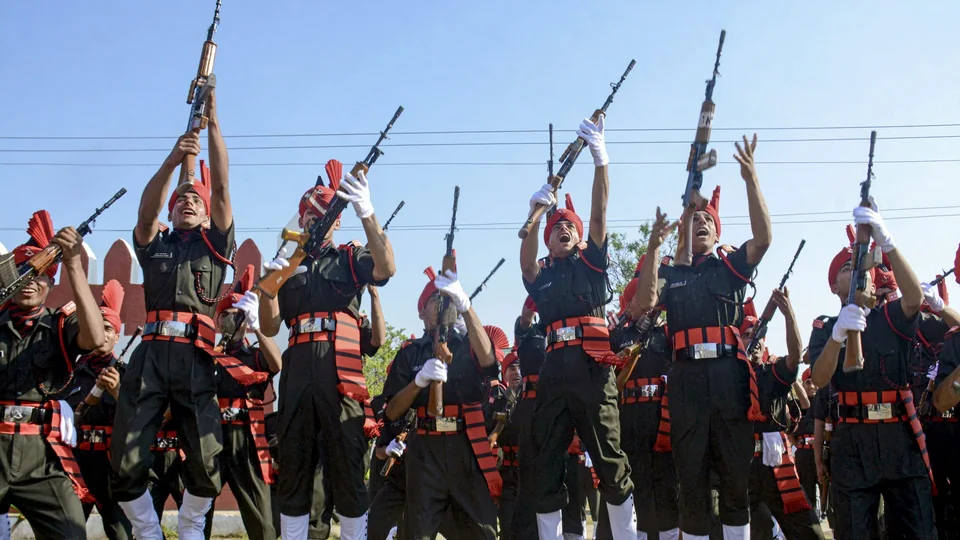
The Centre is preparing to implement a revised framework for the Agnipath Scheme, giving thousands of serving Agniveers an additional two years in the armed forces before decisions on their long-term retention. The latest batches from the Army, Navy and Air Force are scheduled to complete their training between November 13 and December 31, marking an important transition as the government moves ahead with changes to the recruitment programme.
Under the revamped arrangement, Agniveers who were earlier expected to leave after completing four years of service will receive a two-year extension in uniform. Those covered by the revised framework will become permanent members of the services after the extended period, subject to meeting specified eligibility conditions and providing individual consent.
The changes will apply exclusively to the approximately 300,000 Agniveers already serving in the three armed forces. The government is expected to consider further modifications for recruits inducted after December 31, meaning the current arrangement may not automatically apply to future recruitment batches.
The decision represents a significant change to the original Agnipath structure, under which only 25% of each batch could be retained for an additional 15 years, while the remaining 75% would be released after four years. The revised framework is intended to provide existing Agniveers with a longer opportunity to continue their military careers.
Latest Agniveer batches to complete training by December 31
The three services are preparing to hold passing-out ceremonies for their latest Agniveer batches over the coming weeks. The Navy will lead the schedule, with more than 2,700 Agniveers completing their 16-week initial training at INS Chilka in Odisha on November 13.
INS Chilka is the Navy’s lakeside training establishment and one of the main facilities responsible for preparing new recruits for service. The upcoming passing-out parade is expected to be the largest batch ceremony held at the facility.
Navy chief Admiral Krishna Swaminathan will attend the event as the chief guest and reviewing officer. More than 600 regular Naviks of the Indian Coast Guard will also complete their training alongside the Navy Agniveers.
The Air Force Agniveers are scheduled to complete their training in mid-December. The Army’s first batch under the newly introduced model will pass out on December 31, according to officials.
The sequence of ceremonies reflects the rollout of the revised framework across the three services. While the Navy’s latest batch is scheduled to complete its initial training in November, the Air Force and Army will follow in December.
The passing-out ceremonies also come at a time when the government is preparing to change the service conditions for existing Agniveers. The revised policy is particularly important for recruits who were approaching the end of their original four-year engagement and had expected to face discharge under the earlier rules.
What changes under the revised Agnipath framework?
The most significant change is the introduction of an additional two years of service for existing Agniveers who were previously due to leave after completing the initial four-year period.
Under the original Agnipath model, recruits joined the Army, Navy or Air Force for four years. At the end of that period, the services could retain up to 25% of each batch based on merit and organisational requirements. Those selected would continue for another 15 years, while the remaining 75% would leave military service.
The revised framework changes the immediate position for those already serving. Instead of facing release after four years under the earlier arrangement, eligible existing Agniveers will receive an additional two years in uniform.
At the end of the extended period, all existing Agniveers covered by the new framework will become permanent, provided they satisfy the required eligibility criteria and individually agree to continue.
This means the extension is not simply an automatic guarantee of permanent employment without conditions. Eligibility requirements and individual consent remain important parts of the revised arrangement.
The policy also creates a distinction between existing Agniveers and future recruits. The approximately 300,000 personnel currently serving in the three services are covered by the revised framework. Recruits inducted after December 31 are expected to come under a model that may undergo further changes.
Why the government changed the original four-year model
The Agnipath reset comes as the first batches recruited under the scheme approach the end of their initial four-year service period. The services were preparing to release 75% of the first batch, retaining only the 25% selected on merit for longer military careers.
Approximately 24,400 recruits were inducted into the Army, Air Force and Navy during the first round of recruitment. Of these, around 18,300 Agniveers were scheduled to be discharged between mid-November and December 31 under the original provisions.
The revised framework changes the immediate outcome for this group by extending their service for another two years. It also affects the wider pool of existing Agniveers who are currently serving under the programme.
The government’s decision comes at a critical stage for the scheme because the first large-scale transition from initial service to release or retention was approaching. The revised policy provides the Centre with a different approach to managing the transition while changing the career prospects of personnel already inducted.
It also means that the original 25% retention structure will no longer determine the immediate service outcome for the existing Agniveers covered by the new arrangement. Instead, the additional two-year period will provide a further stage before permanent status, subject to the stated conditions.
How many Agniveers will benefit from the two-year extension?
The revised framework is expected to cover approximately 300,000 Agniveers currently serving across the Army, Navy and Air Force.
The immediate impact will be particularly visible among the first batches approaching the end of their four-year engagement. Around 18,300 personnel were due to leave between mid-November and December 31, representing three-fourths of the 24,400 recruits inducted during the first recruitment round.
Under the earlier arrangement, these personnel would have faced release unless selected among the 25% eligible for retention. The new framework provides an additional two years of service to existing Agniveers covered by the revised rules.
The extension is therefore relevant not only to the first batch but also to the broader group of personnel already serving under the scheme. The government has specifically limited the revamped arrangement to existing Agniveers, rather than announcing it as a permanent change for every future recruitment cycle.
This distinction will be important for applicants considering military recruitment after December 31. The service conditions applicable to later batches may differ, depending on the further changes expected from the government.
Cabinet approval and announcement of the Agnipath reset
The revised framework was cleared by the Union Cabinet and unveiled on November 4 by Chief of Defence Staff General NS Raja Subramani, according to officials.
The announcement came weeks before the three services were due to release the majority of Agniveers from their first recruitment batch after four years. The timing makes the changes particularly consequential for personnel who were approaching the end of their initial engagement.
The government has presented the new arrangement as a revised approach to the service structure for existing recruits. Rather than allowing the earlier release process to proceed unchanged, the Centre has introduced an additional two-year period before permanent service decisions are finalised.
The implementation will involve the three services as their latest training batches complete their programmes and join their respective organisations. The Navy’s November 13 passing-out parade, the Air Force ceremony in mid-December and the Army ceremony on December 31 are key dates in this transition.
Further details about the changes applicable to future recruits are expected to emerge separately. For now, the government has made clear that the current two-year extension is intended for personnel already inducted under the Agnipath scheme.
Financial impact: Higher salaries, pensions and gratuity costs
The revised framework is expected to increase government expenditure on military personnel. Extending service and moving existing Agniveers towards permanent status will have financial implications, including higher salary payments and future pension and gratuity liabilities.
Under the original structure, the four-year engagement and limited retention arrangement shaped the government’s long-term financial commitments. The revised policy changes that calculation by providing an additional two years of service and a route to permanent employment for existing personnel who meet the required conditions.
The government is expected to undertake a financial review of the revamped recruitment model. This review will need to account for the additional salary expenditure and the future costs associated with pension and gratuity payments.
Officials have indicated that funding will not be a constraint in implementing the revised framework. They have also argued that the higher expenditure could be partly offset by savings in training costs.
According to officials, the revised arrangement is expected to reduce the need for additional training, potentially lowering expenditure and helping to keep the overall financial impact under control.
The government has also indicated that national security considerations will take priority over fiscal concerns. This reflects the importance attached to the personnel requirements of the armed forces while the Centre reviews the financial implications of the policy.
Agnipath budget rises by 58% in 2026-27
The financial allocation for the Agnipath scheme has increased substantially in the Union Budget for 2026-27. The government allocated ₹17,396 crore for the programme, compared with the budget estimate of ₹11,039 crore for 2025-26.
This represents an increase of approximately 58% over the previous year’s budget estimate. The allocation is also considerably higher than the ₹7,471 crore provided for the scheme across the three services in 2024-25.
The rising allocation comes as the government prepares to implement the revised service structure for existing Agniveers. Higher salaries and longer service periods are among the factors expected to influence expenditure under the updated framework.
The budget figures also show how the financial requirements of the scheme have changed since its introduction. The increase in allocation provides an indication of the growing budgetary commitment associated with the programme, although the full long-term cost will depend on how the revised framework is implemented.
Future pension and gratuity obligations will also be relevant to the financial assessment. As existing Agniveers move towards permanent service under the new arrangement, the government will need to account for the longer-term costs associated with their employment.
Defence pension expenditure continues to rise
The Agnipath changes come against the backdrop of a steadily increasing defence pension bill. The Union Budget for 2026-27 includes a pension allocation of ₹1.71 lakh crore, compared with the budget estimate of ₹1.60 lakh crore in 2025-26.
The increase highlights the scale of the government’s existing pension commitments to defence personnel. The revised Agnipath framework is expected to add to future financial obligations as eligible Agniveers move towards permanent military service.
However, the scheme’s immediate budget allocation and the wider defence pension expenditure are separate figures. The ₹17,396 crore allocation is specifically for the Agnipath programme, while the ₹1.71 lakh crore pension outlay represents the broader defence pension requirement.
The distinction is important when assessing the financial impact of the revised policy. The additional two years of service will affect salary expenditure in the near term, while pension and gratuity costs will have longer-term implications as personnel qualify for permanent service benefits.
What the changes mean for future Agniveer recruitment
One of the most important aspects of the revised framework is its limited coverage. The Centre has said that the two-year extension will apply to existing Agniveers, estimated at around 300,000 personnel across the three services.
Recruitment after December 31 is expected to be governed by a framework that may undergo further changes. This means candidates joining the armed forces in later batches should not assume that the conditions announced for existing Agniveers will automatically apply to them.
The government has not, in the supplied announcement, detailed the final structure that will govern all future recruitment. The possibility of further changes therefore remains an important part of the policy’s next stage.
For serving Agniveers, the revised arrangement changes the immediate service outlook. Those who were preparing to leave after four years will have an additional two-year period under the new framework, followed by the possibility of permanent service if they meet the eligibility requirements and provide consent.
For the armed forces, the change will require the services to manage the transition across different recruitment batches while implementing the revised rules. The three services will also need to account for the additional personnel costs and the long-term implications of permanent retention.
What happens next under the revised Agnipath scheme?
The immediate next step is the completion of training by the latest batches of Agniveers. More than 2,700 Navy recruits are scheduled to pass out from INS Chilka on November 13, followed by Air Force Agniveers in mid-December and the Army’s first batch under the new model on December 31.
At the same time, the Centre will move ahead with implementing the two-year extension for existing Agniveers. The revised arrangement will change the service timeline for personnel who were previously expected to leave after four years under the original framework.
The government will also need to assess the financial requirements of the new model, including higher salaries and future pension and gratuity payments. The expected savings in training costs have been cited by officials as one factor that could partly offset the additional expenditure.
Further decisions will be important for recruits inducted after December 31, as the Centre is expected to consider additional changes to the scheme for future batches.
The revised Agnipath framework marks a major shift for the approximately 300,000 Agniveers already serving in the armed forces. By introducing two additional years of service and a route towards permanent employment, the government has changed the immediate career outlook for existing recruits while opening a new phase in the programme’s implementation.
For breaking news and live news updates, like us on Facebook or follow us on Twitter and Instagram. Read more on Latest India on thefoxdaily.com.






COMMENTS 0