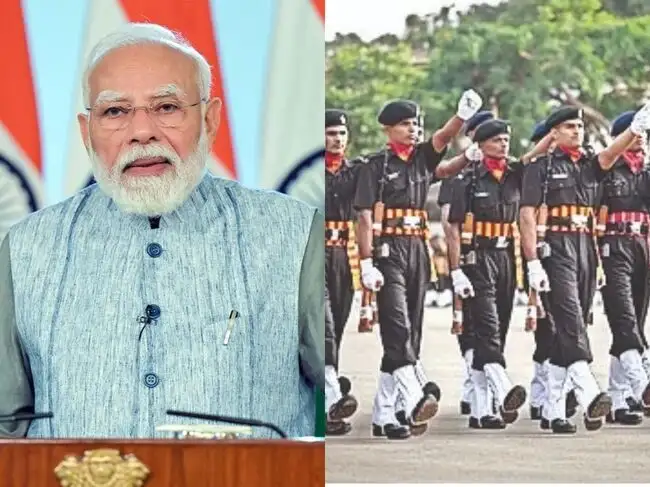
The Union Government has approved a major revision to the Agnipath recruitment scheme, giving Agniveers who were previously expected to leave the armed forces after four years an additional opportunity to continue serving. Under the new framework, 25% of Agniveers will continue to be selected for regular service on merit after their initial four-year tenure, while the remaining 75% will be offered a second engagement period of two years.
After completing six years of service, those who undertake the additional two-year period will be considered for enrolment into the regular armed forces, provided they are willing and meet the prescribed selection criteria. The Cabinet approved the change on November 4, 2026, following recommendations from the Defence Forces and an assessment of Agniveers’ performance during the scheme’s first four years.
The decision changes one of the most debated features of the original Agnipath Scheme: the requirement for most recruits to leave after completing four years. It also comes ahead of Assembly elections in Uttar Pradesh, Uttarakhand and Punjab, states with significant military recruitment links. However, the government has presented the revision as a decision based on organisational requirements, operational efficiency and feedback from the armed forces.
What Has Changed in the Agnipath Scheme?
Under the original Agnipath framework, young recruits joined the Army, Navy or Air Force as Agniveers for a four-year engagement. At the end of this period, up to 25% of each batch could be selected for regular service based on merit and organisational requirements. The remaining 75% were required to leave the armed forces.
The revised arrangement introduces another two-year engagement opportunity for the 75% who are not selected during the first retention process. This gives them additional time in uniform and another opportunity to qualify for regular enrolment.
The revised pathway has three main stages:
- First four years: Agniveers complete their initial engagement under the existing Agnipath framework.
- First selection: Up to 25% are selected for regular service on merit, as originally envisaged.
- Additional two years: The remaining 75% are offered a second engagement period. After completing it, those willing to continue will be considered for regular enrolment, subject to selection criteria.
The government has also approved higher remuneration, an enhanced Seva Nidhi package and seniority benefits for the additional engagement period. The Agnipath scheme itself will continue; the change expands the opportunities available to recruits rather than replacing the original recruitment framework.
Agniveer Retention Rule: What Changes After Four Years of Service?
The biggest change concerns what happens to Agniveers who are not selected for regular service after their first four years. Previously, these recruits had to transition out of the armed forces and return to civilian life. Under the revised policy, they will be offered another two years of engagement.
This additional period creates a second opportunity to demonstrate their suitability for regular military service. At the end of six years, those who want to remain in the armed forces will be offered enrolment as regular soldiers, subject to the prescribed selection criteria.
Importantly, the new arrangement does not guarantee permanent employment to every Agniveer. The opportunity to continue depends on willingness and meeting the required standards. The initial 25% selection on merit also remains part of the framework.
How the New Six-Year Pathway Works
| Stage | Original Agnipath Scheme | Revised Framework |
|---|---|---|
| Initial engagement | Four years | Four years |
| First regular selection | Up to 25% on merit | Up to 25% on merit |
| Remaining 75% | Leave after four years | Offered an additional two-year engagement |
| Second selection opportunity | Not part of the original framework | After six years, subject to willingness and selection criteria |
| Additional engagement benefits | Not applicable | Higher remuneration, enhanced Seva Nidhi and seniority benefits |
The revised arrangement therefore extends the potential service period for the majority of Agniveers from four to six years before the second opportunity for regular enrolment. It creates a broader pathway to a permanent military career, although final selection is not automatic.
Why Has the Government Revised the Agnipath Scheme?
The government says the decision follows an assessment of the Agnipath scheme after four years of implementation. The first batch of Agniveers is approaching the completion of its initial engagement period, giving the armed forces an opportunity to evaluate their performance, training outcomes and suitability for continued service.
According to the Ministry of Defence, the assessment found positive results in areas including physical fitness, motivation, discipline, skills and technological adaptability. The Defence Forces recommended another two-year engagement period for the 75% who would otherwise have left after four years.
1. Retaining Trained Personnel
One of the practical issues associated with the original arrangement was the departure of most recruits after four years, despite the training and experience they had gained during their service.
The revised framework gives the armed forces an opportunity to retain some of this trained manpower for another two years. It also allows Agniveers to gain additional experience before the second selection process.
2. Addressing Concerns About Limited Permanent Recruitment
The original scheme’s 25% retention provision was a major point of concern among sections of prospective recruits, veterans and their families. Under that arrangement, three out of every four Agniveers were expected to leave after four years, regardless of the experience they had acquired during their military service.
The additional engagement period does not remove the selection process, but it gives the remaining recruits another opportunity to qualify for regular service. This changes the earlier expectation that most Agniveers would have to leave immediately after their first four-year term.
3. Aligning Recruitment With Organisational Requirements
The Ministry of Defence has said that the decision was based on organisational requirements and operational efficiency. The additional two-year period gives the services more flexibility to assess personnel over a longer period while considering their performance, skills and suitability for continued military duties.
The government has also said that the second engagement period will carry improved financial benefits. Higher remuneration, an enhanced Seva Nidhi package and seniority benefits are intended to make the additional service period more attractive to eligible Agniveers.
4. Political Significance Ahead of Assembly Elections
The announcement comes ahead of Assembly elections in Uttar Pradesh, Uttarakhand and Punjab. These states have a strong connection with military recruitment, and the future of the Agnipath scheme has been a politically sensitive issue since its introduction in 2022.
Opposition parties and critics have previously raised concerns about the four-year tenure and the limited number of recruits entering regular service. The timing of the latest revision has therefore attracted political attention, with some opposition leaders linking the announcement to the upcoming elections.
However, the government’s official explanation focuses on the performance assessment of Agniveers and recommendations from the Defence Forces. The election-related interpretation should be distinguished from the reasons formally cited by the government.
Can Agniveers Marry During the Two-Year Extension?
Marriage rules have become another point of interest following the announcement of the additional two-year engagement period. Under the original Agnipath recruitment conditions, candidates were required to remain unmarried during their four-year engagement. The restriction was part of the eligibility framework for joining as an Agniveer.
Following the announcement of the revised scheme, reports have indicated that the Defence Ministry is examining whether the marriage restriction could be relaxed during the additional two-year engagement period. The issue is particularly relevant for recruits who will have spent four years in service before becoming eligible for the extension.
However, a possible relaxation should not be treated as an approved policy change. The reported discussions do not, by themselves, establish that Agniveers are now permitted to marry during the extension period. Personnel will need to follow the applicable service rules until an official clarification or revised guideline is issued.
The final position will depend on the detailed implementation rules governing the second engagement period. Until those rules are formally communicated, Agniveers should not assume that the existing marriage-related conditions have automatically changed.
What Financial Benefits Will Agniveers Receive During the Extension?
The revised framework includes improved financial benefits for personnel who enter the additional two-year engagement period. According to the government’s announcement, the second engagement will carry higher remuneration, an enhanced Seva Nidhi package and seniority benefits.
These changes are significant because the original four-year arrangement was designed around a defined service period followed by a one-time Seva Nidhi payment for those leaving the armed forces. The new arrangement creates a longer service pathway for the majority of recruits and introduces additional financial provisions for that period.
The government has announced the broad benefits, but detailed implementation rules will determine the exact remuneration structure, the calculation of the enhanced Seva Nidhi and how seniority will be assigned.
It is therefore important to distinguish the confirmed policy decision from the detailed financial calculations that depend on the forthcoming service guidelines.
How the Original Agnipath Scheme Worked
The Union Cabinet approved the Agnipath scheme on June 14, 2022, as a new recruitment model for the Indian Armed Forces. Under the framework, selected young people would serve as Agniveers for four years under the respective service laws of the Army, Navy and Air Force.
The scheme was designed to create a younger and more dynamic military profile while allowing recruits to gain military training, technical skills, discipline and professional experience.
At the end of four years, up to 25% of each batch could be considered for regular enrolment based on merit, performance and organisational requirements. The remaining personnel would leave the forces with the Seva Nidhi package and could pursue civilian employment or other career opportunities.
The November 2026 revision changes the exit pathway for the remaining 75%. Instead of leaving immediately after four years, they will now be offered a two-year second engagement before another opportunity for regular enrolment.
What Happens to Agniveers Who Are Not Selected After Six Years?
The revised framework creates another opportunity for regular service, but it does not mean every Agniveer will ultimately become a permanent member of the armed forces.
Those who complete the additional two-year engagement but do not meet the selection criteria, or do not wish to continue, will have to transition out of the armed forces under the applicable rules.
The enhanced Seva Nidhi package and other benefits associated with the second engagement are relevant to this extended service pathway. The precise exit arrangements and financial entitlements will depend on the detailed government and service guidelines.
This distinction is important for candidates and families assessing the revised scheme. The government has expanded the opportunity to continue serving, but regular enrolment remains conditional rather than guaranteed.
What the Agnipath Revision Means for Future Army Recruitment
The latest decision changes the long-term career prospects associated with Agnipath recruitment. Under the original arrangement, most recruits had a fixed four-year service period and only a limited opportunity to enter the regular cadre. The revised framework gives the remaining 75% another two years to serve and a second opportunity to qualify for regular enrolment.
For the armed forces, the change offers additional flexibility to retain trained personnel and assess their performance over a longer period. For recruits, it provides more time in uniform, improved financial benefits during the second engagement and another route towards a regular military career.
It may also affect how young candidates and their families evaluate Agniveer recruitment in future. The possibility of serving for six years before a second selection process is materially different from the earlier four-year exit arrangement.
Nevertheless, the scheme’s central structure remains intact: recruitment continues under Agnipath, the initial four-year engagement remains, and the first 25% selection on merit is unchanged. The major reform is the additional engagement opportunity for those who are not selected in the first round.
Conclusion
The government’s revision of the Agnipath scheme gives Agniveers a broader opportunity to build a career in the Indian Armed Forces. While the first 25% will continue to be selected for regular service on merit after four years, the remaining 75% will now be offered an additional two-year engagement period and another opportunity for regular enrolment after six years.
The decision follows the Defence Forces’ assessment of Agniveer performance and introduces higher remuneration, an enhanced Seva Nidhi package and seniority benefits for the extended period. It also addresses concerns surrounding the original scheme’s limited retention provision, although permanent enrolment will remain subject to selection criteria.
With the first batch approaching the end of its initial tenure, the revised framework marks a significant change in the future of military recruitment. The detailed implementation rules, including the reported possibility of changes to marriage restrictions, will be important in determining how the new pathway works in practice.
For breaking news and live news updates, like us on Facebook or follow us on Twitter and Instagram. Read more on Latest Careers on thefoxdaily.com.






COMMENTS 0