Pakistan’s nuclear weapons adviser, retired Lieutenant General Mazhar Jamil, has accused India of using terrorism as an instrument of state policy and pursuing a security approach that he claims is destabilising Pakistan. Speaking at an international strategic security workshop in London on October 13, Jamil criticised India’s national security doctrine, raised concerns about its growing nuclear capabilities and questioned New Delhi’s commitment to its declared no-first-use policy.
Jamil’s remarks were delivered during a Track 1.5 workshop on Nuclear Deterrence and strategic stability in South Asia organised at the International Institute for Strategic Studies (IISS). His address covered India’s alleged support for militant organisations, the deployment of submarine-launched ballistic missiles, the BrahMos cruise missile and the military confrontation associated with Operation Sindoor.
However, several of the assertions in his speech require careful examination, particularly those concerning the BrahMos missile’s nuclear capability and the distinction between India’s declared nuclear doctrine and the possibility of retaliation against an adversary’s nuclear forces. The claims also reflect a wider disagreement between India and Pakistan over deterrence, conventional military operations and the risk of escalation between two nuclear-armed neighbours.
Jamil previously served as director-general of Pakistan’s Strategic Plans Division (SPD) between 2015 and 2017. The division has played a central role in managing Pakistan’s nuclear weapons establishment, making his assessment relevant to understanding how sections of Pakistan’s strategic community view India’s military posture.
What Mazhar Jamil said about the Doval doctrine
Jamil accused India of supporting organisations such as the Tehreek-e-Taliban Pakistan (TTP) and the Balochistan Liberation Army (BLA). He alleged that New Delhi was pursuing a policy of creating instability inside Pakistan and linked this accusation to what he described as the publicly articulated Doval doctrine.
The reference concerns the national security approach associated with Ajit Doval, India’s National Security Adviser. Jamil presented the doctrine as evidence of an Indian strategy intended to weaken Pakistan through activities beyond conventional military confrontation.
To support his argument, Jamil referred to several historical episodes, including India’s assistance to the Mukti Bahini during the 1971 Bangladesh Liberation War, its relationship with the Liberation Tigers of Tamil Eelam (LTTE) during the 1980s and the presence of Indian consulates near the Afghanistan-Pakistan border during the international military presence in Afghanistan from 2001 to 2014.
These examples were presented in his speech as evidence of alleged Indian involvement in activities directed against Pakistan. However, the claims about contemporary support for the TTP and BLA remain allegations in the material provided and should not be treated as independently established findings solely on the basis of Jamil’s remarks.
The distinction matters because accusations of state-sponsored militancy can influence diplomatic relations, military planning and perceptions of hostile intent. When competing governments interpret security developments through opposing narratives, activities described by one side as defensive may be viewed by the other as evidence of an offensive strategy.
Jamil’s speech therefore went beyond criticism of a particular security policy. It attempted to connect India’s historical military and political decisions with present-day concerns about Pakistan’s internal security and the strategic balance between the two countries.
Operation Sindoor and the competing narratives over escalation
One of the central themes of Jamil’s address was Operation Sindoor, which he cited as an example of the dangers he believes India’s military posture poses to regional stability. He alleged that the confrontation brought South Asia close to a nuclear catastrophe and argued that Pakistan’s restraint prevented a further escalation.
These statements represent Jamil’s interpretation of the confrontation rather than an independently established assessment of how the crisis was resolved. His address sought to frame the episode as evidence that conventional military operations between nuclear-armed neighbours can create risks extending beyond the immediate battlefield.
The broader strategic concern is that conventional military action can generate uncertainty about an adversary’s intentions. If one country believes an operation is limited, while the other interprets it as preparation for a wider attack, decisions made under pressure can increase the risk of escalation.
Nuclear deterrence is intended to prevent nuclear use by convincing an adversary that the consequences would be unacceptable. However, deterrence depends partly on how each side understands the other’s capabilities, intentions and thresholds for retaliation.
Jamil’s remarks also appeared to seek greater international attention to the risks of military confrontation in South Asia. His argument connected India’s conventional military capabilities with the possibility of nuclear escalation, a framing that could influence how foreign governments and strategic analysts assess regional security.
However, establishing whether a particular military operation increased the risk of nuclear conflict requires examining the sequence of events, the capabilities involved, the decisions made by both governments and the evidence surrounding escalation management. A speech by one side’s strategic adviser is an important part of the debate, but it does not independently settle those questions.
Why the BrahMos missile claim matters
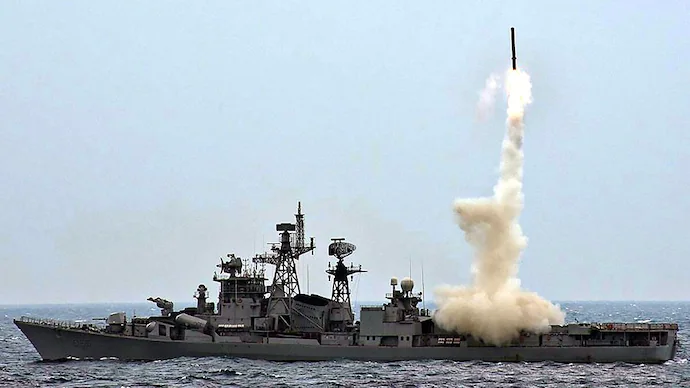
Jamil also alleged that India used dual-capable BrahMos missiles during Operation Sindoor. In nuclear strategy, the term dual-capable generally describes a delivery system that can carry either conventional or nuclear warheads.
The claim is significant because a missile’s perceived payload capability can influence how an adversary interprets its launch. If a military cannot confidently determine whether an incoming missile carries a conventional or nuclear warhead, it may face difficult decisions about the nature and scale of its response.
However, the supplied report directly disputes Jamil’s assertion, stating that the BrahMos carries conventional warheads and is not part of India’s Strategic Forces Command, which is associated with the country’s nuclear deterrent.
The distinction between a conventional cruise missile and a nuclear delivery system is important. A missile’s range, speed and ability to strike military targets do not, by themselves, establish that it is equipped to carry a nuclear warhead.
Conflating conventional strike capabilities with nuclear weapons can distort assessments of military escalation. At the same time, uncertainty about an adversary’s capabilities can influence strategic calculations even when the underlying claims remain unverified or disputed.
For that reason, claims about nuclear-capable delivery systems require particular care. The technical characteristics of the weapon, its operational assignment and the available evidence about its actual configuration must be distinguished from political statements about its possible use.
The 2022 BrahMos missile incident and Pakistan’s interpretation
Jamil referred to the accidental launch of a BrahMos missile in March 2022, describing it as an intentional attack on Pakistan. The missile reportedly crashed in Khanewal district in Pakistan’s Punjab province.
The incident illustrates how a weapons malfunction or accidental launch can become a source of diplomatic and military tension, particularly when the weapon crosses an international border.
India acknowledged that the missile had been accidentally launched during a drill. The account provided in the source material does not support Jamil’s characterisation of the event as an intentional attack.
The difference between an accidental launch and a deliberate strike is fundamental to interpreting military intent. An intentional attack may indicate a decision to use force, while an accident raises questions about technical safeguards, operational procedures, accountability and the management of unintended consequences.
In a region where both countries possess nuclear weapons, even an accidental incident can create pressure for an immediate response. If the circumstances are unclear, decision-makers may have to assess whether an event reflects a technical failure, a deliberate provocation or a broader military operation.
Effective crisis management therefore depends on establishing the facts quickly, communicating through appropriate channels and preventing an isolated incident from triggering a wider confrontation.
Jamil’s description of the 2022 launch demonstrates how the same event can be incorporated into competing national security narratives. A sound assessment, however, must distinguish the established circumstances of the incident from claims about intent.
India’s no-first-use nuclear doctrine under scrutiny
Another major element of Jamil’s address was his criticism of India’s no-first-use (NFU) policy. He dismissed the policy as a diplomatic manoeuvre and argued that India’s strategic posture was more flexible than its public declarations suggested.
India’s nuclear doctrine is based on the principle of credible minimum deterrence and a declared commitment not to initiate a nuclear strike. The draft nuclear doctrine released in August 1999 stated that India would not be the first to initiate a nuclear strike but would retaliate with nuclear weapons if deterrence failed.
The draft also emphasised the survivability of India’s nuclear forces, secure command and control arrangements and the ability to retaliate against a nuclear attack. These principles were intended to make the deterrent credible without requiring an unrestricted nuclear arms buildup.
In January 2003, the Indian government announced key elements of its nuclear doctrine, including a posture of no first use and massive retaliation following a nuclear attack. The official position has continued to be described by Indian representatives as one of credible minimum deterrence and no first use.
Jamil challenged the credibility of that commitment, arguing that developments in India’s military capabilities and strategic thinking could create the possibility of a first strike.
His argument raises a longstanding issue in nuclear strategy: the difference between a country’s declared doctrine and how other states interpret its capabilities and potential actions.
A declaration of no first use communicates an intention not to initiate nuclear warfare. However, the credibility of such a declaration is also shaped by military planning, public statements, force posture and the assumptions made by other nuclear powers.
It is therefore possible for a country to maintain an official no-first-use policy while its adversary remains concerned about how that policy would operate under extreme circumstances. Such concerns are relevant to strategic analysis, but they do not independently establish that the declared policy is merely a diplomatic pretence.
What Shivshankar Menon’s argument actually concerned
To support his criticism of India’s nuclear doctrine, Jamil referred to former National Security Adviser Shivshankar Menon’s discussion of first-strike options in his 2017 book.
The distinction between first use and first strike is essential to understanding the argument. First use generally refers to initiating the use of nuclear weapons in a conflict. A first strike, in the narrower strategic sense discussed in nuclear literature, can refer to an attack intended to destroy an adversary’s nuclear forces before they can be used effectively.
These concepts can overlap, but they are not interchangeable in every strategic scenario.
The source material describes Menon’s discussion of how India’s doctrine of massive retaliation might apply if Pakistan used tactical nuclear weapons. It presents his argument as relating to the possibility of a disarming response against Pakistan’s nuclear capabilities after nuclear use by Pakistan.
That is different from demonstrating that India intends to launch an unprovoked nuclear attack. A discussion of possible retaliation following an adversary’s nuclear use does not, by itself, establish a decision to abandon no first use.
The source also clarifies that Menon did not draft India’s nuclear policy. His later interpretation should therefore not automatically be treated as a formal amendment to the government’s declared doctrine.
Nevertheless, debates about the meaning of massive retaliation are strategically important. An adversary may question whether a promised response would be proportionate, whether it could destroy surviving nuclear forces or whether the threat of retaliation could be implemented in practice.
Such uncertainties can affect deterrence calculations on both sides. The challenge is to distinguish genuine ambiguities in nuclear strategy from claims that go beyond what a particular statement or document establishes.
India’s submarine-launched missiles and the first-strike debate
Jamil also referred to assessments by the Stockholm International Peace Research Institute (SIPRI), a Swedish research institute that studies International Security, arms control and military capabilities. He used concerns about India’s growing sea-based nuclear deterrent to question the country’s strategic intentions.
According to the supplied report, Jamil argued that India had begun pairing nuclear warheads with submarine-launched ballistic missiles and conducting sea-based deterrence patrols. He claimed that these developments increased the possibility of misperception and miscalculation.
Submarine-launched ballistic missiles are an important component of a nuclear triad, which consists of land-based missiles, aircraft capable of delivering nuclear weapons and sea-based nuclear forces. The purpose of a survivable sea-based deterrent is to preserve the ability to retaliate even if an adversary attacks land-based nuclear facilities.
Submarines can complicate an adversary’s targeting calculations because their location may be difficult to determine. This survivability can strengthen deterrence by reducing the likelihood that a first strike could eliminate all of a country’s nuclear response capabilities.
However, the same capabilities can also generate uncertainty. Adversaries may have difficulty assessing the location, readiness and intended role of submarine-based forces during a crisis. Those uncertainties can influence military planning and the interpretation of activity at sea.
It is important, though, to distinguish the development of a survivable second-strike capability from the possession of a first-strike strategy. A country may invest in submarine-launched missiles to ensure that it can retaliate after an attack rather than to prepare to launch the first nuclear strike.
Jamil’s argument highlights the concerns Pakistan may have about India’s expanding nuclear capabilities. It does not, by itself, establish that India is moving towards a strategy of initiating nuclear war.
Why Pakistan’s nuclear command structure matters
Jamil’s position as an adviser to Pakistan’s National Command Authority gives his remarks additional significance. He previously headed the Strategic Plans Division, the Pakistani military organisation responsible for important aspects of the country’s nuclear weapons management.
The National Command Authority has historically played a central role in Pakistan’s nuclear decision-making. According to the supplied material, the authority is chaired by Prime Minister Shehbaz Sharif.
The source also describes a change in Pakistan’s strategic command arrangements involving the creation of a National Strategic Command and the transfer of operational control of nuclear weapons to Field Marshal Asim Munir. Such an arrangement raises questions about the relationship between political oversight, military command and the management of nuclear forces.
In any nuclear-armed state, command arrangements are important because they determine how decisions are authorised, communicated and implemented during a crisis. Clear procedures and reliable communication can help reduce the risk of unauthorised action, accidental use or misinterpretation of orders.
However, the precise implications of changes to Pakistan’s command structure cannot be established from Jamil’s speech alone. They require a closer examination of the formal arrangements, the authority assigned to each institution and the safeguards governing nuclear decision-making.
The broader relevance is that India’s and Pakistan’s nuclear postures cannot be understood in isolation from their command systems. Deterrence depends not only on weapons and declared policies but also on how each country manages those capabilities under pressure.
Pakistan’s defence pact with Saudi Arabia and Turkiye
During the London workshop, Jamil was also asked whether Pakistan’s partners under the Makkah Joint Defence Pact, including Saudi Arabia and Turkiye, would assist Islamabad in the event of a war with India.
According to the supplied report, Jamil described the pact as defensive in nature but did not provide a clear answer on whether those countries would intervene in a conflict between India and Pakistan.
The distinction between a defence partnership and an automatic commitment to participate in a war is important. The extent of any assistance depends on the pact’s actual provisions, the circumstances of a conflict and the decisions made by the participating governments.
Without clear evidence about the agreement’s operational obligations, it would be premature to assume that Saudi Arabia or Turkiye would automatically enter a war involving Pakistan.
The question is relevant because external partnerships can influence how governments assess their security options. However, the existence of a defence agreement does not eliminate the uncertainty surrounding how a particular crisis would unfold or how other countries would respond.
Why Jamil’s remarks matter for South Asian security
Jamil’s address brings together several issues that shape strategic competition between India and Pakistan: allegations of cross-border support for militant groups, conventional military operations, the credibility of nuclear doctrines, missile capabilities and international defence partnerships.
These subjects are connected, but they should not be treated as interchangeable. Allegations of support for militant organisations require evidence about specific activities and responsibility. Claims about missile capabilities require technical verification. Assessments of nuclear doctrine must distinguish declared policy from interpretations of possible military options.
For policymakers and international observers, the principal concern is the risk that competing threat perceptions could narrow the space for diplomatic management during a crisis.
When one side interprets the other’s military modernisation as evidence of offensive intent, it may respond by strengthening its own capabilities. The other side may then view those measures as confirmation of its original concerns, producing a cycle of mistrust.
This dynamic does not mean that every military development creates an imminent threat of war. It does mean that transparency, reliable communication and clear crisis-management arrangements can be important in reducing the risk of miscalculation.
International scrutiny can also help clarify disputed claims, provided that assessments are based on verifiable evidence rather than treating the statements of either government as conclusive.
What happens next in the India-Pakistan nuclear debate?
Jamil’s remarks are likely to remain part of the wider debate over India’s military doctrine and the future of nuclear deterrence in South Asia. The issues he raised include questions that extend beyond a single speech, particularly the interpretation of no first use, the role of submarine-launched missiles and the risks associated with conventional conflict between nuclear-armed states.
Further clarity will depend on the evidence available about the specific allegations, the technical capabilities of the weapons involved and the official positions maintained by both governments.
India’s declared doctrine provides a basis for understanding its stated approach to nuclear deterrence, while Pakistan’s security concerns help explain how New Delhi’s military developments are interpreted in Islamabad. Neither perspective should be treated as a substitute for independently examining the underlying facts.
The most consequential question is whether the two countries can maintain credible deterrence without allowing conventional military competition and conflicting threat perceptions to increase the possibility of nuclear escalation.
Jamil has presented India’s security approach as a source of instability for Pakistan. That remains his assessment, not a conclusion established by the speech itself. The wider strategic debate will depend on distinguishing verified military developments from disputed allegations and evaluating how both countries’ decisions affect regional stability.
For breaking news and live news updates, like us on Facebook or follow us on Twitter and Instagram. Read more on Latest World on thefoxdaily.com.






COMMENTS 0