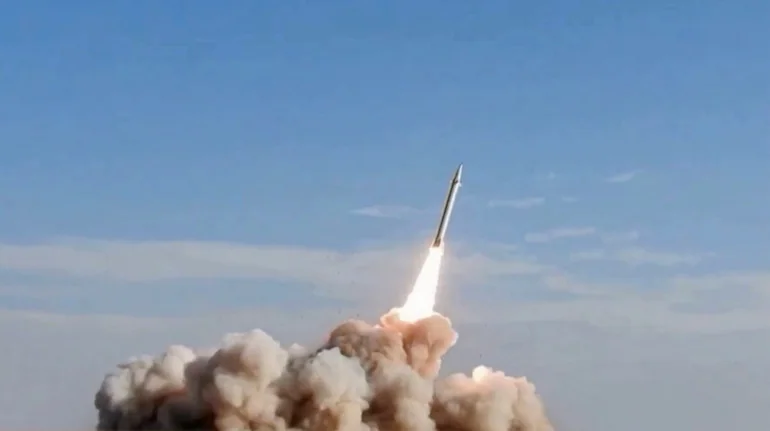
Israel is upgrading its David’s Sling missile defence system to counter a wider range of ballistic missile and drone threats, as the conflict with Iran exposes the financial and industrial limits of relying heavily on expensive interceptors. The improvements extend the system’s operational range and strengthen Israel’s ability to withstand prolonged attacks without exhausting its most costly defensive weapons.
The move reflects a growing challenge for militaries around the world: modern offensive missiles and drones are becoming cheaper and easier to deploy, while the interceptors designed to destroy them can cost millions of dollars each and take considerable time to manufacture.
David’s Sling, which uses Stunner interceptors developed jointly by Israel’s Rafael Advanced Defense Systems and US defence company RTX, offers a less expensive middle layer between short-range defences and Israel’s high-altitude Arrow systems. At approximately $1 million per interceptor, it provides a potentially more sustainable option for engaging certain advanced aerial threats.
Israel’s experience during repeated clashes with Iran has accelerated the need for this change. Large missile barrages earlier in the year exposed weaknesses in the country’s defensive network and demonstrated that even sophisticated interception systems can struggle when confronted with hundreds of incoming weapons.
Why Israel Is Upgrading David’s Sling
The latest improvements to David’s Sling are intended to extend its range and expand the types of ballistic threats it can engage. According to an Israeli Air Force air defence investigator, the upgraded system can now counter a broader variety of incoming missiles and drones, improving the military’s ability to respond to sustained attacks.
The investigator said the changes were informed by operational experience during the fighting with Iran. The intense missile barrages provided the Israeli military with extensive information about how its defence systems performed under pressure, allowing engineers and military specialists to make adjustments in some cases within days.
The need for improvement became apparent during recurring clashes beginning in 2024, when Iranian ballistic missiles managed to penetrate Israeli air defences and caused civilian casualties. During the subsequent conflict, Israel also relied on American anti-ballistic missile systems to strengthen its protection.
David’s Sling was used against ballistic threats during the most intense phase of the fighting. However, there were also incidents in which incoming missiles were not destroyed, including two attacks that resulted in dozens of injuries in southern Israel.
These experiences highlighted an important limitation: even when interception rates are high, a small number of missiles getting through can cause serious damage. They also demonstrated why Israel needs multiple defensive layers rather than relying on a single system.
The latest upgrade is therefore not a replacement for Israel’s most advanced interceptors. Instead, it is intended to give the military more flexibility by allowing a relatively less expensive system to handle a wider range of threats.
The Cost Difference: Stunner Versus Patriot PAC-3 and Arrow 3
The financial argument behind the David’s Sling upgrade is one of its biggest attractions. A Stunner interceptor reportedly costs approximately $1 million, making it significantly cheaper than some of the high-end missile defence weapons used by Israel and its allies.
According to Bloomberg Intelligence analyst Wayne Sanders, a Stunner interceptor costs roughly one-third as much as an Arrow 3 interceptor. A US-made Patriot PAC-3 interceptor can cost more than $4 million, depending on the production configuration and contract.
The difference becomes particularly important during prolonged conflicts. If an attacker launches dozens or hundreds of missiles, the defending country may need to fire expensive interceptors repeatedly to protect populated areas, military facilities and critical infrastructure.
Using a multimillion-dollar interceptor against every incoming threat can quickly place pressure on defence budgets and available stockpiles. A less expensive alternative gives military planners more options, particularly when the threat can be handled without deploying the most advanced weapon in the arsenal.
However, the cheapest interceptor is not automatically the appropriate choice for every target. The decision depends on the incoming missile’s speed, trajectory, altitude, range and potential damage. High-altitude or particularly sophisticated threats may still require systems such as Arrow 3 or Patriot PAC-3.
The objective is to match the defensive weapon to the threat rather than use the most expensive system for every engagement.
Why Modern Missile Warfare Is Creating an Interceptor Shortage
The pressure on Israel’s missile defence system reflects a wider problem facing countries involved in modern conflicts. Offensive weapons are increasingly available in large numbers, while advanced defensive interceptors remain expensive and difficult to manufacture at the same scale.
Military planners traditionally developed missile defence systems around the assumption that they would face a relatively limited number of incoming threats. Large-scale missile barrages have challenged that assumption.
Uzi Rubin, an analyst at the Jerusalem Institute for Strategy and Security who oversaw the development of Israel’s first national missile defence shield, said the original approach was based on dealing with a relatively small number of threats.
“When we developed the first generations of kinetic technical missile defense, the notion was that you’re dealing with a few threats, not with hundreds or thousands,” Rubin said.
He added that militaries now need to develop cheaper interceptor missiles capable of handling larger numbers of incoming weapons.
The problem is not limited to the Middle East. Russia’s war against Ukraine has demonstrated how sustained missile and drone attacks can consume defensive ammunition faster than manufacturers can replace it. Ukraine has repeatedly sought additional air defence equipment from Western partners, particularly Patriot interceptors.
Ukrainian President Volodymyr Zelenskyy has said his country needs approximately 350 Patriot PAC-3 interceptors every month to defend against Russian attacks. That requirement illustrates the gap between battlefield demand and the current production capacity of some advanced weapons systems.
How Israel’s Layered Missile Defence System Works
Israel operates a layered air defence network designed to intercept threats at different ranges and altitudes. Each system has a specific role, allowing the military to respond according to the type of weapon approaching the country.
Iron Dome: Protection Against Short-Range Threats
Iron Dome is designed primarily to intercept short-range rockets, artillery shells and similar threats. It has become one of the most widely recognised components of Israel’s defensive network, particularly during attacks involving large numbers of rockets fired towards populated areas.
The system identifies incoming projectiles and determines whether they are likely to strike populated or strategically important locations. Interceptors can then be launched against threats assessed as requiring engagement.
David’s Sling: The Middle Layer
David’s Sling operates in the middle tier of the network. It is designed to counter more advanced threats, including heavier rockets, cruise missiles and certain ballistic missiles.
Its Stunner interceptor uses advanced guidance technology to engage incoming targets. The system’s upgraded range is expected to give Israeli forces greater flexibility in responding to threats that might previously have required a more expensive defensive weapon.
This middle layer is particularly important because it can reduce pressure on the highest-tier systems while offering greater capability than short-range defences.
Arrow 2 and Arrow 3: Defence Against Advanced Ballistic Missiles
The Arrow family provides Israel with its highest level of ballistic missile defence. Arrow 2 is designed to intercept ballistic missiles within the atmosphere, while Arrow 3 can engage certain threats outside the atmosphere, including targets in space.
These systems are essential against advanced long-range ballistic missiles, but their interceptors are expensive. Their role is therefore likely to remain focused on threats that require their specialised capabilities.
American Systems Provide Additional Protection
Israel also receives support from American-operated Terminal High Altitude Area Defense (THAAD) batteries and ship-based missile interceptors. These systems add another layer of protection against ballistic threats.
During the recent conflict, American defensive weapons played a significant role. Reports indicated that more US interceptors were used than Israeli ones during the fighting, highlighting how heavily Israel’s defence depended on assistance from Washington.
The combination of domestic and American systems provides greater defensive coverage, but it also creates a supply-chain challenge when both countries need to replenish ammunition during prolonged hostilities.
Iran’s Missile Arsenal Continues to Shape Israel’s Defence Strategy
Despite Israeli and American airstrikes, Iran is believed to retain a substantial ballistic missile capability. Its ability to launch missiles towards Israel, Gulf countries and US military facilities in the Middle East remains a major security concern.
According to a Western intelligence estimate cited by Bloomberg News, Iran was likely to retain at least 1,700 ballistic missiles and was producing approximately 50 more each month. These figures underline why Israel cannot assume that a period of reduced fighting means the missile threat has disappeared.
A lull in hostilities can provide both sides with an opportunity to replenish weapons, repair infrastructure and prepare for another confrontation. For Israel, that makes interceptor production and defensive upgrades as important as the performance of individual missile systems.
The concern is also about the economics of a prolonged conflict. If Iran can produce and launch offensive missiles faster or more cheaply than Israel and its allies can manufacture interceptors, the defender faces increasing pressure to conserve ammunition and improve efficiency.
That does not mean Iran’s missiles will necessarily penetrate Israeli defences in large numbers. Israel has demonstrated substantial interception capabilities, but maintaining those capabilities over an extended period requires sufficient stocks, reliable production and cooperation with international partners.
Israel’s Strategy Differs From Washington’s Approach
Israel’s emphasis on a cheaper middle layer highlights a difference between its approach and the broader US strategy for addressing interceptor shortages.
Washington has focused heavily on encouraging long-term production commitments for advanced systems such as the Patriot PAC-3. The approach aims to give manufacturers greater certainty about future demand, allowing them to invest in factories, equipment and additional production capacity.
However, expanding production takes time. Defence companies must secure components, train workers, increase manufacturing capacity and manage complex supply chains before output can rise significantly.
Sanders has warned that countries waiting for additional Patriot PAC-3 interceptors could face long delays. He estimated that deliveries could remain constrained until at least 2029.
Israel’s approach seeks to reduce dependence on the most expensive interceptors by strengthening a system that can be manufactured in larger quantities. The strategy does not eliminate the need for Patriot or Arrow weapons, but it could help preserve those systems for the most demanding threats.
For other US allies, the issue is increasingly important. Countries across Europe, the Asia-Pacific and the Middle East remain dependent on foreign suppliers for advanced air defence systems. Long production timelines can leave them competing for limited stocks during periods of heightened international tension.
Can Israel Manufacture Enough Interceptors to Sustain a Long Conflict?
Production capacity is central to the success of Israel’s strategy. A cheaper interceptor offers limited advantages if manufacturers cannot supply enough weapons to meet operational demand.
Rafael and RTX are involved in producing the Iron Dome and David’s Sling systems. According to a person familiar with the defence industry, the companies can manufacture thousands of interceptors annually in Israel, with an additional production capacity of approximately 2,500 in the United States.
The figure reflects production across the two systems rather than the output of Stunner interceptors alone. It nevertheless indicates the scale of industrial cooperation supporting Israel’s air defence network.
Israel Aerospace Industries, which develops the Arrow family, does not publicly disclose its manufacturing capacity.
The ability to produce interceptors in Israel and the United States gives the country access to a wider industrial base. However, production still depends on specialised components, skilled labour, testing and government procurement arrangements.
Rafael declined to comment on the reported upgrade and production details, while an RTX spokesperson also declined to comment. The Israel Defense Forces referred questions to Rafael.
David’s Sling Is Becoming an Export Opportunity for Israel
Israel’s missile defence systems are also attracting international customers as governments reassess their security requirements following Russia’s invasion of Ukraine and rising tensions in the Middle East.
Finland and Greece have ordered David’s Sling systems, reflecting interest in a defence platform designed to counter more advanced missile threats. Germany, meanwhile, has turned to Israel’s Arrow 3 system as part of its efforts to strengthen protection against long-range ballistic missiles.
The export market could become more important if Israel demonstrates that David’s Sling can provide a practical balance between interception capability, cost and production volume.
For European countries, the attraction is not limited to the system’s technical performance. The ability to obtain additional defensive capacity from a supplier outside the traditional US weapons pipeline could also help diversify procurement options.
However, export orders do not automatically translate into immediate deliveries. Israel must balance international commitments with its own military requirements, particularly while regional tensions remain high.
Why the Cost of Interception Could Influence Trump’s Iran Calculations
The availability of missile interceptors has become part of the wider strategic calculation surrounding any possible return to large-scale fighting with Iran.
US President Donald Trump has been weighing options for further action against Tehran amid renewed exchanges of attacks that have stopped short of a major military escalation. A report by The New York Times, citing US and Israeli officials, said Trump was considering plans to join Israel in more extensive strikes.
Any decision to resume major operations would have to account for Iran’s remaining missile capabilities and the ability of Israel and US forces to sustain defensive operations.
Even if offensive strikes damage Iranian military infrastructure, Tehran could continue launching missiles using weapons already in its arsenal. This would force Israel and its allies to maintain a substantial supply of defensive ammunition.
The problem becomes more complicated if fighting continues for weeks. Every interceptor used must eventually be replaced, and advanced systems such as Patriot PAC-3 and Arrow 3 cannot be manufactured instantly.
Bloomberg Intelligence analyst Wayne Sanders has warned that countries relying on Patriot deliveries may face a long wait. His assessment highlights why Israel’s investment in David’s Sling could have strategic value beyond the immediate conflict.
What the David’s Sling Upgrade Means for the Future of Air Defence
Israel’s decision to strengthen David’s Sling reflects a broader shift in missile defence planning. Militaries are increasingly being forced to consider not only whether they can intercept incoming weapons but also how much each interception costs and how quickly defensive stocks can be replenished.
High-end interceptors will remain necessary against advanced ballistic missiles and threats travelling at extreme speeds or altitudes. But using them against every incoming target can become financially and operationally unsustainable during prolonged attacks.
A stronger middle layer could help reduce that pressure by allowing countries to reserve their most expensive systems for the threats that genuinely require them.
For Israel, the upgraded David’s Sling offers a way to increase defensive flexibility while expanding the role of a domestically supported system. Its long-term value will depend on how effectively it performs against evolving Iranian threats and whether manufacturers can maintain sufficient production.
The wider lesson extends beyond the Middle East. As offensive missile technology becomes more accessible and conflicts consume ammunition at unprecedented rates, the countries best prepared for prolonged warfare may not simply be those with the most advanced weapons. They may also be the ones capable of producing effective defensive systems in large quantities at a sustainable cost.
For breaking news and live news updates, like us on Facebook or follow us on Twitter and Instagram. Read more on Latest World on thefoxdaily.com.






COMMENTS 0