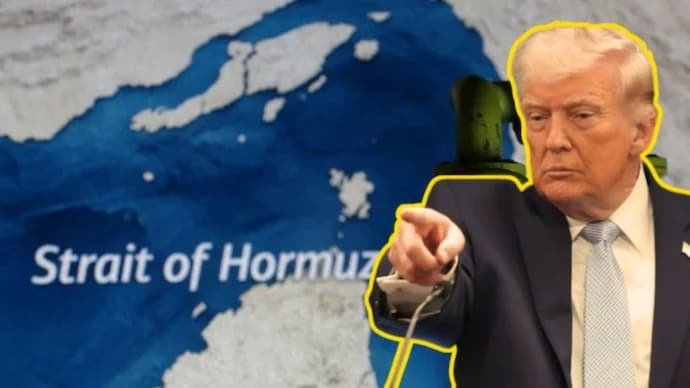
The Strait of Hormuz has once again become the focal point of one of the world’s most dangerous geopolitical confrontations. Following a series of military strikes involving the United States and Iran, both countries have issued conflicting statements regarding control of the strategic waterway, raising fears of a broader regional conflict with global economic consequences.
The latest escalation comes after attacks on commercial shipping, US military strikes on Iranian military infrastructure, and retaliatory operations across the Gulf region. While international mediators continue efforts to preserve an interim ceasefire and revive diplomatic negotiations, growing military activity around the narrow maritime corridor threatens global energy supplies, commercial shipping, and regional stability.
Why the Strait of Hormuz Matters to the World
The Strait of Hormuz is widely regarded as the world’s most strategically important maritime chokepoint. Connecting the Persian Gulf with the Gulf of Oman and the Arabian Sea, the narrow passage serves as the primary export route for oil and liquefied natural gas produced by Gulf nations.
Despite being only around 33 kilometers (21 miles) wide at its narrowest point, the shipping lanes available to commercial vessels are considerably smaller, making navigation highly sensitive during periods of military tension.
Major energy exporters relying on the strait include:
- Saudi Arabia
- United Arab Emirates
- Kuwait
- Qatar
- Iraq
- Iran
According to publicly available international energy data, roughly one-fifth of global petroleum consumption moves through the Strait of Hormuz each day, making uninterrupted navigation essential for global Energy Security.
| Strategic Importance | Why It Matters |
|---|---|
| Global Oil Exports | Nearly 20% of worldwide oil consumption passes through the strait. |
| LNG Shipments | Qatar exports a significant share of global liquefied natural gas through this route. |
| Global Trade | Thousands of commercial vessels transit the corridor every year. |
| Military Presence | Several international naval forces patrol nearby waters. |
What Triggered the Latest Escalation?
The current crisis intensified after attacks on a commercial container vessel near Omani waters. The incident was quickly followed by extensive US military operations targeting Iranian military infrastructure, including radar systems, missile launch facilities, drone capabilities, air-defense installations, and naval assets.
Iran responded by asserting that it possesses authority over the Strait of Hormuz while warning that foreign military forces have no legal right to interfere within what it considers its security sphere.
The United States rejected that position, emphasizing that freedom of navigation must be maintained under international maritime law and that no single country can unilaterally control one of the world’s most vital international shipping routes.
Understanding the Competing Claims
Although Iran borders the northern coastline of the Strait of Hormuz, international maritime law provides a more complex legal framework than simple territorial ownership.
Much of the shipping route passes through territorial waters belonging to both Iran and Oman. Under the United Nations Convention on the Law of the Sea (UNCLOS), international vessels generally enjoy transit passage through international straits used for global navigation.
This legal principle is designed to ensure uninterrupted movement of commercial and military vessels while balancing the sovereignty of coastal states.
As a result, the dispute is not simply about geography—it is about differing interpretations of maritime rights, regional security, and strategic influence.
Timeline of the Current Crisis
| Event | Development |
|---|---|
| Weekend | Commercial shipping attacked near the Strait of Hormuz. |
| Sunday | Military exchanges spread across multiple Gulf countries. |
| Monday | US forces launched extensive strikes on Iranian military targets. |
| Same Day | Iran reiterated its claim over the Strait of Hormuz. |
| Ongoing | Regional mediators continue ceasefire negotiations. |
Regional Countries Are Being Drawn Into the Conflict
The confrontation is no longer limited to Washington and Tehran. Several Gulf nations hosting US military facilities have reported missile alerts or defensive military activity.
Countries affected include Bahrain, Kuwait, Jordan, Qatar, and Oman, highlighting how quickly localized military operations can spill across national borders.
For Gulf governments, maintaining neutrality while protecting critical infrastructure has become increasingly challenging as both sides seek strategic advantages.
These developments also increase risks for civilian aviation, maritime insurance providers, energy exporters, and multinational companies operating throughout the region.
The Economic Stakes Extend Far Beyond the Middle East
Even without a complete closure of the Strait of Hormuz, military uncertainty often creates immediate volatility across global financial markets.
Energy traders closely monitor every development because disruptions can affect:
- Crude oil prices
- Natural gas markets
- Global shipping costs
- Marine insurance premiums
- Inflation in importing countries
- Manufacturing supply chains
Although oil prices have retreated from previous wartime peaks, markets remain highly sensitive to any indication that commercial shipping could face prolonged disruption.
For large energy importers across Asia and Europe, even temporary interruptions can increase transportation costs and place upward pressure on consumer prices.
Military Strategy Behind the Strait
The Strait of Hormuz has long represented a central component of Iran’s defense doctrine. Rather than matching larger military powers in conventional naval strength, Iran has invested heavily in asymmetric capabilities.
These include:
- Fast attack boats
- Coastal missile batteries
- Sea mines
- Unmanned aerial systems
- Anti-ship missiles
Meanwhile, the United States and allied naval forces maintain continuous maritime patrols designed to safeguard commercial shipping and ensure open sea lanes.
This creates an environment where relatively small incidents have the potential to escalate rapidly into broader military confrontations.
Diplomatic Efforts Continue Despite Intensifying Fighting
Although military operations have intensified, diplomatic channels remain active. Regional governments continue working to preserve an interim agreement intended to create conditions for a longer-term political settlement.
Countries including Qatar, Egypt, Pakistan, and Oman have maintained communication with both parties, attempting to reduce tensions through indirect negotiations.
The United Nations has also warned that renewed large-scale conflict would carry severe humanitarian, economic, and security consequences far beyond the immediate battlefield.
However, diplomacy faces increasing challenges as military actions continue alongside negotiations.
Nuclear Concerns Add Another Layer of Complexity
Beyond conventional military operations, the confrontation also intersects with ongoing international concerns regarding Iran’s nuclear program.
Iran has indicated that it would not permit international inspections at certain nuclear facilities affected by recent military strikes. This position could complicate future verification efforts and increase uncertainty surrounding regional security.
Nuclear transparency has historically played a significant role in diplomatic negotiations involving Iran, making inspection disputes a critical factor in any future agreement.
Comparison: Today’s Crisis vs Previous Strait of Hormuz Tensions
| Previous Incidents | Current Situation |
|---|---|
| Limited shipping disruptions | Broader regional military exchanges |
| Localized naval confrontations | Multiple countries involved simultaneously |
| Oil price spikes | Energy markets remain volatile despite lower prices |
| Diplomatic de-escalation followed quickly | Ceasefire negotiations continue alongside active strikes |
Why This Crisis Is Different
One distinguishing feature of the current confrontation is that military operations, diplomatic negotiations, and competing legal claims are unfolding simultaneously.
Rather than following a traditional pattern of conflict followed by negotiations, both tracks are occurring at the same time, making outcomes considerably less predictable.
The involvement of multiple regional governments further complicates crisis management, as any miscalculation could draw additional countries into the conflict.
What Could Happen Next?
Several possible scenarios remain under discussion among international security analysts.
- Successful diplomatic mediation leading to a more durable ceasefire.
- Continued limited military exchanges without full-scale regional war.
- Temporary disruptions to commercial shipping.
- Expanded multinational naval operations to secure maritime routes.
- Renewed negotiations focused on regional security and nuclear issues.
While predicting future developments remains difficult, most analysts agree that preventing miscalculation between military forces operating in close proximity will be essential for avoiding broader escalation.
Expert Insight: Why Freedom of Navigation Matters Globally
The Strait of Hormuz is more than a regional waterway—it represents a cornerstone of the global trading system. Freedom of navigation ensures that international commerce can continue without political interference or military coercion.
When confidence in Maritime Security declines, shipping companies may reroute vessels, insurers may increase premiums, and import-dependent economies can experience higher costs that ultimately affect consumers.
This demonstrates how regional geopolitical disputes can rapidly translate into worldwide economic consequences.
The Bigger Picture for Global Stability
The confrontation highlights the growing intersection of military competition, international law, energy security, and diplomacy in today’s geopolitical landscape.
As major powers seek to protect strategic interests while avoiding uncontrolled escalation, the Strait of Hormuz remains one of the world’s most closely watched flashpoints.
Maintaining open shipping lanes, preserving diplomatic communication, and reducing the risk of accidental conflict will remain priorities for governments, international organizations, and global markets alike.
Conclusion
The latest US-Iran confrontation has once again demonstrated why the Strait of Hormuz remains one of the most strategically significant waterways on Earth. Competing claims over maritime authority, ongoing military operations, and fragile diplomatic efforts have combined to create a highly volatile security environment with implications reaching far beyond the Middle East.
Whether the coming weeks bring renewed negotiations or additional escalation will depend largely on diplomatic engagement, military restraint, and international cooperation. For now, governments, energy markets, shipping companies, and investors will continue watching every development in the Strait of Hormuz, recognizing that stability in this narrow stretch of water remains vital to the global economy and international security.
For breaking news and live news updates, like us on Facebook or follow us on Twitter and Instagram. Read more on Latest World on thefoxdaily.com.






COMMENTS 0