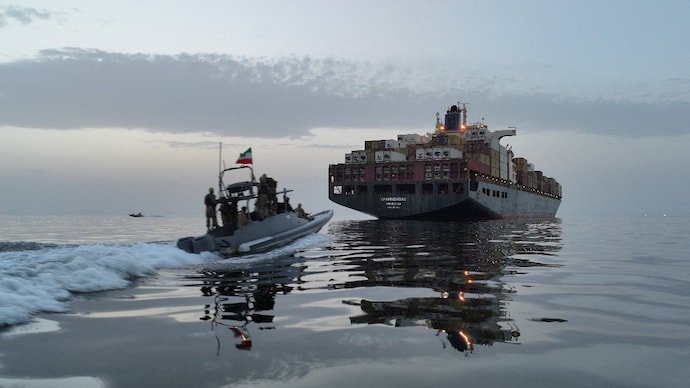
The Strait of Hormuz remains one of the most strategically significant waterways on the planet. Every day, a substantial share of the world’s seaborne crude oil and liquefied natural gas (LNG) passes through this narrow maritime corridor connecting the Persian Gulf with the Gulf of Oman and the Arabian Sea. Because of its importance, even limited disruptions can send shockwaves through Global Energy markets, insurance costs, shipping logistics, and financial markets.
Recent geopolitical tensions involving Iran, the United States, and regional powers have once again placed Hormuz at the center of international attention. While discussions often focus on the possibility of the strait being closed during periods of conflict, another issue has gained increasing attention: whether Iran could establish a more formal regulatory role over navigation through the waterway.
Supporters of this idea frequently compare Hormuz with Turkey‘s administration of the Bosphorus and Dardanelles under the Montreux Convention. However, despite superficial similarities as narrow maritime chokepoints, the two legal and geopolitical situations differ in fundamental ways. Understanding those differences is essential for evaluating what is—and is not—possible under international law.
Why the Strait of Hormuz Matters to the Global Economy
The Strait of Hormuz is among the world’s most critical maritime trade corridors. It serves as the primary export route for major Gulf energy producers, connecting international markets with oil and natural gas supplies originating from countries including Saudi Arabia, Iraq, Kuwait, the United Arab Emirates, Qatar, and Iran.
Beyond hydrocarbons, commercial vessels also transport petrochemicals, fertilizers, refined petroleum products, manufactured goods, food supplies, and containerized cargo through the strait.
Because alternative export routes remain limited for many producers, uninterrupted navigation through Hormuz is considered vital for global Energy Security.
What Makes Maritime Chokepoints So Important?
Maritime chokepoints are narrow waterways through which a significant volume of international shipping must pass. Their strategic importance extends well beyond geography.
- They reduce voyage distances.
- They lower transportation costs.
- They connect major trading regions.
- They influence global commodity prices.
- They become critical during geopolitical crises.
When disruptions occur at these locations, shipping companies often face longer routes, higher insurance premiums, delayed deliveries, and increased fuel expenses that ultimately affect consumers worldwide.
The Turkish Straits: A Frequently Cited Example
Turkey administers the Bosphorus and the Dardanelles, waterways connecting the Black Sea with the Mediterranean Sea through the Sea of Marmara.
Navigation through these straits is governed primarily by the Montreux Convention of 1936, an international treaty negotiated among multiple states that establishes rules for both merchant shipping and naval vessels.
The convention guarantees freedom of passage for merchant ships in peacetime while assigning Turkey responsibility for managing navigation, maritime safety, and certain administrative functions.
Importantly, the convention does not authorize Turkey to impose unrestricted transit tolls simply because vessels pass through the straits. Instead, internationally recognized fees relate to services associated with safe navigation.
| Turkish Straits | Strait of Hormuz |
|---|---|
| Governed by the Montreux Convention | No equivalent multilateral treaty governing transit fees |
| Turkey administers navigation under treaty obligations | Bordered by Iran and Oman |
| Internationally recognized service-related charges | Transit governed by broader international maritime law |
| Historic treaty framework | Strategic global energy corridor |
How Turkey Collects Maritime Fees
Turkey’s maritime administration generally recovers costs associated with navigational services rather than charging a simple fee for passage itself.
These services may include:
- Lighthouse maintenance.
- Maritime traffic management.
- Search and rescue preparedness.
- Emergency response capabilities.
- Sanitation and navigational safety services.
- Pilotage or tug assistance where applicable.
This distinction between charging for services and charging solely for transit is one of the most important legal aspects of the Turkish model.
Why Comparisons Between Turkey and Hormuz Are Complicated
Although both locations are strategically important waterways, their legal foundations differ substantially.
The Turkish Straits operate within a long-established treaty framework accepted by the international community. The Strait of Hormuz, by contrast, is an international waterway bordered by multiple coastal states and governed by broader principles of international Maritime Law.
As a result, applying one legal model directly to the other is considerably more complex than simple geographic comparisons may suggest.
International Law and Transit Passage
A central issue in discussions surrounding Hormuz involves the legal principle known as transit passage.
Under international maritime law, straits used for international navigation generally permit continuous and expeditious passage by commercial vessels and aircraft. This principle seeks to ensure that global trade can continue without unnecessary interruption through waterways connecting one part of the high seas or exclusive economic zones to another.
Interpretations of these rules, however, can become subjects of diplomatic disagreement, particularly during periods of regional conflict.
Why the Strait of Hormuz Is More Than an Energy Route
Although oil dominates headlines, Hormuz supports a much broader range of economic activity.
- Liquefied natural gas exports.
- Petrochemical shipments.
- Refined petroleum products.
- Container shipping.
- Industrial raw materials.
- Food and consumer goods.
Disruptions therefore affect numerous industries beyond the energy sector, including manufacturing, transportation, agriculture, aviation, and retail supply chains.
Economic Consequences of Shipping Uncertainty
Shipping companies evaluate multiple factors whenever geopolitical tensions increase.
Even without a formal closure of a waterway, uncertainty alone can raise:
- Marine insurance premiums.
- Freight rates.
- Fuel costs.
- Delivery times.
- Operational risks.
Higher transportation expenses frequently flow through global supply chains, eventually influencing prices paid by businesses and consumers.
Why Maritime Security Is Increasingly Important
Modern maritime security extends beyond naval operations.
Governments and shipping companies increasingly invest in:
- Real-time vessel monitoring.
- Cybersecurity for navigation systems.
- Satellite surveillance.
- Port security.
- Emergency response coordination.
- International naval cooperation.
Protecting commercial shipping has become an essential component of global economic stability because interruptions at major chokepoints can affect markets worldwide.
How Energy Markets React to Hormuz Developments
Financial markets closely monitor developments involving the Strait of Hormuz because expectations often influence prices even before physical supply is disrupted.
When geopolitical risks increase, traders typically assess:
- Potential supply interruptions.
- Shipping availability.
- Insurance costs.
- Alternative export routes.
- Strategic petroleum reserves.
This explains why oil prices frequently respond rapidly to developments involving the region.
Can Alternative Routes Replace Hormuz?
Several Gulf countries have invested in pipelines and export infrastructure designed to reduce dependence on the Strait of Hormuz. However, these alternatives currently cannot replace the full volume of energy exports that normally transit the waterway.
As a result, Hormuz remains indispensable for international energy markets despite continuing investments in diversified export routes.
Why the International Community Is Watching Closely
Governments, shipping companies, insurers, energy producers, and financial institutions all have significant interests in preserving reliable navigation through the Strait of Hormuz.
Because the waterway supports international commerce far beyond the Middle East, developments there are viewed as matters of global economic importance rather than solely regional security concerns.
Diplomatic engagement therefore often focuses on maintaining freedom of navigation, reducing military escalation, and ensuring commercial shipping can continue safely.
Future Outlook
The Strait of Hormuz is expected to remain one of the world’s most strategically important maritime corridors for the foreseeable future. Growing global energy demand, evolving geopolitical Relationships, and continued investment in maritime security will keep the waterway at the center of international Policy discussions.
While comparisons with other maritime governance models may continue, any lasting changes affecting navigation through Hormuz would require careful consideration of international law, regional diplomacy, and the interests of the broader global trading system. Stability, predictability, and cooperation remain essential for protecting one of the world’s most important commercial arteries.
Conclusion
The debate surrounding the Strait of Hormuz extends far beyond questions of military confrontation. It raises broader issues concerning maritime governance, international law, freedom of navigation, and global economic resilience. Although Turkey’s administration of the Bosphorus and Dardanelles is often referenced in discussions about strategic waterways, significant legal and geopolitical differences mean the two situations cannot be treated as direct equivalents.
For the international community, the central objective remains ensuring that commercial shipping continues to move safely and efficiently through one of the world’s most vital maritime chokepoints. As geopolitical tensions evolve, the future of Hormuz will continue to influence energy security, international trade, and global economic stability.
For breaking news and live news updates, like us on Facebook or follow us on Twitter and Instagram. Read more on Latest World on thefoxdaily.com.





COMMENTS 0