- Why Pakistan Has Suddenly Become A Key Middle East Mediator
- What Is Inside Iran’s Revised 14-Point Proposal?
- Why The Strait Of Hormuz Remains The World’s Most Dangerous Flashpoint
- Trump’s Pressure Campaign Against Iran Is Intensifying
- The Nuclear Issue Still Sits At The Centre Of Everything
- Why Gulf Countries Are Nervously Watching The Negotiations
- The Economic Stakes Extend Far Beyond The Middle East
- Iran’s Strategy Appears Focused On Strategic Patience
- Can Pakistan Actually Help Prevent A Larger War?
- Conclusion
The Middle East may have stepped back from full-scale war, but the region is still dangerously close to the edge.
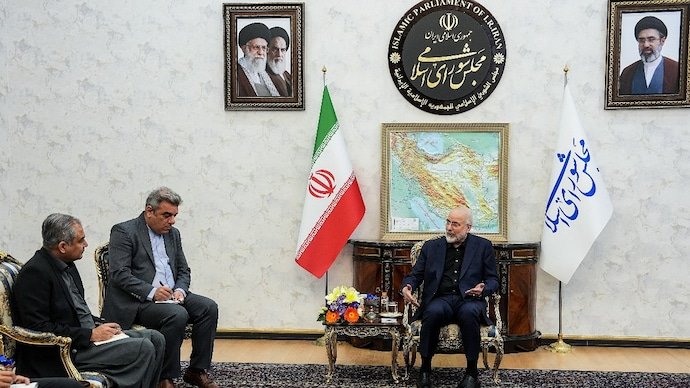
Pakistan has now emerged as an unexpected but increasingly crucial diplomatic bridge between the United States and Iran after reportedly delivering Tehran’s revised 14-point peace proposal to Washington through backchannel negotiations. The move comes at a moment when the fragile ceasefire between Iran, the US, and Israel appears increasingly unstable, with tensions simmering across the Gulf region.
According to diplomatic sources, the updated Iranian proposal focuses on ending hostilities, easing sanctions, securing guarantees against future military attacks, and establishing confidence-building measures between Tehran and Washington.
But behind the diplomatic language lies a far larger geopolitical reality: neither side fully trusts the other, both are under immense domestic and international pressure, and the window for diplomacy may be rapidly closing.
The renewed negotiations are unfolding against the backdrop of drone strikes, naval confrontations near the Strait of Hormuz, disputes over uranium enrichment, and growing fears that another military escalation could destabilise global energy markets and push the region into prolonged conflict.
Why Pakistan Has Suddenly Become A Key Middle East Mediator
Pakistan’s involvement in the US-Iran negotiations reflects a major shift in regional diplomacy.
Traditionally, countries like Oman, Qatar, or European powers have served as intermediaries between Tehran and Washington. But Pakistan’s growing engagement suggests Islamabad is attempting to reposition itself as a strategic diplomatic player in the Middle East.
The reasons are both geopolitical and economic.
Pakistan maintains working relations with Iran, Saudi Arabia, China, and the United States simultaneously a difficult balancing act few regional countries can manage. Islamabad also understands that a prolonged US-Iran conflict could severely damage regional stability, energy supplies, and trade routes that directly affect Pakistan’s economy.
The Strait of Hormuz alone handles roughly one-fifth of the world’s oil shipments. Any sustained conflict in that corridor could trigger massive fuel price spikes, inflation shocks, and supply chain disruptions across Asia.
For Pakistan, this is not merely diplomacy. It is economic self-preservation.
The fact that Iranian officials reportedly trusted Islamabad to communicate revised terms to Washington also signals that Pakistan retains channels of credibility with Tehran despite its ties with Gulf monarchies and the US.
What Is Inside Iran’s Revised 14-Point Proposal?
While the full details of the revised proposal remain undisclosed, reports suggest the document focuses on several key demands and negotiation principles.
Iran is believed to be seeking:
- Formal guarantees against future US or Israeli military strikes
- Phased release of frozen Iranian overseas assets
- Relaxation of sanctions affecting oil exports and ports
- Recognition of Iran’s nuclear enrichment rights
- Protection of Iranian shipping and trade access
- Mechanisms to prevent future escalation in the Gulf
- Confidence-building measures supervised by international bodies
The proposal reportedly also includes broader discussions around post-war regional security arrangements.
However, the biggest obstacle remains Iran’s nuclear programme.
Tehran continues insisting that uranium enrichment is a sovereign right protected under international treaties. Washington, meanwhile, fears that advanced enrichment capabilities could move Iran dangerously close to weapons-grade nuclear capacity.
This disagreement has remained the single largest roadblock in nearly every major US-Iran negotiation over the past two decades.
Why The Strait Of Hormuz Remains The World’s Most Dangerous Flashpoint
Much of the urgency surrounding the negotiations revolves around the Strait of Hormuz.
The narrow waterway between Iran and the Gulf states is one of the most strategically important shipping routes on Earth. Around 20% of global oil exports pass through it every day.
That means even limited military disruption in the region can instantly affect global markets.
In recent weeks, tensions near Hormuz have intensified again:
- Iran-linked drone activity reportedly targeted Gulf infrastructure
- Saudi Arabia claimed it intercepted hostile drones
- A fire broke out at a UAE nuclear-linked facility following a strike
- Iran escalated naval pressure near shipping lanes
- The US debated deploying expanded maritime security operations
These incidents demonstrate how quickly local confrontations can threaten international trade and energy flows.
Even rumours of instability in Hormuz typically push oil prices upward. Markets react because the consequences of disruption would be enormous.
For countries like India, China, Japan, and much of Europe, Gulf energy routes remain critically important.
Trump’s Pressure Campaign Against Iran Is Intensifying
US President Donald Trump has sharply escalated pressure on Tehran in recent days, signalling impatience with the pace of negotiations.
Trump publicly warned that “time is running out” for Iran to strike a deal, while reports suggest top national security officials are reviewing possible military options if diplomacy collapses.
The messaging strategy appears deliberate.
Washington is trying to increase pressure while still keeping negotiations alive a classic “maximum pressure with diplomatic off-ramp” approach.
But that strategy carries serious risks.
Iranian leaders historically respond aggressively to public threats, particularly when sovereignty or national pride becomes involved. Hardline factions inside Tehran often gain political strength whenever US rhetoric becomes more confrontational.
That dynamic complicates negotiations further.
The more Washington escalates pressure publicly, the harder it becomes politically for Iranian leaders to appear flexible domestically.
Diplomacy in this context becomes less about compromise and more about managing humiliation.
The Nuclear Issue Still Sits At The Centre Of Everything
Despite drone strikes, ceasefire tensions, and regional politics, the core issue remains Iran’s nuclear programme.
Tehran insists its nuclear activities are peaceful and legal under international agreements. Iranian officials argue that enrichment for civilian energy and research purposes is a sovereign right.
The United States and its allies remain unconvinced.
Western governments fear that advanced enrichment capabilities could shorten the timeline needed for Iran to develop nuclear weapons capability if political leadership ever chose that path.
This is why the International Atomic Energy Agency (IAEA) continues playing a critical role.
One emerging possibility in negotiations involves allowing limited Iranian nuclear activity under tighter international supervision and inspections.
But even that approach faces political resistance from both sides.
Iran views excessive restrictions as attacks on sovereignty. American policymakers worry any compromise could be portrayed domestically as weakness.
The result is a diplomatic deadlock where both sides want stability but neither wants to appear to surrender leverage.
Why Gulf Countries Are Nervously Watching The Negotiations
The Gulf states are watching these developments with growing anxiety.
Countries like Saudi Arabia and the UAE understand that any direct US-Iran war would immediately place their infrastructure, ports, and energy facilities at risk.
At the same time, they also remain deeply wary of Iran’s regional influence.
This creates a complicated balancing act:
- They want de-escalation to protect economic stability
- They want US security guarantees maintained
- They do not want Iran empowered regionally
- They fear prolonged instability damaging investment and trade
The Gulf economies are increasingly trying to diversify beyond oil through tourism, technology, logistics, and finance. Sustained regional conflict threatens all of those ambitions.
That is one reason countries across the region quietly support continued negotiations even while publicly maintaining hardline rhetoric.
The Economic Stakes Extend Far Beyond The Middle East
The consequences of a failed US-Iran negotiation would not remain limited to the Gulf.
A major escalation could trigger:
- Sharp spikes in global crude oil prices
- Higher inflation worldwide
- Shipping insurance surges
- Stock market volatility
- Supply chain disruptions
- Pressure on Asian energy-importing economies
Countries already dealing with inflation and economic slowdown would face additional strain.
Energy-sensitive economies like India could see fuel prices rise further if Gulf tensions worsen or shipping routes become unstable.
This explains why global powers including China, European nations, and regional actors are all quietly pushing for continued diplomacy.
The cost of failure would be international.
Iran’s Strategy Appears Focused On Strategic Patience
Iran’s revised proposal also suggests Tehran is attempting to balance resistance with pragmatism.
Publicly, Iranian officials continue emphasising sovereignty, nuclear rights, and military readiness. Privately, however, the willingness to revise proposals and continue indirect talks indicates Tehran still prefers negotiated outcomes over open conflict.
That reflects strategic reality.
Iran understands that prolonged war with the US or Israel would carry devastating economic and military costs. At the same time, its leadership also believes appearing weak could encourage future pressure.
So Tehran’s strategy increasingly revolves around controlled escalation:
- Apply pressure without triggering total war
- Maintain leverage through regional influence
- Keep diplomatic channels open
- Avoid complete economic isolation
It is a risky balancing act, but one Iran has repeatedly used throughout past regional crises.
Can Pakistan Actually Help Prevent A Larger War?
Pakistan’s mediation role may seem surprising, but it highlights how modern diplomacy increasingly relies on indirect channels.
Formal US-Iran communication remains politically sensitive. Backchannel intermediaries often become essential because they allow both sides to negotiate without appearing publicly conciliatory.
Whether Pakistan can genuinely help secure lasting peace remains uncertain.
But Islamabad’s involvement already demonstrates two important realities:
- Regional powers desperately want the ceasefire preserved
- Neither Washington nor Tehran has completely abandoned diplomacy yet
That alone matters.
Because once diplomatic channels fully collapse, military escalation often becomes far more difficult to stop.
Conclusion
Pakistan’s delivery of Iran’s revised 14-point peace proposal to the United States comes at one of the most fragile moments in recent Middle East diplomacy.
The ceasefire between Iran, the US, and Israel remains unstable. Tensions around the Strait of Hormuz continue threatening global energy markets. Nuclear negotiations remain deadlocked. And military rhetoric from all sides is intensifying.
Yet the continued exchange of proposals also shows that diplomacy is still alive even if barely.
The coming weeks could prove decisive.
If negotiations advance, the region may step back from another major conflict. If they fail, the Middle East could once again become the centre of a dangerous geopolitical escalation with consequences far beyond the Gulf.
For now, Pakistan’s backchannel diplomacy represents something increasingly rare in modern geopolitics: a thin but critical bridge between confrontation and catastrophe.
For breaking news and live news updates, like us on Facebook or follow us on Twitter and Instagram. Read more on Latest World on thefoxdaily.com.





COMMENTS 0