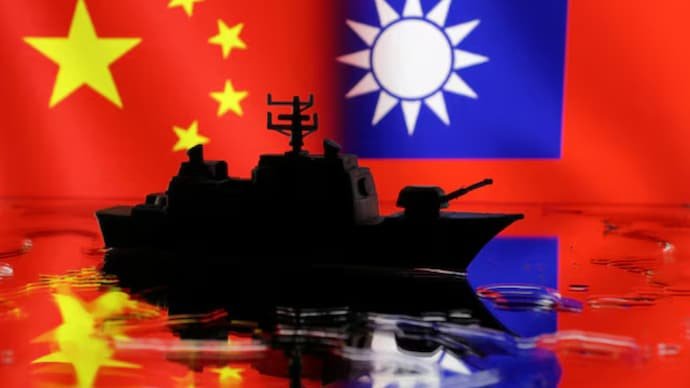
Tensions across the Taiwan Strait escalated once again after Taiwan announced that it had expelled four Chinese government ships that entered restricted waters near the island’s southern tip. The incident involved direct radio exchanges between Taiwanese and Chinese maritime authorities, competing claims of jurisdiction, and a show of force that underscores the increasingly complex Security Environment in the Indo-Pacific.
While the confrontation ended without physical Conflict, it represents much more than a routine maritime dispute. The incident comes amid growing disagreements over regional maritime boundaries, rising Chinese Coast Guard activity, and expanding security cooperation among countries concerned about Beijing’s increasing presence in surrounding waters.
The latest encounter raises important questions about sovereignty, freedom of navigation, regional stability, and the future of cross-strait relations at a time when geopolitical competition in Asia continues to intensify.
What Happened Near Taiwan’s Southern Coast?
According to Taiwan’s coast guard, four Chinese government vessels, including three coast guard ships, entered restricted waters approximately 30 nautical miles southwest of Taiwan’s southernmost point.
Taiwan responded by deploying seven coast guard vessels to monitor, challenge, and ultimately escort the Chinese ships out of the area. Officials stated that after several hours of warnings and maritime maneuvering, all four Chinese vessels left the restricted zone.
The encounter included direct radio communications between both sides. Chinese officers reportedly asserted that the area was under Chinese jurisdiction and that their vessels were conducting a special law-enforcement mission. Taiwanese officers rejected those claims and responded that China possessed no sovereign rights over the waters east of Taiwan.
The exchange highlights a fundamental disagreement that has shaped relations between Beijing and Taipei for decades: the question of sovereignty over Taiwan and surrounding waters.
Why This Incident Is Different From Previous Encounters
Maritime confrontations between China and Taiwan are not new. However, several factors make this particular incident noteworthy.
First, the operation involved Chinese government vessels rather than commercial ships. This transforms the encounter from a navigational issue into a political and strategic event.
Second, Chinese state media publicly described the deployment as a “special maritime traffic law-enforcement operation,” suggesting the mission was intended to demonstrate authority rather than simply transit through the area.
Third, the incident occurred shortly after Japan and the Philippines announced plans to begin formal discussions on maritime boundary delimitation, a move that Beijing has criticized because of its implications for waters surrounding Taiwan.
The timing suggests the operation may have been designed to reinforce China’s territorial claims and challenge developments that Beijing views as unfavorable to its strategic interests.
The Bigger Issue: Why Taiwan Matters So Much to China
At the center of the dispute lies one of the most consequential geopolitical disagreements in the world.
China considers Taiwan part of its territory under the “One China” principle and has repeatedly stated that reunification remains a national objective. Beijing has never ruled out the use of force to achieve that goal.
Taiwan, however, operates as a self-governing democracy with its own government, military, constitution, and economic system. Successive Taiwanese administrations have rejected Beijing’s sovereignty claims.
This fundamental disagreement creates friction across multiple areas:
- Maritime jurisdiction
- Airspace control
- Military operations
- International diplomacy
- Trade and economic relations
- Regional security arrangements
As a result, even relatively small maritime incidents often attract international attention because they touch on much larger strategic questions.
Understanding China’s Expanding Coast Guard Strategy
One of the most significant developments in recent years has been China’s increasing reliance on coast guard vessels to advance territorial claims.
Unlike naval warships, coast guard ships operate in a gray zone between civilian Law Enforcement and military power. This allows governments to project authority without immediately triggering a military crisis.
China has increasingly employed this strategy in several contested areas, including:
- The South China Sea
- The East China Sea
- Waters surrounding Taiwan
- Areas near disputed islands and reefs
By using coast guard vessels, Beijing can assert jurisdiction while maintaining the argument that it is conducting routine law-enforcement activities rather than military operations.
Critics argue that this approach gradually changes facts on the ground or in this case, on the water without crossing the threshold into open conflict.
The Strategic Importance of Taiwan’s Southern Waters
The waters surrounding southern Taiwan occupy a highly strategic location connecting the Taiwan Strait, the South China Sea, and major international Shipping routes.
These sea lanes support a substantial portion of global trade and energy transportation. Any instability in the region has the potential to affect international commerce far beyond East Asia.
The area is also significant from a military perspective.
Control over nearby waters influences naval movement, submarine operations, surveillance capabilities, and access to critical maritime corridors. Consequently, both Taiwan and China closely monitor activity in the region.
| Strategic Factor | Why It Matters |
|---|---|
| Global Shipping Routes | Support international trade and supply chains |
| Military Access | Provides operational flexibility for naval forces |
| Regional Security | Influences stability across the Indo-Pacific |
| Economic Interests | Affects energy and commercial transportation |
| Territorial Claims | Shapes sovereignty disputes between nations |
The Connection to Japan and the Philippines
An important aspect often overlooked in initial reporting is the connection between this incident and broader regional diplomacy.
China expressed frustration after Japan and the Philippines announced plans to begin formal talks regarding maritime boundary delimitation. While such discussions are common between neighboring states, Beijing views many maritime issues through the lens of its broader territorial claims.
From China’s perspective, actions involving waters near Taiwan can carry implications for sovereignty disputes. Consequently, diplomatic developments elsewhere in the region can influence Chinese responses around Taiwan.
This demonstrates how interconnected maritime disputes have become throughout the Indo-Pacific.
Taiwan’s Growing Security Challenge
Taiwan has reported a noticeable increase in Chinese military and coast guard activity in recent years. These activities include aircraft sorties, naval patrols, coast guard deployments, and operations near outlying islands controlled by Taipei.
The challenge for Taiwan is maintaining sovereignty claims while avoiding actions that could trigger a larger confrontation.
This balancing act requires a combination of military preparedness, diplomatic engagement, international partnerships, and effective maritime law enforcement.
The decision to deploy seven coast guard vessels during the latest incident reflects Taiwan’s effort to respond firmly while keeping the situation below the level of military escalation.
The Role of the Pratas Islands in Rising Tensions
The recent increase in Chinese coast guard activity near the Taiwan-controlled Pratas Islands has also contributed to concerns among security analysts.
Located in the northern part of the South China Sea, the Pratas Islands occupy a strategically valuable position despite their small size.
Control of these islands allows monitoring of maritime traffic and enhances the ability to project influence across surrounding waters.
Repeated encounters in the area have become a symbol of broader competition for influence and control in the region.
Why the World Is Watching Closely
The Taiwan Strait is widely regarded as one of the world’s most important geopolitical flashpoints.
Any escalation involving Taiwan could have consequences extending far beyond East Asia. The region plays a critical role in global trade, technology supply chains, semiconductor production, and international shipping.
Governments around the world closely monitor developments because instability could affect:
- Global financial markets
- International trade routes
- Technology manufacturing
- Energy transportation
- Regional defense commitments
- Diplomatic relations among major powers
Even relatively minor incidents can influence investor confidence and geopolitical risk assessments.
A New Era of Gray-Zone Competition
One of the most significant trends emerging from the latest incident is the growing importance of gray-zone operations.
Gray-zone activities fall between peace and war. They include coast guard patrols, maritime law-enforcement missions, economic pressure, cyber operations, and other actions designed to advance strategic goals without triggering direct military conflict.
Many experts believe these tactics will define future geopolitical competition more than traditional warfare.
The encounter near Taiwan’s southern coast fits this pattern. Both sides asserted their claims, deployed government vessels, and exchanged warnings, yet neither side crossed the threshold into armed conflict.
This approach allows governments to demonstrate resolve while managing escalation risks.
What Happens Next?
Several possible scenarios could emerge following the latest confrontation.
Continued Maritime Patrols
China may increase coast guard and maritime law-enforcement activities around Taiwan to reinforce its territorial claims.
Stronger Taiwanese Responses
Taiwan could expand surveillance, maritime patrols, and cooperation with regional partners to counter growing pressure.
Diplomatic Engagement
Regional governments may intensify diplomatic efforts aimed at preventing maritime incidents from escalating into broader security crises.
Increased International Involvement
Major powers may become more active in supporting freedom of navigation and regional stability initiatives throughout the Indo-Pacific.
While a direct military confrontation remains unlikely in the immediate term, recurring incidents increase the risk of miscalculation over time.
Conclusion: A Maritime Incident With Global Implications
The expulsion of four Chinese government ships from Taiwan’s restricted waters may appear at first glance to be a routine maritime confrontation. In reality, it reflects some of the most important geopolitical tensions shaping the modern Indo-Pacific.
The incident highlights the ongoing dispute over Taiwan’s status, China’s expanding maritime strategy, the growing importance of coast guard operations, and the interconnected nature of regional security challenges.
As competition for influence intensifies across Asia, encounters like this are likely to become more frequent. The challenge for all parties will be managing these confrontations in ways that protect national interests without triggering a larger crisis.
For now, the latest standoff serves as another reminder that the Taiwan Strait remains one of the world’s most closely watched and strategically significant waterways, where even a brief maritime encounter can carry consequences far beyond the horizon.
For breaking news and live news updates, like us on Facebook or follow us on Twitter and Instagram. Read more on Latest World on thefoxdaily.com.



COMMENTS 0