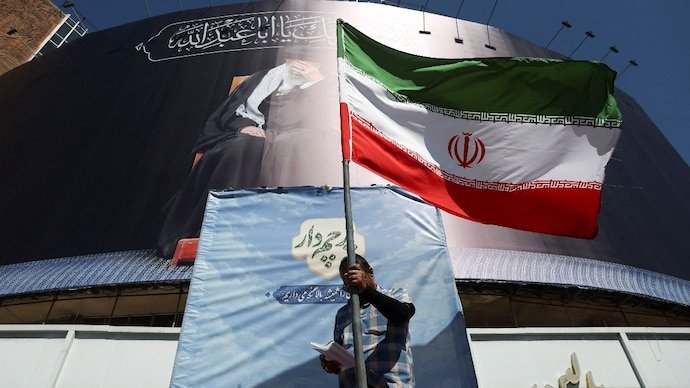
The proposed US-Iran peace deal has generated headlines for promises of de-escalation, Sanctions Relief, and the reopening of critical energy corridors. Yet the most important element of the emerging framework may not be military or diplomatic at all it is economic.
At the center of the debate is a reported reconstruction and investment package valued at approximately $300 billion. While details remain unverified and the full memorandum has not been publicly released, discussions surrounding the package have already transformed the conversation from one about ending conflict to one about who pays for peace.
The agreement reportedly involves negotiations between the United States and Iran following months of regional instability, disruptions in energy markets, and escalating military tensions. The framework is expected to address sanctions, frozen Iranian assets, reconstruction efforts, and future Security guarantees. However, the differing narratives emerging from Washington and Tehran reveal a deeper reality: both sides are attempting to define the political meaning of the agreement before it is even finalized.
Whether the package is ultimately viewed as reconstruction assistance, investment, economic normalization, or indirect compensation could determine whether the peace process succeeds or becomes another failed chapter in the long history of Middle East Diplomacy.
Why the $300 Billion Figure Matters More Than the Ceasefire
Peace agreements often focus on troop withdrawals, security guarantees, and diplomatic recognition. In this case, economics may prove far more important than military arrangements.
For Iran, years of sanctions, restricted access to international financial systems, and conflict-related economic disruptions have severely constrained growth. Tehran’s negotiating position appears to be based on a simple principle: lasting peace requires tangible economic benefits.
The reported framework reportedly includes several major components:
- Large-scale reconstruction and investment commitments
- Access to frozen Iranian assets
- Sanctions relief on energy exports
- Expanded access to international financial systems
- Economic guarantees tied to long-term stability
From Iran’s perspective, these measures are necessary to demonstrate that peace delivers measurable benefits to citizens and businesses.
From Washington’s perspective, however, presenting the package as a reconstruction initiative rather than compensation is politically essential. The distinction may appear semantic, but it has enormous implications for domestic Politics, international perception, and future negotiations.
The Real Cost of Conflict in the Modern Middle East
One reason the reconstruction package has attracted so much attention is that modern conflicts generate economic costs far beyond direct military damage.
Wars in strategically important regions create ripple effects across global supply chains, shipping routes, commodity markets, and investor confidence. The Strait of Hormuz remains one of the world’s most critical energy chokepoints, handling a significant share of globally traded crude oil and liquefied natural gas.
Even limited disruptions in the region can trigger:
- Higher global oil prices
- Increased transportation costs
- Inflationary pressures worldwide
- Reduced investor confidence
- Supply chain disruptions
- Economic uncertainty for emerging markets
The broader economic consequences often exceed direct battlefield costs. This reality helps explain why policymakers increasingly view reconstruction spending as a strategic investment rather than merely humanitarian assistance.
How the US and Iran Are Selling the Same Deal Differently
One of the most fascinating aspects of the negotiations is how both governments appear to be describing the same framework in dramatically different ways.
Iranian narratives emphasize compensation, reconstruction, and economic justice. This framing allows Tehran to portray the agreement as evidence that resistance and persistence produced meaningful concessions.
Meanwhile, American narratives focus on investment, stability, economic opportunity, and market normalization. This approach allows Washington to present the agreement as a diplomatic achievement that reduces tensions without appearing to concede under pressure.
Such dual messaging is not unusual in international diplomacy.
Many major agreements survive precisely because each side can claim victory to its domestic audience. The challenge emerges when public expectations become incompatible with the practical realities of implementation.
If Iranian citizens expect direct economic transformation while international investors remain cautious, dissatisfaction could emerge quickly. Likewise, if American voters perceive reconstruction commitments as excessive spending, political opposition could intensify.
Trump’s Economic Peace Strategy and the Business-First Approach
A notable feature of recent US foreign policy discussions has been an emphasis on economic development as a pathway to regional stability.
Rather than focusing exclusively on traditional diplomatic mechanisms, policymakers increasingly discuss investment funds, infrastructure projects, industrial development, and private-sector participation as tools for conflict resolution.
This strategy reflects a broader belief that economic integration can reduce incentives for future conflict.
The concept is straightforward: countries and populations that benefit from trade, investment, and development may have stronger incentives to preserve stability than to return to confrontation.
However, critics argue that economic projects alone cannot resolve deep political, ideological, and security disputes.
History provides examples supporting both viewpoints.
Postwar reconstruction contributed significantly to stability in parts of Europe and Asia after World War II. At the same time, numerous development initiatives in conflict zones have struggled when underlying political tensions remained unresolved.
The Energy Market Factor Nobody Can Ignore
Perhaps the biggest global stakeholder in any US-Iran agreement is not a government it is the energy market.
Oil prices remain highly sensitive to geopolitical developments involving Iran due to the country’s strategic location and energy resources.
Any durable peace agreement could produce several important outcomes:
- Greater stability in oil markets
- Reduced shipping insurance costs
- Improved energy supply predictability
- Lower risk premiums for investors
- Enhanced regional trade opportunities
For countries heavily dependent on imported energy, including many Asian and European economies, stability in the Persian Gulf directly affects inflation, manufacturing costs, and economic growth.
This explains why international observers are watching the negotiations so closely. The consequences extend far beyond Washington and Tehran.
The Hidden Risk: Expectations Worth $300 Billion
The greatest threat to the peace framework may not be military action but unmet expectations.
Large economic promises create political pressure. Once figures such as $300 billion enter public discussion, citizens, businesses, investors, and political factions begin forming assumptions about what that money will accomplish.
If implementation falls short of expectations, frustration can quickly undermine confidence in the agreement.
This challenge has affected numerous peace processes around the world.
Reconstruction programs often encounter delays caused by bureaucratic hurdles, political disputes, corruption concerns, financing challenges, and changing geopolitical priorities.
The larger the promise, the greater the risk that reality will disappoint stakeholders.
Historical Comparison: Why Reconstruction Deals Often Determine Peace Outcomes
| Historical Example | Economic Component | Long-Term Impact |
|---|---|---|
| Post-WWII Europe | Large-scale reconstruction funding | Economic recovery and stability |
| Balkans Peace Process | International reconstruction assistance | Mixed success due to political divisions |
| Iraq Reconstruction | Infrastructure and development programs | Significant implementation challenges |
| Afghanistan Development Efforts | International aid and investment | Limited sustainability amid instability |
Regional Power Dynamics Could Shift Dramatically
Beyond economics, the agreement could influence the broader balance of power across the Middle East. Regional governments will closely monitor whether sanctions relief and economic normalization strengthen Iran’s economic and diplomatic position.
Countries across the Gulf region have spent years adapting to sanctions-driven uncertainty. A significant easing of restrictions could alter trade flows, energy partnerships, and investment strategies throughout the region.
For Israel, the agreement raises difficult strategic questions. While a reduction in hostilities would lower immediate security risks, concerns remain over Iran’s future regional influence and support for allied groups across the Middle East.
Meanwhile, countries such as Saudi Arabia and the United Arab Emirates may view regional stability as an opportunity to expand economic cooperation while simultaneously maintaining security partnerships with the United States.
The peace framework therefore extends beyond Washington and Tehran. It has the potential to reshape diplomatic relationships across the Middle East for years to come.
The Lebanon Factor Could Become the First Major Test
Many analysts believe the real durability of the agreement will be tested not in Tehran or Washington, but in regional flashpoints where competing interests remain unresolved.
Lebanon represents one of the most significant examples.
The country remains economically fragile while also serving as a critical arena for regional influence. Any disagreements over political arrangements, security concerns, or proxy dynamics could quickly place pressure on the broader peace framework.
History shows that many ceasefires fail not because of disagreements between the principal signatories, but because secondary conflicts reignite tensions and undermine trust.
If regional actors perceive that the agreement disadvantages their interests, they may seek leverage elsewhere, creating new challenges for implementation.
Why Transparency May Be the Missing Ingredient
One of the biggest concerns surrounding the proposed framework is the absence of publicly available details.
Transparency matters because uncertainty creates room for speculation, misinformation, and political manipulation.
Several key questions remain unanswered:
- Who will finance the reconstruction commitments?
- Will the funding come from governments, private investors, or international institutions?
- What benchmarks will determine sanctions relief?
- How will compliance be monitored?
- What happens if either side fails to meet its obligations?
Successful peace agreements generally rely on robust monitoring systems and clear accountability mechanisms. Without them, misunderstandings can quickly evolve into diplomatic crises.
The Unique Insight Most Coverage Is Missing
Much of the public discussion has focused on whether the United States is paying too much or whether Iran is demanding too much. However, the more important question may be whether both sides are acknowledging a fundamental shift in global Geopolitics.
For decades, military power dominated strategic calculations in the Middle East. Today, economic leverage increasingly determines outcomes.
Iran appears to recognize that access to capital, international markets, technology, and trade may deliver longer-lasting advantages than military confrontation.
Likewise, the United States appears to be increasingly focused on using economic incentives to achieve stability rather than relying solely on military pressure.
This reflects a broader global trend in which infrastructure investment, supply chains, trade relationships, and financial integration have become major tools of statecraft.
The proposed $300 billion package is therefore more than a reconstruction proposal. It is a symbol of how power itself may be evolving in the twenty-first century.
What Could Cause the Peace Deal to Collapse?
Even if the memorandum is signed, several factors could threaten its survival:
- Failure to deliver promised economic benefits
- Political opposition within either country
- Regional proxy conflicts
- Disputes over sanctions implementation
- Investor reluctance to participate
- Changes in leadership or political priorities
- Security incidents that undermine trust
- Differences in interpretation of the agreement
Peace agreements are rarely judged by signing ceremonies. They are judged by implementation.
The real challenge begins after the headlines disappear and governments must convert promises into measurable outcomes.
Economic Impact on Global Markets and Consumers
The implications of a successful agreement extend far beyond the Middle East.
Stable energy markets could help ease inflationary pressures worldwide. Lower shipping risks could reduce transportation costs. Businesses would gain greater certainty when planning investments and supply chains.
Emerging economies, many of which are particularly sensitive to oil price volatility, could benefit from more predictable energy costs.
For consumers, the effects may eventually appear through fuel prices, transportation expenses, and overall economic stability.
While geopolitical agreements often seem distant from daily life, energy markets connect international diplomacy directly to household budgets around the world.
Future Outlook: Will the $300 Billion Package Secure Peace or Delay Another Crisis?
The proposed US-Iran peace deal represents one of the most ambitious attempts in recent years to combine diplomacy, economics, and regional security into a single framework.
If successful, it could reduce tensions, stabilize energy markets, encourage investment, and create a foundation for broader regional cooperation.
If unsuccessful, it could become another example of how expectations, political realities, and competing narratives undermine peace efforts.
The reported $300 billion reconstruction package may ultimately become the defining feature of the agreement not because of its size alone, but because it reflects a larger question facing modern diplomacy: can economic incentives create lasting peace where military pressure has repeatedly failed?
The answer will shape not only the future of US-Iran Relations but also the next chapter of Middle East geopolitics. The coming months will reveal whether the framework evolves into a durable peace architecture or becomes another temporary pause in a region where unresolved tensions have often resurfaced when expectations and reality diverge.
For now, the $300 billion question remains unanswered. And that uncertainty may be the weakest link in the entire peace process.
For breaking news and live news updates, like us on Facebook or follow us on Twitter and Instagram. Read more on Latest World on thefoxdaily.com.


COMMENTS 0