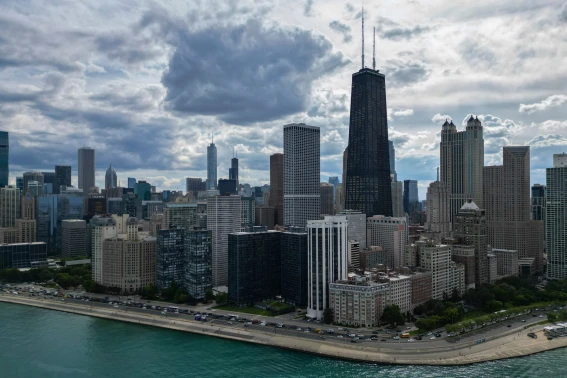
Chicago witnessed another tragic weekend of Gun violence as multiple shooting incidents across the city left at least seven people dead and 38 others injured. The shootings, which occurred over the Juneteenth holiday period, have once again placed America’s third-largest city at the center of a heated political and public policy debate.
The violence prompted renewed comments from US President Donald Trump, who argued that federal intervention could dramatically improve Public safety in Chicago. His remarks have intensified a longstanding national discussion about crime management, policing authority, local governance, and the effectiveness of existing public safety policies.
While the immediate focus remains on victims, their families, and ongoing investigations, the broader implications of the shootings extend far beyond one weekend. The incident has renewed scrutiny of urban crime trends, firearm violence, Law Enforcement strategies, and the challenges facing large American cities.
What Happened in Chicago?
According to preliminary information released by local authorities, at least two dozen separate shooting incidents were reported across Chicago over the weekend. The violence resulted in seven fatalities and dozens of injuries, affecting people of different ages and backgrounds.
One of the most serious incidents involved a crowd gathered on a city street when an SUV reportedly approached and occupants opened fire. Multiple individuals were struck by gunfire, including men and women ranging from teenagers to middle-aged adults.
Several victims required hospitalization, while emergency responders worked across different neighborhoods to manage multiple crime scenes. Law enforcement agencies launched investigations into the incidents, seeking suspects and examining whether any of the shootings were connected.
The shootings occurred during the Juneteenth holiday period, a time when communities across the United States traditionally gather to commemorate the end of slavery and celebrate African American history and culture. The timing added an additional layer of sadness to what was intended to be a period of reflection and celebration.
Understanding Chicago’s Crime Challenge
Chicago has long occupied a unique position in America’s crime conversation. As one of the country’s largest metropolitan areas, the city experiences many of the same challenges that affect major urban centers, including economic inequality, gang activity, illegal firearms trafficking, drug-related crime, and neighborhood disparities.
However, Chicago’s reputation as a symbol of urban violence often exceeds the statistical reality. Crime experts frequently note that violence in the city is highly concentrated in specific neighborhoods rather than evenly distributed across the metropolitan area.
Large portions of Chicago experience crime rates comparable to other major American cities, while a smaller number of communities bear a disproportionate share of violent incidents. This geographic concentration has complicated policymaking efforts and made citywide solutions more difficult to implement.
Over the years, local leaders have experimented with various approaches including community policing, violence interruption programs, youth outreach initiatives, targeted law enforcement operations, and investments in economic development.
Despite some successes, recurring episodes of mass violence continue to generate national attention and Political Controversy.
Trump’s Renewed Call for Federal Action
In response to the weekend shootings, President Donald Trump renewed his criticism of Illinois leadership and once again suggested that stronger federal involvement could dramatically reduce crime in Chicago.
Trump has repeatedly argued that National Guard deployments and enhanced federal law enforcement operations can help restore order in cities experiencing persistent violence. During previous administrations and campaigns, he often highlighted Chicago as an example of what he views as failed urban governance.
His latest comments reflected a broader political message that law-and-order policies remain central to his approach toward public safety.
Supporters of stronger federal intervention argue that local authorities sometimes lack sufficient resources to combat organized criminal networks, illegal gun trafficking, and repeat violent offenders. They believe federal agencies can provide additional manpower, intelligence capabilities, and prosecutorial resources.
Critics, however, contend that long-term public safety improvements require community-based solutions rather than temporary deployments. They argue that federal intervention may generate political headlines without addressing underlying causes of violence.
The Governor’s Opposition to Military Involvement
Illinois Governor JB Pritzker has consistently resisted calls for military-style intervention in Chicago. State leaders generally maintain that local law enforcement agencies are best positioned to address public safety challenges within their jurisdictions.
Opponents of federal deployments often raise concerns about civil liberties, jurisdictional authority, and the appropriate role of military personnel in civilian policing environments.
They also point to historical examples showing that sustainable crime reductions typically emerge from a combination of policing, social investment, education, employment opportunities, and community engagement rather than purely enforcement-driven approaches.
The disagreement between federal and state leaders reflects a broader national debate about how governments should respond to urban crime and whether aggressive enforcement or preventive strategies deliver better long-term outcomes.
What the Data Actually Shows
Crime statistics often become political talking points, but experts caution that understanding trends requires examining long-term patterns rather than isolated incidents.
Although the latest weekend violence is deeply concerning, Chicago’s overall crime picture is more complex. Several categories of violent crime have shown declines over recent years, reflecting broader national trends observed in many US cities following the crime increases seen during and immediately after the COVID-19 pandemic.
However, gun violence remains a major challenge. Even when total crime decreases, highly publicized shootings can shape public perception and influence political discourse.
Researchers emphasize that public fear is often driven not only by statistical risk but also by the visibility and severity of violent incidents. A single mass shooting can significantly impact how residents perceive safety, regardless of broader trends.
This disconnect between data and perception frequently complicates policymaking because elected officials must respond to both measurable outcomes and public concerns.
Why Gun Violence Remains Difficult to Control
The persistence of gun violence in American cities stems from a combination of factors that extend beyond local law enforcement.
One major challenge is the widespread availability of firearms. Weapons often cross state lines, making local regulations less effective when neighboring jurisdictions maintain different firearm laws.
Gang conflicts, retaliatory violence, drug-related disputes, and personal conflicts can escalate rapidly when firearms are readily accessible.
Economic instability, unemployment, educational disparities, and limited opportunities for young people can further contribute to environments where violence becomes more common.
Experts frequently note that successful violence reduction requires coordinated action across multiple sectors, including law enforcement, education, Healthcare, housing, and workforce development.
No single policy has consistently solved the problem in any major city, which explains why public officials continue searching for more effective approaches.
The Impact on Communities
Beyond statistics and political debates, the human cost of gun violence remains profound.
Families lose loved ones, survivors face long-term physical and psychological trauma, and entire neighborhoods experience lasting emotional effects. Repeated exposure to violence can alter how residents interact with their communities, affecting everything from business activity to school attendance and neighborhood cohesion.
Children growing up in areas affected by recurring violence often experience elevated levels of stress and anxiety. Researchers have linked exposure to violence with educational challenges, Mental health concerns, and reduced economic opportunities later in life.
These broader social impacts illustrate why many public safety experts argue that crime prevention should be viewed as both a law enforcement issue and a Public health challenge.
Juneteenth Celebrations Overshadowed
The timing of the shootings drew particular attention because they occurred during Juneteenth celebrations.
Juneteenth commemorates the emancipation of enslaved African Americans and has become one of the most significant cultural observances in the United States. Communities across the country organize festivals, educational programs, family gatherings, and public events to mark the occasion.
In Chicago, many residents had gathered to celebrate the holiday when violence erupted in various parts of the city. Local leaders expressed disappointment that a day intended to honor freedom, progress, and community solidarity became associated with tragedy.
The contrast between celebration and violence underscored the continuing challenges facing communities seeking safer public spaces and stronger social stability.
How Other Cities Are Responding to Similar Challenges
Chicago is not alone in confronting urban violence. Major cities across the United States have adopted different strategies to address similar issues.
Some cities have expanded community violence intervention programs that employ trained mediators to prevent conflicts before they escalate. Others have invested heavily in youth employment initiatives, mental health services, and neighborhood revitalization efforts.
Several jurisdictions have increased collaboration between federal and local law enforcement agencies to target repeat offenders and illegal firearms networks.
Results vary widely depending on local conditions, political leadership, and available resources. Nevertheless, many experts believe the most successful approaches combine targeted enforcement with broader social investments.
The debate over which strategy works best remains central to discussions about public safety across America.
The Political Stakes Ahead
The Chicago shootings are likely to become part of a larger national conversation as political leaders prepare for future elections and policy battles.
Crime consistently ranks among voters’ top concerns, particularly during periods of economic uncertainty and social change. As a result, major incidents often become symbols within broader debates about governance, leadership, and public policy.
Republican leaders generally emphasize tougher enforcement, stricter penalties, and stronger police support. Democratic leaders often advocate a combination of law enforcement reforms and social investment strategies.
Both sides argue that their approach offers the most effective path toward safer communities.
For residents living in neighborhoods affected by violence, however, political arguments matter less than tangible improvements in safety and quality of life.
Future Outlook: Can Chicago Reduce Violence?
Chicago’s future will likely depend on its ability to balance enforcement efforts with long-term community development initiatives.
Law enforcement agencies continue working to remove illegal firearms from the streets and disrupt violent criminal networks. At the same time, city leaders face pressure to address economic inequality, educational opportunities, affordable housing, and youth engagement.
Public safety experts generally agree that sustainable progress requires persistence, coordination, and measurable accountability across multiple institutions.
The latest wave of shootings serves as a reminder that while some crime indicators may improve, significant challenges remain. Whether through local reforms, state initiatives, federal support, or a combination of all three, policymakers will continue searching for solutions capable of reducing violence and restoring public confidence.
As investigations into the weekend shootings continue, Chicago once again finds itself at the center of a national discussion about crime, public safety, and the future of urban America. The coming months will reveal whether renewed political attention translates into meaningful changes capable of preventing similar tragedies in the future.
For breaking news and live news updates, like us on Facebook or follow us on Twitter and Instagram. Read more on Latest World on thefoxdaily.com.




COMMENTS 0