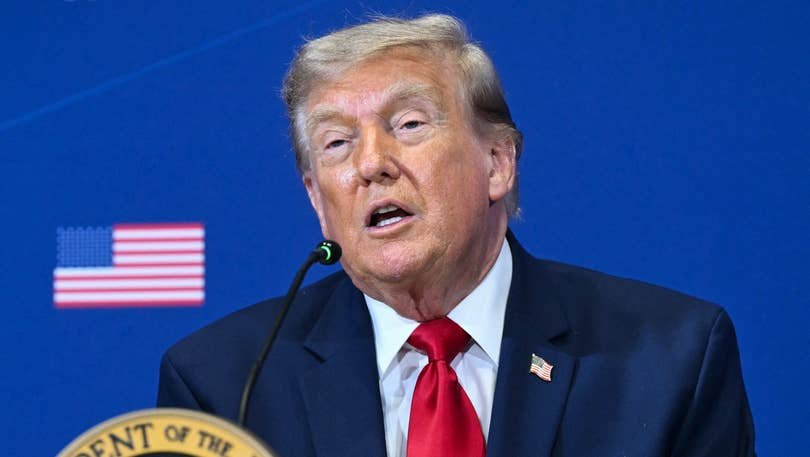
The Middle East has once again become the center of global attention after US President Donald Trump issued one of his strongest warnings yet to Iran. Trump declared that the United States would strike Iranian infrastructure including bridges or power plants if Tehran attacks any commercial vessel passing through the Strait of Hormuz, one of the world’s most strategically important maritime chokepoints.
The warning comes amid continued military exchanges involving US forces, Iranian missile and drone launches, growing regional instability, and disruptions to international shipping. With oil prices climbing and diplomatic efforts showing little visible progress, governments and financial markets are increasingly worried that the conflict could evolve into one of the most significant geopolitical crises in recent years.
While the military developments dominate headlines, the broader story extends beyond missiles and warships. The Strait of Hormuz is not merely a regional waterway it is a cornerstone of the global energy system. Any prolonged disruption has consequences that reach consumers, businesses, investors, and governments worldwide.
What Did Donald Trump Say?
In a public statement shared on social media, President Donald Trump warned that any future Iranian attack against vessels transiting the Strait of Hormuz would trigger direct American retaliation against critical Iranian infrastructure.
The statement significantly raises the stakes because it expands the scope of possible military responses beyond traditional military targets. Such rhetoric signals a tougher deterrence strategy aimed at preventing further attacks on commercial shipping while increasing pressure on Tehran.
The remarks followed reports of additional Iranian missile and drone activity in the Gulf region, continued US air operations, and heightened security alerts across several Middle Eastern countries.
Why the Strait of Hormuz Matters
The Strait of Hormuz is one of the world’s most strategically valuable maritime passages. Located between Iran and Oman, it connects the Persian Gulf with the Gulf of Oman and the Arabian Sea.
Despite being only a narrow shipping lane, it serves as the primary export route for crude oil and liquefied natural gas produced by Gulf nations.
According to publicly available international energy data, approximately 20% of global oil consumption passes through the Strait of Hormuz during normal market conditions. Countries including Saudi Arabia, Iraq, Kuwait, the United Arab Emirates, and Qatar rely heavily on this route to supply global markets.
Any disruption immediately affects shipping insurance, freight costs, energy prices, and investor confidence.
Quick Facts About the Strait of Hormuz
| Feature | Importance |
|---|---|
| Location | Between Iran and Oman |
| Primary Role | Global oil and LNG shipping corridor |
| Global Oil Flow | Roughly one-fifth of worldwide petroleum trade |
| Strategic Importance | Critical to energy security and international trade |
| Major Users | Saudi Arabia, UAE, Kuwait, Iraq, Qatar and international shipping companies |
Latest Developments in the Conflict
The latest escalation includes multiple military developments occurring simultaneously across the region.
- Continued US military air operations targeting Iranian military infrastructure.
- Iranian missile and drone launches toward regional targets.
- Air defense systems activated in multiple Middle Eastern countries.
- Heightened Maritime Security concerns in the Persian Gulf.
- Growing fears of additional attacks on commercial shipping.
The expanding geographic scope of these incidents demonstrates that the conflict is no longer confined to a single battlefield but now affects multiple countries and critical trade corridors.
Why Oil Markets React So Quickly
Energy Markets respond not only to actual supply disruptions but also to the possibility of future shortages.
When investors believe shipping through the Strait of Hormuz could become riskier, traders begin pricing that uncertainty into oil futures. Tanker operators may reroute vessels, insurance premiums rise, and transportation costs increase long before actual shortages occur.
This chain reaction can eventually influence:
- Petrol and diesel prices.
- Airline operating costs.
- Manufacturing expenses.
- Shipping rates.
- Inflation.
- economic growth forecasts.
Even countries that import little oil directly from the Gulf often experience higher fuel prices because oil is traded in interconnected global markets.
How the Conflict Could Affect the Global Economy
The economic consequences extend well beyond energy.
Higher transportation costs increase the price of imported goods. Manufacturers relying on petroleum-based products face rising production expenses. Airlines often introduce fuel surcharges, while logistics companies adjust freight rates.
Financial markets also become more volatile as investors seek safer assets during geopolitical crises.
Central banks carefully monitor such developments because sustained increases in oil prices can complicate efforts to control inflation while supporting economic growth.
Comparison: Short-Term vs Long-Term Consequences
| Short-Term Impact | Long-Term Impact |
|---|---|
| Oil price spikes | Persistent inflationary pressure |
| Shipping delays | Supply chain restructuring |
| Market volatility | Reduced investor confidence |
| Higher insurance costs | Long-term increase in trade expenses |
| Regional military tensions | Changes in global energy security policies |
Why the Strait of Hormuz Is Difficult to Replace
Although some Gulf countries have invested in alternative export pipelines, these routes cannot fully replace the enormous volume of oil transported through the Strait of Hormuz.
Alternative infrastructure has limited capacity, making the strait indispensable for international energy markets.
This is why even temporary disruptions receive close attention from governments, energy companies, and financial institutions.
The Diplomatic Challenge
Military operations have intensified even as diplomatic channels remain formally open.
Several regional governments continue encouraging negotiations to prevent further escalation. However, public statements from both Washington and Tehran indicate that significant disagreements remain regarding maritime security, Sanctions, regional influence, and nuclear issues.
Diplomatic negotiations in such conflicts are often complicated because military actions continue while political discussions take place simultaneously.
The Nuclear Dimension
The current tensions are also connected to longstanding disagreements surrounding Iran’s nuclear program.
Western governments have repeatedly expressed concerns regarding uranium enrichment activities and future nuclear capabilities. Iranian officials continue maintaining that the country’s nuclear program is intended exclusively for peaceful civilian purposes.
The issue has remained central to regional diplomacy for years and continues to influence relations between Iran, the United States, European governments, and neighboring countries.
How Global Shipping Is Responding
Shipping companies closely monitor every development in the Persian Gulf.
When military tensions increase, commercial operators may:
- Delay vessel departures.
- Increase onboard security.
- Purchase additional insurance coverage.
- Alter shipping schedules.
- Coordinate more closely with naval protection forces.
These measures improve safety but also increase transportation costs that may eventually be reflected in consumer prices.
Regional Security Implications
The conflict has implications for nearly every country in the Gulf region.
Neighboring governments continue strengthening air defense systems, increasing maritime surveillance, and coordinating with international partners to secure shipping lanes.
Regional stability is especially important because the Gulf hosts numerous military bases, energy infrastructure, international ports, and global commercial routes.
Expert Insight: Why Hormuz Remains One of the World’s Most Sensitive Chokepoints
Security experts frequently describe the Strait of Hormuz as one of the world’s most vulnerable strategic locations because a relatively small geographic area influences a disproportionately large share of global energy trade.
Unlike broader oceans where ships can easily change routes, Hormuz offers very limited alternatives. That makes any military confrontation particularly significant for international commerce.
History has shown that even isolated incidents involving tankers or naval vessels can trigger sharp reactions in commodity markets, diplomatic circles, and defense planning.
What Investors Are Watching
Global investors are closely tracking several indicators that could determine the next phase of the crisis.
- Future military activity in the Gulf.
- Commercial shipping volumes.
- Oil production decisions by major exporters.
- Diplomatic negotiations.
- Insurance costs for maritime transport.
- Central bank responses to higher energy prices.
Financial markets generally dislike prolonged uncertainty more than temporary price increases, making political developments almost as important as military ones.
Possible Future Scenarios
Several outcomes remain possible depending on military and diplomatic decisions in the coming weeks.
Scenario 1: Diplomatic De-escalation
Negotiations reduce military activity, shipping resumes normally, and oil prices gradually stabilize.
Scenario 2: Limited Military Confrontation
Both sides continue exchanging limited strikes while avoiding a wider regional war, leading to prolonged market volatility.
Scenario 3: Regional Escalation
Additional countries become directly involved, significantly disrupting global energy supplies and increasing geopolitical risks.
While predicting geopolitical events remains difficult, markets generally prepare for all three possibilities simultaneously.
What This Means for Consumers Worldwide
Although the conflict is taking place thousands of kilometers away from many consumers, its effects can become visible through higher fuel prices, transportation costs, inflation, and increased prices for everyday goods.
Businesses dependent on global shipping including retailers, airlines, manufacturers, and logistics companies closely monitor developments because energy remains one of the largest operating expenses across multiple industries.
Conclusion
Donald Trump’s warning regarding attacks on ships in the Strait of Hormuz represents another significant escalation in an already fragile regional security environment. While military operations continue, the broader implications extend far beyond the battlefield.
The Strait of Hormuz remains one of the world’s most critical energy corridors, making every development there a matter of global economic importance. Rising oil prices, shipping disruptions, financial market volatility, and diplomatic uncertainty illustrate how regional conflicts can rapidly produce worldwide consequences.
Ultimately, whether the situation moves toward de-escalation or further confrontation will depend on diplomatic engagement, military restraint, and the willingness of all parties to prevent one of the world’s most important trade routes from becoming the center of a prolonged international crisis.
For breaking news and live news updates, like us on Facebook or follow us on Twitter and Instagram. Read more on Latest World on thefoxdaily.com.






COMMENTS 0